Medical Conditions · 12 MIN READ
Indian Diet Plan for PCOD / PCOS
A PCOS-friendly Indian diet built on insulin-smart principles — the foods to favor, the foods to limit, the PCOS plate, and a practical 7-day plan.
Loading...
A PCOS-friendly Indian diet built on insulin-smart principles — the foods to favor, the foods to limit, the PCOS plate, and a practical 7-day plan.
PCOS (also called PCOD) affects a large share of women of reproductive age, and for most of them, the way the body handles insulin sits at the centre of it. That’s actually empowering news: because food directly shapes insulin and blood sugar, everyday eating becomes one of the most effective tools for managing symptoms — often the first-line recommendation alongside exercise. Here’s an evidence-based, Indian-food-first approach. Treat it as a framework to use with your doctor, not a replacement for medical care.
Polycystic ovary syndrome is a hormonal condition that can cause irregular periods, excess androgens (leading to acne and unwanted hair growth), and difficulty with weight. A central driver for many women is insulin resistance — the body’s cells respond poorly to insulin, so it pumps out more, and high insulin in turn worsens the hormonal imbalance. This is why diet matters so much: what you eat directly affects your blood sugar and insulin levels.
The goal of a PCOS diet is therefore to keep blood sugar and insulin steady — favouring foods that release energy slowly, balancing every meal, and, where there’s excess weight, supporting gradual loss, since even a modest reduction can meaningfully improve symptoms and restore more regular cycles. Crucially, this is about a sustainable way of eating, not a crash diet.
For most women with PCOS, the lever is insulin. Eat in a way that keeps blood sugar and insulin steady — lower-GI, balanced, fiber-rich meals — and you’re working directly on the root of the symptoms.
These tend to spike blood sugar and insulin or add inflammation — not “forbidden,” but best kept occasional.
A simple way to build every meal: half vegetables, a quarter protein, a quarter low-GI whole-grain carbs, plus healthy fat. This automatically keeps the glycemic load low and the meal balanced.
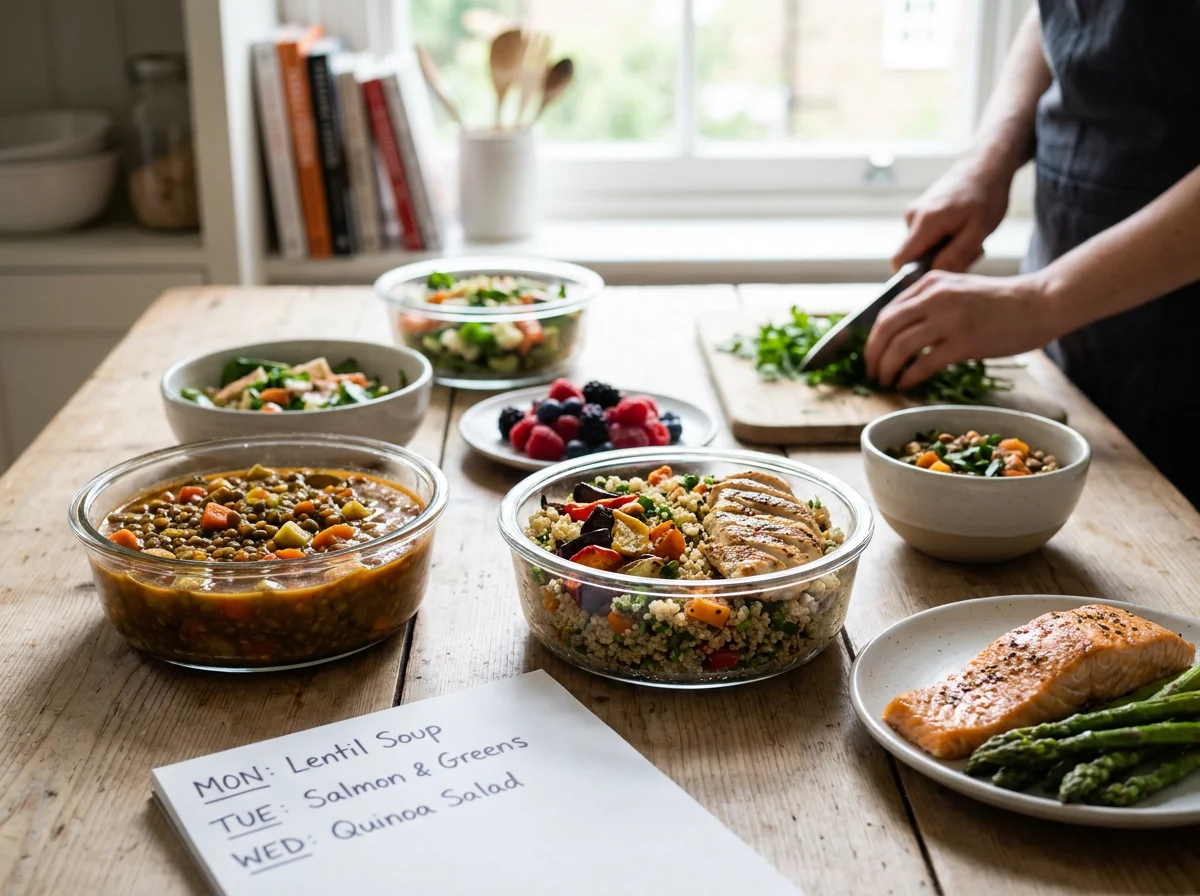
A week of balanced, lower-GI Indian meals built on the principles above. Adjust portions to your needs and your doctor’s or dietitian’s guidance.
I’ve watched cycles regularize and energy return when women with PCOS simply shifted to balanced, lower-GI meals and lost a little weight. Food isn’t the whole answer — but it’s one of the most powerful pieces, and it’s in your hands every day.
— Dr. Lena Hoff, RD
Diet is central, but it works best as part of a broader approach — ideally guided by your doctor.
PCOS varies a lot from person to person, and this is general guidance, not a personal prescription. Work with your doctor and, ideally, a registered dietitian to tailor an approach to your body, symptoms, and any other conditions.
Tell our planner your tastes and that you’re managing PCOS, and it builds a balanced, lower-GI Indian week — millets, dals, protein, and vegetables in the right proportions, with a grocery list. A framework to bring to your doctor or dietitian.
Build my PCOS-friendly week →PCOS responds well to how you eat: protein and fiber at every meal, whole grains over refined, and steadier blood sugar over the day — which also eases the insulin resistance behind many PCOS symptoms [1][3]. Low-GI, balanced eating is evidence-based for PCOS [4], and lifestyle change is the recommended first step alongside any medication [5]. Build meals around the PCOS plate and use the 7-day plan as a template — and work with your doctor or a dietitian, especially if you’re on medication or trying to conceive [2].
Built using verified nutrition databases, culinary research, and traditional cooking knowledge — every claim is cross-referenced against the sources listed in the article.
Articles are curated using trusted food databases (USDA FoodData Central, IFCT), culinary literature, and dietary guidelines, then structured by our editorial team for clarity, accuracy, and usefulness.