What to Eat on a Low-Sodium Diet: A Beginner's Weekly Meal Plan
Cutting salt feels like losing flavor — until you learn the swaps. Here’s a full 7-day plan that keeps you under 1,500mg of sodium a day without anyone at…
By Kayte Williams, Nutrition Writer
May 31, 2026 · Reviewed May 2026 · Updated Aug 2026
Cutting salt feels like losing flavor — until you learn the swaps. Here’s a full 7-day plan that keeps you under 1,500mg of sodium a day without anyone at the table noticing..
A low-sodium diet sounds like a punishment — bland soup, naked vegetables, food that tastes like the inside of a hospital. It doesn’t have to be. The trick isn’t adding less salt to the same recipes; it’s rebuilding flavor from acid, herbs, aromatics, and umami so you never miss it. This plan does exactly that, across seven days, while keeping you comfortably under 1,500mg of sodium daily.
Why sodium matters
Sodium isn’t evil — your body needs some to move fluid, fire nerves, and contract muscles. The problem is dose. The average adult eats around 3,400mg a day, more than double what most guidelines recommend. Chronically high sodium pulls water into your bloodstream, raising blood pressure and forcing your heart and kidneys to work harder for decades.
Lowering it has fast, measurable payoffs: in clinical trials, cutting sodium drops systolic blood pressure within weeks, eases swelling, and reduces strain on the kidneys. For anyone managing hypertension, heart failure, or chronic kidney disease, it’s one of the highest-leverage diet changes available.
KEY IDEA
More than 70% of the sodium most people eat comes from packaged and restaurant food — not the salt shaker. [2][3] Cook more at home and you've won most of the battle before seasoning anything.
Your daily target
Guidelines vary by who you ask and your health status. Here’s how the common targets stack up:
2,300
mg upper limit (general) [1][2]
1,500
mg ideal for most adults [2]
<2,000
mg for CKD / heart failure [4][5]
~500
mg the body truly needs [2]
This plan targets roughly 1,400–1,500mg per day — the sweet spot the American Heart Association recommends for adults working to lower blood pressure. Every meal below is built to land within that envelope.
The flavor swaps that replace salt
Salt makes food taste “finished.” These five levers do the same job through different doors — use them generously and you won’t reach for the shaker:
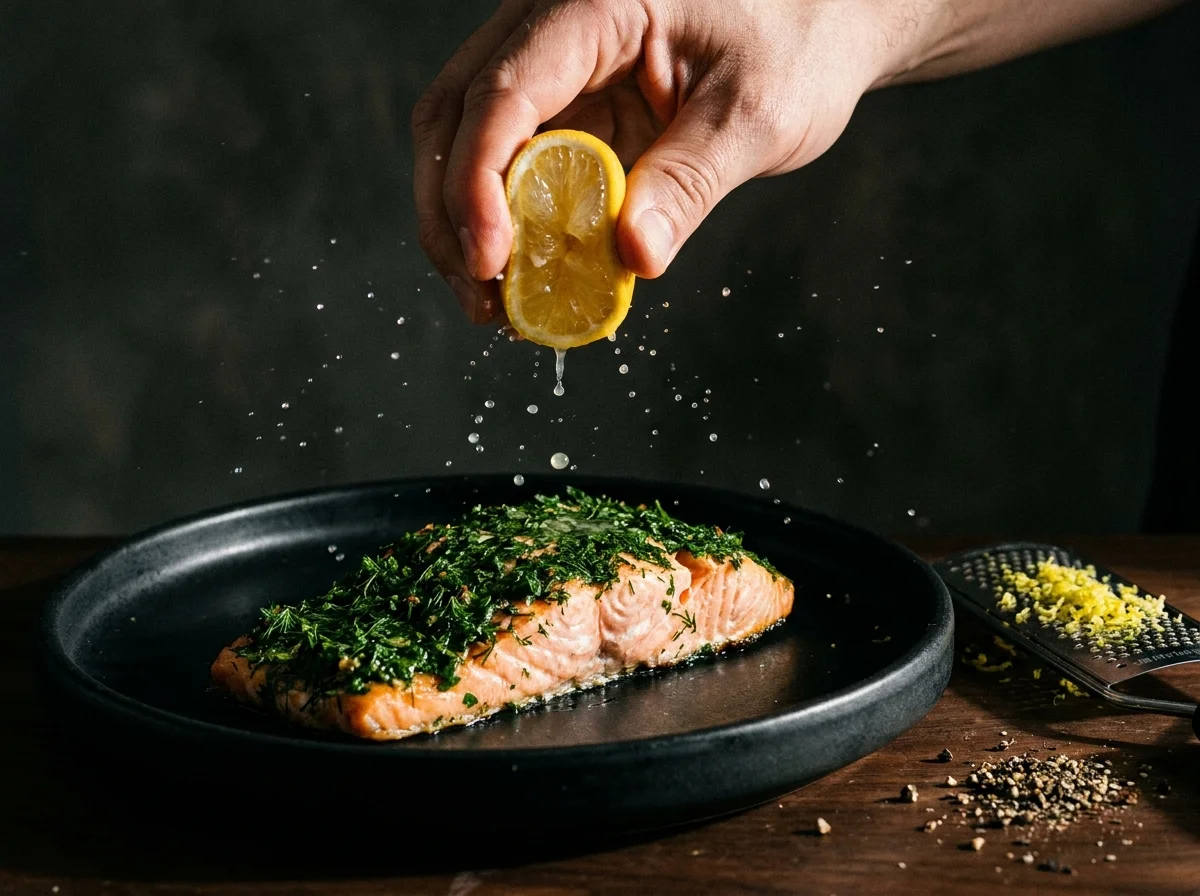
Acid. A squeeze of lemon, lime, or a splash of vinegar at the end of cooking brightens a dish the way salt does. Add it off the heat so it stays vivid.
Aromatics. Garlic, onion, ginger, and shallots build a savory base. Bloom them in oil before anything else goes in the pan.
Herbs & spices. Cumin, smoked paprika, black pepper, oregano, dill, and fresh coriander add depth. Toast whole spices for 30 seconds to wake them up.
Umami. Mushrooms, tomato paste, nutritional yeast, and a parmesan rind in soup deliver that deep savoriness without sodium-heavy soy sauce.
Heat & texture. A little chili and a crunchy topping (toasted seeds, breadcrumbs) make food exciting enough that salt becomes an afterthought.
Your 7-day low-sodium meal plan
Each day lands around 1,400–1,500mg of sodium and 1,600–1,800 calories. Mix and match days freely — they’re interchangeable. Snacks are built in.
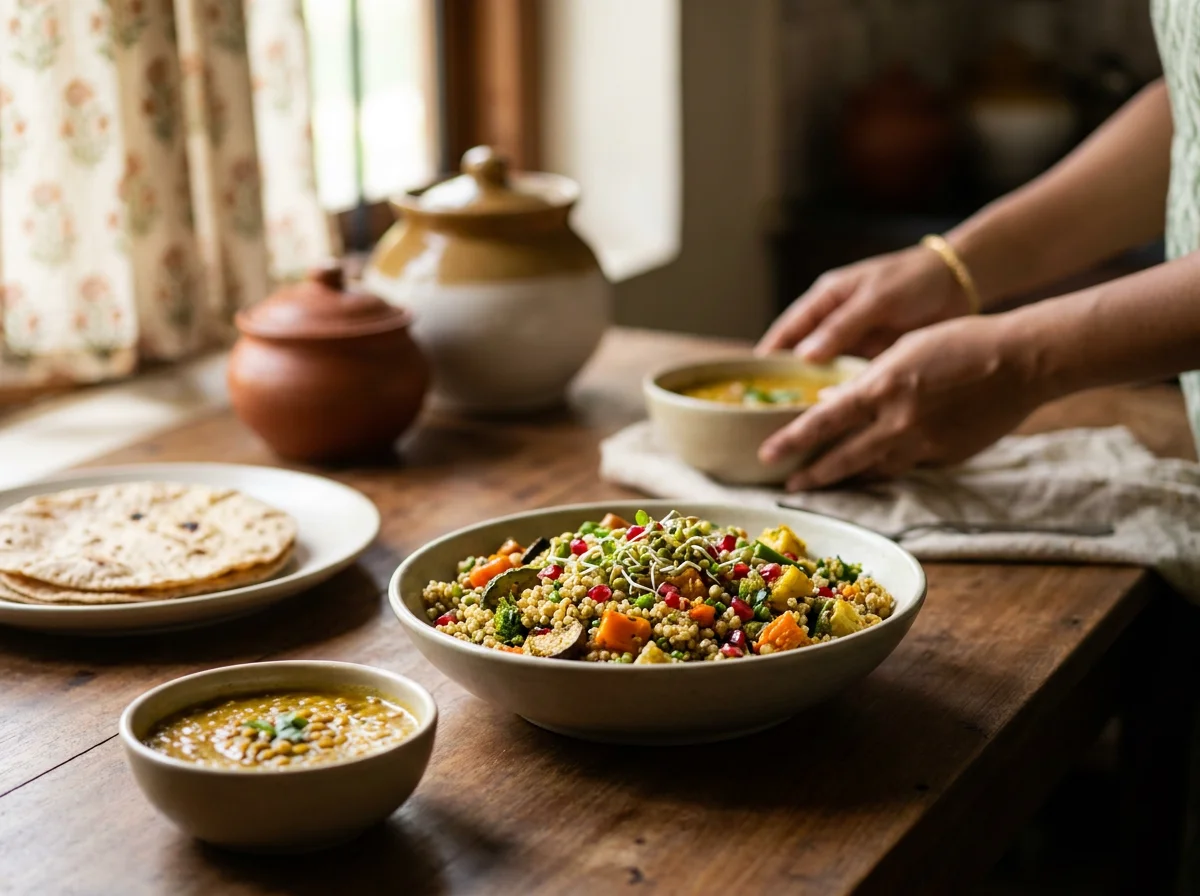
Big grain salad: quinoa, chickpeas, cucumber, mint
DINNER
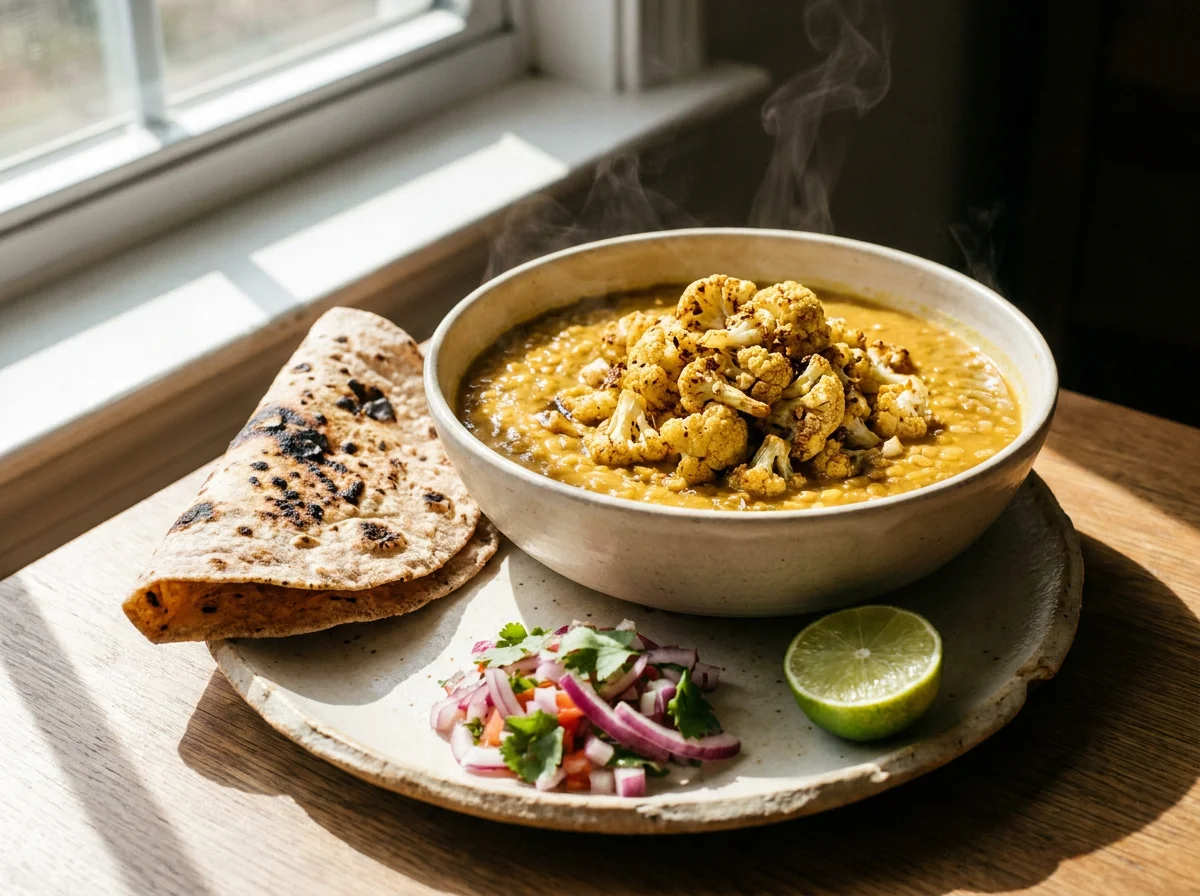
Slow-cooked dal, brown rice, cucumber raita
SNACK
Pear + unsalted almonds
PRO TIP
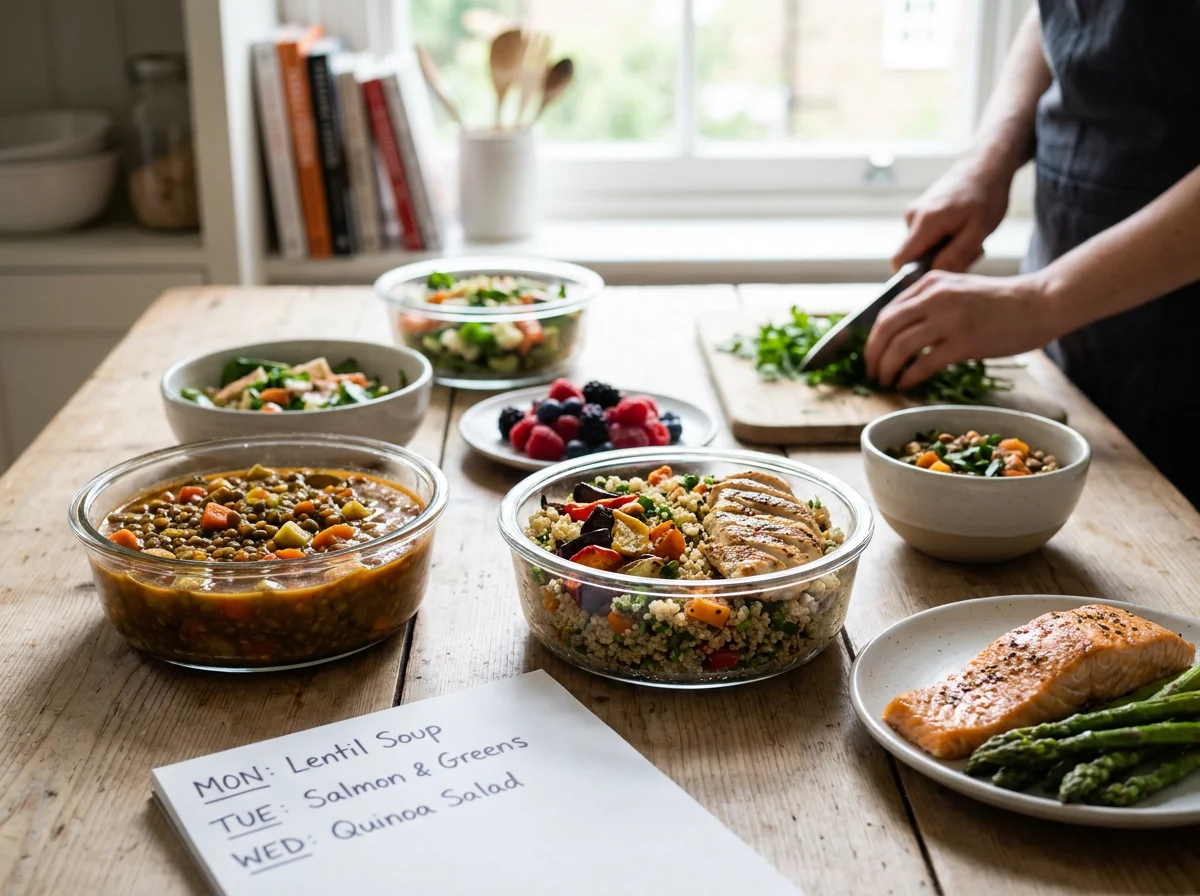
Batch-cook the lentil stew and a pot of brown rice on Sunday. They anchor three lunches and reheat in five minutes — the #1 reason low-sodium plans fail is hunger with nothing prepped.
Smart shopping for low sodium
The grocery store is where a low-sodium diet is won or lost. A few label habits make it almost automatic:
01
Read the milligrams, not the marketing.
'Sea salt' and 'Himalayan pink' are still sodium. Check the Nutrition Facts panel: aim for under 140 mg per serving (the FDA's threshold for a 'low sodium' food), and remember to multiply if you eat more than one serving. [6]
02
Buy 'no-salt-added' canned goods.
Beans, tomatoes, and stock all come in no-salt-added versions now. Draining and rinsing regular canned beans under cold water cuts their sodium by roughly 40% — drained-only saves about 36%, drained-and-rinsed about 41%. [7]
03
Shop the perimeter first.
Fresh produce, plain meats, eggs, and dairy carry almost no added sodium. The center aisles — sauces, deli, frozen meals — are where it spikes.
04
Make your own spice blends.
Most 'seasoning' mixes are salt-first. Build a no-salt blend: garlic powder, onion powder, smoked paprika, cumin, oregano, black pepper.
Where sodium quietly hides
Some of the saltiest foods don’t taste salty at all. These are the ones that blow a budget without warning:
Bread & rolls (1 slice)
Small per slice — but bread is the #1 sodium source in the US diet because of how much we eat [8]
~150 mg
80
limit
Deli meat (2 oz)
Cured/processed meats are the second-biggest source [8]
~500 mg
60
limit
Canned soup (1 cup)
Choose low-sodium versions or make your own
~700 mg
90
limit
Fresh vegetables
Eat freely — the foundation of the plan
<20 mg
25
best
6 habits that make it stick
01
Taste before you season.
Most food has more flavor than you think. Add acid and herbs first, then decide if it truly needs anything else.
02
Keep cut produce ready.
When something crunchy and fresh is in arm’s reach, you reach for it instead of the salty snack drawer.
03
Cook once, eat twice.
Doubling dinner gives you a no-decision, low-sodium lunch — the meal people most often outsource to takeout.
04
Build a “finish” shelf.
Lemons, limes, vinegars, fresh herbs, chili. These are what you reach for instead of salt at the end of cooking.
05
Give your palate 2–3 weeks.
Taste buds recalibrate. Food that seems flat at first tastes perfectly seasoned by week three — and old favorites start tasting too salty.
06
Order smarter when out.
Ask for sauces on the side, no added salt, and dishes that are grilled or roasted rather than cured, brined, or breaded.
“
Lowering sodium isn’t about willpower — it’s about having a short list of meals you genuinely want to eat. Build that list once and the diet runs itself.
— Dr. Lena Hoff, RD
Frequently asked questions
Want this plan built into your week automatically?
Our meal planner can drop all seven low-sodium days into your calendar, generate one merged grocery list, and keep every day under 1,500mg — no math required.
Eating well is rarely about willpower. It’s about having a short list of dinners you actually want to eat. Pick two from this list. Make them next week. The rest will follow.
If you want these on autopilot, our weekly meal planner can drop the picks above into your calendar with one click and build a single grocery list from the merged ingredients.
FREQUENTLY ASKED QUESTIONS
How long until I see results from a low-sodium diet?
Many people notice less bloating and swelling within a few days. In the DASH-Sodium trial, systolic blood pressure dropped progressively over 4 weeks of lowered sodium intake and was still declining at the final measurement — so meaningful BP improvement typically shows up within 2-4 weeks and continues to improve over months. [9]
Will food taste bland forever?
No. Salt-taste sensitivity recalibrates with consistent exposure to less salt — research presented at the European Society of Cardiology found most participants on a low-salt diet stopped reaching for the salt shaker within about three weeks. Once your palate adjusts, properly herbed and acid-brightened food tastes fully seasoned, and restaurant food often starts tasting noticeably too salty. [10]
Can I use salt substitutes?
Be careful. Most 'salt substitutes' replace sodium chloride with potassium chloride, and the extra potassium can be dangerous — even life-threatening — for people with kidney disease, heart failure, type 2 diabetes, or anyone taking ACE inhibitors, ARBs, or potassium-sparing diuretics like spironolactone. In those situations the kidneys can't excrete the extra potassium and blood levels can rise to a dangerous range (hyperkalemia). Talk to your doctor or pharmacist before using any potassium-based substitute, and check the ingredient list of so-called 'lite' or 'low-sodium' salts for potassium chloride. [11][12]
Do I need to cut sodium completely?
No, and you shouldn't. Your body needs about 500 mg of sodium a day to function. The goal is to move from the typical 3,400 mg toward the AHA's 1,500 mg optimum — not to eliminate it. [2]
Is eating out impossible on this diet?
Not impossible, just intentional. Choose grilled or roasted dishes, ask for sauces and dressings on the side, skip cured meats and pickled items, and don't add table salt. One restaurant meal a week won't derail steady home cooking.
ABOUT THE AUTHOR
Kayte Williams
NUTRITION WRITER
Kayte is a nutrition writer, food and recipe content creator, and wellness educator. She bridges evidence-based nutrition science with everyday cooking — translating research into practical recipes, meal ideas, and wellness habits that readers can actually use in their kitchens.
Built using verified nutrition databases, culinary research, and traditional cooking knowledge — every claim is cross-referenced against the sources listed in the article. Last reviewed May 2026.
Articles are curated using trusted food databases (USDA FoodData Central, IFCT), culinary literature, and dietary guidelines, then structured by our editorial team for clarity, accuracy, and usefulness.
· Verified data sources· Culinary research· Quality reviewed