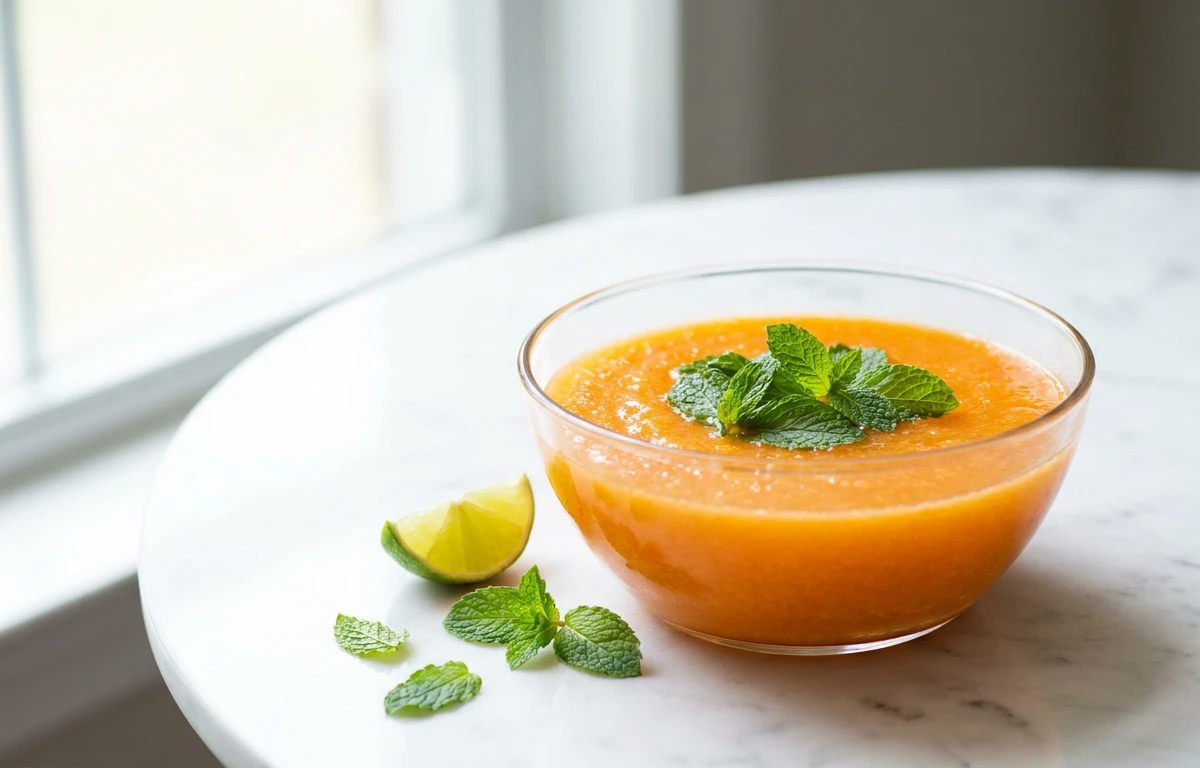
Let's be honest, cantaloupe is the fruit salad regular that nobody gets too excited about. It's just... there. But that's a real mistake. A perfectly ripe, fragrant cantaloupe is a hydration superstar, incredibly low in calories, and packs a serious vitamin C punch. People worry about its glycemic index, but the bigger picture is much friendlier. The secret is understanding that because it's mostly water, its actual impact on blood sugar is far gentler than the numbers suggest.
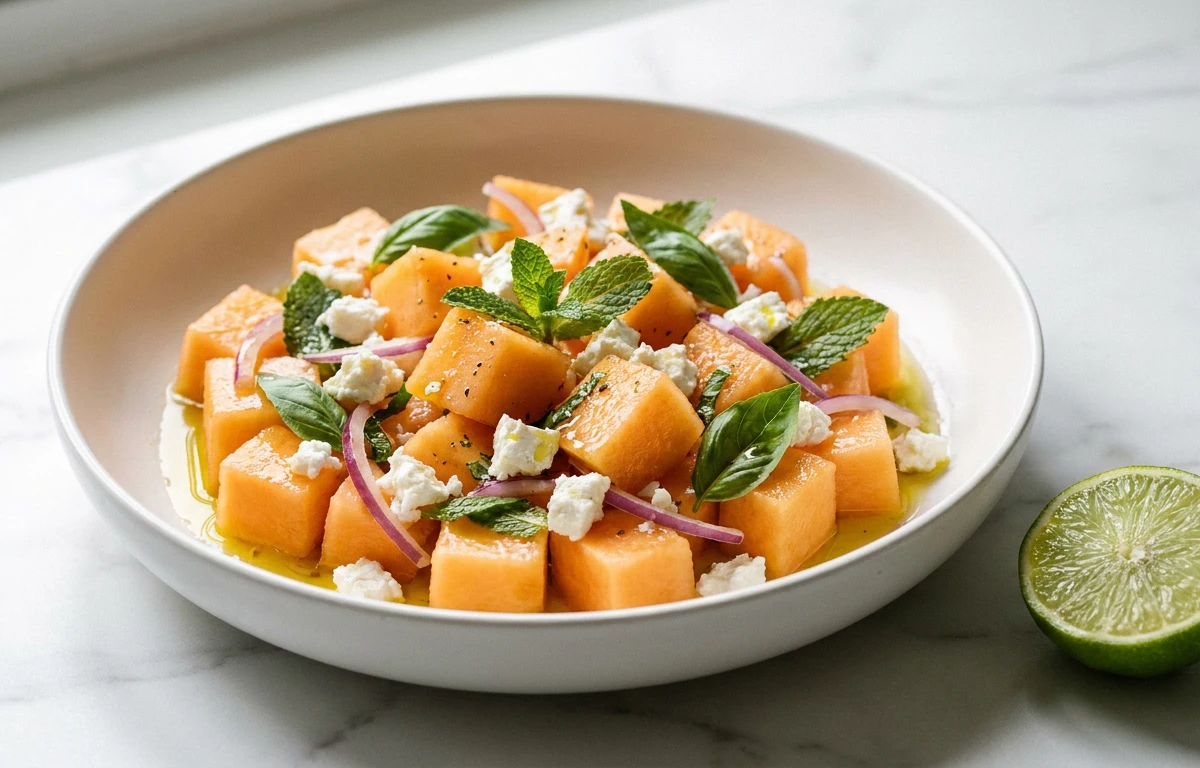
↑ A ripe cantaloupe is one of the most hydrating fruits you can eat.
The hydration hero
Cantaloupe is essentially flavored water, in the best way possible. It's about 90% water by weight, which makes it an incredibly effective (and delicious) way to hydrate on a hot day. Beyond the water, it delivers a surprising amount of Vitamin C and Vitamin A for very, very few calories. It's one of the most diet-friendly fruits out there.
The main point of confusion is its glycemic index, which looks high on paper. But this is a classic case where another number — the glycemic load — tells the real story. Because a serving of cantaloupe has so few actual carbs, its effect on your blood sugar is small. It's a gentle giant.
IN ONE LINE
Cantaloupe is an incredibly low-calorie, hydrating fruit with a big dose of Vitamin C. Its glycemic index is medium, but its low carb content means its actual blood sugar impact is small.
Cantaloupe nutrition facts
Here's the nutritional breakdown for a 100-gram serving of raw cantaloupe, which is about two-thirds of a cup of cubed melon.
The two big stories here are the vitamins. For just 34 calories, you get almost half your daily Vitamin C and a solid 19% of your Vitamin A (from beta-carotene, which gives the melon its orange color). The carb count is low, and the fat and protein are negligible. It's a nutrient-dense, low-energy food.
Cantaloupe's glycemic index explained
Glycemic index (GI) tells you how fast a food's carbs raise blood sugar. Cantaloupe's GI is around 65, which is in the 'medium' range. This is what causes concern. But GI doesn't account for how much carbohydrate is in a serving. That's where Glycemic Load (GL) comes in. Cantaloupe's GL is only about 4, which is very low.
Think of it this way: the sugar in cantaloupe is absorbed moderately fast (the GI), but there's so little of it in a normal serving that the total effect is just a small blip (the GL). For most people, including those with diabetes, the Glycemic Load is the more practical number to pay attention to.
GLYCEMIC INDEX · CANTALOUPE vs COMMON FOODS
Cantaloupe has a low blood sugar impact
Apple
whole fruit
LOW
Pineapple
whole fruit
MEDIUM
Cantaloupe
whole fruit
MEDIUM
Watermelon
whole fruit
HIGH
Cornflakes
refined
HIGH
SCALE 0–90
04590
The best way to eat it
It's hard to go wrong with fresh cantaloupe, but a few simple habits help you get the most out of it.
01
Choose a ripe one.
A good cantaloupe should feel heavy for its size and have a sweet, musky smell at the stem end. The netting on the rind should be raised and well-defined.
02
Eat it fresh and whole.
The benefits come from the whole fruit. Juicing it removes the (small amount of) fiber and concentrates the sugar.
03
Pair it with protein or fat.
A classic for a reason! Pairing cantaloupe with prosciutto, cheese, or yogurt slows digestion and makes it a more balanced, satisfying snack.
04
Stick to a reasonable portion.
A cup or two (about 150-300g) is a great serving. It's so light it can be easy to eat half a melon in one go, which can add up.
What cantaloupe is good for
01
Serious hydration
At 90% water, eating cantaloupe is a delicious way to contribute to your daily fluid needs, especially in hot weather or after exercise.
90%
water
02
A big Vitamin C boost
Just 100g provides over 40% of your daily Vitamin C, crucial for immune function, healthy skin, and absorbing iron.
41%
vit C DV
03
Rich in Vitamin A
The orange flesh is packed with beta-carotene, an antioxidant your body converts to Vitamin A, which supports vision and immune health.
19%
vit A DV
04
Supports blood pressure
Cantaloupe is a good source of potassium, a mineral that helps counteract the effects of sodium and maintain healthy blood pressure.
267mg
potassium
What to pair cantaloupe with
Cantaloupe's mild sweetness makes it a great partner for salty, tangy, and creamy foods. Adding a little protein or fat turns it into a more complete and satisfying snack.
Eat freely — or be mindful?
Three ways to eat it
Go beyond the simple slice with these easy ideas that make the most of cantaloupe's refreshing character.

Want fresh, simple foods worked into a balanced week?
Our meal planner uses hydrating, nutrient-dense foods like cantaloupe to build delicious, satisfying meal plans. We handle the portions and pairings so you get all the benefits without the guesswork.
Explore meal plans →SOURCES & REFERENCES · 3
One more thing
Eating well is rarely about willpower. It’s about having a short list of dinners you actually want to eat. Pick two from this list. Make them next week. The rest will follow.
If you want these on autopilot, our weekly meal planner can drop the picks above into your calendar with one click and build a single grocery list from the merged ingredients.
FREQUENTLY ASKED QUESTIONS
Frequently asked questions
Can people with diabetes eat cantaloupe?
Yes, in moderation. While its glycemic index is medium (~65), its glycemic load is very low (~4) for a one-cup serving. This means it has a minimal effect on blood sugar. Pairing it with a protein like yogurt or cheese is a great strategy.
Is cantaloupe good for weight loss?
Absolutely. It's very low in calories (about 50 calories per cup) and high in water, which helps you feel full. It's a great way to satisfy a sweet craving without derailing your diet.
How can you tell if a cantaloupe is ripe?
Look for three things: 1) It should feel heavy for its size. 2) The 'netting' on the rind should be well-defined and coarse. 3) The stem end (where it was attached to the vine) should have a sweet, musky fragrance. It should also have a slight give when pressed gently.
Is cantaloupe high in potassium?
Yes, it's considered a good source of potassium. A 100g serving has about 267mg. This is great for heart health and blood pressure for most people, but individuals on a potassium-restricted diet for kidney disease should be mindful of their portion size.
METHODOLOGY
How this article was created
Built using verified nutrition databases, culinary research, and traditional cooking knowledge — every claim is cross-referenced against the sources listed in the article.
· USDA data· Culinary research· Quality reviewed
Read our methodology →TRANSPARENCY
About this content
Articles are curated using trusted food databases (USDA FoodData Central, IFCT), culinary literature, and dietary guidelines, then structured by our editorial team for clarity, accuracy, and usefulness.
· Verified data sources· Culinary research· Quality reviewed
Read our editorial policy →EXPLORE OUR MEALS
Meals that fit this article

AMERICAN · 1677 CAL
Almonds with Sliced Apple + supplement + iron

MEDITERRANEAN · 809 CAL
Greek Yogurt with Berries Almonds and Granola + supplement + iron

GENERAL_HEALTHY · 705 CAL
Banana with Peanut Butter Pregnancy + supplement + iron

MODERN · 982 CAL
Hummus with Crudits and Pita with Fresh Orange Snack + supplement + iron
TAGGED
KEEP READING