Oat milk has a serious health halo. It feels wholesome, right? It comes from oats, after all. But here's the thing: the creamy, sweet liquid in your latte is nutritionally a world away from a bowl of porridge. The process that makes it so smooth and delicious also changes its fundamental nature, particularly how it affects your blood sugar. It's not a bad choice, but it's not the simple 'liquid oatmeal' many of us think it is.
↑ Oat milk is made from oats and water, but it's nutritionally quite different from the whole grain.
The creamiest fraud in the dairy aisle?
Let's be clear: I like oat milk. It steams beautifully for a flat white and it doesn't have the chalky or nutty aftertaste of some other plant milks. But we need to see it for what it is: a processed beverage.
To make it, oats are blended with water, and then enzymes are often added. These enzymes break down the oat starches into smaller, simpler sugars (like maltose). This is what gives many brands their signature sweetness and smooth texture, but it's also what bumps up the glycemic index. The mixture is then strained, which removes a lot of the fiber and protein that makes whole oats so good for us. What you're left with is creamy, tasty, and a very different beast from a bowl of porridge.
Think of oat milk as a 'grain beverage', not a 'milk'. It's a great dairy-free option for coffee, but it isn't a one-to-one swap for dairy milk or a bowl of whole oats.
Oat milk nutrition facts
Here's what a typical 100g serving of unsweetened oat milk (about 1/2 cup) provides. Remember that a standard glass is larger, around 240g.
The numbers speak for themselves. Per serving, it's very low in protein and fiber compared to dairy milk or soy milk. Most of the fat content doesn't come from the oats themselves, but from added vegetable oils (like canola or sunflower oil) which are emulsified to create that signature creamy mouthfeel.
Oat milk's surprising glycemic index
This is the part that catches most people out. We associate oats with slow-release energy, but oat milk doesn't behave the same way. The processing that breaks down oat starch into sugar means that many commercial oat milks have a medium to high glycemic index. They can raise blood sugar more quickly and sharply than you'd expect from a product with 'oat' on the label. It's not as high as a fizzy drink, but it's certainly not in the low-GI band like whole apples or cherries.
GLYCEMIC INDEX · OAT MILK vs COMMON FOODS
Oat milk's GI is higher than you think
Apple
whole fruit
LOW
Pineapple
whole fruit
MEDIUM
Oat Milk
processed
MEDIUM
White Bread
refined
HIGH
Cornflakes
refined
HIGH
SCALE 0–90
04590
How to choose a better oat milk
Not all oat milks are created equal. When you're at the store, a quick label check can make a big difference.
01
Check for 'unsweetened'.
The base product is already naturally sweet from processing. You don't need added sugars on top of that.
02
Look for protein and fiber.
Some brands are better than others. Compare labels and pick one that retains more of the good stuff from the original oat.
03
Note the oil type.
Most use canola (rapeseed) or sunflower oil. Some newer brands use oils with better fatty acid profiles, like high-oleic sunflower oil.
04
Prioritize fortification.
If you're using it as a milk replacement, choose one fortified with calcium and vitamin D to match what you'd get from dairy.
05
Scan for beta-glucans.
This is the cholesterol-lowering fiber in oats. Some brands will list the amount per serving. More is better.
What oat milk is good for
01
Excellent dairy-free alternative
For those with lactose intolerance or milk allergies, it's a safe, creamy, and versatile option. It's also typically free of nuts and soy.
100%
dairy-free
02
Potential cholesterol benefits
Oat milk that contains a good dose of beta-glucan soluble fiber can contribute to lowering LDL ('bad') cholesterol. Check the label for amounts.
β-glucan
fiber
03
A vehicle for nutrients
Most commercial oat milks are fortified with key nutrients like calcium, vitamin D, and vitamin B12, which can be harder to get on a vegan diet.
Ca + Vit D
fortified
04
Unbeatable in coffee
Let's be honest, this is its superpower. Its neutral flavor and ability to create a stable, creamy foam is why baristas (and home coffee lovers) adore it.
Creamy
texture
What to pair oat milk with
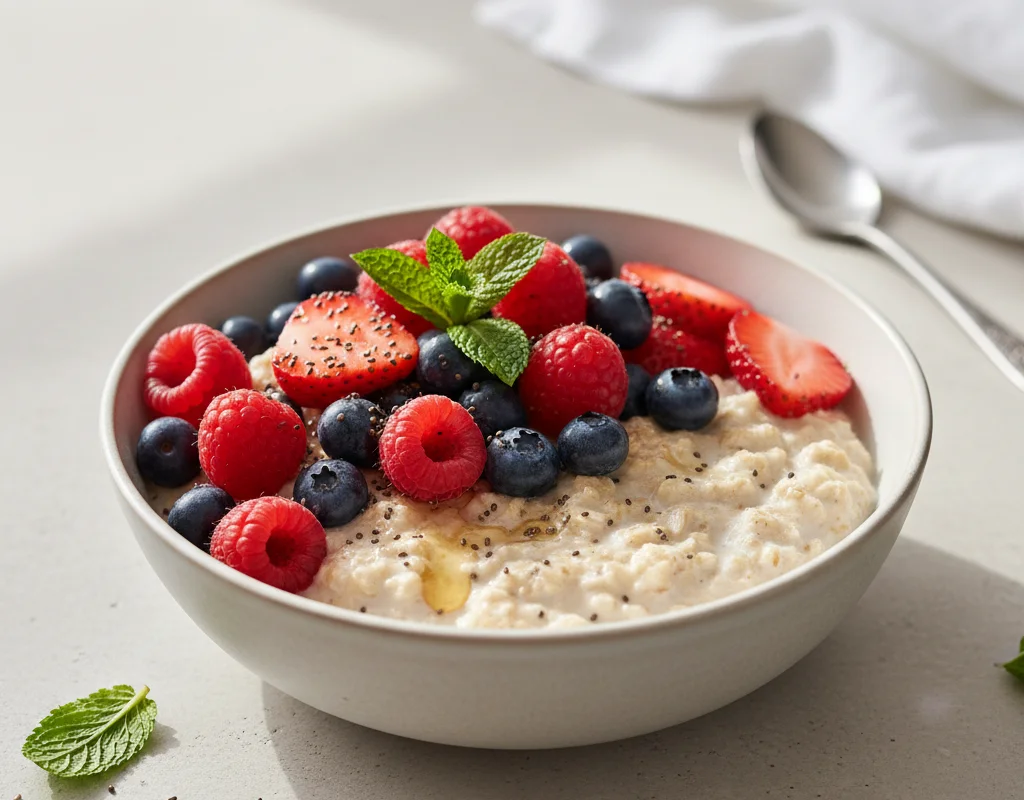
Because it's low in protein and fiber, the smartest way to use oat milk is to pair it with foods that provide those missing nutrients. This helps to create a more balanced meal and blunt any potential blood sugar rise.
Drink freely — or be mindful?
Three ways to use it
Beyond just pouring it on cereal, here are three simple ways to use oat milk that play to its strengths.


Want to build a balanced meal plan, without the guesswork?
Our meal planner can help you incorporate foods like oat milk in a smart way, pairing them with the right ingredients for steady energy and balanced nutrition. Get a custom plan with a single grocery list.
Build my weekly plan →SOURCES & REFERENCES · 3
One more thing
Eating well is rarely about willpower. It’s about having a short list of dinners you actually want to eat. Pick two from this list. Make them next week. The rest will follow.
If you want these on autopilot, our weekly meal planner can drop the picks above into your calendar with one click and build a single grocery list from the merged ingredients.
FREQUENTLY ASKED QUESTIONS
Frequently asked questions
Is oat milk healthier than almond milk?
It's different, not necessarily 'healthier'. Oat milk is creamier, higher in carbs and calories. Almond milk is lower in calories and carbs, but has very little protein. It depends on your goals. For creaminess, oat milk wins. For a low-calorie option, unsweetened almond milk is better.
Does oat milk cause blood sugar spikes?
It can for some people. Due to the processing that breaks down oat starches into simpler sugars, many oat milks have a medium-to-high glycemic index. If you have diabetes or are sensitive to blood sugar changes, it's best to have it in small amounts and pair it with protein or fat.
Why is there oil in my oat milk?
Oil, usually canola or sunflower, is added as an emulsifier. It's what gives oat milk its famously creamy texture and rich mouthfeel, and it prevents the water and oat base from separating. Without it, oat milk would be much thinner and less pleasant to drink.
Is oat milk good for weight loss?
Not particularly. It's relatively low in protein and fiber, two key nutrients for satiety (feeling full). While it's not super high in calories, they can add up if you drink a lot, and it won't keep you full for long on its own.
METHODOLOGY
How this article was created
Built using verified nutrition databases, culinary research, and traditional cooking knowledge — every claim is cross-referenced against the sources listed in the article.
· USDA data· Culinary research· Quality reviewed
Read our methodology →TRANSPARENCY
About this content
Articles are curated using trusted food databases (USDA FoodData Central, IFCT), culinary literature, and dietary guidelines, then structured by our editorial team for clarity, accuracy, and usefulness.
· Verified data sources· Culinary research· Quality reviewed
Read our editorial policy →RELATED RECIPES
Cook from this article
EXPLORE OUR MEALS
Meals that fit this article

AMERICAN · 1677 CAL
Almonds with Sliced Apple + supplement + iron

MEDITERRANEAN · 809 CAL
Greek Yogurt with Berries Almonds and Granola + supplement + iron

GENERAL_HEALTHY · 705 CAL
Banana with Peanut Butter Pregnancy + supplement + iron

MODERN · 982 CAL
Hummus with Crudits and Pita with Fresh Orange Snack + supplement + iron
TAGGED
KEEP READING