Pinto beans don't get the glamour treatment. They're the quiet, dependable workhorse of the pantry, but don't let their humble vibe fool you. A scoop of pintos is one of the most balanced, satisfying, and affordable things you can put on a plate. They're absolutely loaded with plant protein and gut-friendly fiber, delivering slow, steady energy that keeps you full for hours. Forget fleeting food trends; this is real, foundational nutrition.
↑ Pinto beans are as beautiful as they are nutritious.
The pantry workhorse
Pinto beans are the definition of a staple food. They're central to Mexican and Southwestern American cooking for a reason: they're creamy, satisfying, and they take on the flavor of whatever you cook them with. But their real magic is nutritional. They offer a rare combination of high-quality carbohydrate, heaps of fiber, and a serious dose of plant protein, all with virtually no fat.
This unique profile makes them incredibly good at providing steady, sustained energy. Unlike refined carbs that can cause a quick spike and crash, the energy from pinto beans is released slowly, keeping you full and focused for a surprisingly long time.
IN ONE LINE
Packed with protein and fiber, pinto beans are a low-GI, heart-healthy staple that delivers steady energy and keeps you full for hours.
Pinto bean nutrition facts
The numbers below are for 100 grams of dry pinto beans. That's about ½ cup dry, which swells to around 2.5 cups when cooked. A more typical serving would be 1 cup cooked, which is about 1/3 of these values (around 145 calories).
Pinto beans' glycemic index
While we don't have a single verified number for pinto beans, all beans and lentils are consistently ranked as low-glycemic foods. Their GI is typically in the 30-40 range. Why? The massive amount of fiber and significant protein act as a natural brake, slowing down how quickly your body can access the carbohydrates. This is what makes them such a fantastic food for blood sugar management — no sharp spikes, just a gentle, sustained release of energy.
GLYCEMIC INDEX · PINTO BEANS vs COMMON FOODS
Pinto beans are firmly in the low-GI camp
Apple
whole fruit
LOW
Pinto Beans (cooked)
legume
LOW
Pineapple
whole fruit
MEDIUM
White bread
refined
HIGH
Cornflakes
refined
HIGH
SCALE 0–90
04590
How to eat them right
Getting the best from pinto beans is easy. A few simple habits make them more delicious and even easier to digest.
01
Soak them if you can.
Soaking dried beans overnight helps them cook faster and can make them easier to digest, reducing the gas-producing compounds.
02
Cook from scratch to control salt.
Canned beans are convenient, but cooking your own lets you control the sodium. If using canned, give them a good rinse.
03
Pair with a whole grain.
Beans and grains (like brown rice or corn) together form a 'complete protein,' providing all the essential amino acids.
04
Don't throw out the broth.
The liquid from cooking beans is full of flavor and nutrients. Use it as a base for soups, stews, or for cooking rice.
What pinto beans are good for
01
A huge dose of fiber
With over half your daily fiber needs in just 100g (dry), pinto beans are incredible for gut health, regularity, and feeling full.
15.5 g
fiber
02
Excellent source of plant protein
Pinto beans provide a substantial amount of protein, essential for muscle repair, immune function, and overall satiety.
21.4 g
protein
03
Steady, low-glycemic energy
The combination of fiber, protein, and complex carbs means pinto beans provide energy that lasts, without the blood sugar rollercoaster.
Low GI
energy
04
Supports heart health
The soluble fiber in pinto beans helps lower LDL (bad) cholesterol, and they're naturally low in fat and sodium (if unsalted).
1.2 g
fat
What to pair them with
Pinto beans have a mild, earthy flavor that pairs well with almost anything. These combinations don't just taste good; they often complete the nutritional picture.
Eat freely — or be mindful?
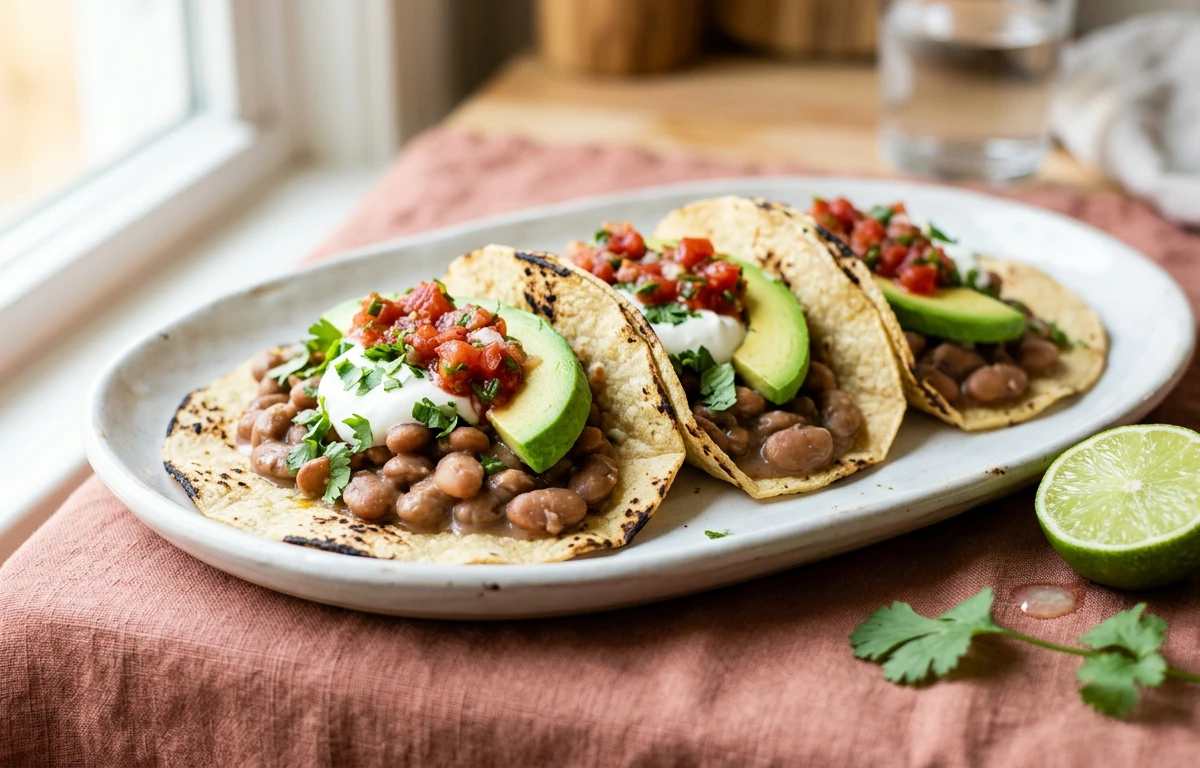
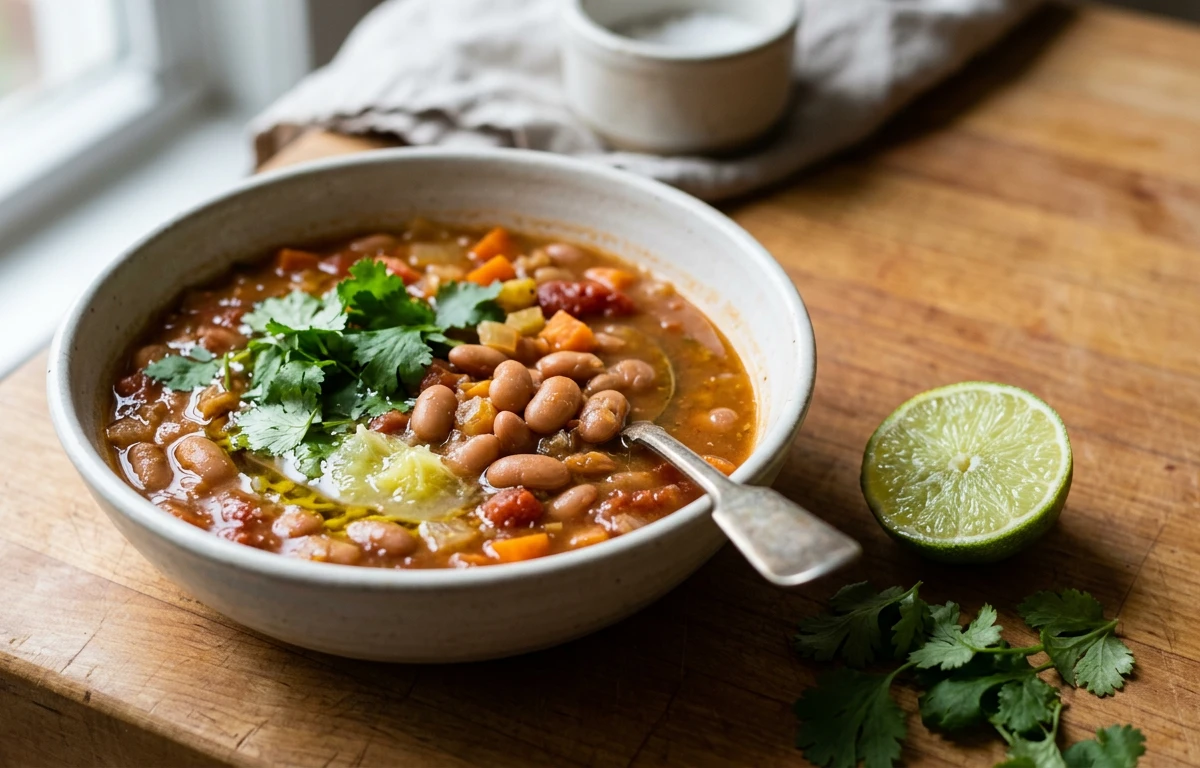
Three ways to use them
Beyond just a side dish, pinto beans can be the star of the meal. Here are three simple ideas.
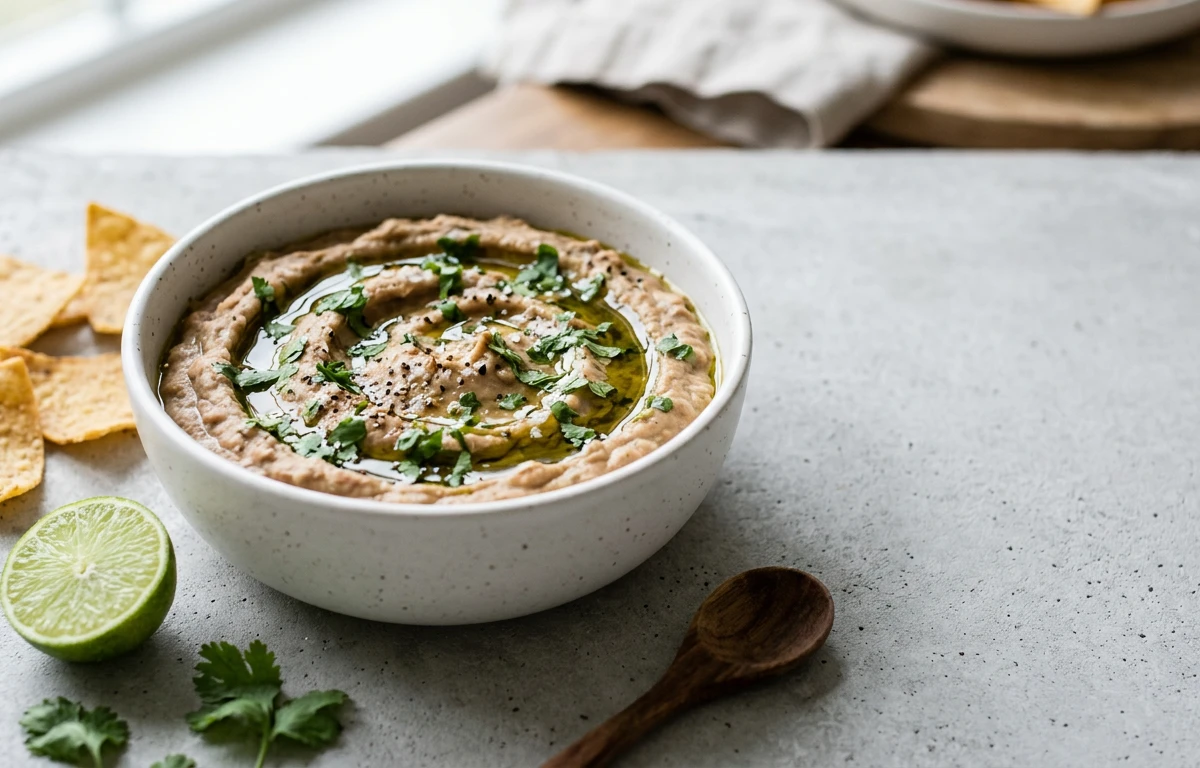
Want balanced meals like this worked into your week — without the planning?
Our meal planner pairs high-fiber foods like pinto beans with fresh vegetables and lean proteins for steady energy, with portions and macros already calculated and a single grocery list at the end.
Build my weekly plan →SOURCES & REFERENCES · 3
One more thing
Eating well is rarely about willpower. It’s about having a short list of dinners you actually want to eat. Pick two from this list. Make them next week. The rest will follow.
If you want these on autopilot, our weekly meal planner can drop the picks above into your calendar with one click and build a single grocery list from the merged ingredients.
FREQUENTLY ASKED QUESTIONS
Frequently asked questions
Are pinto beans a carb or a protein?
Both! This is what makes them unique. They are rich in complex carbohydrates, but also contain a very high amount of plant-based protein. This combination is what provides such balanced, long-lasting energy.
Are canned pinto beans healthy?
Yes, they are a healthy and convenient option. The main drawback is added sodium. To minimize this, look for 'no salt added' versions or rinse regular canned beans thoroughly under running water before using them.
Do pinto beans cause gas and bloating?
They can. Beans contain oligosaccharides, a type of fiber that can be hard for some people to digest. Soaking dried beans overnight and rinsing them well can help. Introducing them into your diet gradually can also give your gut time to adjust.
Are pinto beans good for weight loss?
They are an excellent food for weight loss. The high fiber and protein content makes them incredibly filling, which can help you eat fewer calories overall without feeling hungry.
METHODOLOGY
How this article was created
Built using verified nutrition databases, culinary research, and traditional cooking knowledge — every claim is cross-referenced against the sources listed in the article.
· USDA data· Culinary research· Quality reviewed
Read our methodology →TRANSPARENCY
About this content
Articles are curated using trusted food databases (USDA FoodData Central, IFCT), culinary literature, and dietary guidelines, then structured by our editorial team for clarity, accuracy, and usefulness.
· Verified data sources· Culinary research· Quality reviewed
Read our editorial policy →RELATED RECIPES
Cook from this article
EXPLORE OUR MEALS
Meals that fit this article

AMERICAN · 1677 CAL
Almonds with Sliced Apple + supplement + iron

MEDITERRANEAN · 809 CAL
Greek Yogurt with Berries Almonds and Granola + supplement + iron

GENERAL_HEALTHY · 705 CAL
Banana with Peanut Butter Pregnancy + supplement + iron

MODERN · 982 CAL
Hummus with Crudits and Pita with Fresh Orange Snack + supplement + iron
TAGGED
KEEP READING