Let's be honest: the main reason most of us don't eat more pomegranates is the prep. It can feel like a messy, high-effort fruit. But if you can get past the business of opening one, those jewel-like seeds (called arils) are a nutritional bargain. They're packed with fibre, vitamin C, and unique antioxidants, all with a glycemic index that's comfortably in the 'low' zone. The key is eating the whole aril, not just drinking the juice.
↑ The magic is in the whole aril — juice, fibre, and seed combined.
More than just a messy fruit
Pomegranate has a reputation for being difficult. And yes, getting those vibrant red seeds (the arils) out can be a bit of a project. But the nutritional payoff is so worth it. Each aril is a tiny package of sweet-tart juice surrounding a crunchy, fibre-rich seed. When you eat them whole, you get the complete package: hydration, vitamins, and fibre that slows down any sugar absorption.
The biggest mistake people make is thinking pomegranate juice is the same thing. It's not. Juicing removes the fibre from the seeds and pulp, leaving you with what is essentially a sugary drink. The real health story of the pomegranate is in eating it whole.
IN ONE LINE
The real magic is in the whole arils — fibre, juice, and seed. Don't just drink the juice and miss out on half the benefits.
Pomegranate nutrition facts
Here's the nutritional breakdown for a 100-gram serving of fresh pomegranate arils, which is about what you'd get from half a medium-sized fruit.
The two numbers that really stand out here are the fibre and the low calorie count. Four grams of fibre is significant for a fruit serving, contributing to fullness and digestive health. All of that for just 83 calories makes pomegranate a very nutrient-dense choice.
Pomegranate's glycemic index
Glycemic index (GI) tells us how quickly a food raises blood sugar. Anything under 55 is considered low. Pomegranate clocks in at 53, placing it firmly in the low-GI category. Why? Because the sugar in the arils comes packaged with lots of fibre, which slows down digestion and prevents a rapid blood sugar spike. Its glycemic load (GL), which considers a typical portion size, is also very low at around 8. This makes it a much smarter choice than a glass of pomegranate juice, which has its fibre stripped away.
GLYCEMIC INDEX · POMEGRANATE vs COMMON FOODS
Pomegranate sits in the low-GI band
Cherries
whole fruit
LOW
Apple
whole fruit
LOW
Pomegranate
whole arils
LOW
Pineapple
whole fruit
MEDIUM
Watermelon
whole fruit
HIGH
SCALE 0–90
04590
The smart way to eat one
Getting the most from a pomegranate means getting to the arils without painting your kitchen red. Here's how.
01
Use the water bowl method.
Cut the pomegranate in half. Submerge one half in a bowl of water and gently pry the arils away from the pith. The seeds will sink and the white pith will float. Skim and drain.
02
Eat the whole aril.
Don't just suck the juice and spit out the seed! The crunchy interior is where much of the fibre is. It's meant to be eaten.
03
Stick to a 100g portion.
This is about half a medium fruit, or a generous ½ cup of arils. It's a satisfying amount without going overboard on carbs.
04
Use as a topping.
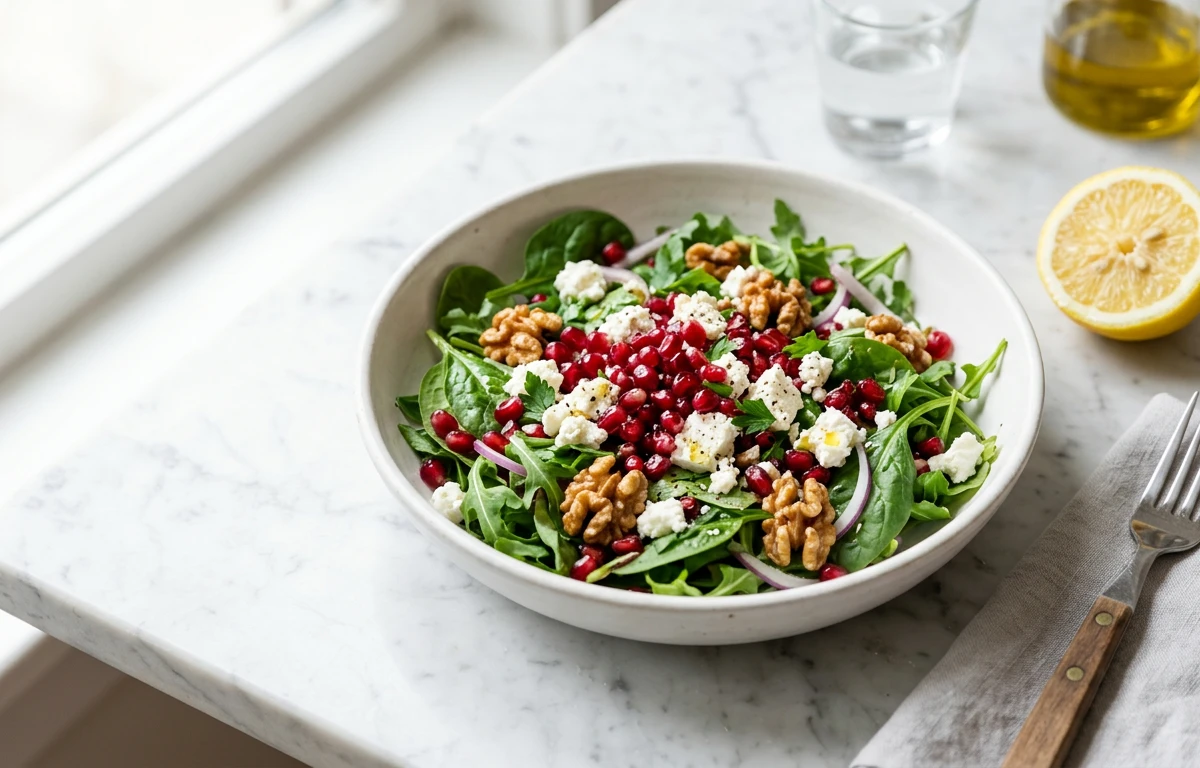
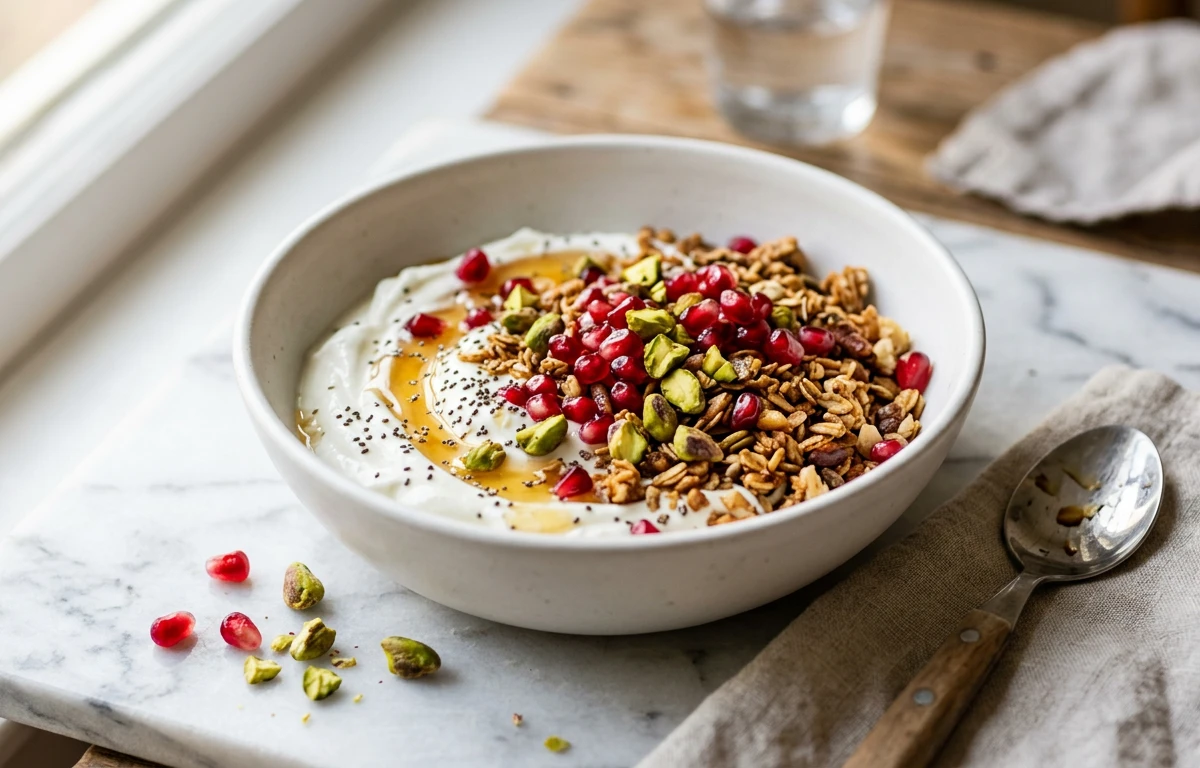
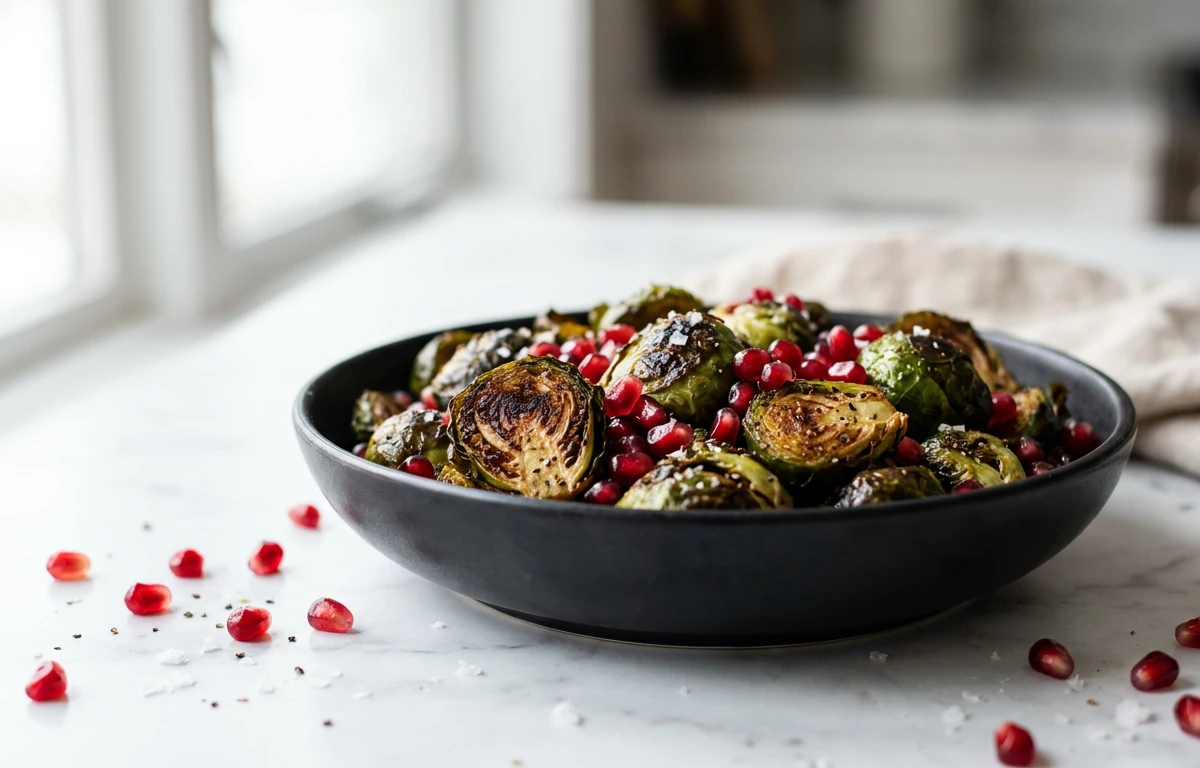
Think of pomegranate arils as a finishing touch. They add a burst of flavour, colour, and texture to salads, yogurt, oatmeal, and even roasted vegetables.
What pomegranate is good for
01
Unique, potent antioxidants
Pomegranates are famous for punicalagins, extremely powerful antioxidants found in the juice and peel that contribute to many of its health benefits.
High
Antioxidants
02
A serious source of fibre
With 4 grams of fibre in a 100g serving, whole pomegranate arils are great for gut health, promoting regularity and feeding beneficial gut bacteria.
4 g
fiber
03
Supports immune function
A single serving provides over 10% of your daily vitamin C, a key nutrient for a healthy immune system and skin health.
11%
vit C DV
04
May have anti-inflammatory effects
The potent antioxidants in pomegranates have been shown in studies to help fight inflammation, a root cause of many chronic diseases.
Low GI
fruit
What to pair pomegranate with
Pomegranate's tartness is its superpower. It cuts through richness and adds a bright, acidic pop to both sweet and savoury dishes.
Eat freely — or be mindful?
Three ways to eat it
Move beyond just snacking on the seeds. Here are three simple ways to incorporate pomegranate into your meals.
Want fruit worked into a balanced week — without the planning?
Our meal planner pairs fruit like pomegranate with protein and fibre for steady energy, with portions and macros already calculated and a single grocery list at the end.
Build my weekly plan →SOURCES & REFERENCES · 3
One more thing
Eating well is rarely about willpower. It’s about having a short list of dinners you actually want to eat. Pick two from this list. Make them next week. The rest will follow.
If you want these on autopilot, our weekly meal planner can drop the picks above into your calendar with one click and build a single grocery list from the merged ingredients.
FREQUENTLY ASKED QUESTIONS
Frequently asked questions
Can people with diabetes eat pomegranate?
Yes, in moderation. The whole arils are high in fibre and have a low glycemic index (GI≈53), making them a good choice. The key is to eat the whole fruit, not drink the juice, and be mindful of the portion size (a ½ cup serving is a good place to start).
Are you supposed to eat the hard seed inside the aril?
Absolutely! The crunchy little seed in the middle is where a lot of the fibre and some healthy fats are. Eating the whole aril—juice, pulp, and seed—gives you the full nutritional benefit.
Is pomegranate juice as healthy as the whole fruit?
No. While 100% pomegranate juice retains some of the antioxidants, the process of juicing removes almost all of the fibre. This makes the juice much higher in concentrated sugar that's absorbed more quickly. The whole fruit is always the better choice.
What's the easiest way to get the seeds out of a pomegranate?
The water bowl method is the cleanest. Cut the pomegranate in half, then hold a half cut-side down in a bowl of water. Pry the seeds out with your fingers. The arils will sink to the bottom and the white pith will float, making it easy to skim off.
METHODOLOGY
How this article was created
Built using verified nutrition databases, culinary research, and traditional cooking knowledge — every claim is cross-referenced against the sources listed in the article.
· USDA data· Culinary research· Quality reviewed
Read our methodology →TRANSPARENCY
About this content
Articles are curated using trusted food databases (USDA FoodData Central, IFCT), culinary literature, and dietary guidelines, then structured by our editorial team for clarity, accuracy, and usefulness.
· Verified data sources· Culinary research· Quality reviewed
Read our editorial policy →EXPLORE OUR MEALS
Meals that fit this article

AMERICAN · 1677 CAL
Almonds with Sliced Apple + supplement + iron

MEDITERRANEAN · 809 CAL
Greek Yogurt with Berries Almonds and Granola + supplement + iron

GENERAL_HEALTHY · 705 CAL
Banana with Peanut Butter Pregnancy + supplement + iron

MODERN · 982 CAL
Hummus with Crudits and Pita with Fresh Orange Snack + supplement + iron
TAGGED
KEEP READING