Let's be honest: you can't just bite into a quince. This isn't an apple. Raw, it's rock-hard, astringent, and frankly, a bit disappointing. But apply a little heat, and a kind of kitchen magic happens. The hard, pale flesh softens, turns a beautiful rosy pink, and releases the most incredible floral perfume. It's a project fruit, for sure. But its nutrition — low in calories, full of fibre — is wildly underrated, as long as you're the one in charge of the sugar.
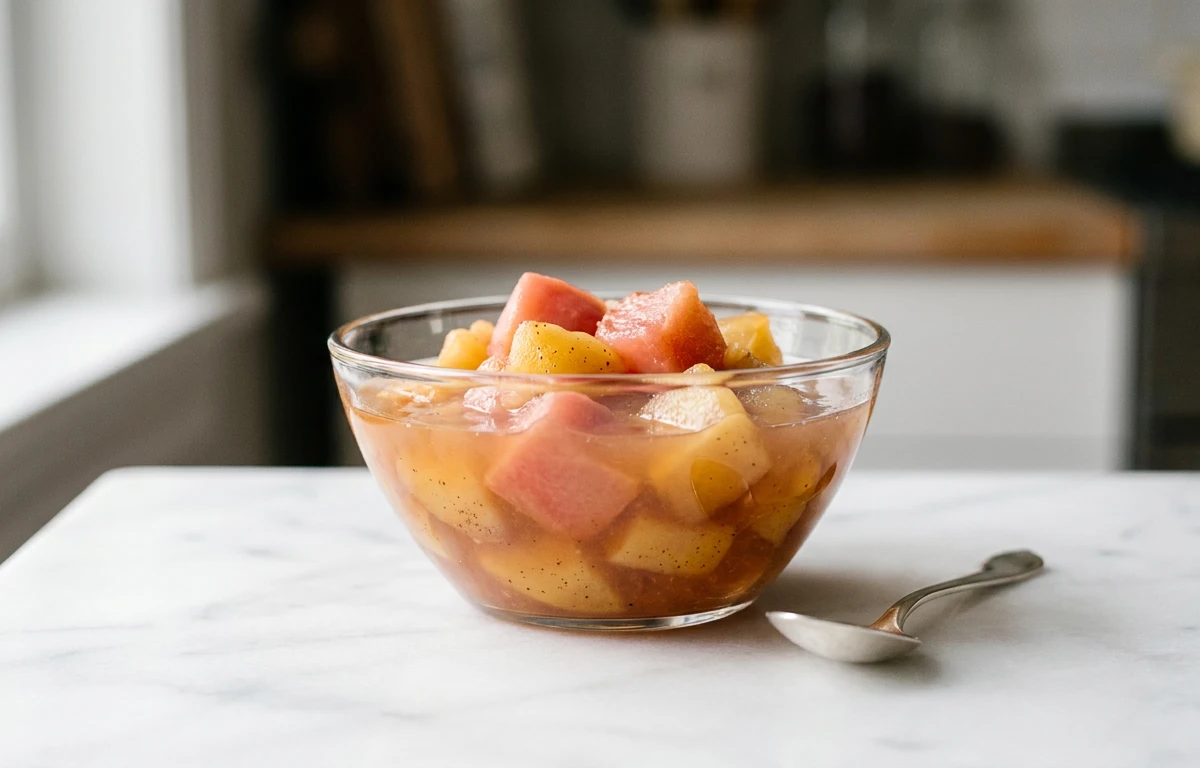
↑ Quince is a 'project fruit' — inedible raw, but magical when cooked.
The magical project fruit
Quince looks like a lumpy, oversized pear and smells incredible — like vanilla, citrus, and apple all at once. But biting into a raw one is a mistake you only make once. It's incredibly hard and tannic.
The real story of quince begins in the kitchen. When you slowly poach or bake it, something amazing happens. The tannins break down, the flesh softens to a spoonable texture, and it blushes from pale cream to a deep, beautiful rose or ruby red. It’s a transformation, and it’s why this ancient fruit has been prized for centuries in everything from fragrant jellies to savory meat stews.
Inedible raw, quince transforms when cooked into a tender, floral, low-calorie treat. The trick is to prepare it yourself so you control the sugar.
Quince nutrition facts
Most of the time, you'll eat quince cooked. The numbers below are for about 100 grams of the raw fruit (about one medium quince), which is where all our recipes start. The cooking method doesn't change the core nutrition much, but added sugar will dramatically alter the calorie and carb counts.
For a fruit, that's a decent hit of Vitamin C. But the real nutritional star is the fiber. Quince is famously rich in pectin, a type of soluble fiber that forms a gel. It's why quince makes such fantastic jelly, and it's also great for digestive health and feeling full.
Quince's glycemic index
There's no official, published glycemic index for quince. But we can make a very educated guess. Given its high fiber content, astringency, and relatively modest carbohydrate count, plain cooked quince would have a low GI, likely similar to or even lower than an apple (GI ≈ 36).
The problem isn't the quince; it's the company it keeps. Traditional quince paste (membrillo) and quince jelly are often more than 50% sugar by weight. In those forms, the GI will be high. But if you poach or roast the fruit with little to no added sugar, it remains a very blood-sugar-friendly food.
GLYCEMIC INDEX · QUINCE vs COMMON FOODS
Plain quince sits in the low-GI band
Quince (plain, cooked)
estimated
LOW
Apple
whole fruit
LOW
Pineapple
whole fruit
MEDIUM
White Bread
refined
HIGH
SCALE 0–90
04590
How to cook quince right
Forget complex recipes. The best way to enjoy quince is to cook it simply, letting its unique flavor shine without burying it in sugar.
01
Peel, core, and slice.
Use a sturdy peeler and knife. The core is woody and tough, so cut around it. Drop the slices into acidulated water (water with a squeeze of lemon) to stop them browning.
02
Poach it gently.
Place the slices in a pan, cover with water, and add aromatics like a cinnamon stick, a star anise, or a vanilla bean. Simmer gently for 45-90 minutes until tender and rosy. Add a tiny bit of sweetener at the end, only if needed.
03
Roast it.
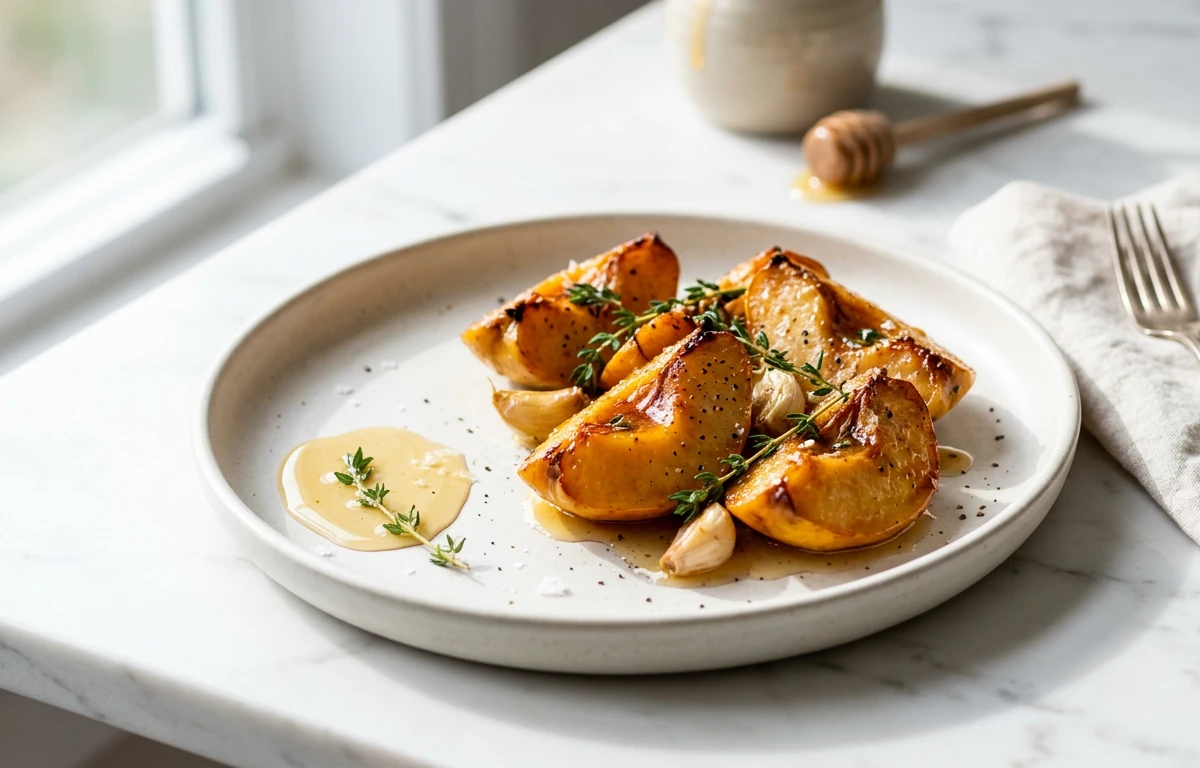
Toss slices with a tiny bit of coconut oil or butter and a sprinkle of cinnamon. Roast at 375°F (190°C) for 30-40 minutes until tender. This works beautifully alongside a pork roast.
04
Grate it (carefully).
A little raw grated quince can be added to apple or pear pies and crumbles. It adds a floral note and its high pectin content helps the filling set.
What quince is good for
01
Excellent for gut health
Quince is packed with pectin, a soluble fiber that acts as a prebiotic (food for good gut bacteria) and helps promote regularity and fullness.
1.9 g
fiber / 100g
02
A surprising vitamin C boost
A single medium quince provides about 17% of your daily vitamin C, which is crucial for immune function and skin health.
17%
vit C DV
03
Rich in antioxidants
Beyond vitamins, quince contains flavonoids like quercetin and kaempferol which help fight oxidative stress and inflammation in the body.
Low
inflammation
04
Supports weight management
At only 57 calories per 100g and with filling fiber, plain cooked quince is a fantastic, low-energy-density food to include in meals.
57
calories
What to pair quince with
The floral, slightly tart flavor of cooked quince pairs beautifully with both sweet and savory foods. The key is to add protein or fat to make it a balanced meal or snack.
Who should eat quince?
Three healthy quince recipes
Here are three simple ways to cook quince that celebrate its flavor without overloading on sugar.
Want interesting fruits worked into a balanced week?
Our meal planner can incorporate unique ingredients like quince into a healthy eating plan, balancing them with protein and fiber for steady energy. We do the planning so you can do the cooking.
Build my weekly plan →SOURCES & REFERENCES · 3
One more thing
Eating well is rarely about willpower. It’s about having a short list of dinners you actually want to eat. Pick two from this list. Make them next week. The rest will follow.
If you want these on autopilot, our weekly meal planner can drop the picks above into your calendar with one click and build a single grocery list from the merged ingredients.
FREQUENTLY ASKED QUESTIONS
Frequently asked questions
Can you eat quince raw?
It's not recommended. Raw quince is extremely hard, woody, and astringent (that furry, mouth-puckering feeling). Cooking is necessary to make it palatable and bring out its wonderful flavor and aroma.
Is quince good for people with diabetes?
Plain, cooked quince is a great choice. It's low in calories and high in fiber, with a low glycemic index. However, you must be very careful with traditional quince products like jam, jelly, or membrillo (paste), which are loaded with sugar and are not diabetes-friendly.
What does quince taste like?
It's a unique flavor! Think of a cross between a firm apple and a pear, but with a much more intense, perfumed, floral aroma. It has a pleasant tartness that balances its fruity notes.
Why does quince turn red when it's cooked?
It's a bit of food science magic! Quince contains compounds called anthocyanin precursors. During slow, prolonged cooking, these colorless compounds react with heat and tannins in the fruit to form red-pigmented anthocyanins, giving cooked quince its beautiful rosy hue.
METHODOLOGY
How this article was created
Built using verified nutrition databases, culinary research, and traditional cooking knowledge — every claim is cross-referenced against the sources listed in the article.
· USDA data· Culinary research· Quality reviewed
Read our methodology →TRANSPARENCY
About this content
Articles are curated using trusted food databases (USDA FoodData Central, IFCT), culinary literature, and dietary guidelines, then structured by our editorial team for clarity, accuracy, and usefulness.
· Verified data sources· Culinary research· Quality reviewed
Read our editorial policy →RELATED RECIPES
Cook from this article
EXPLORE OUR MEALS
Meals that fit this article

AMERICAN · 1677 CAL
Almonds with Sliced Apple + supplement + iron

MEDITERRANEAN · 809 CAL
Greek Yogurt with Berries Almonds and Granola + supplement + iron

GENERAL_HEALTHY · 705 CAL
Banana with Peanut Butter Pregnancy + supplement + iron
MODERN · 982 CAL
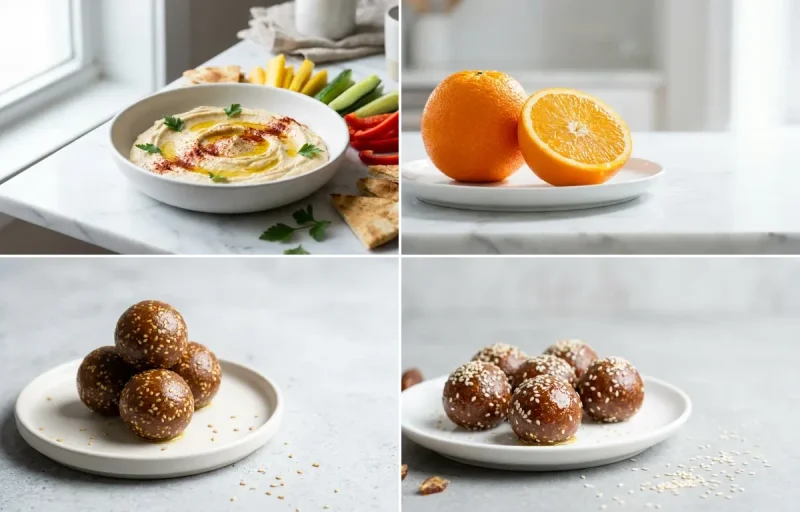
Hummus with Crudits and Pita with Fresh Orange Snack + supplement + iron
TAGGED
KEEP READING