Let's be honest, beetroot can be a bit divisive. That deep, earthy sweetness isn't for everyone, and the crime-scene stains it leaves on your kitchen counter are legendary. But nutritionally? It's a quiet superstar. It's packed with dietary nitrates, which are fantastic for blood pressure and exercise, it's low in calories, and its glycemic index is more moderate than you might think. The key is to look past the pickled stuff in jars and embrace the fresh, whole root.
↑ Fresh beetroot is earthy, sweet, and nutritionally dense.
The earthy powerhouse
Beetroot is a root vegetable best known for two things: its stunning magenta colour and its unique, earthy flavour. It's one of those vegetables that people either love or... don't. But beyond the taste, it's gained a serious reputation in sports nutrition and heart health circles for one very specific reason: dietary nitrates. Your body converts these nitrates into nitric oxide, a molecule that helps relax and widen blood vessels. This improves blood flow, which has knock-on effects for everything from blood pressure to athletic stamina. It's a pretty neat trick for a humble root.
IN ONE LINE
Beetroot is low-calorie, a source of fiber, and a standout source of dietary nitrates, which support blood pressure and exercise performance.
Beetroot nutrition facts
Here’s the nutritional breakdown for a 100-gram serving of cooked beetroot — that's about two small beets.
For just 43 calories, you get a decent hit of fiber and a very impressive 20% of your daily folate, a B-vitamin crucial for cell health. But again, the real story isn't just in the standard nutrition label; it's in the compounds that don't show up there, like nitrates and betalains.
The deal with nitrates
When you eat beetroot, your body converts its dietary nitrates into nitric oxide. Think of nitric oxide as a key that unlocks your blood vessels, allowing them to relax and widen. This is called vasodilation. Better blood flow means your heart doesn't have to work as hard to pump blood, which can help lower blood pressure. For athletes, it means more oxygen and nutrients can get to working muscles, potentially improving endurance and performance. It's the main reason you see so many runners and cyclists drinking beetroot juice before a race.
Be prepared for the 'Beeturia' effect — seeing a pink or red tinge in your urine or stools after eating beets. It's completely harmless!
Beetroot's glycemic index
Glycemic index (GI) ranks how fast a food raises blood sugar. Anything under 55 is low, 56-69 is medium, and 70+ is high. Cooked beetroot has a GI of about 64, which puts it in the medium category. This might sound high, but it's important to consider glycemic load (GL), which accounts for the actual amount of carbs in a serving. Because beetroot isn't very carb-dense, its glycemic load is only about 6, which is very low. So, while it's not as low-GI as something like broccoli, a normal portion is unlikely to cause a major blood sugar spike, especially if you eat it as part of a meal.
GLYCEMIC INDEX · BEETROOT vs COMMON FOODS
Beetroot sits in the medium-GI band
Apple
whole fruit
LOW
Pineapple
whole fruit
MEDIUM
Beetroot (cooked)
root vegetable
MEDIUM
Watermelon
whole fruit
HIGH
White bread
refined
HIGH
SCALE 0–90
04590
How to eat it right
Getting the most out of beetroot is easy. A few simple approaches preserve its nutrients and balance its earthy flavour.
01
Roast, don't just boil.
Roasting concentrates beetroot's natural sweetness and gives it a tender, delicious texture. Just wrap in foil and bake until tender.
02
Grate it raw.
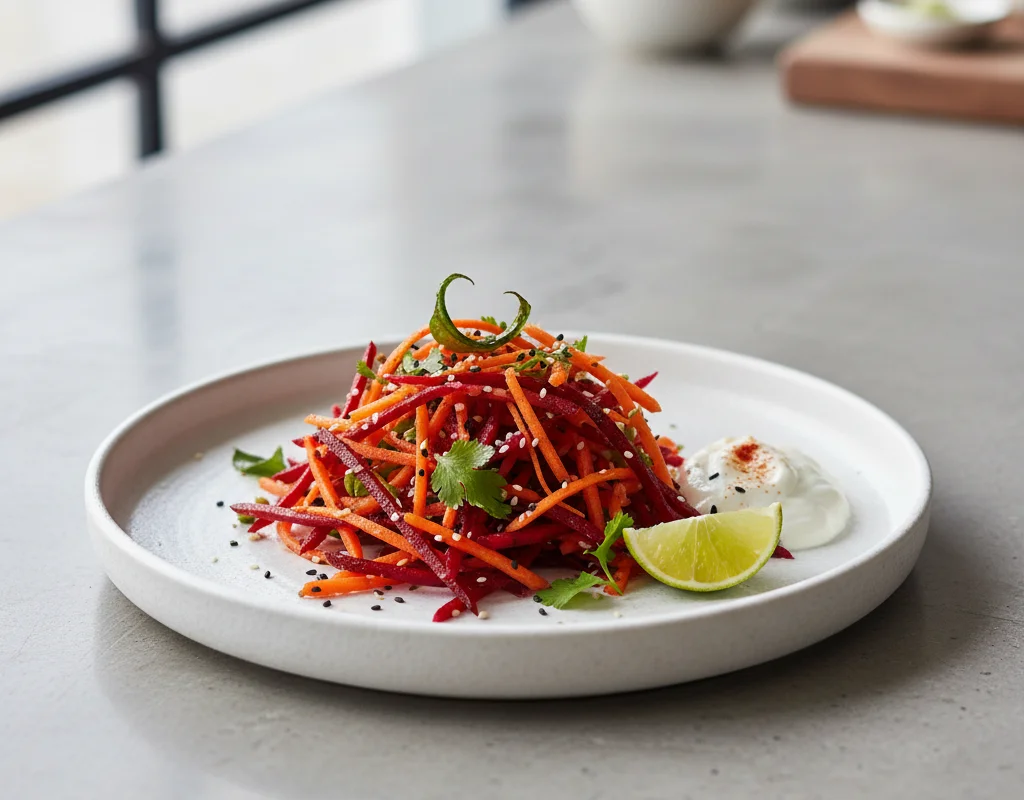
For a lower GI option and maximum crunch, peel a fresh beet and grate it into salads or slaws. It's surprisingly refreshing.
03
Pair it with fat or acid.
A creamy cheese (like goat cheese or feta), a handful of nuts, or a sharp vinaigrette beautifully balances beetroot's earthiness.
04
Don't toss the greens!
Beet greens are edible and incredibly nutritious, similar to Swiss chard. Sauté them with garlic and olive oil.
05
Go easy on the juice.
Beetroot juice is a concentrated source of nitrates but also sugar, without the fiber. Great for a pre-workout shot, but eat the whole beet for daily nutrition.
What beetroot is good for
01
Supporting healthy blood pressure
This is beetroot's claim to fame. The dietary nitrates help relax blood vessels, which can contribute to lower blood pressure readings.
High
in nitrates
02
Boosting exercise stamina
By improving blood flow and oxygen delivery to muscles, the nitrates in beetroot may help you exercise for longer before feeling fatigued.
+
endurance
03
Fighting inflammation
The vibrant color comes from pigments called betalains, which have been shown to have potent anti-inflammatory and antioxidant properties.
Rich
in betalains
04
A great source of folate
Just one 100g serving provides a fifth of your daily folate, essential for DNA synthesis and preventing certain birth defects.
20%
Folate DV
05
Supporting gut health
With nearly 3 grams of fiber per serving, beetroot feeds beneficial gut bacteria and promotes digestive regularity.
2.8 g
fiber
What to pair beetroot with
Beetroot's earthy sweetness is a fantastic team player. Pairing it with the right ingredients can elevate it from a simple vegetable to something special.
Eat freely — or be mindful?
Three ways to eat it
Move beyond boiled beets with these simple recipes that make the most of their unique flavour and colour.
Want to get more healthy vegetables like beetroot into your week?
Our meal planner makes it easy. Get balanced, delicious recipes tailored to you, with all the planning and grocery lists handled.
Build my weekly plan →SOURCES & REFERENCES · 3
One more thing
Eating well is rarely about willpower. It’s about having a short list of dinners you actually want to eat. Pick two from this list. Make them next week. The rest will follow.
If you want these on autopilot, our weekly meal planner can drop the picks above into your calendar with one click and build a single grocery list from the merged ingredients.
FREQUENTLY ASKED QUESTIONS
Frequently asked questions
Is beetroot good for lowering blood pressure?
Yes, it's one of its most well-researched benefits. Beetroot is rich in dietary nitrates, which the body converts to nitric oxide. This molecule helps relax and widen blood vessels, promoting better blood flow and potentially lowering blood pressure.
Is beetroot high in sugar?
It tastes sweet, but it's not particularly high in sugar. A 100g serving has about 9.6 grams of total carbs, which includes fiber. The overall sugar content is modest and, when eaten whole, is balanced by its fiber and other nutrients.
Can I eat beetroot raw?
Absolutely. Raw beetroot is delicious, with a crisp texture and a slightly milder earthy flavor. It's fantastic when grated into salads and slaws. Plus, eating it raw preserves more of its heat-sensitive nutrients like vitamin C.
Why does beetroot turn my pee pink?
This is a harmless and common phenomenon called 'beeturia'. The red pigments in beetroot (betalains) are not broken down by everyone's digestive system, so they can pass through and color urine and stools. It's not a cause for concern!
Are pickled beets as healthy as fresh ones?
Not quite. While pickled beets still contain nitrates and fiber, the pickling process often involves adding significant amounts of salt and sometimes sugar. Fresh or roasted beetroot is a better choice for everyday health.

ABOUT THE AUTHOR
Shreya Chatterjee
NUTRITION WRITER
Shreya is a nutrition writer and the voice behind The Nutrition Pen, where she turns evidence-based nutrition into simple, repeatable eating habits. Her writing focuses on practical food guidance — what to actually put on the plate — for readers who want to eat well without the noise.
Meet the editorial team →METHODOLOGY
How this article was created
Built using verified nutrition databases, culinary research, and traditional cooking knowledge — every claim is cross-referenced against the sources listed in the article.
· USDA data· Culinary research· Quality reviewed
Read our methodology →TRANSPARENCY
About this content
Articles are curated using trusted food databases (USDA FoodData Central, IFCT), culinary literature, and dietary guidelines, then structured by our editorial team for clarity, accuracy, and usefulness.
· Verified data sources· Culinary research· Quality reviewed
Read our editorial policy →RELATED RECIPES
Cook from this article
EXPLORE OUR MEALS
Meals that fit this article

AMERICAN · 1677 CAL
Almonds with Sliced Apple + supplement + iron

MEDITERRANEAN · 809 CAL
Greek Yogurt with Berries Almonds and Granola + supplement + iron

GENERAL_HEALTHY · 705 CAL
Banana with Peanut Butter Pregnancy + supplement + iron

MODERN · 982 CAL
Hummus with Crudits and Pita with Fresh Orange Snack + supplement + iron
TAGGED
KEEP READING