It looks like something from another planet — a spiky, crimson sea urchin that fits in the palm of your hand. But crack open a rambutan and you'll find a sweet, translucent fruit that's a close cousin to lychee and longan. It's mostly a simple, hydrating pleasure: sweet, grape-like, and fun to eat. While it's not a nutritional powerhouse like a blueberry, it's a perfectly lovely whole food with a bit of vitamin C and a unique flavor that's wildly underrated in the West.
↑ Rambutan's 'hairy' exterior hides a sweet, translucent fruit similar to lychee.
The spiky lychee cousin
Let's be honest, you don't eat rambutan for a massive nutrient hit. You eat it because it's delightful. The name comes from the Malay word for 'hair,' and once you get past the strange exterior, the experience is all reward. The flesh is juicy, slightly chewy, and carries a sweet, floral flavor that's less perfumed than lychee and a bit creamier.
It's a simple, whole-food treat. Think of it less as a daily vitamin pill and more as nature's alternative to gummy sweets. It’s mostly water and carbohydrate, which makes it a great source of quick, natural energy.
IN ONE LINE
A sweet, hydrating fruit that's low in calories but also low in fiber. Think of it as a fun, whole-food treat to be enjoyed in moderation.
Rambutan nutrition facts
Here's the nutritional breakdown for a 100-gram serving of fresh rambutan, which is about 10 to 12 individual fruits.
As you can see, it's not a chart-topper. The numbers that stand out are the carbohydrates — nearly 21 grams — and the very low fiber, at less than a gram. This combination means its sugar is absorbed more quickly than from a high-fiber fruit like a raspberry. The vitamin C is present, but at 4.9mg, it's a fraction of what you'd get from an orange or a kiwi.
Rambutan's glycemic index
This is the big question, and the answer is: we don't officially know. Rambutan has not been formally tested to establish a precise glycemic index (GI) value. However, we can make an educated guess.
Given its high carbohydrate content, notable sweetness, and very low fiber, rambutan is likely to have a moderate GI, probably somewhere in the 50-65 range. This would be similar to other tropical fruits like lychee or mango, and higher than low-sugar, high-fiber berries. For anyone managing blood sugar, this means rambutan is a fruit to eat in small quantities, not by the bowlful.
GLYCEMIC INDEX · CONTEXT
How rambutan might compare on the GI scale
Cherries
low sugar, high fiber
LOW
Apple
moderate sugar, high fiber
LOW
Pineapple
sweet, moderate fiber
MEDIUM
Watermelon
sweet, low fiber
HIGH
SCALE 0–90
04590
The right way to eat one
Getting into a rambutan is half the fun. Here's how to do it without making a mess or hurting yourself.
01
Score the skin.
Don't try to peel it like an orange. Use a small paring knife to slice through the leathery, spiky skin around the equator, just deep enough to cut the rind.
02
Pop it open.
Once scored, squeeze gently and the top half of the skin should pop off, revealing the white fruit. You can then pull the fruit out of the remaining 'cup'.
03
Mind the seed.
The fruit clings to a single, woody seed in the center. Don't eat the seed — it's bitter and considered inedible. Just eat the flesh around it.
04
Stick to a serving.
It's incredibly easy to sit and eat 20 of these. A sensible portion is around 10-12 fruits (100g), which keeps the sugar in check.
05
Choose fresh over canned.
Canned rambutan is almost always packed in a sugary syrup, which sends the sugar content sky-high. Fresh is always the better choice.
What rambutan is good for
01
A Hydrating, Low-Calorie Snack
Rambutan is over 80% water, making it a refreshing and hydrating choice. At just 82 calories per 100g, it's a light option for satisfying a sweet craving.
82
cals / 100g
02
A Source of Quick, Natural Energy
The 21 grams of carbohydrate are mostly simple sugars, which your body can use quickly for energy. This makes a small handful a decent pre-workout snack.
21 g
carbs
03
A Modest Vitamin C Contribution
While not a superstar, a 100g serving provides a small boost of vitamin C, an important antioxidant for skin health and immune function.
~5%
Vit C DV
What to pair rambutan with
Because rambutan is sweet and low in fiber, fat, and protein, pairing it with other foods is a smart way to make it more balanced and satisfying.
Eat freely — or be mindful?
Three ways to use it
Beyond eating them straight from the skin, rambutan works beautifully in simple, fresh preparations.
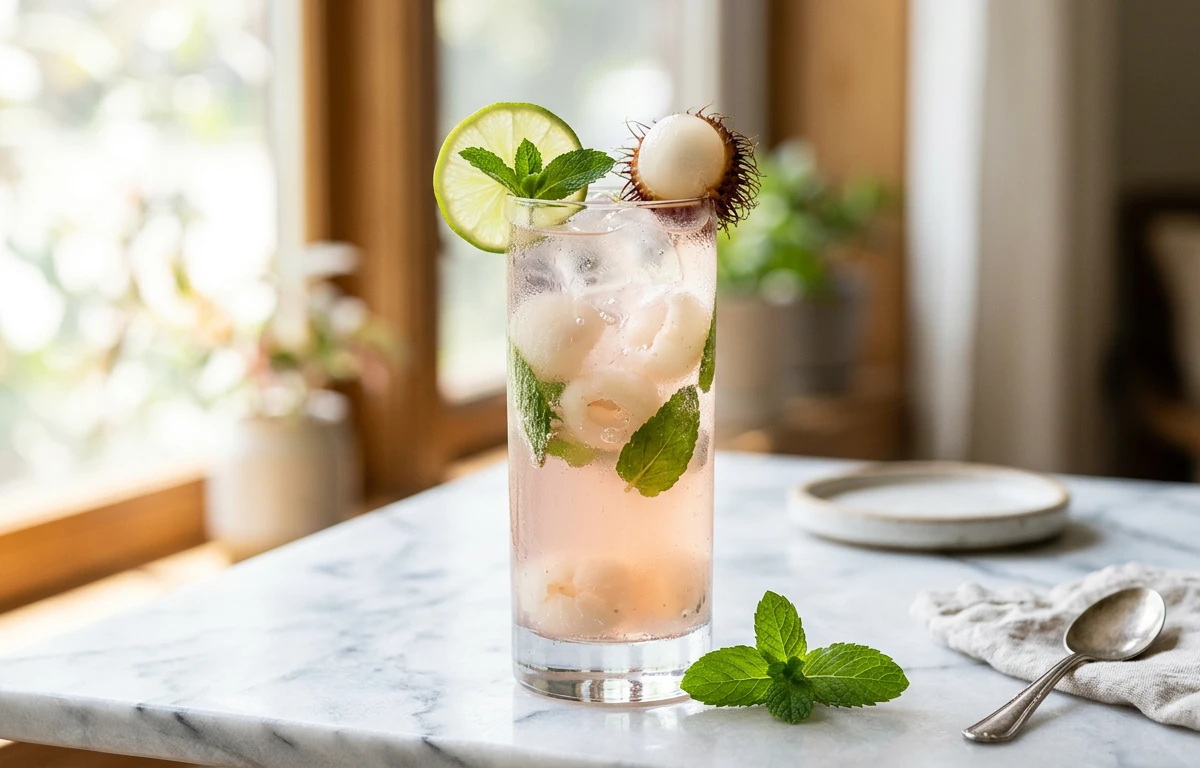
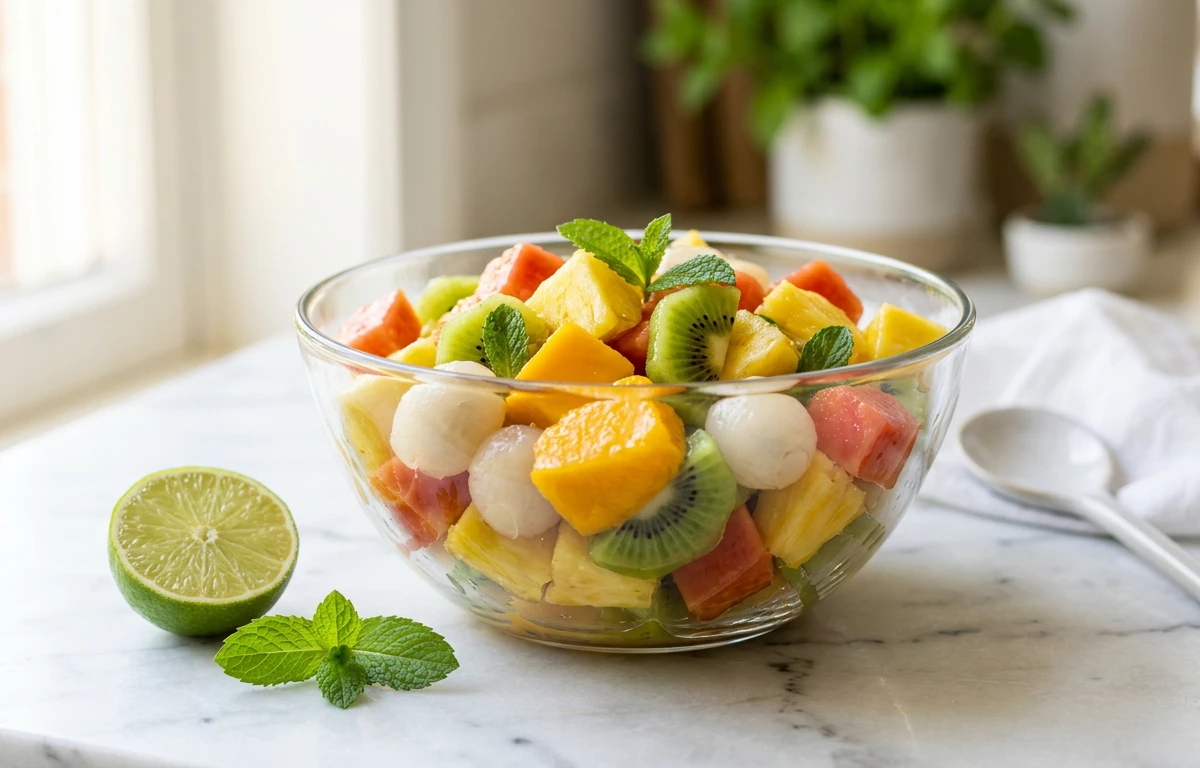
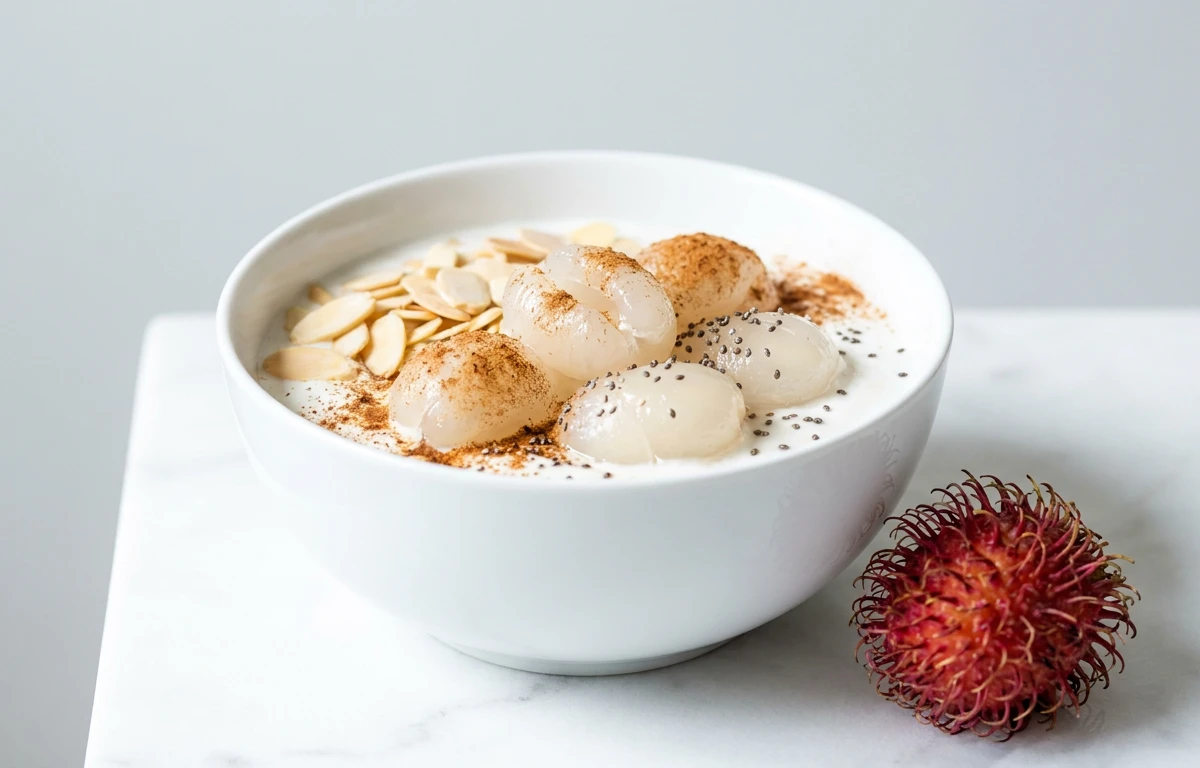
Want fruit worked into a balanced week — without the planning?
Our meal planner pairs fruit like rambutan with protein and fibre for steady energy, with portions and macros already calculated and a single grocery list at the end.
Build my weekly plan →SOURCES & REFERENCES · 3
One more thing
Eating well is rarely about willpower. It’s about having a short list of dinners you actually want to eat. Pick two from this list. Make them next week. The rest will follow.
If you want these on autopilot, our weekly meal planner can drop the picks above into your calendar with one click and build a single grocery list from the merged ingredients.
FREQUENTLY ASKED QUESTIONS
Frequently asked questions
Can people with diabetes eat rambutan?
With caution. Rambutan is sweet and low in fiber, which can cause blood sugar to rise. If you have diabetes, it's best to eat only a very small portion (a few fruits) and pair it with a source of protein or fat like nuts or yogurt to slow sugar absorption.
Is rambutan the same as lychee?
They are related but not the same. They belong to the same soapberry family. Lychee has bumpy red skin and a more crisp, floral flavor. Rambutan has a spiky, 'hairy' skin and the flesh is typically creamier and milder.
How many rambutans can I eat in a day?
A standard serving is about 100 grams, which is roughly 10-12 fruits. This provides about 82 calories and 21 grams of carbs. Given its low fiber content, it's best to stick to one serving per day.
Can you eat the rambutan seed?
No, the seed is considered inedible and should not be eaten. Some sources suggest it may have narcotic properties. Always eat the flesh around the seed and discard the seed itself.
METHODOLOGY
How this article was created
Built using verified nutrition databases, culinary research, and traditional cooking knowledge — every claim is cross-referenced against the sources listed in the article.
· USDA data· Culinary research· Quality reviewed
Read our methodology →TRANSPARENCY
About this content
Articles are curated using trusted food databases (USDA FoodData Central, IFCT), culinary literature, and dietary guidelines, then structured by our editorial team for clarity, accuracy, and usefulness.
· Verified data sources· Culinary research· Quality reviewed
Read our editorial policy →RELATED RECIPES
Cook from this article
EXPLORE OUR MEALS
Meals that fit this article
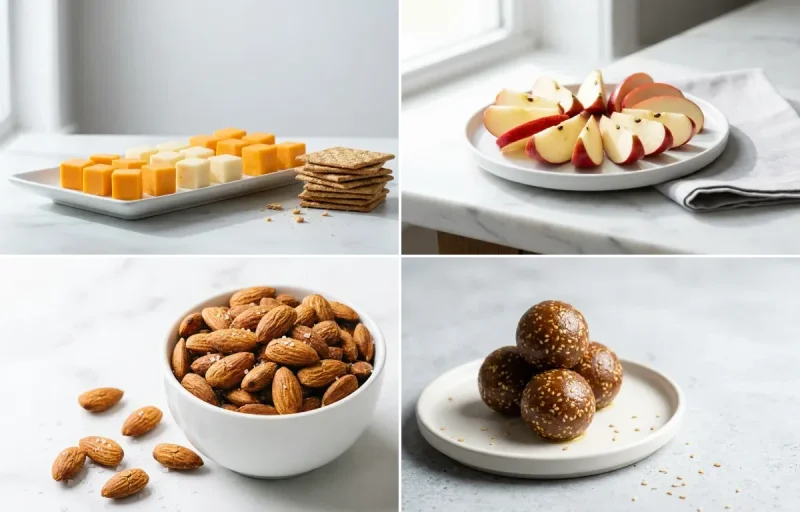
AMERICAN · 1677 CAL
Almonds with Sliced Apple + supplement + iron
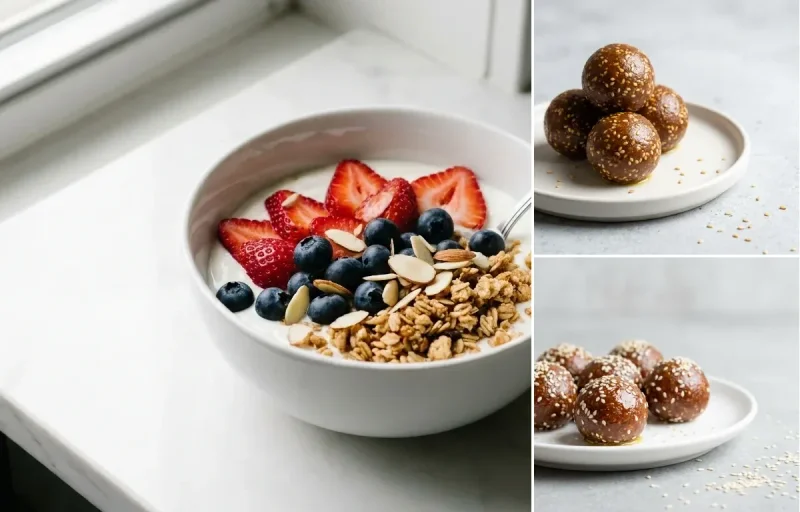
MEDITERRANEAN · 809 CAL
Greek Yogurt with Berries Almonds and Granola + supplement + iron

GENERAL_HEALTHY · 705 CAL
Banana with Peanut Butter Pregnancy + supplement + iron

MODERN · 982 CAL
Hummus with Crudits and Pita with Fresh Orange Snack + supplement + iron
TAGGED
KEEP READING