It's the starchy root you've probably seen but maybe never cooked. Colocasia, better known as taro, often gets lumped in with potatoes, but that's not the whole story. It's got a uniquely nutty, slightly sweet flavor, a satisfyingly dense texture, and a nutritional profile that's quietly impressive — especially its fiber content. The key to loving taro isn't just how you season it, but how you cook it. Get that right, and you've got a fantastic, filling carbohydrate on your hands.
↑ Taro must be cooked before eating to break down compounds that can irritate the throat.
A more interesting potato
Think of taro as a potato with a personality. It's a starchy tuber, yes, but it brings more to the table. When cooked, it has a dense, creamy, and slightly 'dry' texture that's incredible at soaking up sauces. The flavor is mild, nutty, and a little vanilla-like, which makes it versatile in both sweet and savory dishes across Asia, Africa, and the Pacific Islands.
But the most important thing to know about taro? You must cook it. Raw taro contains calcium oxalate crystals, which can cause serious irritation to your mouth and throat. Cooking, whether by boiling, steaming, or roasting, neutralizes them completely, leaving you with a delicious and surprisingly nutritious vegetable.
IN ONE LINE
Taro is a fiber-rich, starchy root vegetable with a medium glycemic index. It's more satisfying than a potato, but must be cooked thoroughly before eating.
Taro nutrition facts
Here's the nutritional breakdown for a 100-gram serving of cooked colocasia root, which is about 2/3 of a cup.
The standout number here is the fiber. At 4.1 grams per 100g, taro has significantly more fiber than a potato (which has about 2.2g). This is a big deal for fullness, gut health, and slowing down the absorption of all those carbohydrates. It's a starchy vegetable, for sure, but it's a slow-burning one.
Taro is high in potassium, a mineral crucial for managing blood pressure. However, this also means people with kidney disease (CKD) need to be mindful of their portion sizes.
Taro's glycemic index
The glycemic index (GI) of taro is a moving target. It really depends on how you prepare it. There isn't one single, universally agreed-upon number. However, most studies on boiled taro place its GI in the 'medium' range, typically in the mid-50s. This means it raises blood sugar more slowly than white bread or even boiled potatoes, but faster than non-starchy vegetables or fruits like apples.
The fiber content is taro's secret weapon here, acting as a brake on how quickly the carbs are digested. This makes it a more stable source of energy than many other starches.
GLYCEMIC INDEX · TARO vs COMMON FOODS
Taro sits in the medium-GI band
Apple
whole fruit
LOW
Taro (boiled)
root vegetable
MEDIUM
Pineapple
whole fruit
MEDIUM
White bread
refined
HIGH
SCALE 0–90
04590
How to cook it right
Getting the best from taro is all about the preparation. Follow these rules for a safe, delicious, and healthy result.
01
Always, always cook it.
This is non-negotiable. Boiling, steaming, or roasting for at least 15-20 minutes until fork-tender is essential to destroy the calcium oxalate that makes raw taro toxic.
02
Peel carefully.
The skin can also cause irritation for some people. It's best to wear gloves while peeling taro under running water to be safe.
03
Boil or steam for the lowest GI.
These cooking methods keep the GI in the medium range. Frying (like taro chips) will increase the calorie and fat density significantly.
04
Cool it down for a gut boost.
Letting cooked taro cool allows some of its starches to convert into 'resistant starch,' which acts like a prebiotic fiber that feeds good gut bacteria.
05
Pair with protein and healthy fat.
Like any carbohydrate, pairing taro with a protein source (like fish or beans) or healthy fat (like coconut milk or avocado) makes for a more balanced, satisfying meal.
What taro is good for
01
Excellent for digestive health
With over 4 grams of fiber per 100g, taro supports regular digestion. When cooled, it also provides resistant starch, a prebiotic that benefits your gut microbiome.
4.1 g
fiber
02
Sustained energy release
Its medium GI and high fiber content mean the carbohydrates in taro are released steadily, helping to avoid the sharp blood sugar spikes associated with refined starches.
Medium
glycemic index
03
Supports heart health
Taro is naturally free of fat and cholesterol, and it's a good source of potassium, which is vital for regulating blood pressure by counteracting sodium.
0.2 g
fat
04
Great for weight management
The combination of fiber and dense starch makes taro incredibly filling. A small portion can keep you feeling full for longer, helping to manage overall calorie intake.
116
calories
What to pair taro with
Taro's mild, nutty flavor makes it a great canvas. Pair it with bold flavors and some protein or fat to create a complete meal.
Is taro right for you?
Three ways to eat it
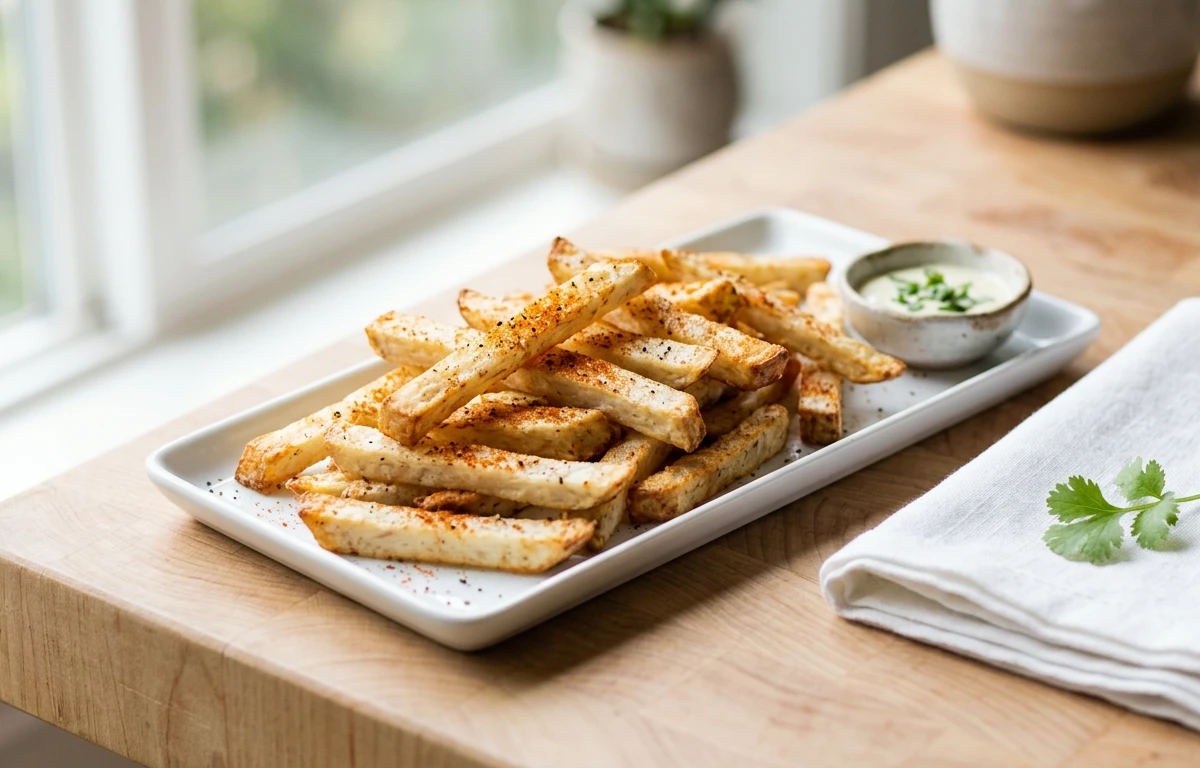
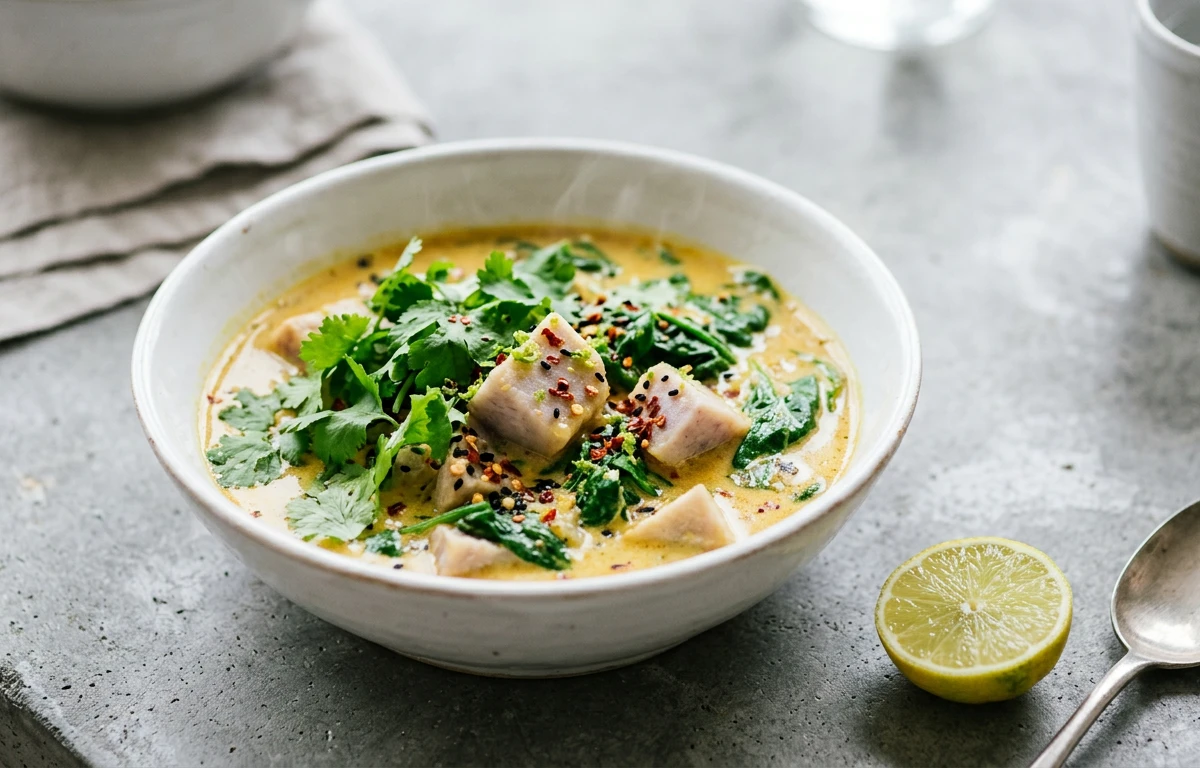
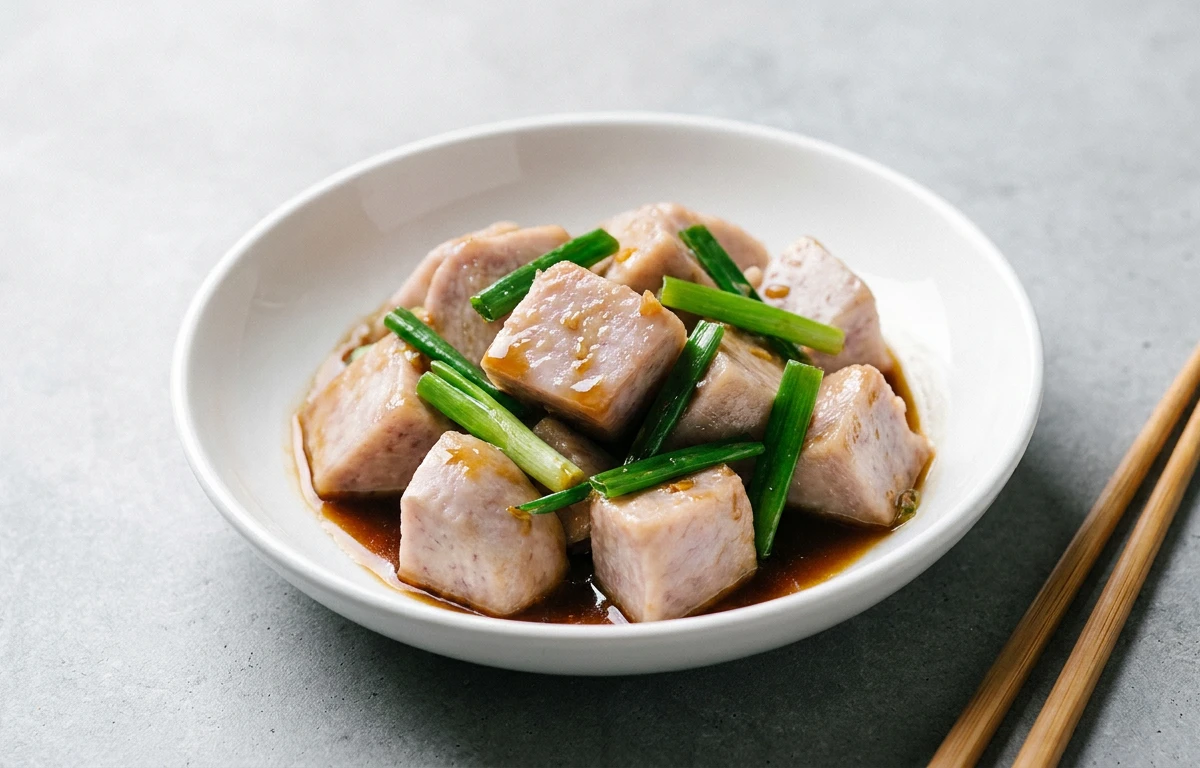
Ready to try it? Here are three simple ways to cook taro that highlight its unique texture and flavor.
Tired of the same old starches?
Our meal planner can help you incorporate interesting, healthy carbs like taro into a balanced week of eating. Get custom plans that manage portions and pair foods perfectly for steady energy.
Build my weekly plan →SOURCES & REFERENCES · 3
One more thing
Eating well is rarely about willpower. It’s about having a short list of dinners you actually want to eat. Pick two from this list. Make them next week. The rest will follow.
If you want these on autopilot, our weekly meal planner can drop the picks above into your calendar with one click and build a single grocery list from the merged ingredients.
FREQUENTLY ASKED QUESTIONS
Frequently asked questions
Can people with diabetes eat taro?
In moderation, yes. Taro has a medium glycemic index and high fiber, which is better than high-GI starches like white potato. However, it's still high in carbohydrates, so portion control is essential. Pair it with protein and fat, and fit it into your overall carb budget.
Is taro healthier than a potato?
They have different strengths. Taro has significantly more fiber per serving, which is great for fullness and blood sugar control. Potatoes, especially with the skin on, can be higher in vitamin C. Taro is a great, nutrient-dense alternative if you're looking for more fiber.
Can you eat taro raw?
No, never. Raw taro contains calcium oxalate crystals, which are toxic and cause a painful, itchy sensation in the mouth and throat. It must be cooked thoroughly (boiled, steamed, roasted) to be safe to eat.
What does taro taste like?
Cooked taro has a unique flavor that's hard to pin down. It's mildly sweet and nutty, with a starchy texture that's denser and 'drier' than a potato. Some people compare the subtle sweetness to vanilla.

ABOUT THE AUTHOR
Shreya Chatterjee
NUTRITION WRITER
Shreya is a nutrition writer and the voice behind The Nutrition Pen, where she turns evidence-based nutrition into simple, repeatable eating habits. Her writing focuses on practical food guidance — what to actually put on the plate — for readers who want to eat well without the noise.
Meet the editorial team →METHODOLOGY
How this article was created
Built using verified nutrition databases, culinary research, and traditional cooking knowledge — every claim is cross-referenced against the sources listed in the article.
· USDA data· Culinary research· Quality reviewed
Read our methodology →TRANSPARENCY
About this content
Articles are curated using trusted food databases (USDA FoodData Central, IFCT), culinary literature, and dietary guidelines, then structured by our editorial team for clarity, accuracy, and usefulness.
· Verified data sources· Culinary research· Quality reviewed
Read our editorial policy →RELATED RECIPES
Cook from this article
EXPLORE OUR MEALS
Meals that fit this article

AMERICAN · 1677 CAL
Almonds with Sliced Apple + supplement + iron

MEDITERRANEAN · 809 CAL
Greek Yogurt with Berries Almonds and Granola + supplement + iron

GENERAL_HEALTHY · 705 CAL
Banana with Peanut Butter Pregnancy + supplement + iron

MODERN · 982 CAL
Hummus with Crudits and Pita with Fresh Orange Snack + supplement + iron
TAGGED
KEEP READING