Let's be honest, the freezer aisle gets a bad rap. But nestled in there, usually in a humble plastic bag, is one of the most nutritionally impressive and convenient foods you can buy: the frozen raspberry. They're picked and frozen at peak ripeness, locking in a tart flavour and a startling amount of fibre and vitamin C. Forget the idea that fresh is always best. For year-round access to a low-sugar, high-fibre fruit, frozen raspberries are a total win.
↑ Frozen raspberries are a convenient, low-sugar fruit available year-round.
The freezer-aisle hero
Raspberries feel like a luxury, a delicate summer fruit that costs a fortune and lasts about five minutes in the fridge. But frozen raspberries are a different story. They're an affordable, year-round staple that, nutritionally, are every bit as good as fresh—and sometimes even better, since they're frozen right after being picked.
They're not overly sweet. Instead, you get a bright, tart flavour and a texture that breaks down perfectly into smoothies, yogurt, or warm oatmeal. They're mostly water and fibre, which makes them incredibly filling for how few calories they contain.
IN ONE LINE
Frozen raspberries are a low-sugar, high-fibre bargain, packing antioxidants and vitamin C with a minimal blood sugar impact. They are one of the healthiest and most convenient fruits you can keep on hand.
Frozen raspberry nutrition facts
Here's the nutritional profile for a 100-gram serving of unsweetened frozen raspberries, which is about ¾ of a cup.
The standout number here is the fibre. At 4.3 grams per 100g, raspberries are one of the highest-fibre fruits you can eat. That fibre is what makes them so filling and so good for your gut and blood sugar. You also get a very useful amount of Vitamin C for very few calories.
Raspberry's Glycemic Index: A Gentle Giant
While raspberries don't have an official, universally agreed-upon glycemic index number, they are widely recognized as a very low-GI food. Why? Because the formula for blood sugar impact is simple: it's about how much sugar there is and how fast you can absorb it. Raspberries have very little sugar to begin with, and the sugar they do have is tangled up in a huge amount of soluble fibre. This combination slows digestion to a crawl, leading to a very gentle, minimal rise in blood sugar.
Compared to other common fruits, raspberries have far less impact than even other 'low-GI' choices.
GLYCEMIC INDEX · COMMON FOODS FOR CONTEXT
Raspberries Sit at the Very Low End of the GI Scale
Cherries
whole fruit
LOW
Apple
whole fruit
LOW
Pineapple
whole fruit
MEDIUM
White bread
refined
HIGH
SCALE 0–90
04590
How to get the most from them
It's hard to go wrong with raspberries, but a few simple habits make them even better for you.
01
Use them straight from frozen.
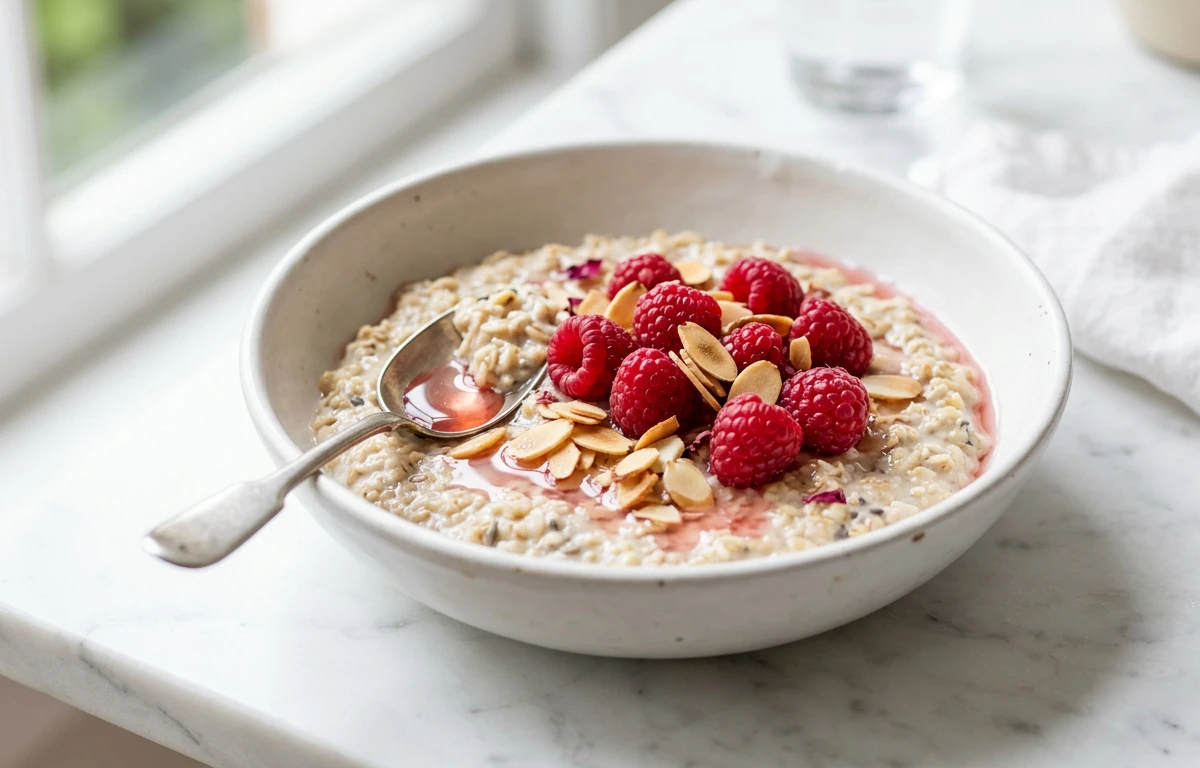
Don't bother thawing them for smoothies, oatmeal, or chia pudding. They'll chill your smoothie perfectly and thaw into warm oats, releasing their juices.
02
Let them be the sweetener.
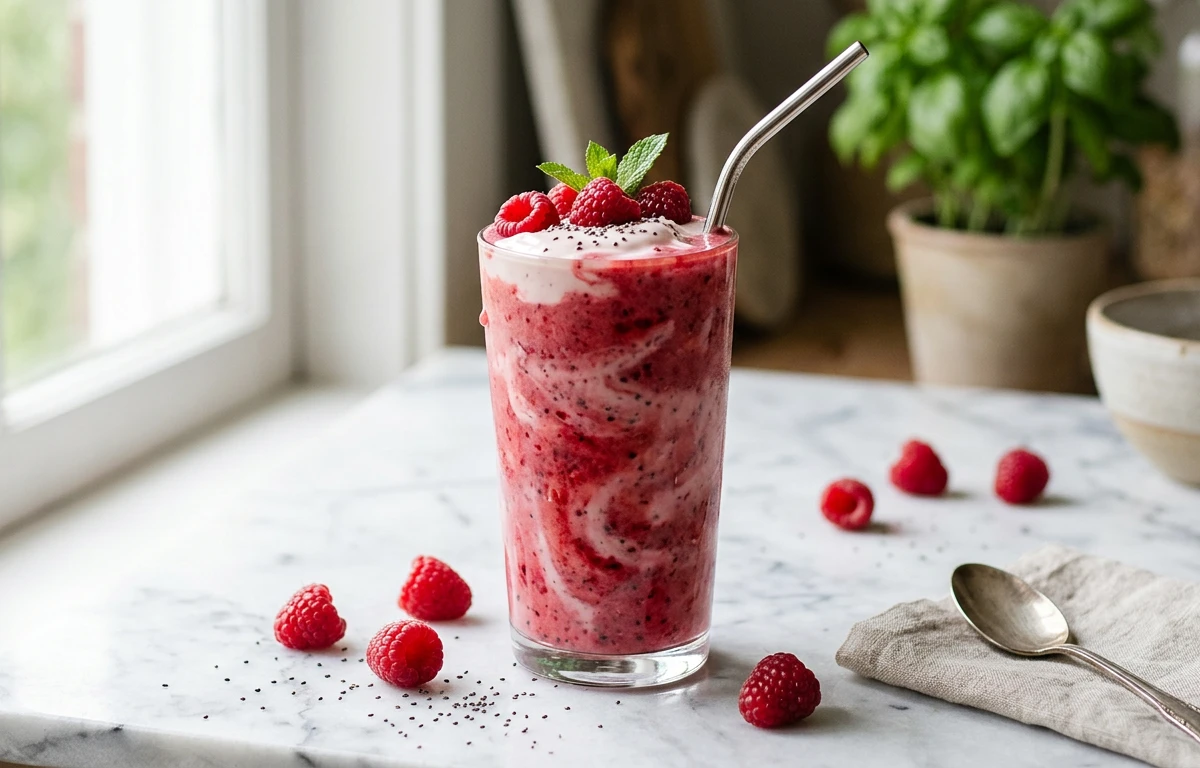
Their natural tartness is refreshing. Try to avoid adding sugar. Instead, pair them with creamy things like yogurt or banana to balance the flavour.
03
Pair with protein or fat.
This is always a good rule for fruit. Adding nuts, seeds, or yogurt makes for a more complete, satisfying snack and further slows any sugar absorption.
04
Think beyond smoothies.
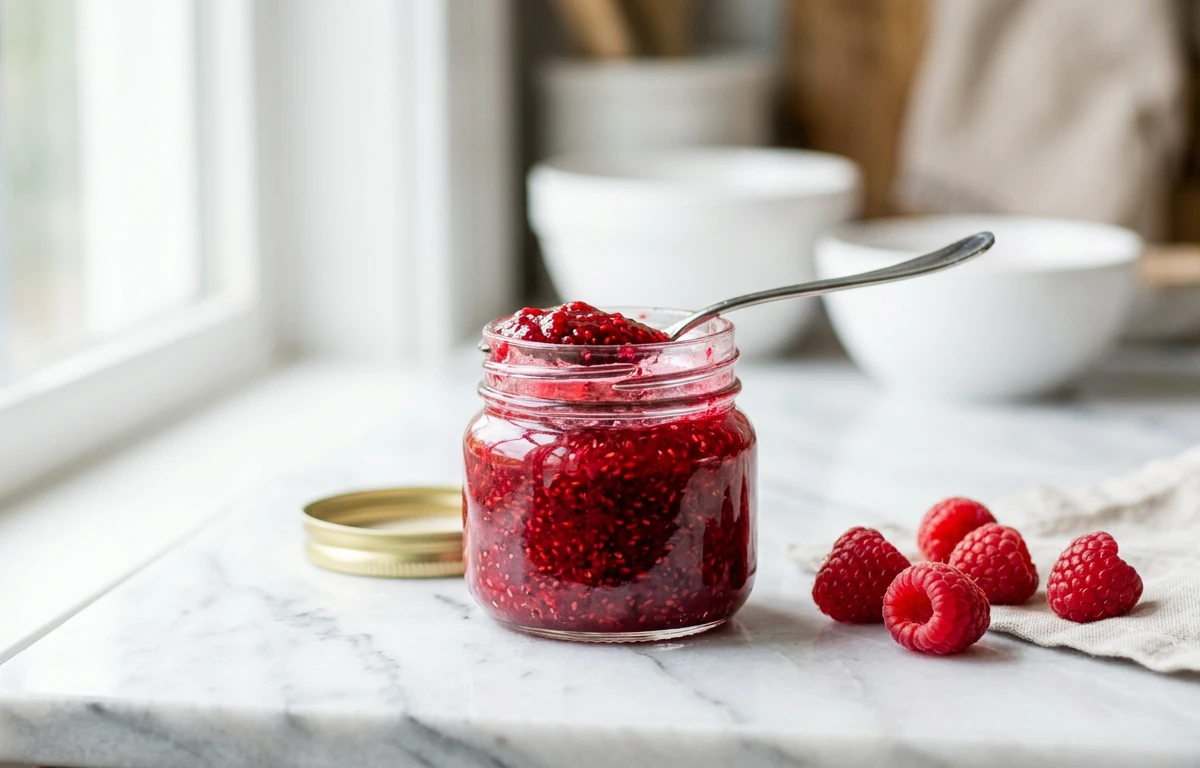
Mash them with a fork to create a quick, no-sugar-added jam for toast or yogurt. Stir them whole into muffin batter. Or just eat a small bowl of them, partially thawed.
What raspberries are good for
01
Outstanding for Gut Health
With over 4 grams of fibre per serving, raspberries are fantastic for feeding beneficial gut bacteria and promoting regularity.
4.3 g
fiber
02
Supporting Stable Blood Sugar
The combination of extremely high fibre and low sugar content makes raspberries one of the best fruits for anyone managing blood sugar levels.
Very Low
GI
03
Fighting Inflammation
Their deep red color comes from anthocyanins, powerful antioxidants that have been shown to have anti-inflammatory effects in the body.
Rich in
antioxidants
04
Low-Calorie Weight Management
They provide significant volume and filling fibre for very few calories, making them a smart addition to any weight-loss or maintenance plan.
56
calories
What to pair raspberries with
Raspberries' tartness cuts through richness beautifully. Pairing them with fat, protein, or more fibre creates a balanced meal or snack.
A fit for almost everyone
Three easy ideas
Here are three simple ways to use that bag of frozen raspberries sitting in your freezer.
Want more smart, simple food choices worked into your week?
The CraftMyMeals meal planner builds balanced weeks of eating, using high-fibre foods like raspberries to keep you full and your energy steady. All with a single, simple grocery list.
Build my weekly plan →SOURCES & REFERENCES · 3
One more thing
Eating well is rarely about willpower. It’s about having a short list of dinners you actually want to eat. Pick two from this list. Make them next week. The rest will follow.
If you want these on autopilot, our weekly meal planner can drop the picks above into your calendar with one click and build a single grocery list from the merged ingredients.
FREQUENTLY ASKED QUESTIONS
Frequently asked questions
Are frozen raspberries as healthy as fresh?
Yes. They are nutritionally almost identical. Because they are frozen at peak ripeness, frozen raspberries can sometimes retain more vitamin C than fresh ones that have been transported and sat on a shelf for days.
Are raspberries good for people with diabetes?
They are an excellent choice. Their high fibre content and very low sugar mean they have a minimal effect on blood sugar levels, making them one of the most diabetes-friendly fruits available.
How many raspberries can I eat on a keto diet?
Raspberries are one of the better fruit options for keto. A 100g (¾ cup) serving has about 8.3g of net carbs. A smaller portion, like ¼ to ½ cup, can easily fit into most daily keto carb budgets.
Will raspberries make me gain weight?
It's highly unlikely. Raspberries are very low in calories and high in fibre and water, which helps you feel full. They are an ideal food for weight management, not weight gain.
METHODOLOGY
How this article was created
Built using verified nutrition databases, culinary research, and traditional cooking knowledge — every claim is cross-referenced against the sources listed in the article.
· USDA data· Culinary research· Quality reviewed
Read our methodology →TRANSPARENCY
About this content
Articles are curated using trusted food databases (USDA FoodData Central, IFCT), culinary literature, and dietary guidelines, then structured by our editorial team for clarity, accuracy, and usefulness.
· Verified data sources· Culinary research· Quality reviewed
Read our editorial policy →RELATED RECIPES
Cook from this article
EXPLORE OUR MEALS
Meals that fit this article

AMERICAN · 1677 CAL
Almonds with Sliced Apple + supplement + iron

MEDITERRANEAN · 809 CAL
Greek Yogurt with Berries Almonds and Granola + supplement + iron

GENERAL_HEALTHY · 705 CAL
Banana with Peanut Butter Pregnancy + supplement + iron

MODERN · 982 CAL
Hummus with Crudits and Pita with Fresh Orange Snack + supplement + iron
TAGGED
KEEP READING