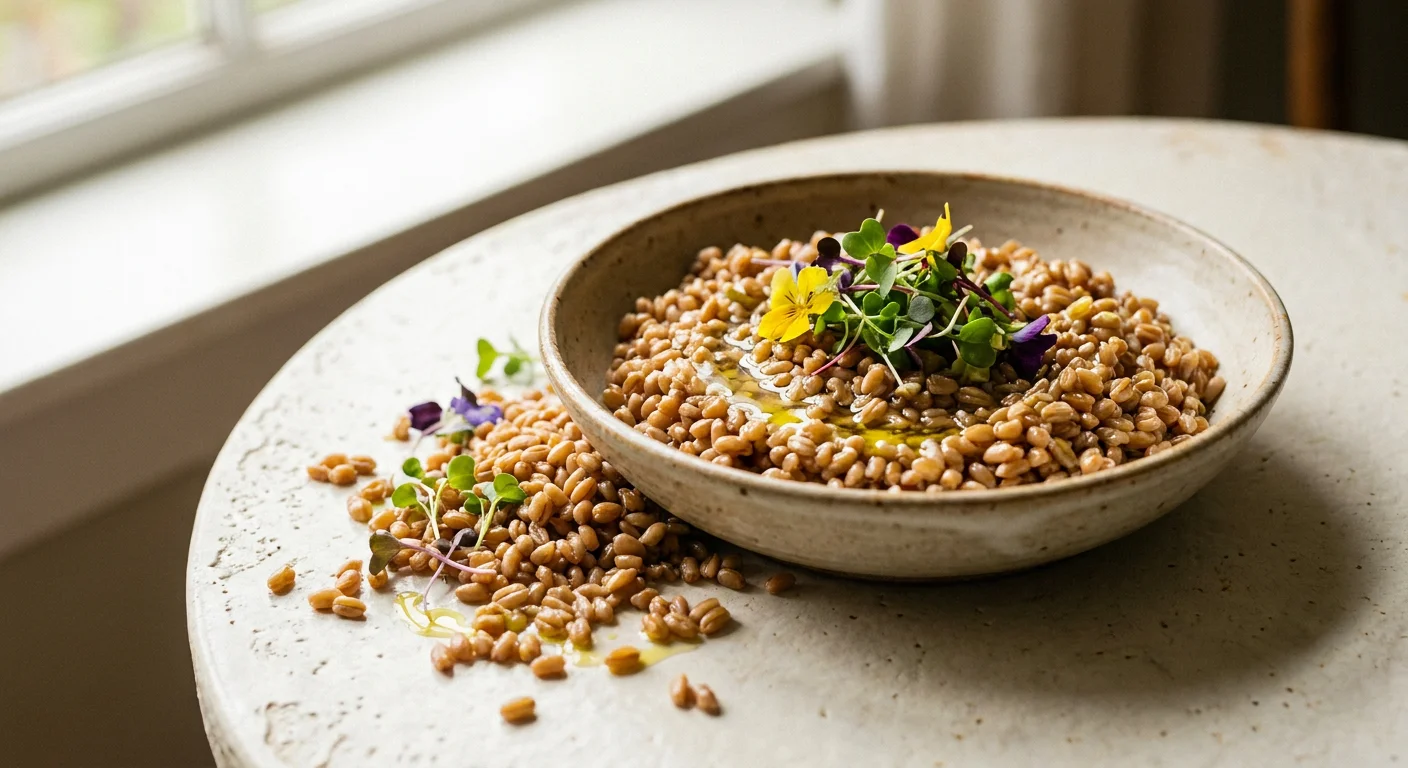
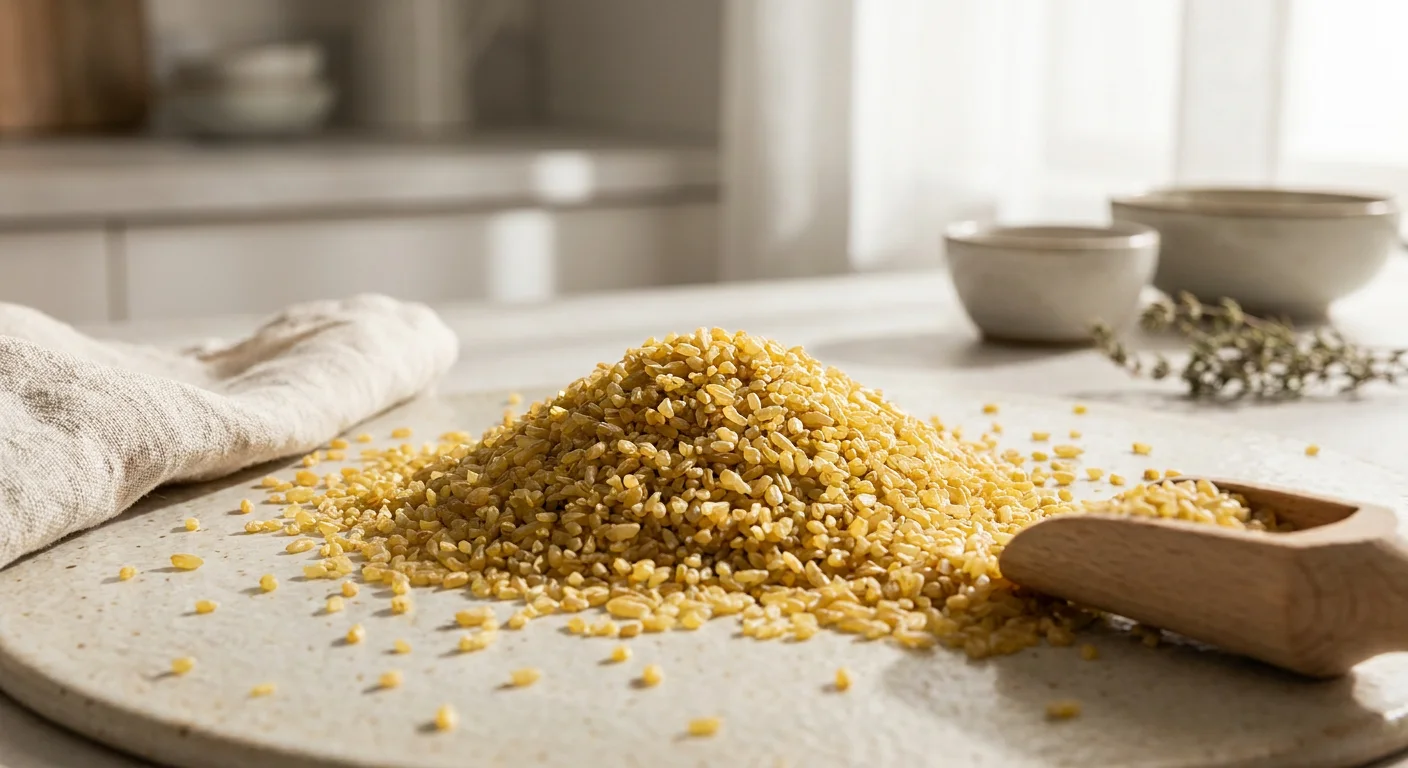
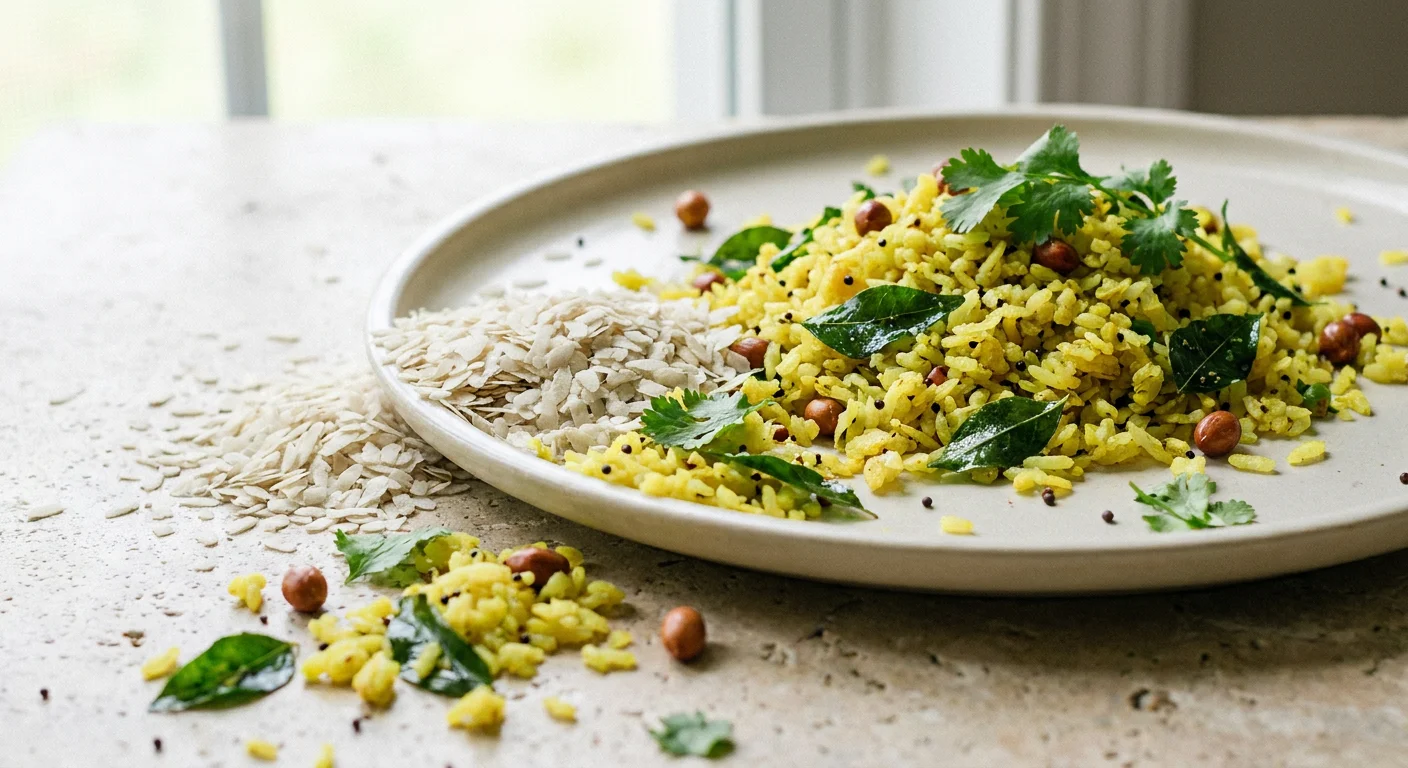
Walk down a grain aisle and you'll find fine rava, also known as semolina or suji. It's the stuff of comforting upma, fluffy idlis, and sweet sheera. It's easy to lump it in with other refined white grains, but that's not the whole story. For a refined grain, it packs a surprising amount of protein — more than you'll find in most rice or standard wheat flours. This changes how it behaves in your body. It's not a low-carb food by any stretch, but understanding its medium-glycemic nature and protein punch is the key to using it well.
↑ Fine rava's sandy texture comes from milled durum wheat.
The surprisingly high-protein grain
Fine rava is simply a granular, milled form of durum wheat. Durum is a hard, high-protein variety of wheat, which is why rava's protein content is so impressive. Think of it as the midpoint between a whole grain and a fine white flour. It's lost some of the bran and germ during milling, but it hangs onto more protein and structure than, say, all-purpose flour.
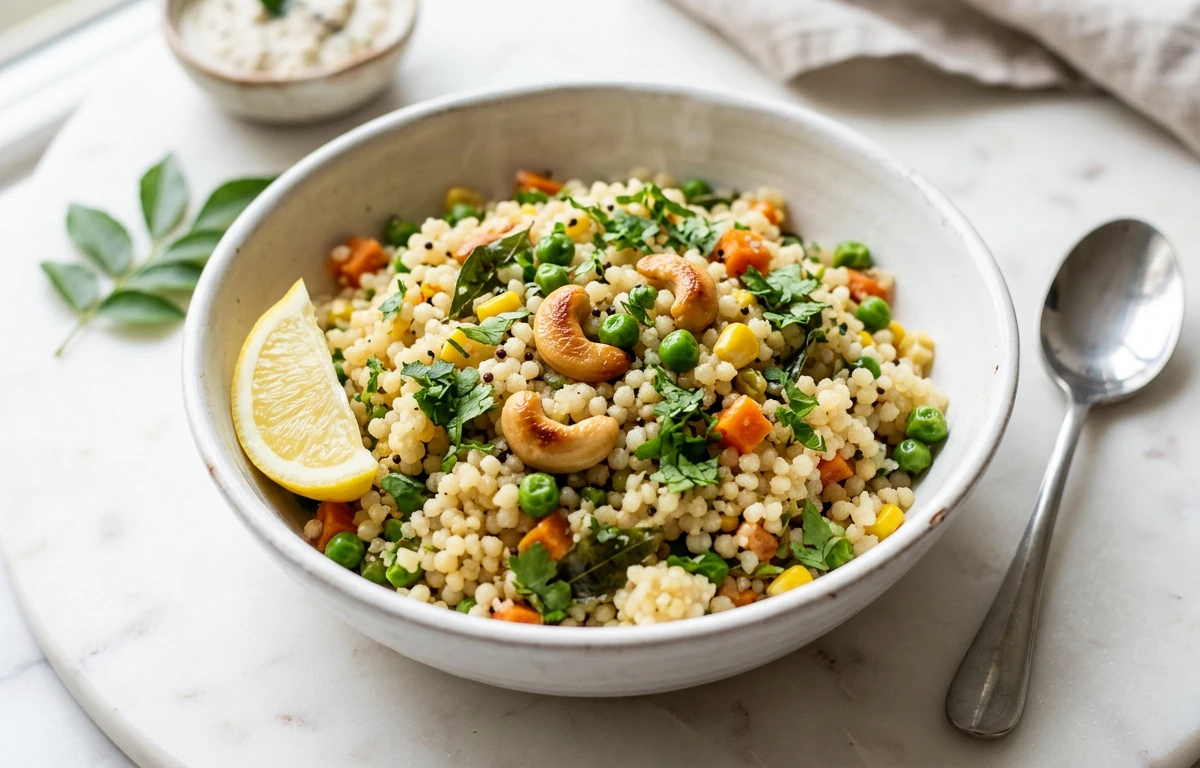
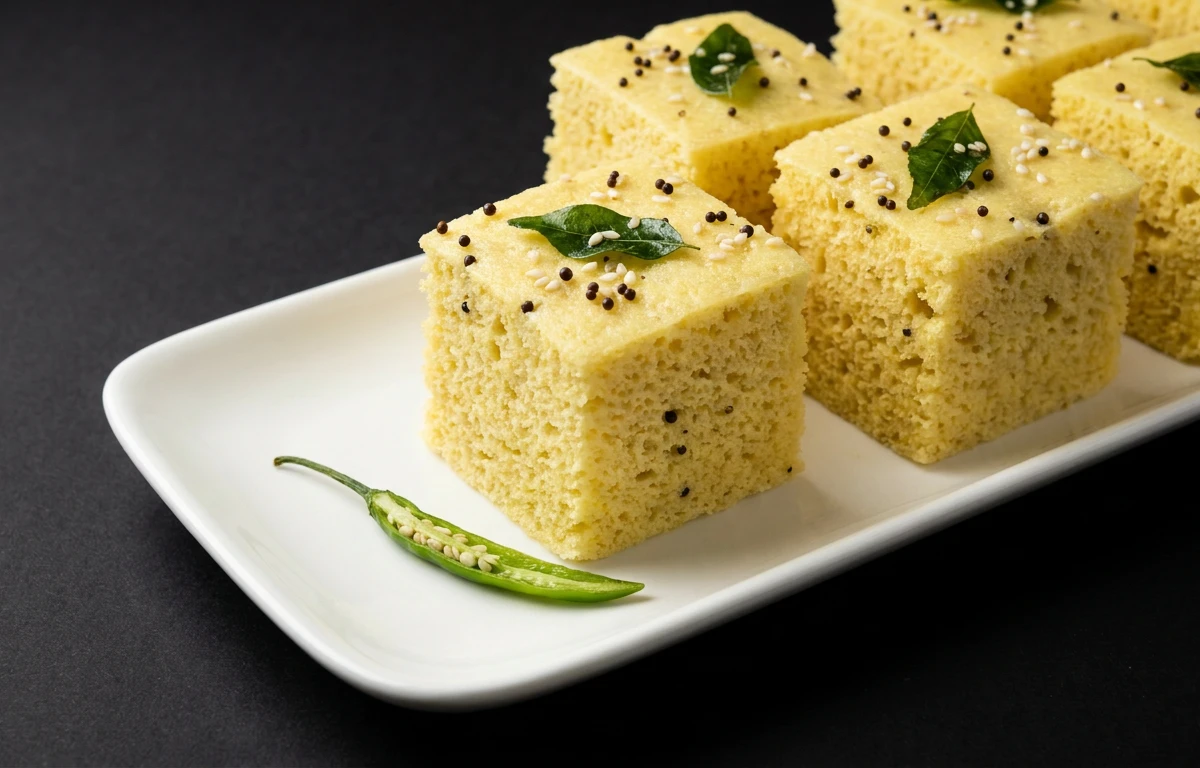
Its sandy, couscous-like texture is perfect for creating soft porridges like upma or for providing the body in steamed cakes like dhokla. The key takeaway is simple: it's a carb, yes, but a sturdier, more satisfying one than you might think.
IN ONE LINE
With 12.7 grams of protein per 100g, rava is a more satisfying carb than white rice or bread. The trick is to pair it with fibre and fat to manage its medium-GI energy release.
Fine rava nutrition facts
Here’s the nutritional profile for 100 grams of dry, unenriched fine rava. Keep in mind that cooking it with water will increase the volume and weight, so a typical serving of cooked rava will be much larger than 100 grams but contain fewer calories.
The two numbers that jump out are the protein—a massive 12.7 grams—and the carbohydrate. This combination is what makes rava interesting. Many enriched versions are also fantastic sources of selenium, a critical antioxidant mineral for thyroid health, and B-vitamins like folate and thiamin, which are essential for converting food into energy.
Rava's glycemic index: The middle ground
Glycemic index (GI) tells us how quickly a food raises blood sugar. Below 55 is low, 56-69 is medium, and 70+ is high. Rava doesn't have a single, official GI number because it depends on how it's cooked, but most tests place it firmly in the medium category, often somewhere in the 60s.
This means it provides a quicker energy release than slow-burn carbs like oats or barley, but it's significantly gentler on blood sugar than white bread, cornflakes, or plain sugar. That high protein content does a lot of the work, acting as a natural brake on how fast the carbs are digested.
GLYCEMIC INDEX · RAVA vs COMMON FOODS
Fine Rava's Glycemic Index in Context
Apple
whole fruit
LOW
Mango
whole fruit
LOW
Fine Rava
cooked
MEDIUM
White bread
refined
HIGH
Cornflakes
refined
HIGH
SCALE 0–90
04590
The smart way to eat it
Because it’s calorie-dense and a medium-GI carb, how you eat rava makes all the difference. A few simple rules turn it from a potential blood-sugar spiker into a balanced meal.
01
Pair it with fibre and fat.
This is the golden rule. Cooking rava with vegetables (like in upma) or serving it with lentils, nuts, or yogurt slows down carb absorption significantly.
02
Mind the portion size.
100g of dry rava is 360 calories. A sensible serving is more like 40-50g dry (about 1/4 cup), which cooks up into a satisfying portion.
03
Go savoury over sweet.
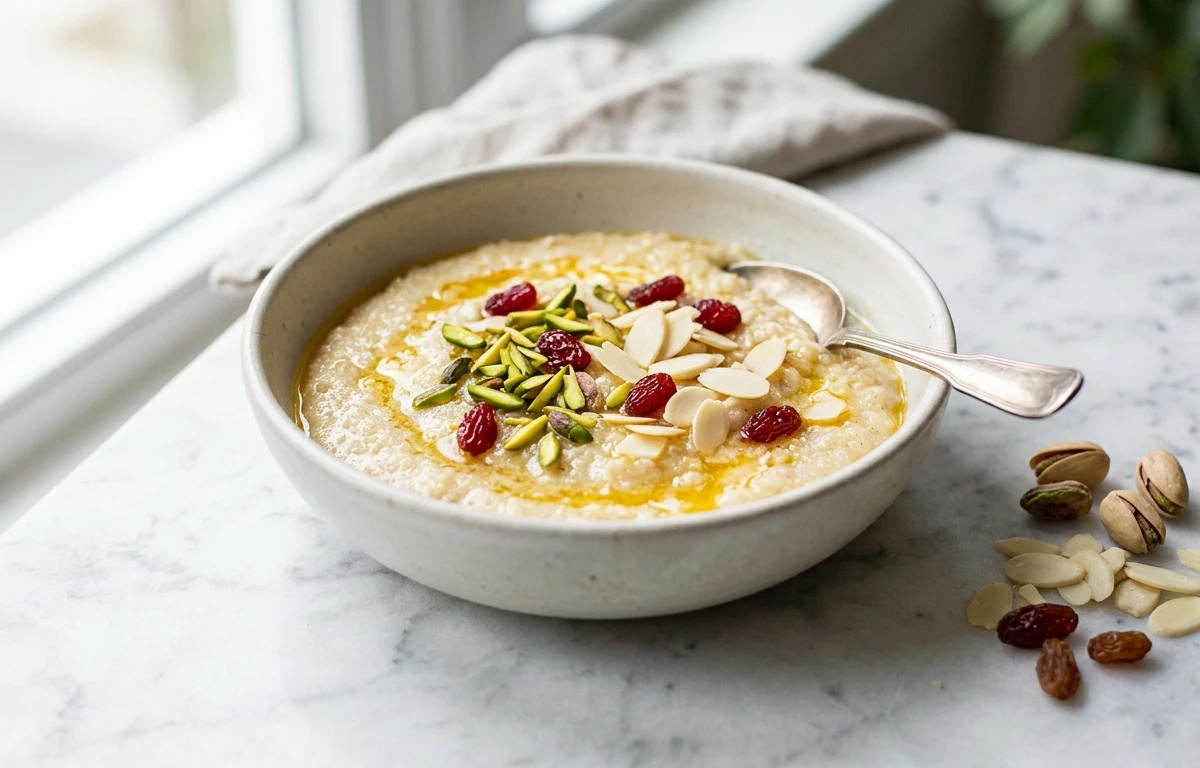
A vegetable upma is a balanced meal. A sweet sheera or halwa, loaded with sugar and ghee, is a dessert. Treat it as such.
04
Don't eat it 'naked'.
Eating a bowl of plain, watery rava porridge is a recipe for an energy crash. It needs friends! Add seeds, a swirl of ghee, or some spiced dal.
What rava is good for
01
A real protein punch
At nearly 13g of protein per 100g, rava helps build and repair tissues and provides a feeling of fullness that other refined grains lack.
12.7g
protein
02
Sustained energy release
Its medium GI and high protein content provide energy that's more stable than high-GI carbs, making it great for fueling an active day.
Medium
GI
03
Rich in selenium
Enriched semolina is a fantastic source of selenium, a powerful antioxidant that supports your immune system and thyroid function.
72%
selenium DV
04
Supports iron levels
Semolina is a good source of non-heme (plant-based) iron. Enriched versions are even better, helping to prevent iron-deficiency anemia.
Good
iron source
What to pair rava with
Think of rava as a blank canvas. Its job is to provide a satisfying, energy-giving base. Your job is to add colour, texture, and balancing nutrients.
Eat freely — or be mindful?
Three ways to use it
Here are three simple, balanced ways to incorporate fine rava into your week.
Want smart carbs worked into a balanced week — without the planning?
Our meal planner pairs grains like rava with protein and fibre for steady energy, with portions and macros already calculated and a single grocery list at the end.
Build my weekly plan →SOURCES & REFERENCES · 3
One more thing
Eating well is rarely about willpower. It’s about having a short list of dinners you actually want to eat. Pick two from this list. Make them next week. The rest will follow.
If you want these on autopilot, our weekly meal planner can drop the picks above into your calendar with one click and build a single grocery list from the merged ingredients.
FREQUENTLY ASKED QUESTIONS
Frequently asked questions
Is fine rava good for people with diabetes?
It can be, but with caution. Rava has a medium glycemic index, which is better than high-GI foods like white bread. However, it's very high in carbohydrates. The key is strict portion control and always pairing it with fibre (vegetables) and protein/fat (nuts, yogurt, dal) to slow sugar absorption.
Is rava good for weight loss?
It's a mixed bag. Rava is calorie-dense, so large portions can easily hinder weight loss. On the other hand, its high protein content can increase satiety and keep you fuller for longer compared to other refined carbs. If you're trying to lose weight, measure your portion (e.g., 1/4 cup dry) and load it up with vegetables.
Are rava, suji, and semolina the same thing?
Yes, they are all names for the same product: milled durum wheat. 'Semolina' is the English/Italian term, while 'rava' and 'suji' are commonly used in India. There can be slight variations in coarseness ('fine rava' vs. 'coarse rava'), but the base ingredient is the same.
Is rava healthier than white rice?
In many ways, yes. Rava is significantly higher in protein and has a bit more fibre than white rice. It also typically has a lower glycemic index. For the same number of calories, rava generally offers a better nutritional package, especially regarding satiety.

ABOUT THE AUTHOR
Shreya Chatterjee
NUTRITION WRITER
Shreya is a nutrition writer and the voice behind The Nutrition Pen, where she turns evidence-based nutrition into simple, repeatable eating habits. Her writing focuses on practical food guidance — what to actually put on the plate — for readers who want to eat well without the noise.
Meet the editorial team →METHODOLOGY
How this article was created
Built using verified nutrition databases, culinary research, and traditional cooking knowledge — every claim is cross-referenced against the sources listed in the article.
· USDA data· Culinary research· Quality reviewed
Read our methodology →TRANSPARENCY
About this content
Articles are curated using trusted food databases (USDA FoodData Central, IFCT), culinary literature, and dietary guidelines, then structured by our editorial team for clarity, accuracy, and usefulness.
· Verified data sources· Culinary research· Quality reviewed
Read our editorial policy →RELATED RECIPES
Cook from this article
EXPLORE OUR MEALS
Meals that fit this article

AMERICAN · 1677 CAL
Almonds with Sliced Apple + supplement + iron

MEDITERRANEAN · 809 CAL
Greek Yogurt with Berries Almonds and Granola + supplement + iron

GENERAL_HEALTHY · 705 CAL
Banana with Peanut Butter Pregnancy + supplement + iron
MODERN · 982 CAL
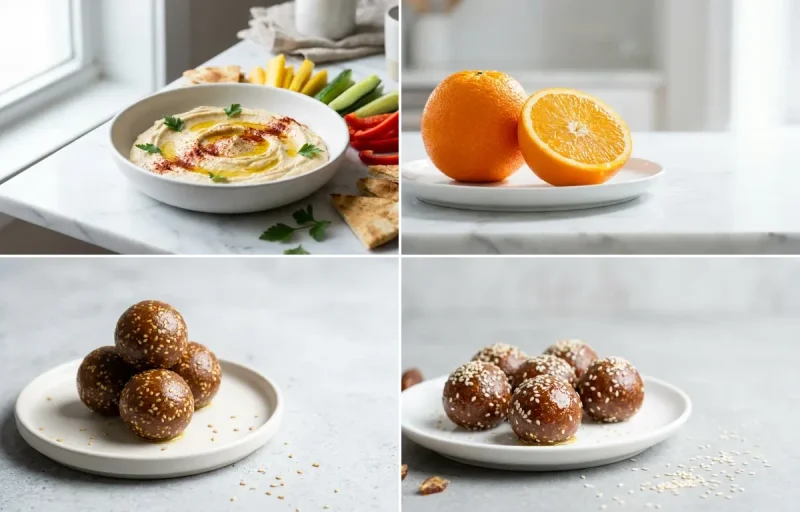
Hummus with Crudits and Pita with Fresh Orange Snack + supplement + iron
TAGGED
KEEP READING