Let's clear something up: bulgur isn't quinoa, and it's not couscous. It's its own thing, and it's wildly underrated. Think of it as fast-food from the whole-grain world. It's simply cracked wheat that's been parboiled, so it cooks in minutes, but it packs an astonishing amount of fiber and a decent hit of protein. It has a nutty, satisfying chew that refined grains just can't match. For anyone looking to get more fiber into their week without spending hours by the stove, bulgur is the answer.
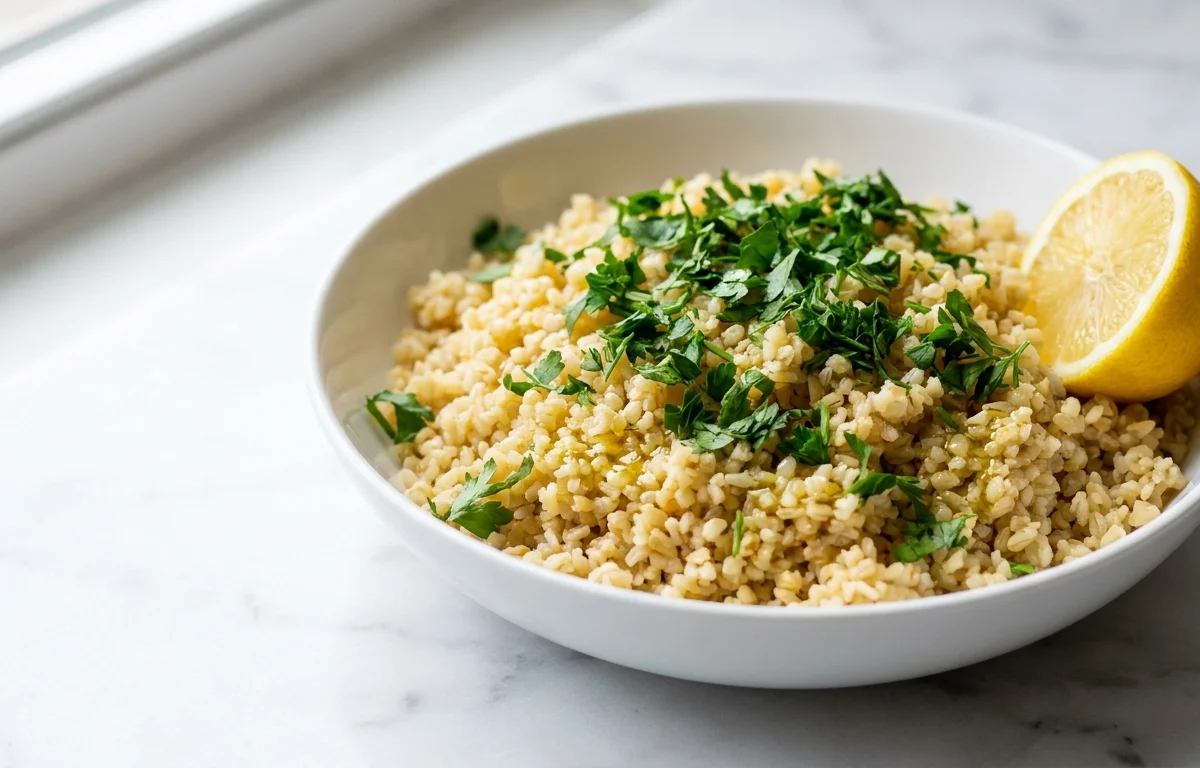
↑ Bulgur is a parboiled, cracked whole wheat — which is why it cooks so quickly.
The 15-minute whole grain
Bulgur's magic trick is that it delivers all the nutritional clout of a whole grain but cooks with the speed of something refined, like white pasta. Because the whole wheat kernels are steamed and baked before being cracked, a lot of the cooking is already done for you. All you have to do is rehydrate it.
This makes it one of the most convenient ways to hit your fiber goals. It has a satisfying, slightly chewy texture and a mild, nutty flavor that makes it a perfect base for salads, pilafs, or even a savory breakfast porridge. It's not exotic; it's just incredibly practical.
Bulgur is a whole-wheat product, so it is not gluten-free. Anyone with celiac disease or a non-celiac gluten sensitivity should avoid it.
Bulgur nutrition facts
The numbers below are for 100 grams of raw, dry bulgur (about ½ cup), which cooks up to roughly 1.5 to 2 cups. The standout number here is the fiber — it's genuinely enormous.
To put that fiber number in perspective, 18.3 grams is more than half of the recommended daily intake for most adults. It's also significantly higher than quinoa (around 7g per 100g dry) and brown rice (around 3.5g). This is what makes bulgur such a powerhouse for gut health, fullness, and blood sugar control. The protein is substantial, too, making it a satisfying plant-based option.
Bulgur's glycemic index
Glycemic index (GI) tells us how quickly a food's carbohydrates affect blood sugar. Anything under 55 is considered 'low'. While the exact GI of bulgur can vary based on how coarsely it's milled, it consistently falls in the low-to-medium range, typically around 48. This is thanks to its intact grain structure and very high fiber content, which dramatically slow down digestion and sugar absorption. It provides steady, sustained energy, not a sharp spike and crash.
GLYCEMIC INDEX · BULGUR vs COMMON FOODS
Bulgur provides slow-release energy
Apple
whole fruit
LOW
Bulgur wheat
cooked
LOW
Pineapple
whole fruit
MEDIUM
White bread
refined
HIGH
SCALE 0–90
04590
How to cook it right
Cooking bulgur is incredibly simple. Forget simmering for 45 minutes like other whole grains. Most of the time, you just need to add hot water.
01
Choose your grain.
Fine bulgur is for tabbouleh and can be soaked without boiling. Medium or coarse is better for pilafs and needs a short simmer.
02
Use a 1:2 ratio.
As a general rule, use one part dry bulgur to two parts liquid (water or broth). For example, 1 cup of bulgur needs 2 cups of boiling water.
03
Soak or simmer.
Pour boiling liquid over the bulgur, stir once, cover, and let it stand for 10-20 minutes, depending on the coarseness. It's done when the water is absorbed and the grain is tender.
04
Fluff it up.
Once cooked, fluff the bulgur with a fork to separate the grains. Don't stir it while it's absorbing water, or it can become mushy.
What bulgur is good for
01
Exceptional for gut health
With over 18 grams of fiber per 100g, bulgur is a top-tier prebiotic food that feeds beneficial gut bacteria and promotes regularity.
18.3 g
fiber
02
Keeps you full for longer
The combination of high fiber and substantial protein makes bulgur incredibly satiating, which can help with weight management by reducing overall calorie intake.
12.3 g
protein
03
Supports stable blood sugar
As a low-to-medium GI food, bulgur provides slow-releasing carbohydrates, preventing the energy spikes and crashes associated with refined grains.
Low GI
energy
04
A convenient plant-based protein
Bulgur offers a solid dose of protein, making it a great foundation for vegetarian and vegan meals when paired with legumes or nuts.
Quick
cook time
What to pair bulgur with
Bulgur's nutty, mild taste makes it a blank canvas. It works beautifully with bright, fresh flavors as well as rich, savory ones.
Eat freely — or be mindful?
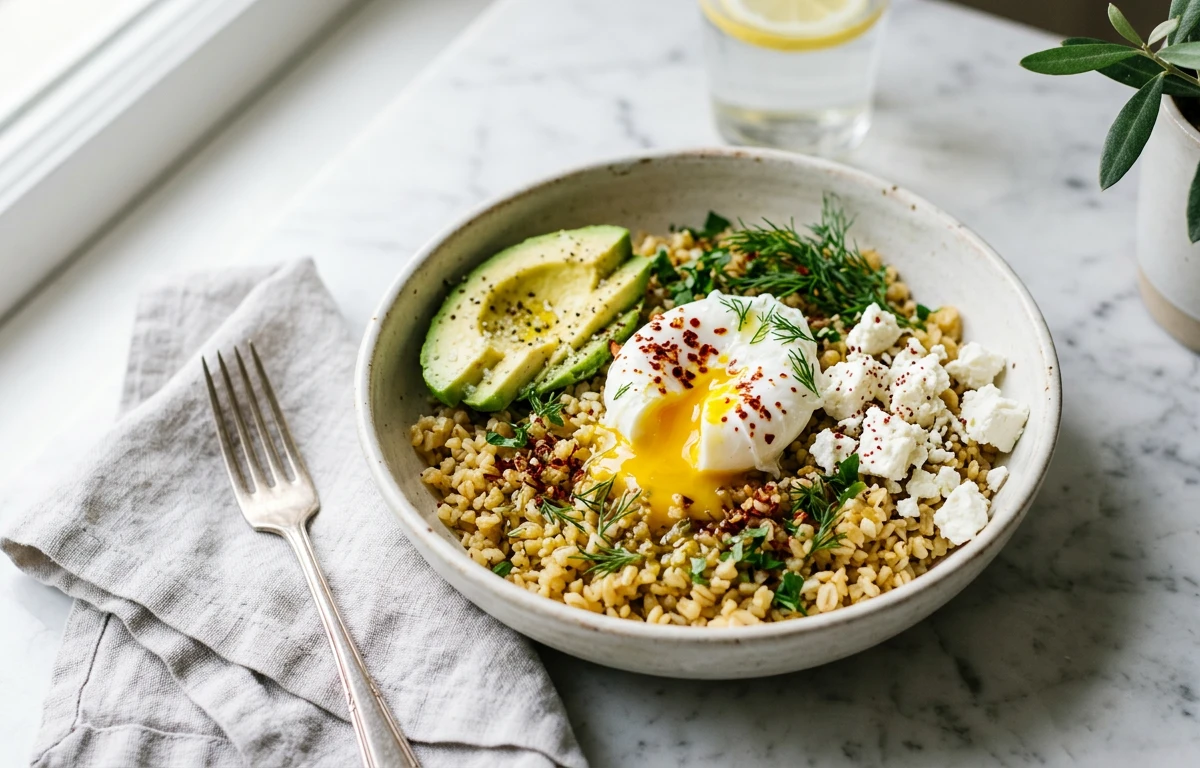
Three ways to eat it
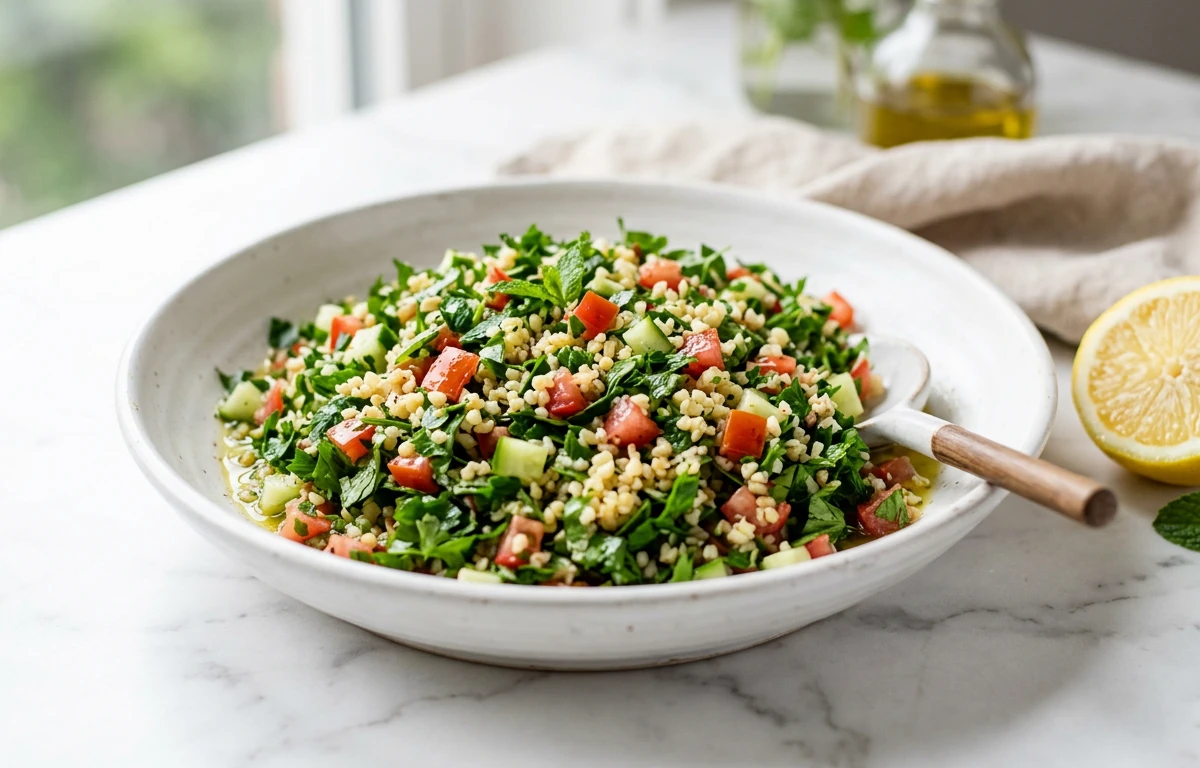
Beyond tabbouleh, bulgur is a versatile base for countless meals. Here are three simple ideas to get you started.
Want more high-fiber grains in your life, without the guesswork?
Our meal planner can build you a balanced week featuring satisfying whole grains like bulgur, with all the portions and pairings figured out for you. Get a custom plan and a single grocery list in seconds.
Build my weekly plan →SOURCES & REFERENCES · 3
One more thing
Eating well is rarely about willpower. It’s about having a short list of dinners you actually want to eat. Pick two from this list. Make them next week. The rest will follow.
If you want these on autopilot, our weekly meal planner can drop the picks above into your calendar with one click and build a single grocery list from the merged ingredients.
FREQUENTLY ASKED QUESTIONS
Frequently asked questions
Is bulgur gluten-free?
No. Bulgur is made from whole wheat, which contains gluten. It is not suitable for individuals with celiac disease or a gluten sensitivity.
Is bulgur healthier than quinoa?
They're both incredibly healthy but have different strengths. Bulgur has significantly more fiber, while quinoa is a complete protein (containing all nine essential amino acids). Both are great choices.
Is bulgur good for weight loss?
Yes, it can be a great tool for weight loss. Its very high fiber content makes it extremely filling, which can help you eat fewer calories overall. Just be mindful of portion sizes as it's a carbohydrate source.
What's the difference between bulgur and cracked wheat?
They're very similar, but bulgur is parboiled (steamed) before being cracked, while cracked wheat is not. This pre-cooking is why bulgur cooks much faster, often just by soaking.
METHODOLOGY
How this article was created
Built using verified nutrition databases, culinary research, and traditional cooking knowledge — every claim is cross-referenced against the sources listed in the article.
· USDA data· Culinary research· Quality reviewed
Read our methodology →TRANSPARENCY
About this content
Articles are curated using trusted food databases (USDA FoodData Central, IFCT), culinary literature, and dietary guidelines, then structured by our editorial team for clarity, accuracy, and usefulness.
· Verified data sources· Culinary research· Quality reviewed
Read our editorial policy →RELATED RECIPES
Cook from this article
EXPLORE OUR MEALS
Meals that fit this article

AMERICAN · 1677 CAL
Almonds with Sliced Apple + supplement + iron

MEDITERRANEAN · 809 CAL
Greek Yogurt with Berries Almonds and Granola + supplement + iron

GENERAL_HEALTHY · 705 CAL
Banana with Peanut Butter Pregnancy + supplement + iron

MODERN · 982 CAL
Hummus with Crudits and Pita with Fresh Orange Snack + supplement + iron
TAGGED
KEEP READING