Those whisper-thin, delicate strands of vermicelli look so light, don't they? It feels like you could eat a mountain of them. That's the trap. Vermicelli, whether it's made from rice or wheat, is a surprisingly dense source of refined carbohydrate. It's not a villain, but it's also not a 'free' food. The secret isn't to banish it, but to treat it for what it is: a small, starchy accent that's brilliant at soaking up the flavors of healthier things, like broths, herbs, and vegetables.
↑ Vermicelli's delicate appearance hides a dense carbohydrate load.
The delicate carb-bomb
Vermicelli is a catch-all term for very thin pasta. In Italy, it's made from durum wheat. In Asia, it's more often made from rice flour, and sometimes mung bean starch (cellophane noodles). For this profile, we're talking about the common rice and wheat types you find in soups and salads.
They cook in minutes and are brilliant at soaking up flavor. That's their strength. Their weakness is that they don't bring much to the table nutritionally besides calories from carbohydrates. There's a decent bit of protein, but almost no fiber, fat, or micronutrients. Think of it as a fluffy, white bread equivalent in noodle form.
IN ONE LINE
Vermicelli is a fast-digesting, refined carbohydrate. Treat it as a 20% component of your plate, and fill the other 80% with vegetables and protein.
Vermicelli nutrition facts
Here's what a 100-gram portion of dry vermicelli provides. Keep in mind, 100g dry is a very large serving — it cooks up to about 2-3 cups. A more realistic single serving is closer to 50g dry.
The numbers speak for themselves. Nearly 75% of its weight is carbohydrate. That 13 grams of protein is a welcome surprise for a grain product, but it comes alongside very little fiber to slow down digestion. This profile — high carb, low fiber, low fat — is what makes portion control so important.
Vermicelli's glycemic index
Glycemic index (GI) tells us how fast a food raises blood sugar. While we don't have a single verified number for all vermicelli (it varies by brand and type), we know it's a refined grain. Most rice vermicelli lands in the medium GI band, around 58-65. This is higher than whole fruit but a bit better than instant white rice or cornflakes. It will raise your blood sugar moderately quickly if eaten alone.
GLYCEMIC INDEX · VERMICELLI vs COMMON FOODS
Vermicelli sits in the medium-GI band
Apple
whole fruit
LOW
Mango
whole fruit
LOW
Vermicelli (Rice)
refined grain
MEDIUM
White bread
refined
HIGH
Cornflakes
refined
HIGH
SCALE 0–90
04590
The smart way to eat it
You can absolutely enjoy vermicelli. You just need a strategy to manage the carb load.
01
Shrink the portion.
Aim for a small fistful or about one cup of cooked noodles per person. Use it as a garnish, not the main event.
02
Load up on vegetables.
The classic Vietnamese noodle salad is a perfect model: a small nest of noodles buried under a mountain of lettuce, herbs, and bean sprouts.
03
Always add protein and fat.
Chicken, shrimp, tofu, a handful of peanuts, a sesame oil dressing—these all slow down carbohydrate absorption and make the meal more satisfying.
04
Choose broth, not cream.
Enjoy vermicelli in a light, brothy soup like pho. This helps with hydration and fullness without adding heavy fats.
05
Go for rice vermicelli if you're gluten-free.
It's a great pasta alternative for those with celiac disease or gluten sensitivity. Just remember, gluten-free doesn't mean low-carb.
What vermicelli is good for
01
A fast source of energy
Because it's a simple carbohydrate, vermicelli provides quick energy, which can be useful for athletes or for a fast pick-me-up.
75g
carbs
02
A useful source of protein
At 13 grams per 100g dry weight, it contributes a surprising amount of protein for a pasta, helping with satiety.
13g
protein
03
Extremely low in fat
With just over 1 gram of fat per serving, it's a lean base for meals, as long as you don't drown it in oily sauces.
1.1g
fat
04
A versatile blank canvas
Its mild flavor makes it a perfect vehicle for the flavors you add to it, from spicy stir-fries to aromatic soups.
Culinary
flexibility
What to pair vermicelli with
The trick is to use vermicelli as a vehicle for more nutritious ingredients. Think of it as a way to get more vegetables and protein into your day.
Eat freely — or be mindful?
Three ways to eat it
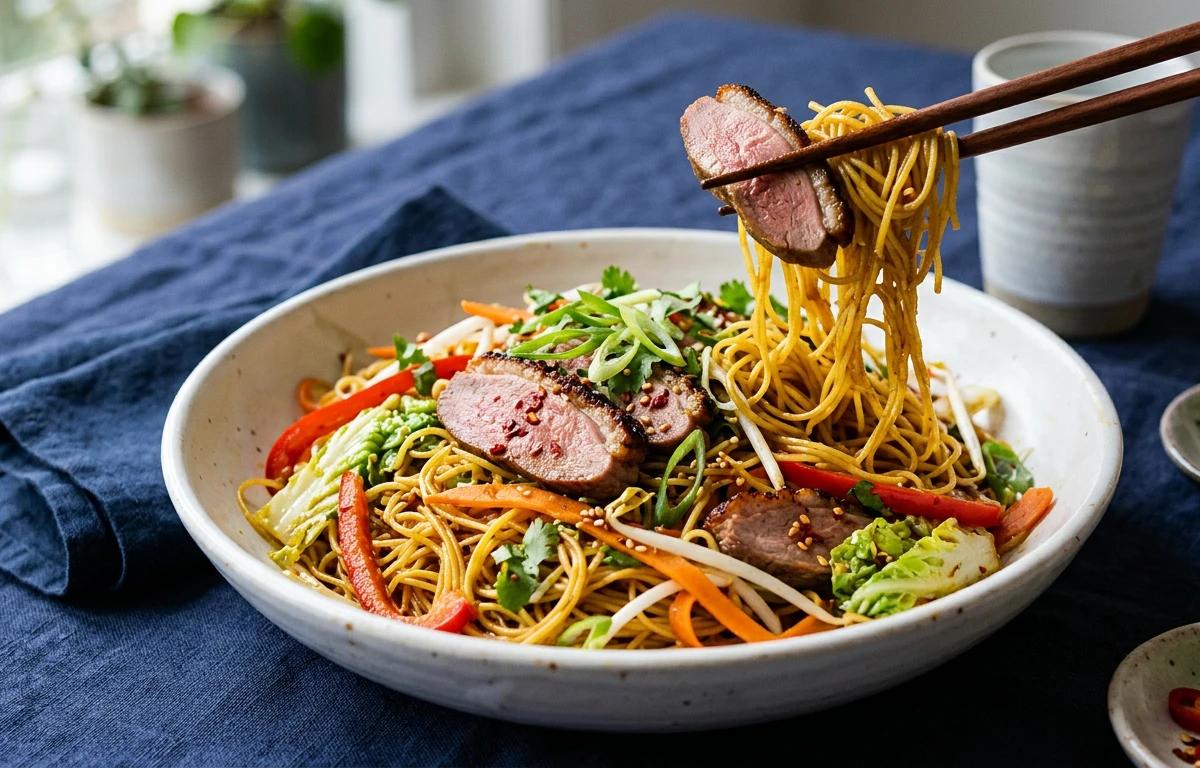
Here are three classic ways to enjoy vermicelli that put the principles of portion control and balanced pairing into practice.
.webp)
Want carbs worked into a balanced week — without the guesswork?
Our meal planner fits foods like vermicelli into a healthy plan by pairing them with protein and fibre for steady energy. Portions and macros are already calculated, and you get a single grocery list for the week.
Build my weekly plan →SOURCES & REFERENCES · 3
One more thing
Eating well is rarely about willpower. It’s about having a short list of dinners you actually want to eat. Pick two from this list. Make them next week. The rest will follow.
If you want these on autopilot, our weekly meal planner can drop the picks above into your calendar with one click and build a single grocery list from the merged ingredients.
FREQUENTLY ASKED QUESTIONS
Frequently asked questions
Is vermicelli healthy?
On its own, vermicelli is not particularly healthy. It's a refined carbohydrate with little fiber or micronutrients. Its healthiness depends almost entirely on how you eat it: in small portions, paired with lots of vegetables and lean protein.
Is vermicelli good for weight loss?
Not especially. It's calorie-dense for its volume and low in fiber, which means it's not very filling. You can include it in a weight-loss diet, but you must be very strict with the portion size—think half a cup, cooked.
Is rice vermicelli healthier than wheat pasta?
They are nutritionally very similar: both are refined grains that are high in carbs. Rice vermicelli's main advantage is that it's gluten-free. For fiber, a whole-wheat pasta would be a better choice than either.
How much is one serving of vermicelli?
A sensible serving size is about 50 grams of dry noodles, which cooks up to about one cup. Many restaurant portions are two or three times this amount.
METHODOLOGY
How this article was created
Built using verified nutrition databases, culinary research, and traditional cooking knowledge — every claim is cross-referenced against the sources listed in the article.
· USDA data· Culinary research· Quality reviewed
Read our methodology →TRANSPARENCY
About this content
Articles are curated using trusted food databases (USDA FoodData Central, IFCT), culinary literature, and dietary guidelines, then structured by our editorial team for clarity, accuracy, and usefulness.
· Verified data sources· Culinary research· Quality reviewed
Read our editorial policy →RELATED RECIPES
Cook from this article
EXPLORE OUR MEALS
Meals that fit this article

AMERICAN · 1677 CAL
Almonds with Sliced Apple + supplement + iron

MEDITERRANEAN · 809 CAL
Greek Yogurt with Berries Almonds and Granola + supplement + iron

GENERAL_HEALTHY · 705 CAL
Banana with Peanut Butter Pregnancy + supplement + iron
MODERN · 982 CAL
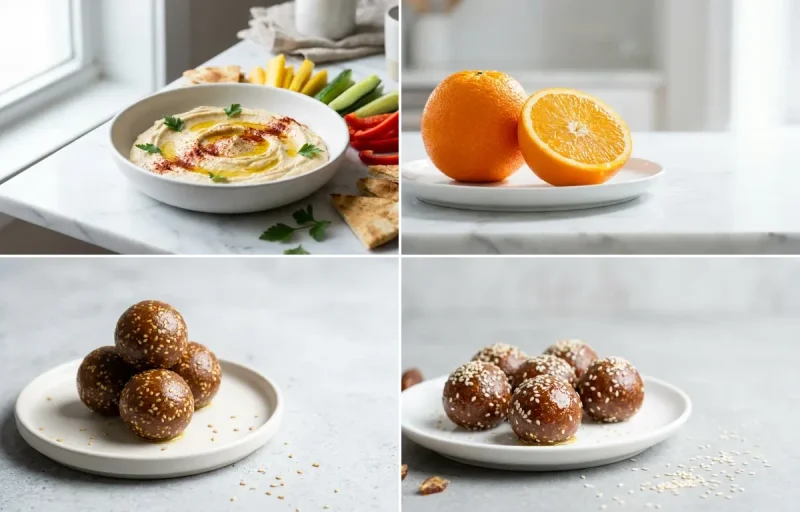
Hummus with Crudits and Pita with Fresh Orange Snack + supplement + iron
TAGGED
KEEP READING