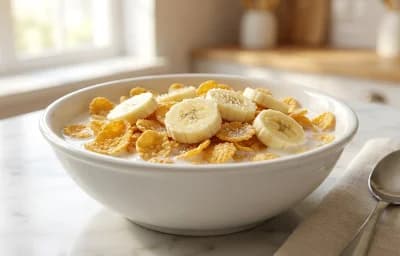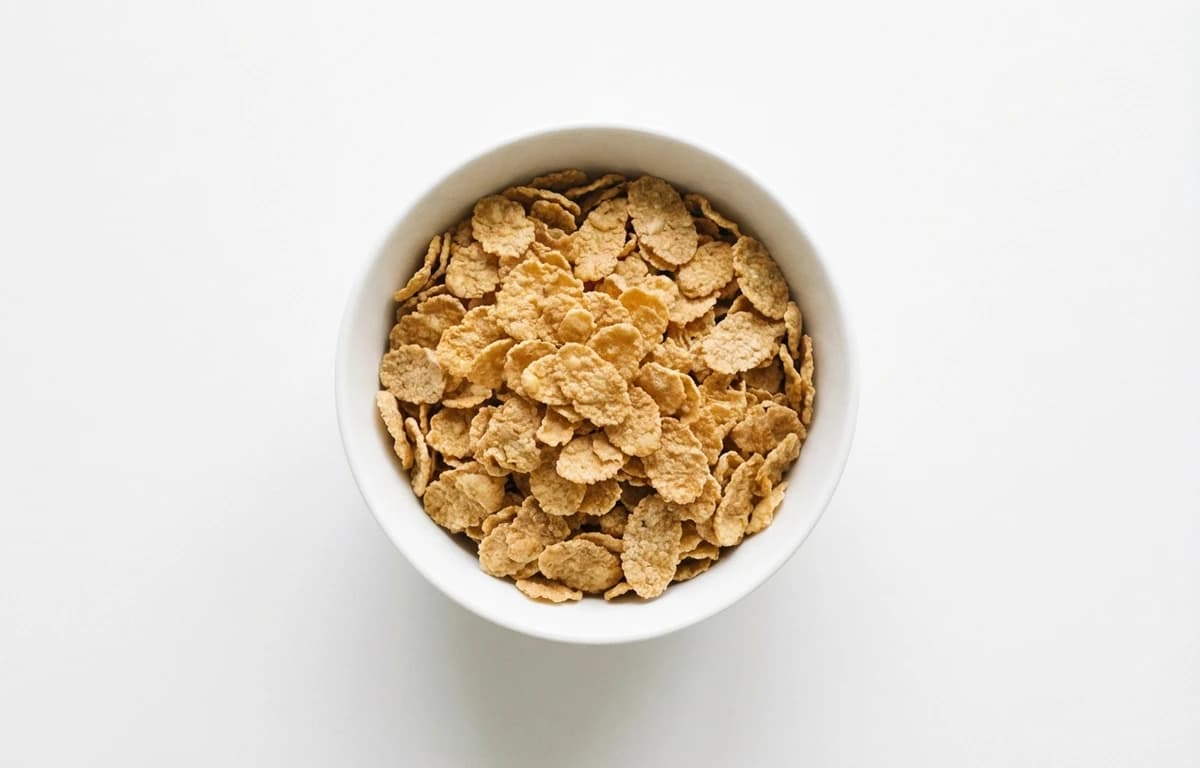
cereal
Also known as: breakfast cereal
Loading...
Also known as: breakfast cereal
Per 100g
Nutrition data source: USDA FoodData Central
Common measurement equivalents in grams
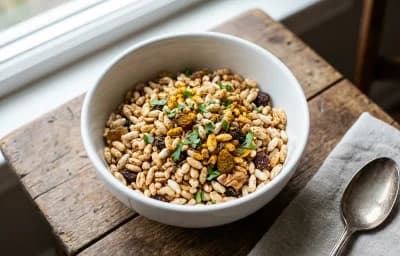
A simple, light, and crispy breakfast cereal that's incredibly versatile. Naturally low in sodium, potassium, and phosphorus, it's an excellent choice for a quick meal or for those on specific dietary plans.

A warm, comforting bowl of creamy porridge that's perfect for a quick and satisfying breakfast. This classic American hot cereal is simple to make, wonderfully smooth, and can be customized with your favorite sweet or savory toppings.
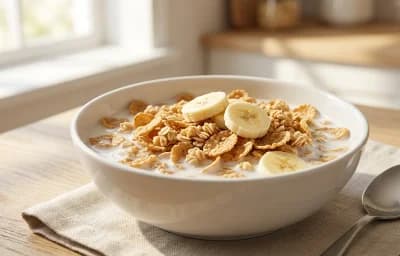
A quick and classic American breakfast that's ready in seconds. Crunchy cereal combined with cold, creamy milk is the perfect simple start to any day, customizable with your favorite fruits and toppings.

The ultimate party snack that's crunchy, savory, and completely addictive. A classic blend of cereals, pretzels, and nuts are coated in a savory butter sauce and baked to crispy perfection. It's incredibly easy to make a big batch for holidays or game day.
Cereal can be a healthy part of a diet, especially when choosing whole-grain varieties that are high in fiber and low in added sugar. It provides essential B-vitamins and minerals like iron and magnesium, which support energy metabolism and heart health. However, many processed cereals are high in sugar, so it is important to check the nutrition label.
On average, 100g of cereal contains approximately 379 calories and 82g of carbohydrates. While it is a high-carbohydrate food, it also provides about 8.5g of protein and is generally low in fat, containing only about 2.5g per 100g.
High-fiber, whole-grain cereals can aid weight loss by promoting satiety and helping you feel full for longer periods. However, because cereal is calorie-dense and often high in carbohydrates, portion control is essential. Avoid cereals with high amounts of added sugars, which can lead to energy crashes and increased hunger.
Many cereals are vegan as they are primarily made from grains like corn, rice, or wheat. However, some brands use animal-derived ingredients such as honey, gelatin, or Vitamin D3 sourced from lanolin. Always check the ingredient list to ensure the specific product meets vegan standards.
Not all cereals are gluten-free, as many are made from wheat, barley, or rye. While corn and rice-based cereals are naturally gluten-free, they may be processed in facilities that handle wheat. Look for a 'certified gluten-free' label if you have celiac disease or a severe gluten sensitivity.
Traditional grain-based cereals are generally not keto-friendly because they are very high in carbohydrates, averaging 82g per 100g. Most ketogenic diets require much lower carb intake to maintain ketosis. There are, however, specialized 'keto cereals' made from nuts, seeds, or protein isolates that are designed for low-carb lifestyles.
cereal is a versatile ingredient found in cuisines around the world. With 379 calories per 100g and 8.5 grams of protein, it's a nutritious addition to many dishes.
Explore more ingredients in the grain category with complete nutrition information.
View all grain →Cereal is highly versatile and can be used as a crunchy topping for yogurt or smoothie bowls. It can also be crushed and used as a breading for baked chicken or fish, or incorporated into snack mixes and baking recipes like muffins and granola bars.
The flavor of cereal depends entirely on its ingredients; whole-grain cereals typically have a nutty, earthy taste, while corn-based cereals are milder and slightly sweet. Many commercial cereals are flavored with honey, cinnamon, fruit, or cocoa to enhance their appeal.
Cereal should be stored in a cool, dry place. Once the original packaging is opened, it is best to transfer the cereal to an airtight container or use a bag clip to seal the inner liner tightly. This prevents moisture from entering, which causes the cereal to become stale and lose its crunch.
Unopened cereal can remain fresh for 6 to 12 months past the 'best by' date if stored in a dry environment. Once opened, cereal is best consumed within 2 to 3 months for the best texture and flavor, though it remains safe to eat as long as there is no mold or off-smell.