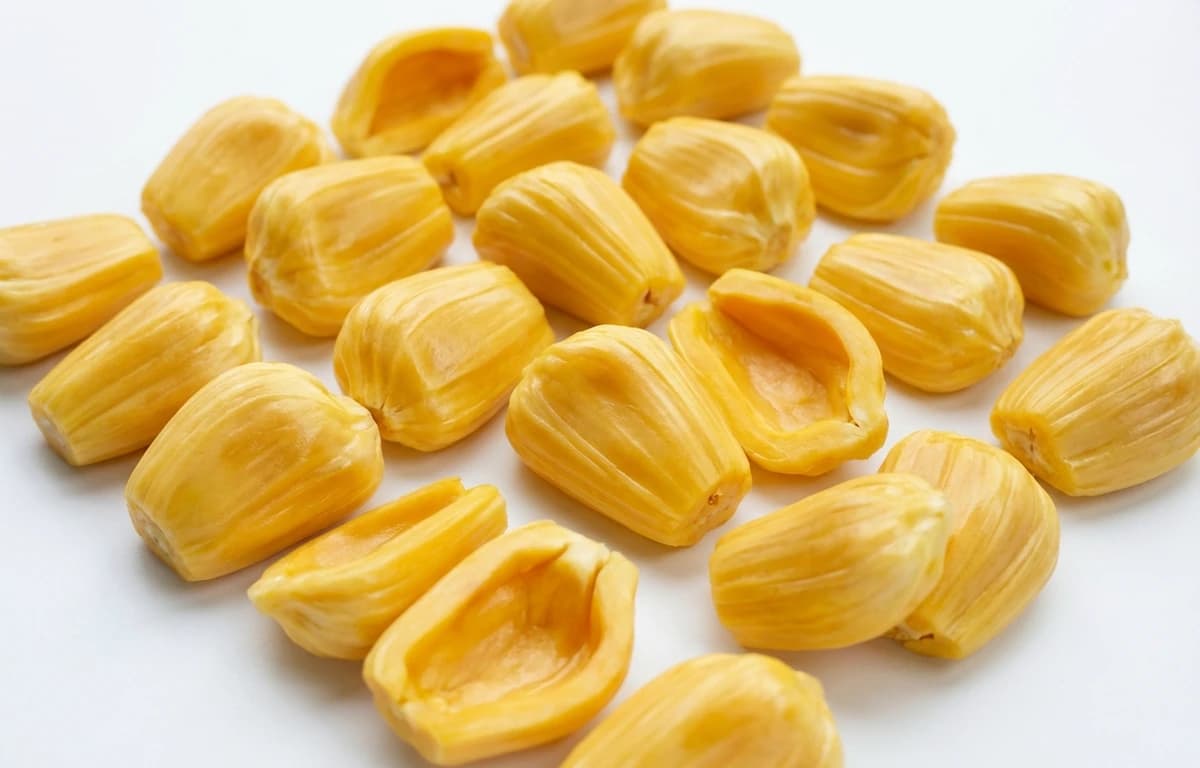
jackfruit
Also known as: ripe jackfruit, kathal, jack fruit
Loading...
Also known as: ripe jackfruit, kathal, jack fruit
Per 100g
Nutrition data source: USDA FoodData Central
Common measurement equivalents in grams

Tender, shredded jackfruit simmered in smoky spices, creating a perfect plant-based pulled pork alternative. These vegan tacos are packed with flavor and ready for your favorite fresh toppings, making for a fun and satisfying weeknight meal.

A traditional Konkani curry made with tender raw jackfruit simmered in a fragrant, tangy coconut masala. This authentic dish from the Mangalorean coast offers a unique blend of sweet, sour, and spicy flavors, perfect with steamed rice.

Discover the meaty texture of green jackfruit in this classic Maharashtrian dry curry. Spiced with traditional goda masala, it's a hearty, vegan dish that pairs perfectly with chapatis or dal rice.

Sweet, tender fritters made from ripe jackfruit pulp, jaggery, and coconut. This traditional Goan monsoon snack is a delightful treat, with a soft, fluffy interior and a lightly crisp, golden-brown exterior. A perfect way to enjoy the seasonal bounty of jackfruit.
Yes, jackfruit is very healthy. It's rich in essential nutrients like Vitamin C, potassium, and dietary fiber, supporting overall well-being. It also contains antioxidants such as carotenoids and flavonoids, which may help reduce inflammation and protect cells.
Per 100 grams, jackfruit contains approximately 95 calories, 1.72 grams of protein, 23.25 grams of carbohydrates, and 0.64 grams of fat. It's also a good source of dietary fiber, contributing to digestive health and regularity.
Jackfruit can be part of a weight-loss diet due to its high fiber content, which promotes satiety and aids digestion. While it's relatively low in fat, its moderate calorie and carbohydrate content means it should be consumed in appropriate portions within a balanced diet.
Yes, jackfruit is naturally vegan and vegetarian. As a fruit, it is entirely plant-based and contains no animal products. This makes it a popular meat substitute in many plant-based dishes.
Yes, diabetics can generally eat jackfruit in moderation. Its high fiber content and relatively low glycemic index compared to some other fruits may help manage blood sugar levels. However, due to its carbohydrate content, portion control is important, and it's best to consult a healthcare professional.
No, jackfruit is not considered keto-friendly. With approximately 23.25 grams of carbohydrates per 100 grams, it is too high in carbs to fit into a typical ketogenic diet, which strictly limits carbohydrate intake.
Young, unripe jackfruit is often cooked as a savory meat substitute; it can be boiled, shredded, and then sautéed, roasted, or braised in curries, stews, or 'pulled pork' style dishes. Ripe jackfruit is typically eaten raw or used in desserts, smoothies, and sweet preparations.
jackfruit is a versatile ingredient found in cuisines around the world. With 95 calories per 100g and 1.72 grams of protein, it's a nutritious addition to many dishes.
Explore more ingredients in the other category with complete nutrition information.
View all other →Ripe jackfruit has a sweet, tropical flavor often described as a blend of pineapple, mango, and banana, with a soft, fibrous texture. Young, unripe jackfruit, when cooked, has a neutral flavor and a stringy, meat-like texture, making it excellent for absorbing spices and sauces.
Whole, unripe jackfruit can be stored at room temperature for several days until it ripens. Ripe jackfruit, whether whole or cut, should be refrigerated and consumed within a few days, or the arils can be frozen for longer storage.
Young (green) jackfruit is unripe, has a firm, starchy texture, and a neutral flavor, making it ideal for savory cooking as a meat substitute. Ripe jackfruit is sweet, soft, and fragrant, typically eaten fresh or used in desserts. The skin of ripe jackfruit will yield slightly to pressure and have a stronger aroma.