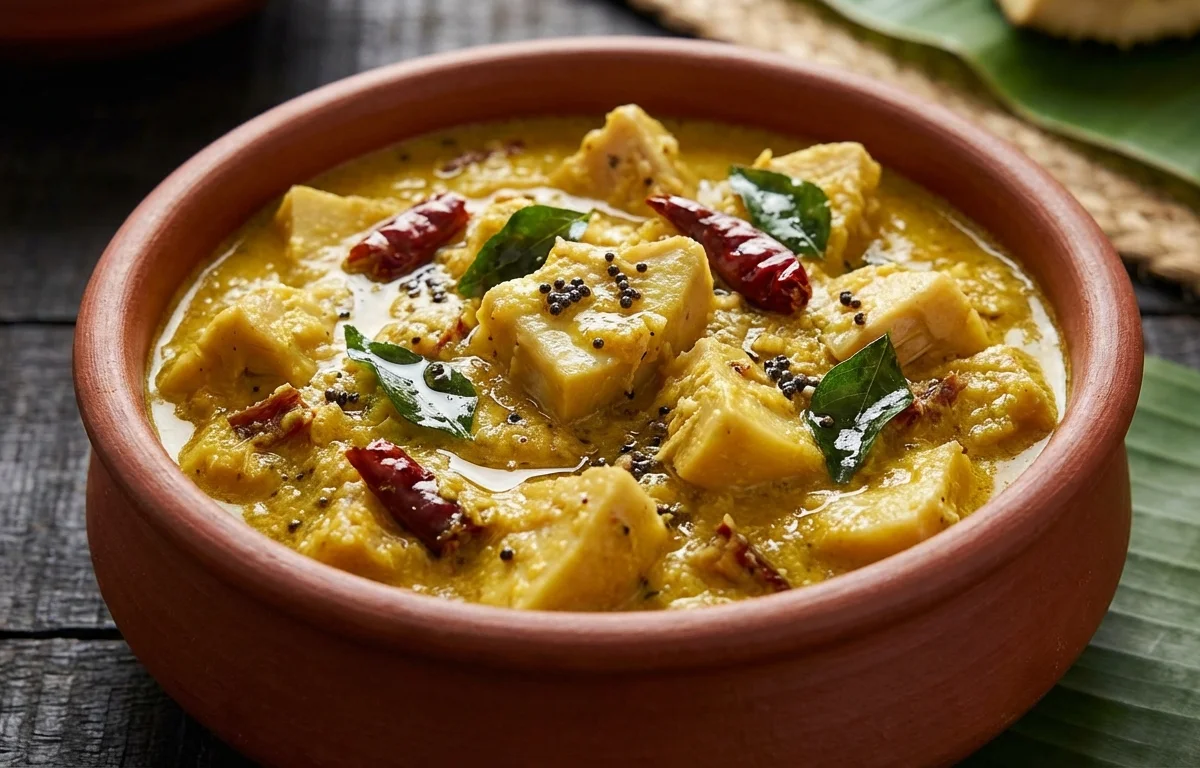
Ponsa Ghashi
Tender chunks of raw jackfruit simmered in a fragrant coconut and roasted spice masala. This coastal Karnataka and Konkan classic balances the earthy sweetness of young jackfruit with a rich, tangy, and mildly spiced gravy. A hearty, plant-based main dish that pairs beautifully with steamed rice or neer dosa.
For 4 servings
- prep · ~15 min
Boil the raw jackfruit.
1.Apply a little oil to your hands and knife before cutting to prevent sap from sticking.2.Place chopped jackfruit cubes in a pressure cooker with 1 cup water, a pinch of turmeric, and salt.3.Pressure cook for 3-4 whistles until tender but firm. Drain and set aside.TIPIf not using a pressure cooker, boil in a pot for 15-20 minutes until fork-tender. - roast · ~6 min
Roast the spices and coconut.
1.Heat 1 tbsp oil in a heavy bottom pan over medium heat.2.Add coriander seeds, cumin seeds, fenugreek seeds, and dried red chilies. Roast until fragrant and slightly darkened (1-2 min).3.Add grated coconut and continue roasting until it turns golden brown (3-4 min).4.Turn off the heat and let the mixture cool completely.TIPKeep stirring continuously — fenugreek seeds burn quickly and turn bitter. - mix · ~3 min
Grind the masala paste.
1.In a mixer grinder, add the cooled roasted coconut-spice mixture.2.Add soaked tamarind along with its water, and 0.5 cup fresh water.3.Grind to a smooth, thick paste. Set aside.TIPMake sure the mixture is completely cool before grinding to prevent the paste from turning rancid. - temper · ~2 min
Make the tempering.
1.Heat coconut oil in a deep pan over medium heat.2.Add mustard seeds and let them splutter.3.Add curry leaves and stir until fragrant (10 sec). - saute · ~5 min
Sauté the aromatics.
1.Add finely chopped onion to the tempering.2.Sauté until onions turn soft and translucent (3-4 min).3.Add crushed garlic and sauté for another minute until the raw smell disappears. - simmer · ~12 min
Cook the jackfruit in the masala.
1.Add the ground masala paste to the pan and stir well.2.Add the boiled jackfruit cubes, 0.25 cup water, salt, and jaggery.3.Mix gently to coat the jackfruit evenly. Cover and simmer on low heat for 10-12 minutes.4.Stir occasionally until the gravy thickens and clings to the jackfruit.TIPThe jackfruit should absorb the flavors but still hold its shape — avoid over-stirring vigorously. - serve · ~5 min
Rest and serve hot.
Turn off the heat and let the Ponsa Ghashi rest for 5 minutes. Transfer to a serving bowl and serve hot with steamed rice, neer dosa, or chapati.
TIPA drizzle of fresh coconut oil on top just before serving enhances the authentic coastal flavor.
What to keep in mind.
6 tips from the recipe — small details that make a real difference to the final dish.
- 1Oil your hands and knife before cutting raw jackfruit to prevent sticky sap from clinging.
- 2Roast the coconut until deep golden for a richer, nuttier masala base.
- 3Grind the spice-coconut mixture only after it is completely cool to avoid a grainy paste.
- 4Use Byadgi or Kashmiri chilies for vibrant color and mild heat, not searing spice.
- 5Simmer the jackfruit gently so it absorbs the masala without turning mushy.
- 6Finish with a drizzle of fresh coconut oil for an authentic coastal Karnataka touch.
Adapt it for your goals.
Low-oil
Skip the oil-roasting step; dry-roast the spices and coconut in a non-stick pan, and use only 1 teaspoon of coconut oil for tempering. Perfect for those watching their fat intake without losing authentic flavor.
high proteinHigh-protein
Add 200g of cubed paneer or firm tofu along with the jackfruit in step 6 for extra protein. Great for post-workout meals or anyone wanting a heartier main dish.
jainJain
Replace onion and garlic with 1/2 cup finely chopped cabbage and 1/2 teaspoon asafoetida (hing) while sautéing. This keeps the dish Jain-friendly while retaining the gravy's body.
veganVegan
The recipe is already vegan — simply ensure the jaggery is from plant-based sources. For an extra flavor boost, use raw coconut oil instead of refined.
Why this is on our healthy list.
Rich in Dietary Fiber
Raw jackfruit and coconut provide a hearty dose of fiber, supporting healthy digestion and prolonged satiety.
Good Source of Plant Protein
Jackfruit offers a modest amount of plant-based protein, making this curry a satisfying main for vegetarian and vegan diets.
Loaded with Antioxidants
Spices like coriander, cumin, and fenugreek seeds, along with curry leaves, supply antioxidants that help combat oxidative stress.
Naturally Gluten-Free
All ingredients in this recipe are naturally free from gluten, safe for those with celiac disease or gluten sensitivity.
Frequently asked questions
Ponsa Ghashi is a traditional coastal Karnataka curry made with raw jackfruit simmered in a roasted coconut and spice paste, similar to a gassi or ghashi gravy.