Protein3 recipes
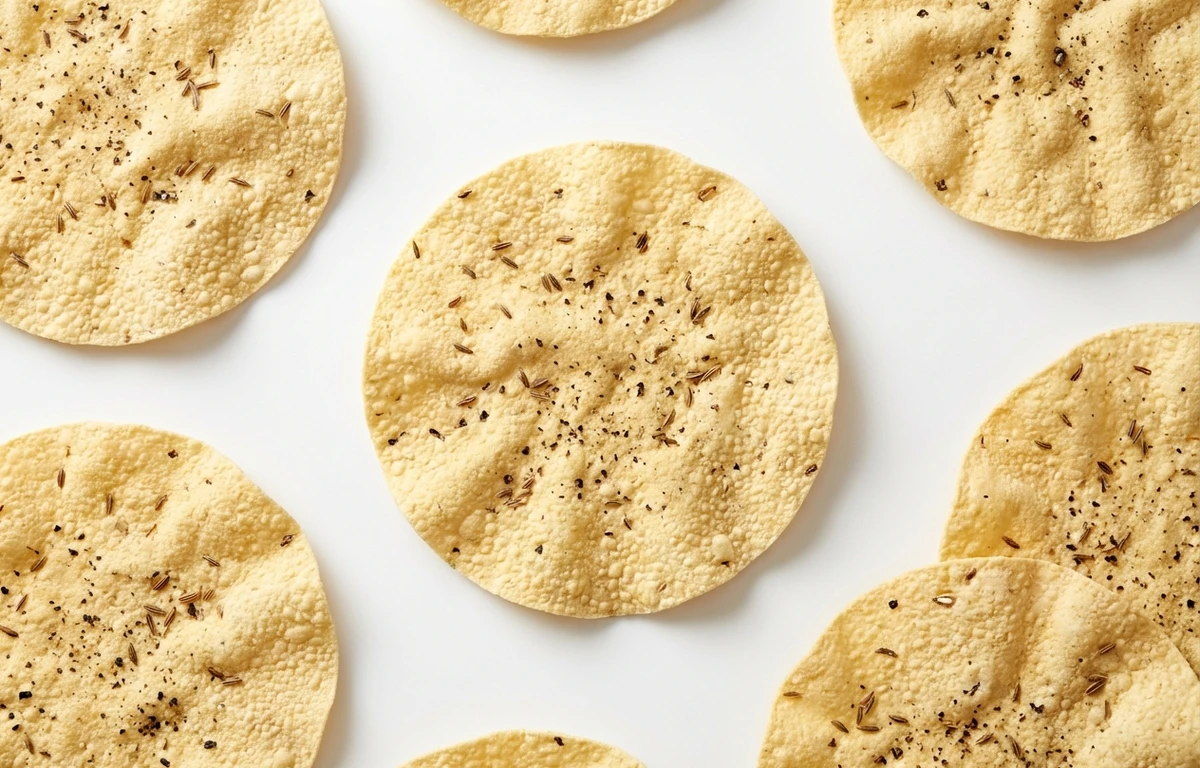
lentil wafers.
VegetarianVeganGluten-freeDairy-freeNut-freePeanut-freeSoy-freeEgg-freeShellfish-freeHoney-freeAlcohol-free
ALSO KNOWN AS
urad dal papadpapadumpappadamappalampapadpappadumlentil crackerIndian crispbread
SERVING
CALORIES
326
PROTEIN
21g
CARBS
57g
FAT
1.5g
FIBER
14g
This ingredient is flagged as naturally gluten-free. Per 100 g, it provides 4.0 µg of vitamin K.
NUTRITION PROFILE · per 100 g
Everything in this ingredient.
MACRONUTRIENTS
Calories326kcal—
Protein21g42%
Carbohydrates57g21%
Fiber14g50%
Sugar2.0g4%
Total fat1.5g2%
Saturated fat0.30g2%
Trans fat0g—
Cholesterol0mg0%
Water10g—
MINERALS
Sodium1650mg72%
Potassium850mg18%
Calcium120mg9%
Iron6.5mg36%
Magnesium110mg26%
Phosphorus320mg26%
Zinc2.8mg25%
Copper0.60mg67%
Manganese1.1mg48%
Selenium2.5µg5%
VITAMINS
Vitamin A0µg0%
Vitamin C0mg0%
Vitamin D0µg0%
Vitamin E0.20mg1%
Vitamin K4.0µg3%
Thiamin (B1)0.40mg33%
Riboflavin (B2)0.20mg15%
Niacin (B3)2.1mg13%
Pantothenic acid (B5)0.60mg12%
Vitamin B60.40mg24%
Folate (B9)350µg88%
Vitamin B120µg0%
%DV based on a 2,000 cal diet. Source: USDA FoodData Central. A dash in the %DV column means there’s no established Daily Value for that nutrient.
MEASUREMENT CONVERSIONS
How much is what.
1 piece15g
HEALTH BENEFITS
Why eat it.
- ✓Lentils provide essential minerals such as iron, magnesium, and folate, important for blood production and energy metabolism.
- ✓When roasted or microwaved instead of deep-fried, they are a low-calorie and low-fat crunchy snack.
COOKING TIPS
In the kitchen.
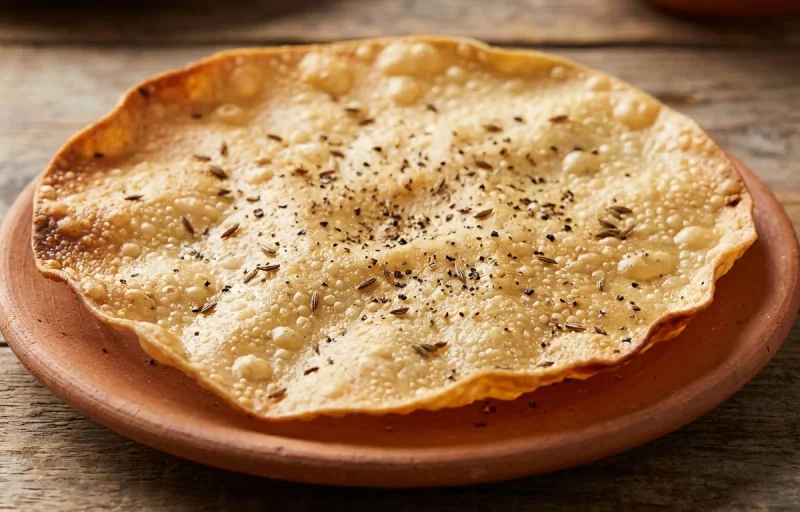
- 1For a low-fat version, roast the wafer directly over a gas flame using tongs, flipping it quickly and constantly until it is evenly cooked and blistered.
- 2Alternatively, cook in a microwave on high for 30-60 seconds until it fully expands and becomes crisp.
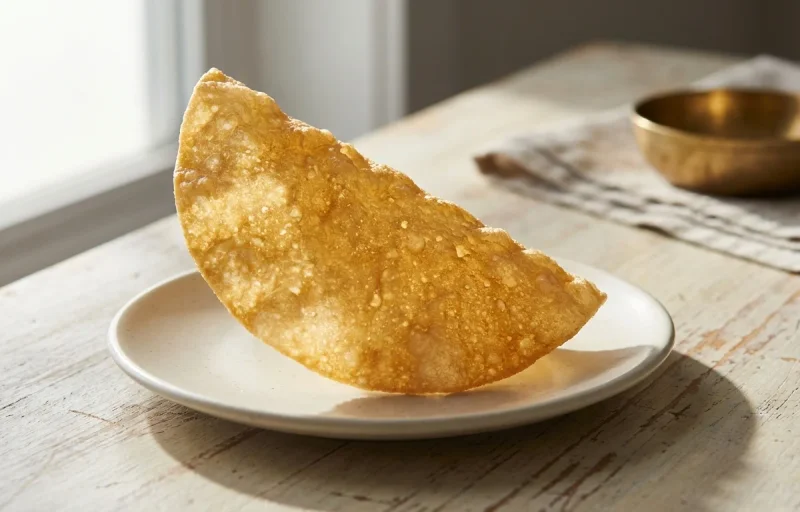
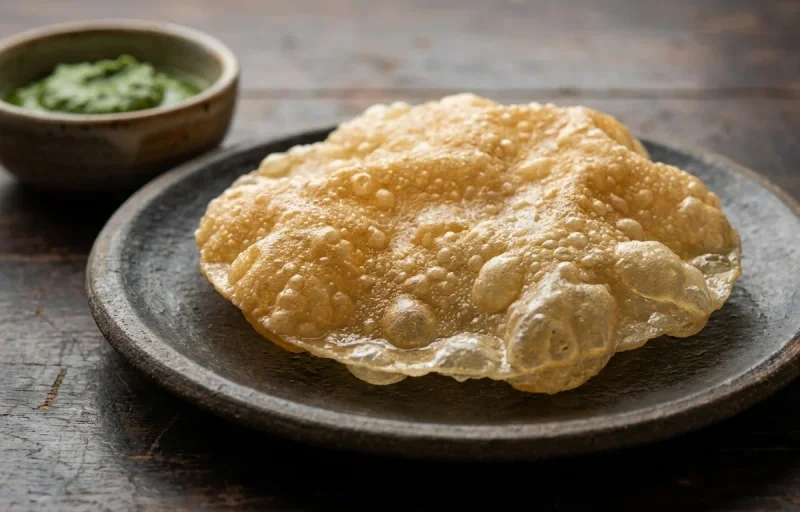
- 3For a traditional and richer taste, deep-fry in hot oil for 5-10 seconds until it puffs up and turns a light golden color. Drain excess oil on a paper towel.
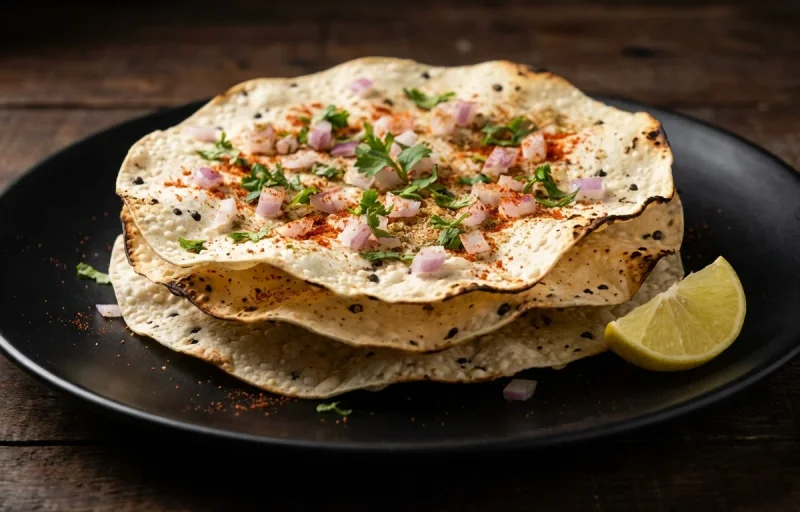
- 4Serve as an appetizer with chutneys, dips, or chopped vegetable toppings (masala papad), or crumble over rice and curry dishes for added texture.
STORAGE
Keep it fresh.
- Store uncooked lentil wafers in a cool, dry, and dark place in an airtight container to prevent them from absorbing moisture. They can last for over a year.
- Once cooked, they are best eaten immediately. To store leftovers, place them in an airtight container at room temperature for up to two days, though they may lose their crispness.
FAQ
Frequently asked questions.
How much protein and calories are in lentil wafers?
Per 100g, lentil wafers contain approximately 326 calories and a significant 21g of protein. They are also very low in fat, with only about 1.5g per 100g, making them a protein-rich and relatively low-fat snack option when prepared without oil.
Are lentil wafers vegan?
Yes, lentil wafers are typically vegan, as they are made from lentils, flour, and spices, without any animal products. Always check the ingredient list to confirm, as some specific brands might use non-vegan additives or processing aids.
How do you cook or prepare lentil wafers?
Lentil wafers are commonly prepared by roasting them over an open flame, microwaving for a few seconds until crisp, or baking in an oven. They can also be deep-fried, but roasting or microwaving offers a healthier, lower-fat option that retains their crunch.
What do lentil wafers taste like?
Lentil wafers have a distinct savory, slightly earthy flavor from the lentils, often enhanced by added spices like cumin, black pepper, or chili. When cooked, they become very light, airy, crispy, and crunchy, making them a satisfying snack or accompaniment to meals.
How long do lentil wafers last?
Uncooked lentil wafers typically have a long shelf life, often several months to a year, if stored properly in a sealed package in a cool, dry environment. Always refer to the 'best by' or 'expiration' date on the packaging for the most accurate information.
Are lentil wafers the same as papadum?
Yes, 'lentil wafers' is often another name for papadum (or pappad), a thin, crisp, disc-shaped food from the Indian subcontinent. They are traditionally made from seasoned dough of black gram (urad dal) flour, lentil flour, or other legume flours, and then dried.
RECIPES
Cook with lentil wafers.
3 recipes · sorted by what’s quick