Other10 recipes
mayonnaise.
VegetarianVeganGluten-freeDairy-freeNut-freePeanut-freeSoy-freeEgg-freeShellfish-freeHoney-freeAlcohol-free
ALSO KNOWN AS
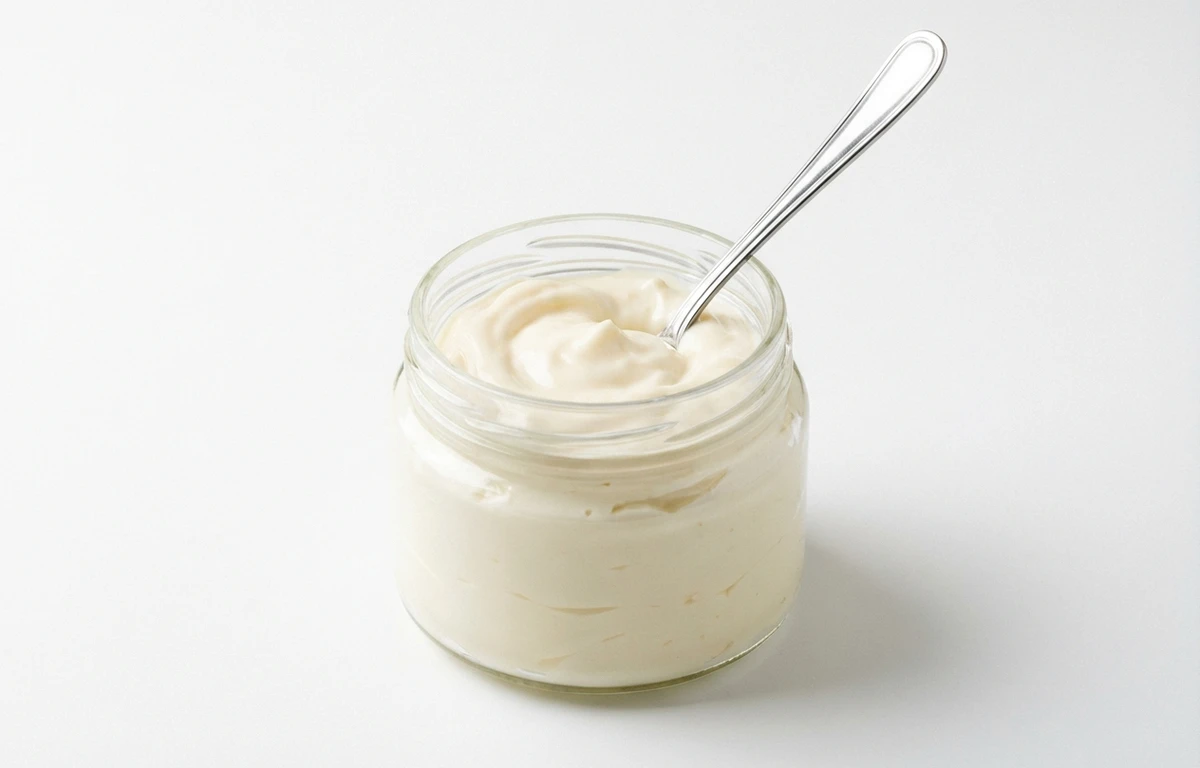
mayolight mayonnaise
SERVING
CALORIES
680
PROTEIN
1.0g
CARBS
0.60g
FAT
75g
FIBER
0g
This ingredient is flagged as naturally gluten-free. Per 100 g, it provides 163 µg of vitamin K.
NUTRITION PROFILE · per 100 g
Everything in this ingredient.
MACRONUTRIENTS
Calories680kcal—
Protein1.0g2%
Carbohydrates0.60g0%
Fiber0g0%
Sugar0.60g1%
Total fat75g96%
Saturated fat11.7g59%
Trans fat0.20g—
Cholesterol42mg14%
Water21.6g—
MINERALS
Sodium635mg28%
Potassium20mg0%
Calcium10mg1%
Iron0.20mg1%
Magnesium1.0mg0%
Phosphorus25mg2%
Zinc0.10mg1%
Copper0.02mg2%
Manganese0.01mg0%
Selenium3.5µg6%
VITAMINS
Vitamin A18µg2%
Vitamin C0mg0%
Vitamin D0.10µg1%
Vitamin E11.8mg79%
Vitamin K163µg136%
Thiamin (B1)0.01mg1%
Riboflavin (B2)0.01mg1%
Niacin (B3)0.01mg0%
Pantothenic acid (B5)0.05mg1%
Vitamin B60.01mg1%
Folate (B9)2.0µg1%
Vitamin B120.10µg4%
%DV based on a 2,000 cal diet. Source: USDA FoodData Central. A dash in the %DV column means there’s no established Daily Value for that nutrient.
MEASUREMENT CONVERSIONS
How much is what.
1 cup220g
1 tablespoon14g
1 teaspoon5g
1 oz28.4g
1 lb453.6g
1 ml0.9g
1 liter920g
HEALTH BENEFITS
Why eat it.
- ✓Provides Vitamin K essential for blood clotting
- ✓Helps in the absorption of fat-soluble vitamins (A, D, E, K)
- ✓Contains healthy unsaturated fats if made with olive or avocado oil
- ✓Provides a source of energy through high-density lipids
COOKING TIPS
In the kitchen.
- 1Use as a moisture-locking coating for baked chicken or fish
- 2Spread on the outside of bread for a perfectly golden grilled cheese
- 3Whisk into vinaigrettes to act as a stabilizer and emulsifier
STORAGE
Keep it fresh.
- Refrigerate immediately after opening to prevent bacterial growth
- Do not freeze, as the emulsion will break and the oil will separate
- Keep the rim of the jar clean to ensure a tight seal
FAQ
Frequently asked questions.
How long does mayonnaise last after opening?
Commercial mayonnaise typically lasts 2 to 3 months in the refrigerator after opening, provided it is kept at or below 40°F (4°C).
Can I freeze mayonnaise?
No, freezing is not recommended. Mayonnaise is an emulsion; freezing causes the oil to separate from the egg yolks and water, resulting in a thin, oily mess when thawed.
What is a good vegan substitute for mayonnaise?
Vegan mayonnaise (made with aquafaba or soy protein), mashed avocado, or hummus are excellent plant-based alternatives.
Is mayonnaise dairy-free?
Yes, traditional mayonnaise is dairy-free as it is made from oil, egg yolks, and an acid (vinegar or lemon juice). It does not contain milk or cream.
Why did my homemade mayonnaise break?
Mayonnaise breaks if the oil is added too quickly or if the ingredients are at different temperatures. Adding a teaspoon of warm water or another egg yolk can help re-emulsify it.
How can I tell if mayonnaise has gone bad?
Look for a yellowish or brownish tint, a sour or off-smell, or visible mold. If the oil has separated significantly, it may also be past its prime.
Is mayonnaise gluten-free?
Most commercial mayonnaises are gluten-free, but some brands may use thickeners or vinegars derived from gluten-containing grains. Always check the label.
What is the difference between mayonnaise and salad dressing (like Miracle Whip)?
Mayonnaise must contain at least 65% vegetable oil by weight. Salad dressings often contain less oil, more sugar, and additional spices.
RECIPES
Cook with mayonnaise.
10 recipes · sorted by what’s quick