millet
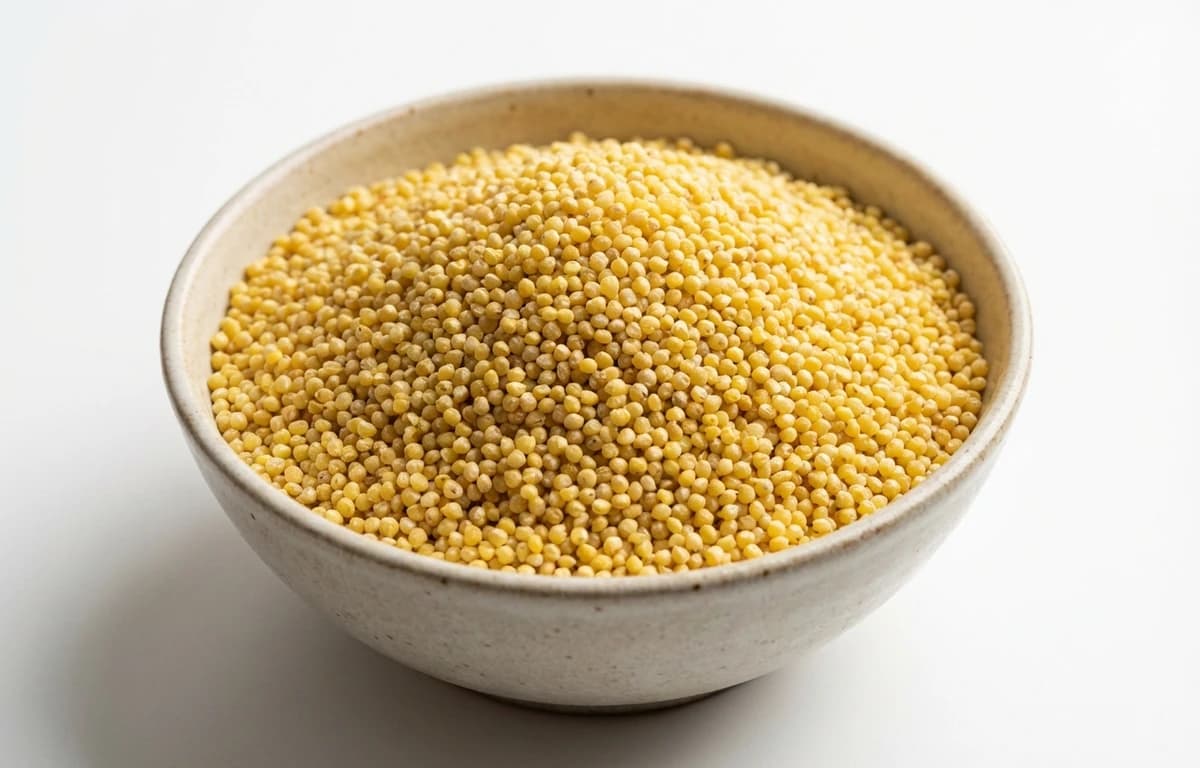
Also known as: millet grain, hulled millet
Loading...
Also known as: millet grain, hulled millet
Per 100g
Nutrition data source: USDA FoodData Central
Common measurement equivalents in grams
A simple guide to cooking perfectly fluffy millet every time. This versatile, gluten-free grain is a wonderful alternative to rice or quinoa, ready in under 30 minutes.
A wonderfully light and fluffy pilaf made with toasted millet, tender carrots, sweet peas, and aromatic thyme. This wholesome, low-sodium side dish is a fantastic gluten-free alternative to rice.
A classic Karnataka one-pot meal, reimagined for a low-glycemic diet. This version uses wholesome foxtail millet instead of rice, combined with lentils and vegetables in a fragrant, spicy tamarind broth. It's comfort food that's both hearty and healthy.
A wholesome and savory South Indian pancake made with a low-glycemic blend of millets, brown rice, and mixed lentils. Packed with fiber and protein, this diabetic-friendly adai is a delicious and guilt-free choice for breakfast or dinner.
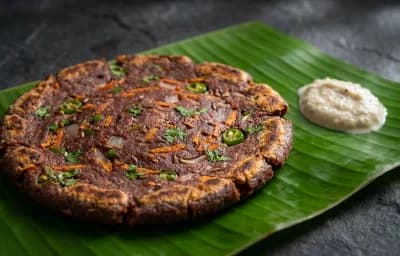
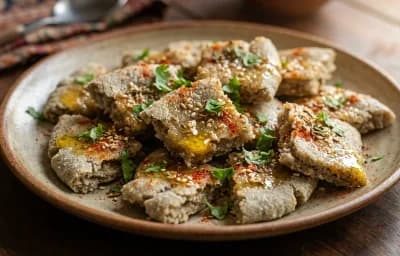
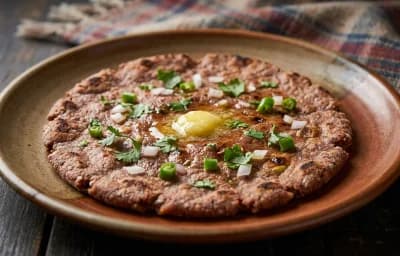
A wholesome and gluten-free flatbread from Karnataka made with finger millet flour. Packed with finely chopped onions, carrots, and fresh herbs, it's both nutritious and delicious. Perfect for a healthy breakfast or light lunch.
Yes, millet is naturally gluten-free and is an excellent grain alternative for those with gluten sensitivities or celiac disease.
When stored in an airtight container in a cool, dry place, raw millet can last for up to 12 months.
Quinoa, sorghum, or amaranth are the best substitutes as they have similar sizes and cooking times.
Soaking is not strictly necessary, but soaking for 2-4 hours can improve digestibility and reduce cooking time.
Yes, cooked millet freezes well. Spread it on a baking sheet to cool, then store in freezer-safe bags for up to 3 months.
Spoiled millet will have a distinct musty or rancid smell, or you may see signs of moisture or pantry pests.
If cooked with a 2:1 water ratio, it is fluffy like couscous. With more water, it can become creamy like porridge or polenta.
Yes, most millet sold for human consumption is the whole grain with only the indigestible outer husk removed.
Look for grains that are uniform in color, dry, and free from any signs of moisture or dust in the packaging.
millet is a versatile ingredient found in cuisines around the world. With 378 calories per 100g and 11.02 grams of protein, it's a nutritious addition to many dishes.
Explore more ingredients in the grain category with complete nutrition information.
View all grain →Yes, whole millet adds crunch to breads, or it can be ground into flour for gluten-free baking.