Ragi Rotti
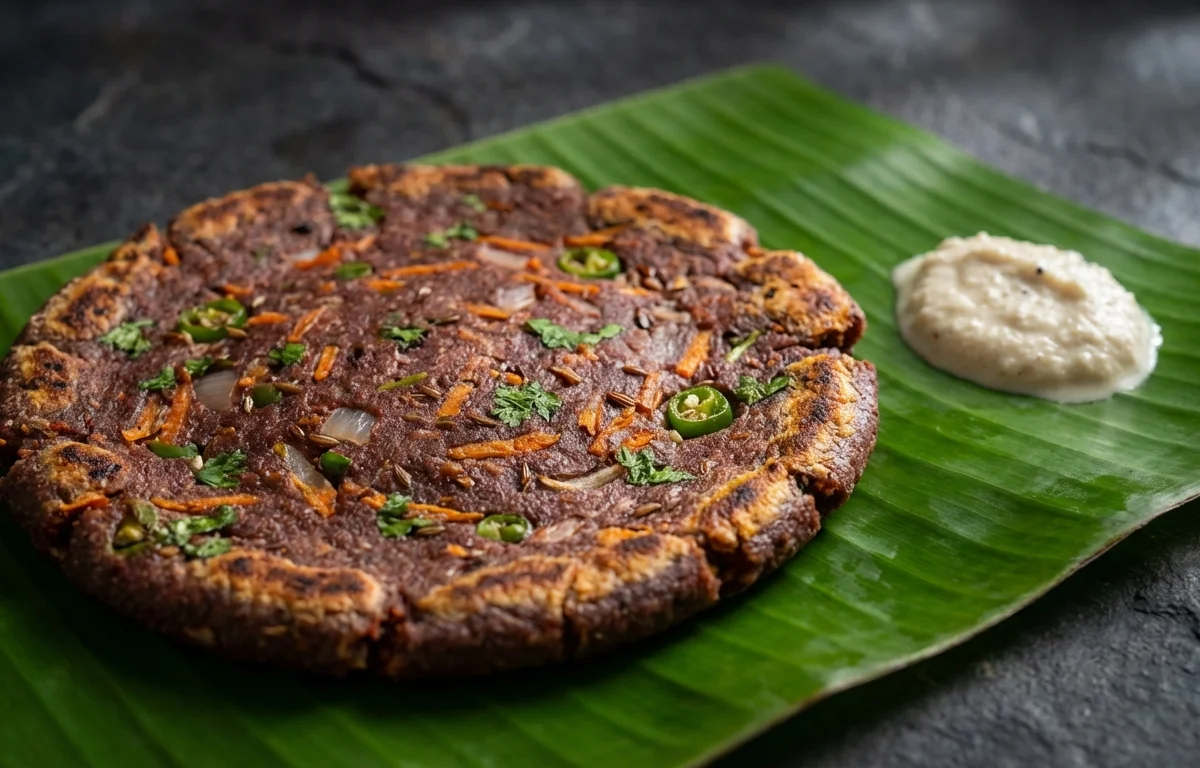
Crispy, golden flatbreads made from finger millet flour, speckled with fresh coconut, green chilies, and aromatic curry leaves. A rustic Karnataka-style rotti that's rolled thin and cooked on a hot griddle until beautifully spotty and crisp at the edges, best enjoyed hot with a dollop of butter or spicy chutney.
For 4 servings
- prep
Mix the dry ingredients.
1.In a large mixing bowl, add ragi flour and salt.2.Add cumin seeds and mix well. - mix · ~8 min
Prepare the dough with vegetables.
1.Add chopped onion, green chili, grated carrot, coconut, curry leaves, and coriander leaves to the flour mixture.2.Mix everything well so the vegetables are evenly distributed in the flour.3.Gradually pour hot water while mixing with a spoon, then knead into a soft, pliable dough once it's cool enough to handle.TIPUse hot water — it softens the ragi flour and makes the dough easier to roll without cracking. - rest · ~5 min
Rest the dough briefly.
Cover the dough and let it rest for 5 minutes so the flour absorbs the moisture fully.
- prep
Divide and shape the dough balls.
1.Divide the dough into 8 equal portions.2.Roll each portion into a smooth ball between your palms. - prep
Roll out the rottis.
1.Place a dough ball between two sheets of parchment paper.2.Gently roll into a thin, even circle about 5-6 inches in diameter.3.Peel off the top paper carefully.TIPRoll gently and evenly. If the edges crack, patch them with damp fingers — ragi has no gluten, so treat the dough with care. - fry · ~5 min
Cook the rotti on a hot tawa.
1.Heat a tawa on medium-high heat until hot.2.Invert the rolled rotti onto the hot tawa and peel off the second sheet of paper.3.Drizzle about 1.5 teaspoons of oil around the edges and a few drops on top.4.Cook for 2-3 minutes until the underside is golden and spotty, then flip.5.Press gently with a spatula and cook the other side for 2 more minutes until crisp and golden.TIPThe tawa should be medium-hot — too low and the rotti dries out; too high and it burns before cooking through. - prep
Repeat for remaining rottis.
Roll and cook the remaining dough balls the same way. Stack the cooked rottis on a plate, keeping them covered with a clean kitchen towel to stay warm.
- serve
Serve hot with butter and chutney.
Serve the ragi rottis immediately while hot and crisp, with a dollop of fresh butter on top and coconut chutney or chutney pudi on the side.
What to keep in mind.
6 tips from the recipe — small details that make a real difference to the final dish.
- 1Use hot water to bind the ragi dough — it prevents cracking and makes rolling easier.
- 2Roll the rotti between parchment sheets to avoid sticking, as ragi dough is delicate.
- 3If the edges crack while rolling, gently press them back with moistened fingertips.
- 4Cook on a medium-hot tawa — too low heat dries the rotti, too high burns it before it cooks through.
- 5Stack cooked rottis under a clean kitchen towel to keep them soft and warm while you finish the batch.
- 6For extra crispness, drizzle oil around the edges and press lightly with a spatula while cooking.
Adapt it for your goals.
Low-oil
Skip the oil drizzle and cook the rotti on a non-stick tawa dry — it will be less crisp but still delicious and lower in fat.
High proteinHigh-protein
Add 2 tablespoons of roasted and crushed peanuts or flaxseed meal to the dough for extra protein and a nutty flavor.
VeganVegan
The recipe is already plant-based — simply serve without butter and enjoy with coconut chutney or a nut-based spread.
No onion no garlicNo onion-no garlic
Replace onion with grated bottle gourd (lauki) or finely chopped cabbage for a sattvic version that still adds texture.
Why this is on our healthy list.
Rich in Calcium
Finger millet (ragi) is one of the best grain sources of calcium, which supports bone health and teeth strength.
High in Dietary Fiber
Ragi flour is packed with fiber that aids digestion and helps maintain steady blood sugar levels.
Gluten-Free Grain
This dish is naturally gluten-free, making it a safe and nutritious option for those with celiac disease or gluten sensitivity.
Packed with Vegetables
Onions, carrots, and fresh herbs add vitamins, antioxidants, and natural flavor without extra fat or sodium.
Frequently asked questions
This happens if the water isn't hot enough or the dough is too dry. Use freshly boiled water and knead until smooth — if cracks appear, moisten your hands and knead again.