Loading...
Also known as:
Per 100g
Nutrition data source: USDA FoodData Central
Common measurement equivalents in grams
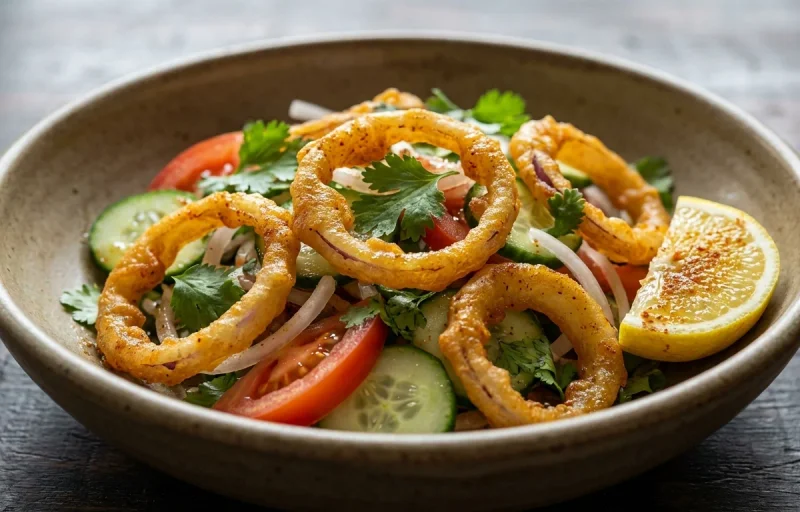
Crispy, spiced onion rings tossed with a fresh, tangy salad of cucumbers, tomatoes, and a zesty chaat masala dressing. A delightful fusion snack that's both crunchy and refreshing.

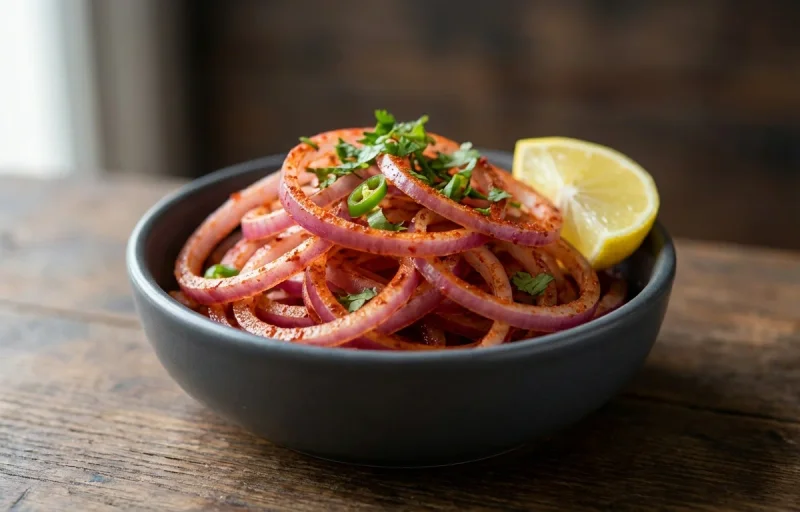
Crisp, tangy onion rings tossed in a zesty mix of spices and lemon juice. This classic Indian onion salad, or Laccha Pyaz, is the perfect crunchy accompaniment to rich curries and tandoori dishes.

Crispy, golden fish fillets marinated in a zesty blend of ginger, garlic, and green chilies. This iconic Kolkata street food snack is perfect as an appetizer, served with tangy kasundi and onion rings.
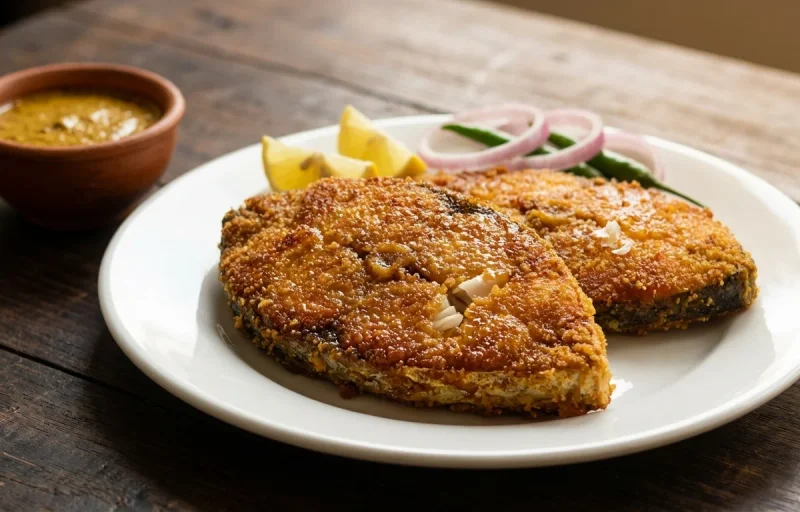
Tender, flaky Bhetki fillets marinated in zesty spices and coated in a golden, crispy crumb. This iconic Kolkata street food is a beloved appetizer, perfect with a side of kasundi and onion rings.
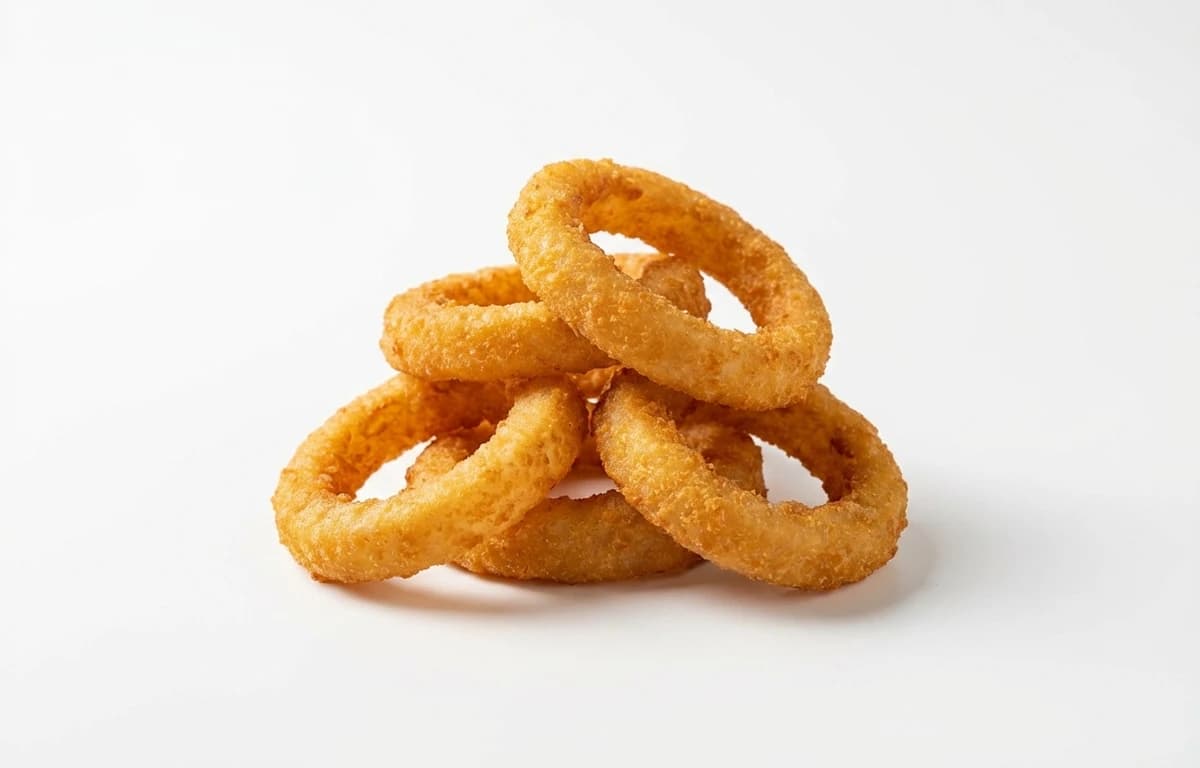
While onion rings contain onions which provide fiber and antioxidants, they are generally considered an indulgent food. Because they are typically breaded and deep-fried, they are high in calories (330 per 100g) and fats, so they should be consumed in moderation.
A 100g serving of onion rings contains approximately 330 calories and 38g of carbohydrates. Most of these calories and carbs come from the flour or breadcrumb coating and the oil absorbed during the frying process.
Not necessarily. While the core ingredient is a vegetable, many traditional batters use eggs or milk as a binding agent. You must check the specific ingredients or packaging to ensure no animal-derived products were used in the breading.
Standard onion rings are not gluten-free because the batter and breading are typically made with wheat flour. However, gluten-free versions can be made using alternative flours like cornstarch, rice flour, or certified gluten-free breadcrumbs.
No, onion rings are generally not keto-friendly. With 38g of carbohydrates per 100g, the breading provides too many carbs for a standard ketogenic diet, which usually limits daily intake to under 50g.
For the best results, bake frozen onion rings in a preheated oven at 400°F (200°C) until golden brown, or use an air fryer for a crispier texture. Avoid microwaving them, as this often results in a soggy, limp coating.
Yes, air frying is an excellent way to prepare onion rings with less oil than deep-frying. Cook them at 375°F (190°C) for 8-10 minutes, shaking the basket halfway through to ensure they become evenly crispy and golden.
Onion Rings is a versatile ingredient found in cuisines around the world. With 330 calories per 100g and 4 grams of protein, it's a nutritious addition to many dishes.
Explore more ingredients in the processed category with complete nutrition information.
View all processed →Discover 10 recipes featuring onion rings with step-by-step instructions.
Browse recipes →Explore more ingredients similar to Onion Rings.
The most-searched ingredients on CraftMyMeals.
Cooked onion rings can be stored in an airtight container in the refrigerator for 2 to 3 days. To maintain their texture when eating leftovers, reheat them in an oven or air fryer rather than a microwave.
Yes, the onion component provides some dietary fiber, antioxidants, and small amounts of B vitamins. However, these benefits are often secondary to the high fat and sodium content found in processed or restaurant versions.
Yes, you can freeze homemade onion rings by placing them in a single layer on a baking sheet until solid, then transferring them to a freezer bag. This 'flash-freezing' prevents them from sticking together and helps the breading stay intact.