
Other
oregano.
VegetarianVeganGluten-freeDairy-freeNut-freePeanut-freeSoy-freeEgg-freeShellfish-freeHoney-freeAlcohol-free
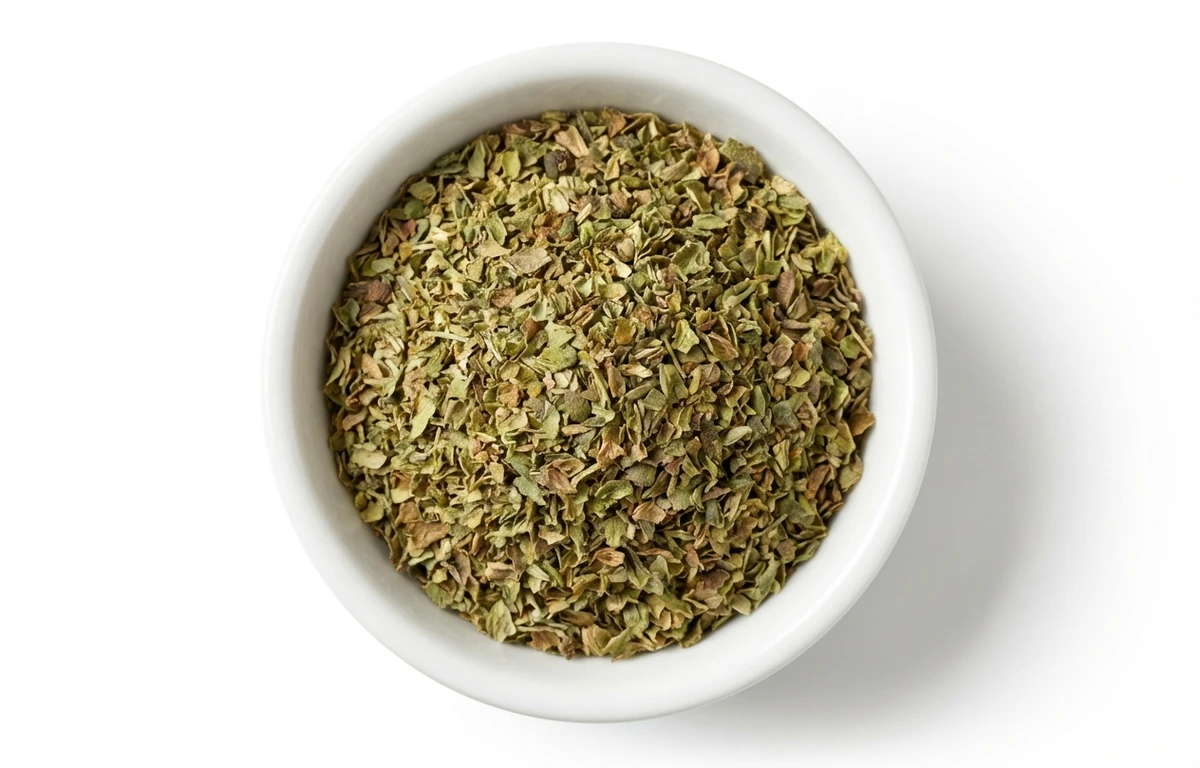
SERVING
CALORIES
265
PROTEIN
9.0g
CARBS
47.5g
FAT
4.3g
FIBER
42.5g
This ingredient is flagged as naturally gluten-free. Per 100 g, it provides 622 µg of vitamin K.
NUTRITION PROFILE · per 100 g
Everything in this ingredient.
MACRONUTRIENTS
Calories265kcal—
Protein9.0g18%
Carbohydrates47.5g17%
Fiber42.5g152%
Sugar4.1g8%
Total fat4.3g6%
Saturated fat1.6g8%
Trans fat0g—
Cholesterol0mg0%
Water9.9g—
MINERALS
Sodium25mg1%
Potassium1260mg27%
Calcium1597mg123%
Iron36.8mg204%
Magnesium270mg64%
Phosphorus148mg12%
Zinc2.7mg25%
Copper0.60mg67%
Manganese4.7mg204%
Selenium4.5µg8%
VITAMINS
Vitamin A85µg9%
Vitamin C2.3mg3%
Vitamin D0µg0%
Vitamin E18.3mg122%
Vitamin K622µg518%
Thiamin (B1)0.18mg15%
Riboflavin (B2)0.53mg41%
Niacin (B3)4.6mg29%
Pantothenic acid (B5)0.90mg18%
Vitamin B61.0mg59%
Folate (B9)237µg59%
Vitamin B120µg0%
%DV based on a 2,000 cal diet. Source: USDA FoodData Central. A dash in the %DV column means there’s no established Daily Value for that nutrient.
MEASUREMENT CONVERSIONS
How much is what.
1 cup45g
1 tablespoon3g
1 teaspoon1g
1 oz28.4g
1 lb453.6g
1 ml0.2g
1 liter180g
HEALTH BENEFITS
Why eat it.
- ✓May help fight bacteria and reduce infection risk
- ✓May aid in digestion and gut health
COOKING TIPS
In the kitchen.
- 1Crush the dried leaves between your palms before adding to release oils
- 2Add early in the cooking process for stews to allow flavors to meld
- 3Pairs exceptionally well with tomato-based sauces, lemon, and olive oil
STORAGE
Keep it fresh.
- Store in a cool, dark, and dry place like a pantry
- Keep in an airtight glass container to preserve essential oils
- Avoid storing near the stove as heat degrades the flavor
FAQ
Frequently asked questions.
How long does dried oregano last?
It typically maintains peak flavor for 1 to 3 years if stored in a cool, dark place in an airtight container.
Can I substitute dried oregano for fresh?
Yes, use 1 teaspoon of dried oregano for every 1 tablespoon of fresh oregano, as the dried form is more concentrated.
How can I tell if my dried oregano has gone bad?
If the herb has lost its characteristic pungent aroma and the color has faded to a dull grey-brown, it should be replaced.
Is dried oregano gluten-free?
Pure dried oregano is naturally gluten-free, but always check labels for potential cross-contamination in processing facilities.
What are the best food pairings for oregano?
It pairs perfectly with pizza, pasta sauces, roasted lamb, grilled chicken, and Greek salads.
Can I freeze dried oregano?
Freezing is not necessary for dried herbs and can introduce moisture; a dry pantry is the best storage environment.
What is a good substitute if I run out of oregano?
Dried marjoram is the closest substitute. Thyme or basil can also work depending on the specific recipe.
RECIPES
Cook with oregano.
0 recipes · sorted by what’s quick
RELATED GUIDES



















