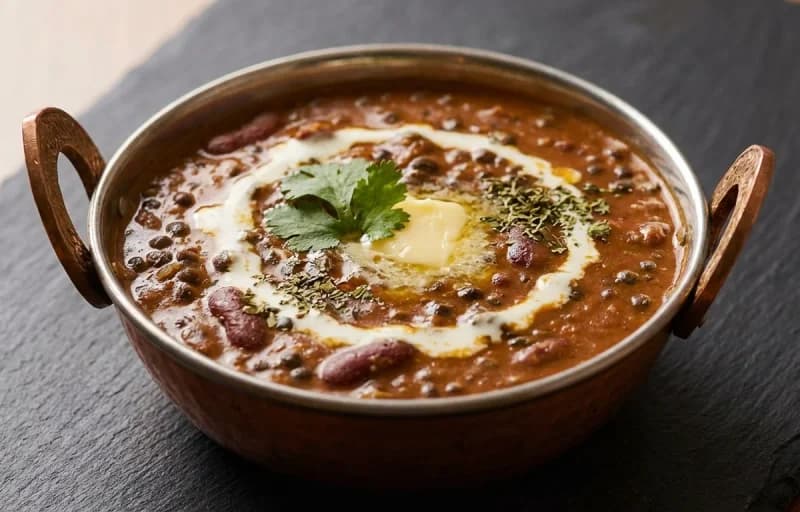
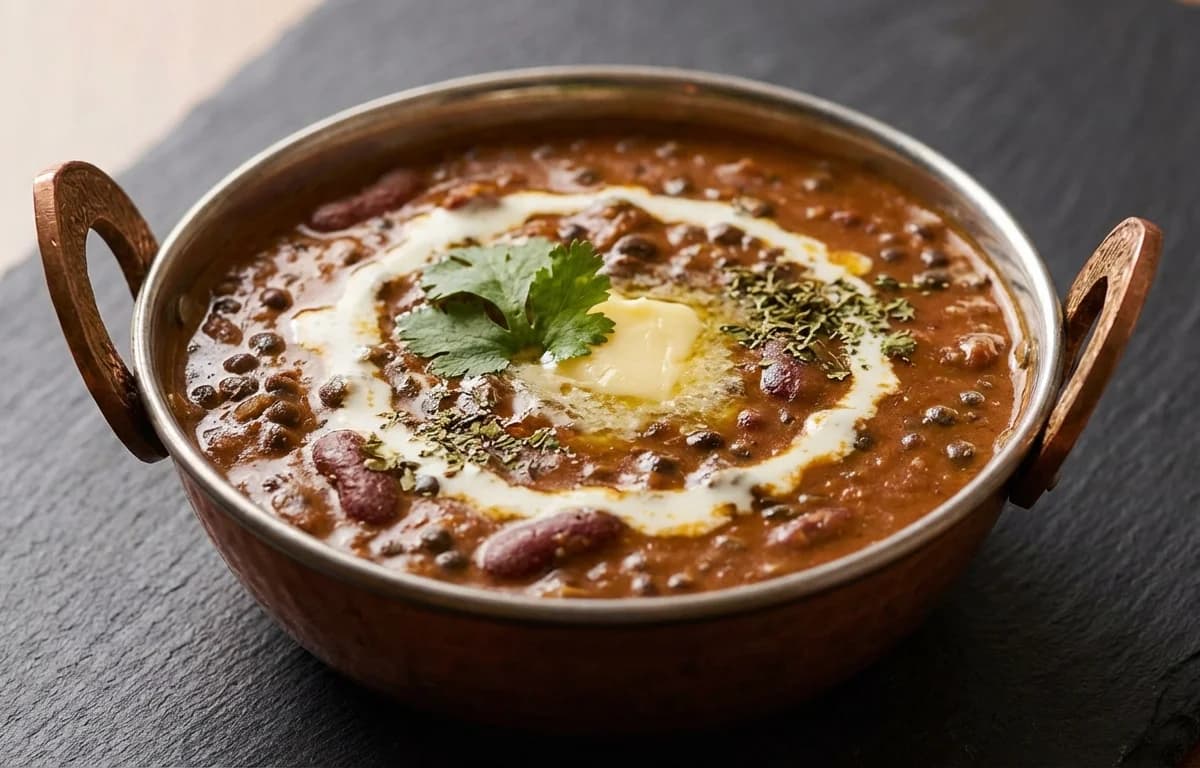

A quintessential Punjabi dish, this Dal Makhani is incredibly rich and creamy. Whole black lentils and kidney beans are slow-cooked in a buttery, tomato-based gravy, resulting in a dish that's pure comfort in a bowl. Perfect with naan or rice.
Prep20 min
Cook90 min
Soak480 min
Servings4
Serving size: 1 cup
418cal
18gprotein
50gcarbs
Ingredients
1 cup Whole Black Gram (also known as Sabut Urad Dal)
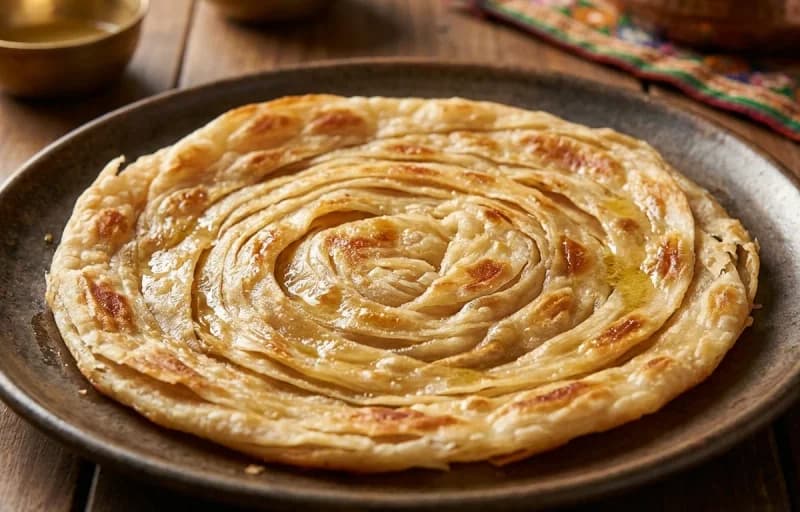
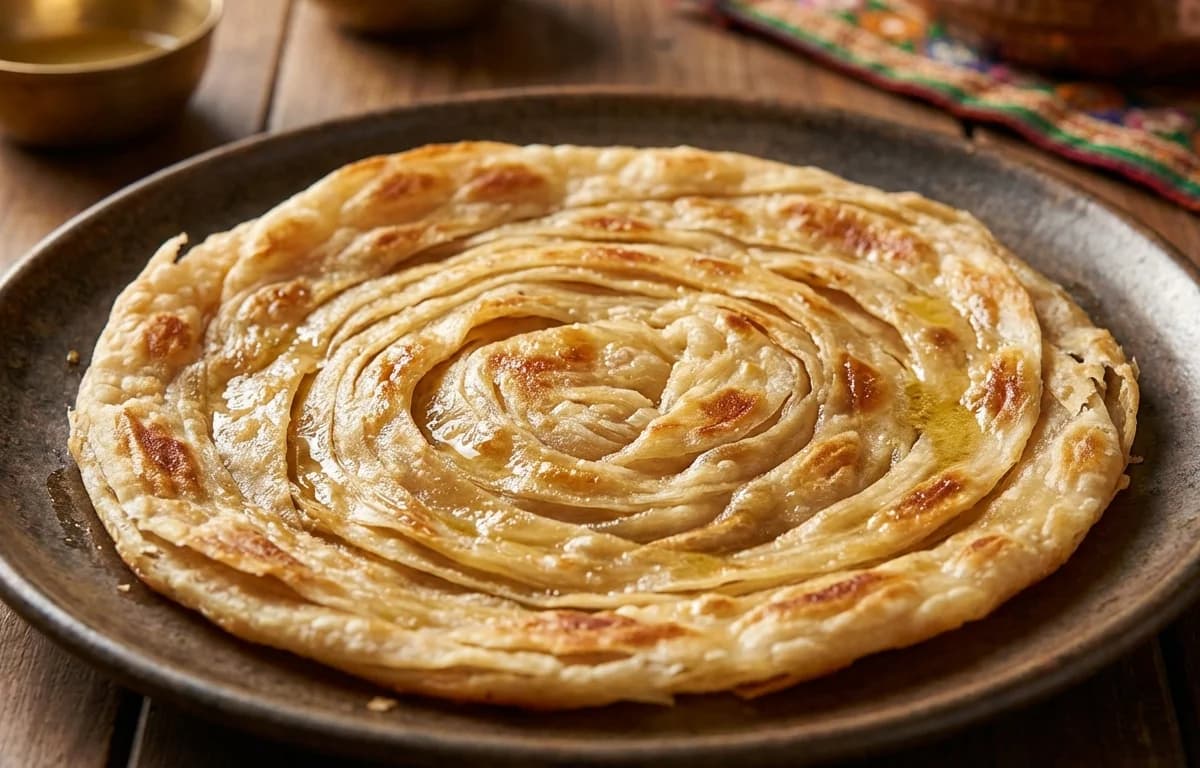
Experience the culinary artistry of North India with Laccha Paratha, a multi-layered flatbread celebrated for its intricate, flaky texture. Each bite reveals delicate, buttery layers that are both crispy and soft. Made from whole wheat flour and pan-fried to golden perfection with ghee, it's the ultimate accompaniment to rich curries, dals, or simply a dollop of yogurt.
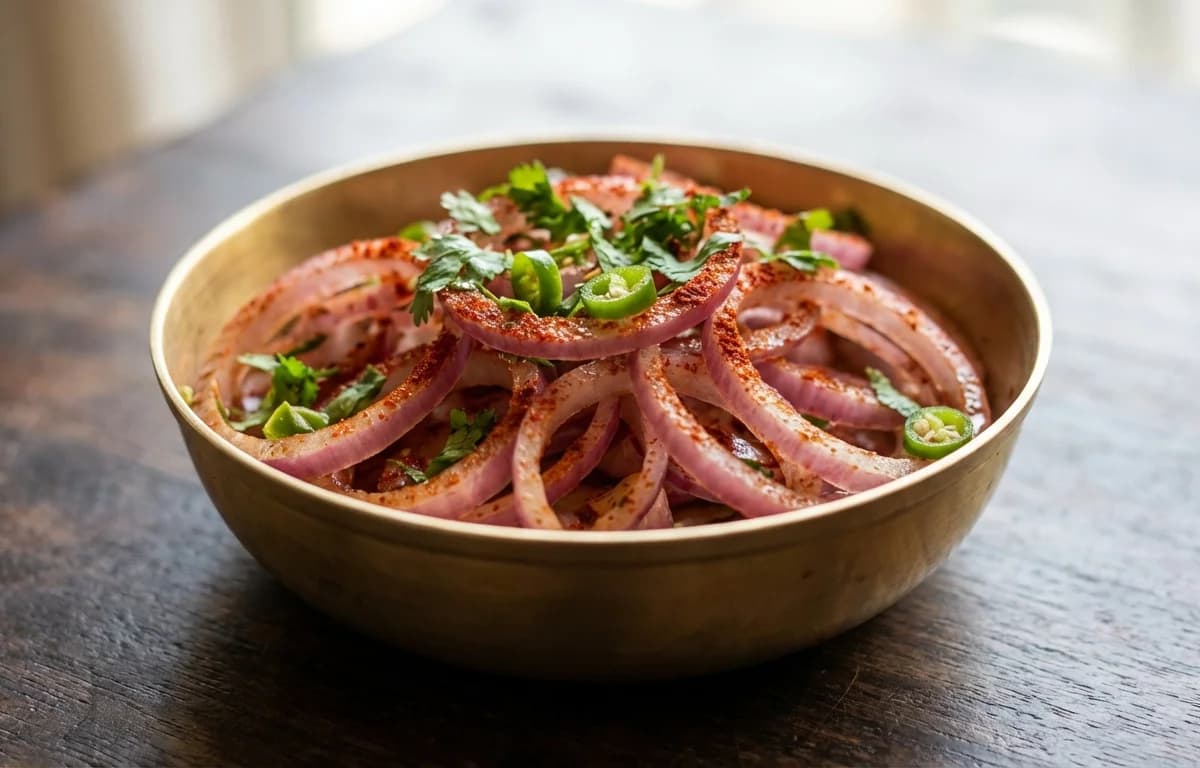
Crisp, tangy rings of onion tossed with fresh lemon juice, herbs, and a hint of spice. This classic Indian side salad, known as Laccha Pyaz, is the perfect refreshing accompaniment to rich curries and grilled kebabs.
Creamy, protein-packed Dal Makhani with flaky Lachha Paratha – a soul-satisfying, aromatic feast!
This indian dish is perfect for lunch. With 908.39 calories and 26.62g of protein per serving, it's a nutritious choice for your meal plan.
18gfat
1 cup Tomato Puree (from 3-4 medium tomatoes)
1 tsp Kashmiri Red Chili Powder (for color, adjust to taste)
1 tsp Coriander Powder
0.75 tsp Garam Masala
0.25 cup Heavy Cream (plus more for garnish)
1 tbsp Kasuri Methi (dried fenugreek leaves)
Instructions
1
Soak and Cook Lentils
Rinse the whole black gram and kidney beans thoroughly under running water. Soak them together in plenty of water for at least 8 hours, or preferably overnight.
Drain the soaking water. Add the lentils and beans to a pressure cooker along with 4 cups of fresh water, 1 tsp of salt, the bay leaf, and the cinnamon stick.
Secure the lid and pressure cook on high heat. After the first whistle, reduce the heat to medium-low and cook for 15-20 minutes. The beans should be completely soft and mashable.
Allow the pressure to release naturally. Open the cooker, remove the bay leaf and cinnamon stick. Using the back of a ladle, lightly mash about a quarter of the lentils against the side of the pot to help create a creamy base.
2
Prepare the Masala Base
In a heavy-bottomed pan (kadai), melt 2 tbsp of butter over medium heat.
Add the finely chopped onion and sauté for 7-8 minutes until it turns soft and golden brown.
Add the ginger-garlic paste and cook for another minute until the raw aroma disappears.
Stir in the tomato puree, Kashmiri red chili powder, coriander powder, and the remaining 0.5 tsp of salt. Cook this masala, stirring occasionally, for 8-10 minutes until it thickens and you see oil separating at the edges.
3
Combine and Slow Cook
Pour the cooked lentil mixture (along with its cooking liquid) into the prepared masala. Mix everything thoroughly.
Add 1 cup of hot water, or more if needed, to achieve a thick but pourable consistency. Bring the dal to a gentle boil.
Reduce the heat to the lowest setting. Partially cover the pan and let the dal simmer for a minimum of 45 minutes, stirring every 10-15 minutes to prevent it from sticking to the bottom.
This slow simmering process is crucial for developing the deep, creamy flavors of Dal Makhani. The dal will continue to thicken as it cooks.
4
Finish and Garnish
Once the dal has reached your desired creamy consistency, stir in the garam masala and the remaining 2 tbsp of butter.
Crush the kasuri methi between your palms to release its aroma and add it to the dal. Stir in the heavy cream.
Let it simmer for a final 5 minutes on low heat for all the flavors to meld together beautifully.
Taste and adjust the salt if necessary. Turn off the heat.
5
Serve
Transfer the Dal Makhani to a serving bowl.
Garnish with a swirl of fresh cream and serve hot with garlic naan, roti, or jeera rice.
456cal
8gprotein
44gcarbs
29gfat
Ingredients
2 cup Atta (Whole wheat flour)
1 tsp Salt
0.5 cup Ghee (Melted, for dough, layering, and cooking)
1 cup Water (Lukewarm, adjust as needed)
Instructions
1
Prepare the Dough (10 mins + 30 mins resting)
In a large mixing bowl, combine 2 cups of atta and 1 tsp of salt.
Add 2 tbsp of the melted ghee to the flour. Rub it in with your fingertips until the mixture resembles coarse breadcrumbs.
Gradually add lukewarm water, a little at a time, and knead to form a soft, smooth, and pliable dough. The dough should be soft but not sticky.
Knead the dough on a clean surface for 8-10 minutes until it is elastic and smooth.
Cover the dough with a damp cloth or lid and let it rest for at least 30 minutes. This step is crucial for relaxing the gluten.
2
Create Layers (15 mins + 15 mins resting)
After resting, knead the dough for another minute. Divide it into 8 equal-sized balls.
Take one dough ball, dust it with dry atta, and roll it into a very thin circle, about 8-9 inches in diameter. The thinner you roll, the more layers you will get.
Spread about 1 tsp of melted ghee evenly over the entire surface of the rolled dough.
Sprinkle a light, even layer of dry atta over the ghee. This helps keep the layers separate.
Starting from one edge, begin to fold the dough into narrow pleats (about 1/2 inch wide), like making a paper fan, until you have a long, pleated strip.
Gently stretch the pleated strip to lengthen it slightly.
Roll this strip tightly into a spiral or pinwheel shape. Tuck the loose end underneath the coil to secure it.
Gently press the spiral flat with your palm. Repeat this process for all the dough balls.
Cover the prepared coils and let them rest for another 10-15 minutes. This second rest makes them easier to roll out.
3
Roll the Parathas (5 mins)
Take one rested coil and lightly dust it with atta.
Gently roll it out into a circle about 5-6 inches in diameter. Apply even, gentle pressure to avoid pressing the layers together and making the paratha dense.
4
Cook the Parathas (25 mins)
Heat a tawa or a flat, heavy-bottomed pan over medium-high heat.
Place a rolled paratha on the hot tawa. Cook for about 30-45 seconds, or until small bubbles appear on the surface.
Flip the paratha. Drizzle about 1/2 tsp of ghee on the top surface and spread it evenly.
Cook for about 1 minute, then flip again. The side with the ghee should now be facing up and have golden-brown spots.
Drizzle another 1/2 tsp of ghee on this side. Press down gently with a spatula and cook for another minute, rotating it occasionally for even browning.
Continue to flip and cook until both sides are golden-brown, crisp, and the layers are visible.
Repeat the process for all remaining parathas, adjusting the heat as necessary.
5
Serve
Remove the cooked paratha from the tawa. While it's still hot, gently crush it between your palms. This action helps to open up and fluff the layers.
Serve immediately with your favorite curry, dal, raita, or pickle.