
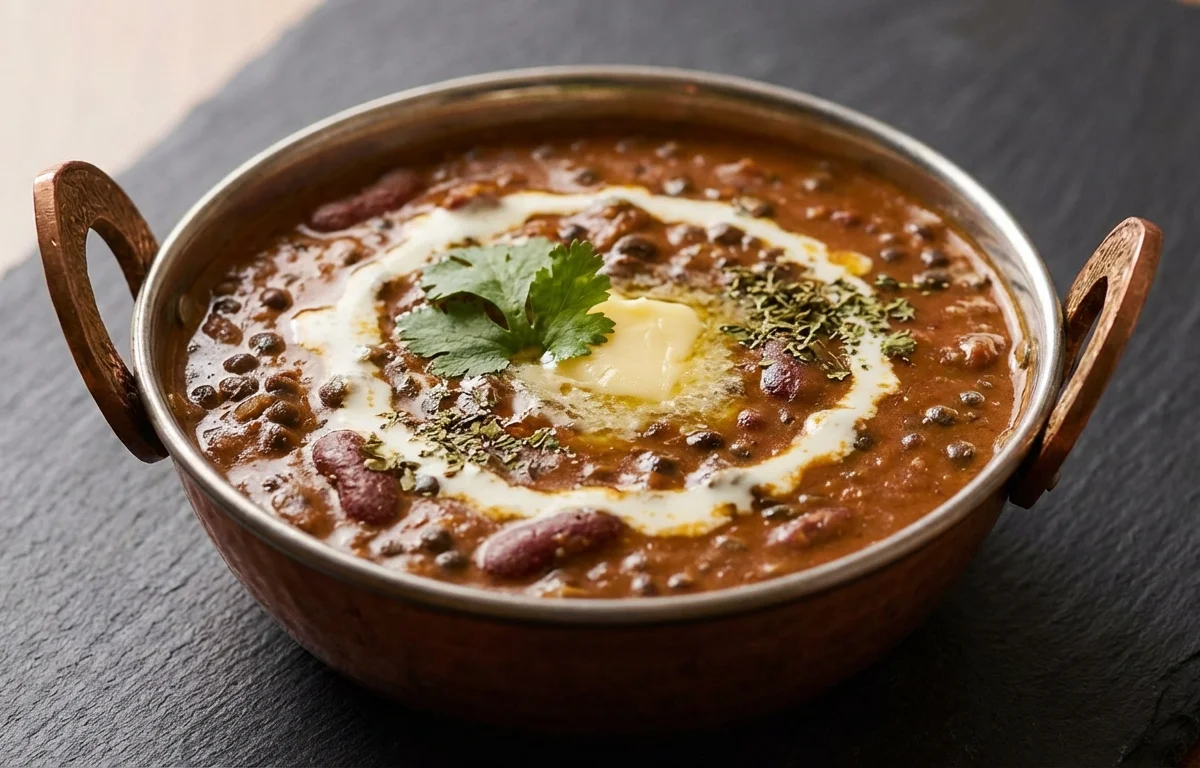
Dal Makhani
Slow-cooked whole black gram and kidney beans turn rich and creamy in this beloved Punjabi dal. Butter, a little cream, and a gentle tomato base give it deep flavor that tastes even better after resting.
For 4 servings
- prep · ~480 min
Soak the lentils and beans.
Rinse the urad dal and rajma well, then soak them in plenty of water overnight or for at least 8 hours. Drain before cooking.
TIPOld beans take longer to soften, so a full overnight soak gives the best texture. - pressure cook · ~30 min
Pressure cook the dal and beans.
1.Add soaked urad dal and rajma to a pressure cooker with 4 cups water and salt.2.Cook on medium heat for 18 to 20 minutes after the first whistle.3.Let the pressure drop naturally before opening the cooker.4.Check that both the lentils and beans are very soft and easy to mash.TIPDal Makhani needs the lentils very soft, not just cooked, so add a little more water and cook longer if needed. - saute · ~15 min
Make the masala base.
1.Heat butter and oil in a heavy pan over medium heat.2.Add cumin seeds and bay leaf, and let them sizzle for 20 to 30 seconds.3.Add onion and cook until light golden, about 5 to 6 minutes.4.Add ginger-garlic paste and green chili, and cook for 1 minute.5.Add tomato, red chili powder, turmeric powder, and coriander powder.6.Cook until the tomatoes soften and the mixture looks thick and glossy, about 6 to 8 minutes.TIPCook the tomatoes well here; a raw tomato taste will stand out in a simple dal like this. - mix · ~3 min
Combine the cooked dal with the masala.
Add the pressure-cooked dal and beans along with their cooking liquid to the pan. Mash a small portion with the back of a spoon to help the dal turn naturally creamy.
- simmer · ~35 min
Slow cook the dal.
Bring the dal to a gentle simmer, then cook uncovered on low heat for 30 to 35 minutes, stirring often so it does not catch at the bottom. Add a splash of water if it gets too thick.
TIPLow, slow cooking is what gives Dal Makhani its deep flavor and silky finish. - simmer · ~4 min
Finish with cream and kasuri methi.
Stir in cream, garam masala, and crushed kasuri methi. Simmer for 3 to 4 minutes more until the dal looks rich and creamy.
- garnish
Garnish with cilantro.
- serve
Serve the Dal Makhani hot.
What to keep in mind.
6 tips from the recipe — small details that make a real difference to the final dish.
- 1If the rajma still feels firm after pressure cooking, cook it longer before making the masala; Dal Makhani should be fully soft and mashable.
- 2Mash a few spoonfuls of the cooked urad and rajma into the pot to create the classic creamy texture without needing extra cream.
- 3Keep the simmer very low and stir the bottom every few minutes, as the thick dal can catch quickly in a heavy pan.
- 4Crush the kasuri methi between your palms right before adding so its aroma blooms into the finished dal.
- 5Let the dal rest for 15 to 20 minutes before serving; it thickens and the butter, cream, and spices settle into a deeper flavor.
- 6This dal tastes even better the next day, so make it ahead and reheat gently with a splash of water to loosen.
Adapt it for your goals.
Vegan
Replace butter with more oil and swap cream for cashew cream or coconut cream for a dairy-free but still rich finish.
low creamLow-cream
Skip the cream and rely on extra mashing plus a longer simmer for a lighter dal that still stays creamy.
smokySmoky
Add a quick dhungar finish with hot charcoal and a little ghee for a classic smoky aroma often found in restaurant Dal Makhani.
spicierSpicier
Increase green chili or red chili powder if you want more heat without changing the core Punjabi flavor profile.
Why this is on our healthy list.
Rich in Plant Protein
Whole urad dal and rajma make this dish filling and nourishing, with legumes that support a satisfying vegetarian meal.
High in Fiber
The lentils and beans provide plenty of fiber, which helps make Dal Makhani hearty and slow-digesting.
Contains Beneficial Spices
Ginger, garlic, cumin, coriander, and turmeric add flavor while contributing traditional spice-based wellness value.
Frequently asked questions
Soaking is strongly recommended because it helps the urad dal and rajma cook evenly and become soft enough for the creamy texture this dish needs.


