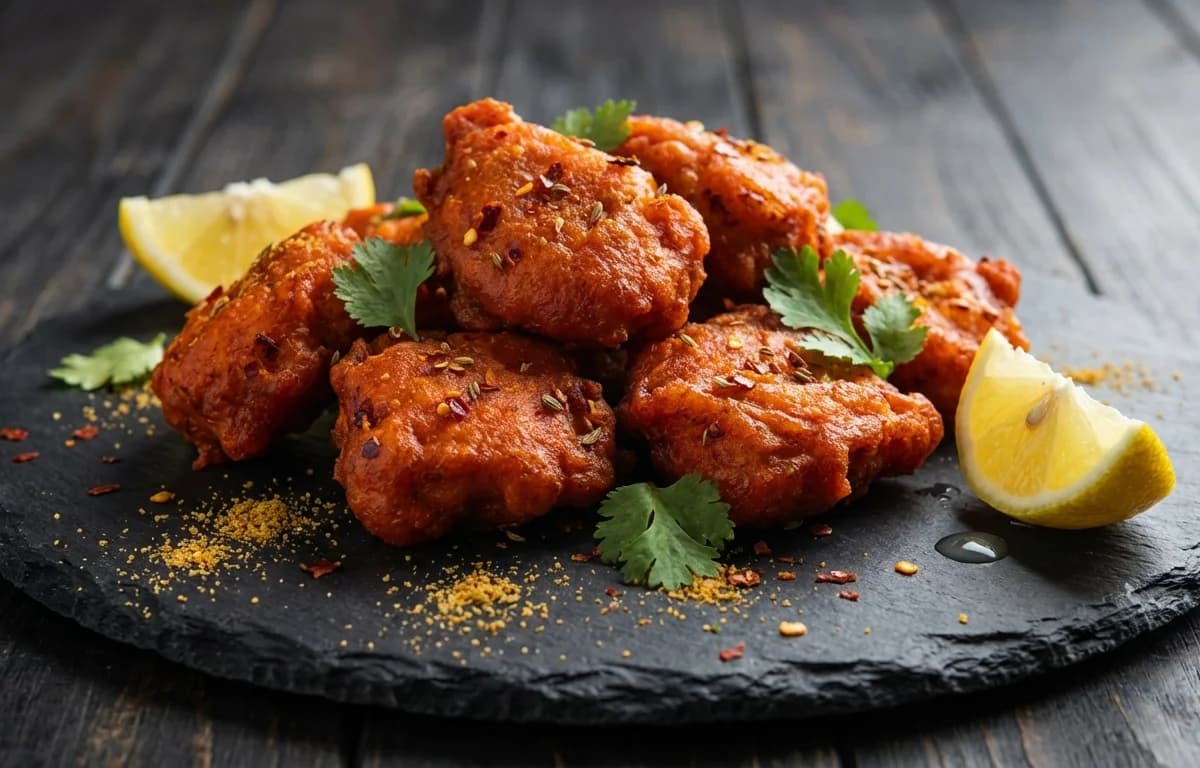
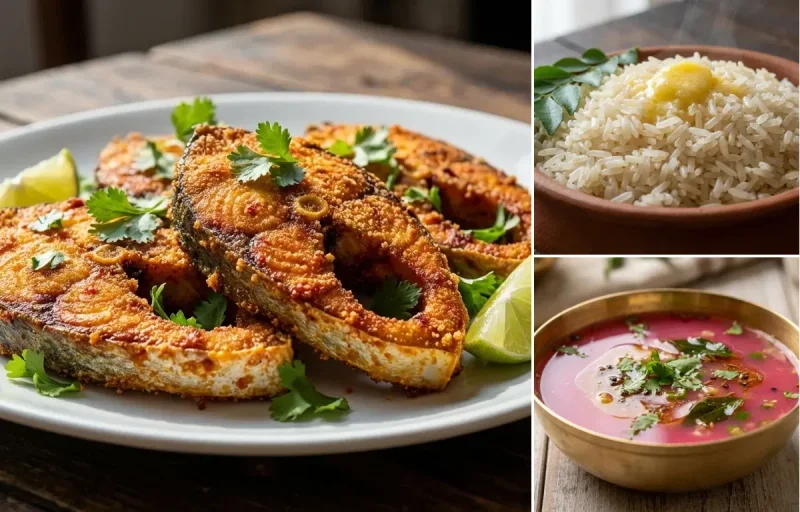
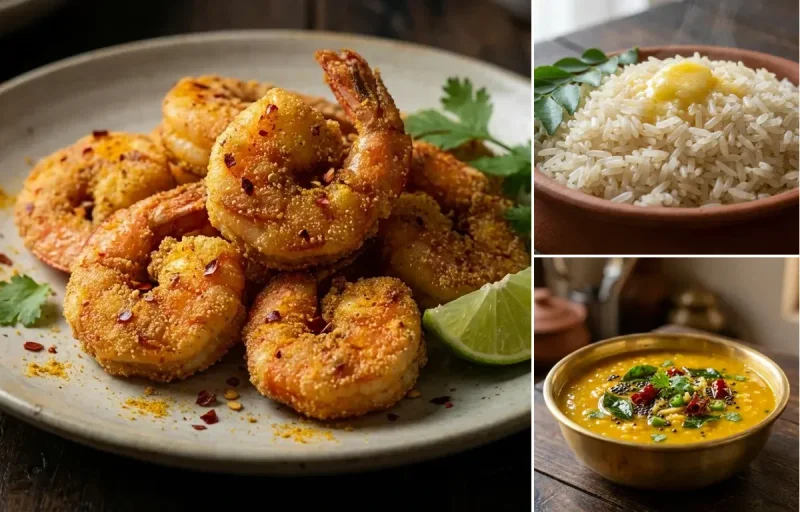
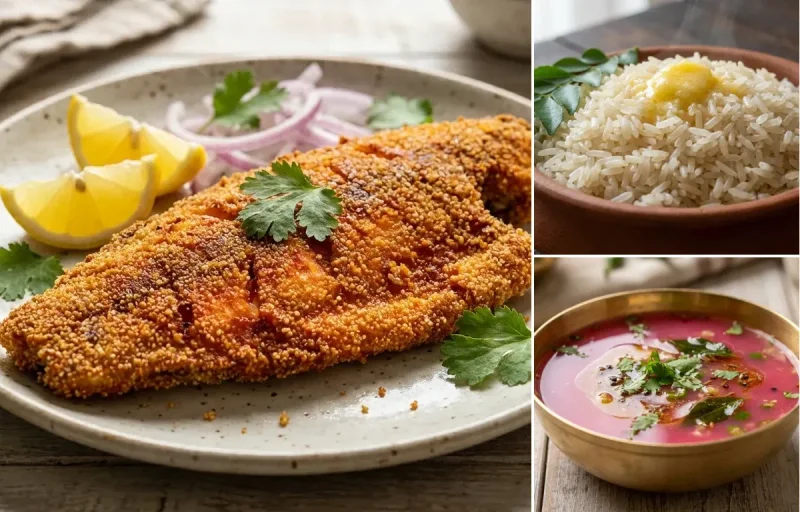
Crispy, golden-fried fish bites with a tangy, spicy marinade. This iconic street food from Mumbai is the perfect appetizer, bursting with flavors of ginger, garlic, and aromatic spices.
Prep20 min
Cook15 min
Servings4
Serving size: 1 serving
399cal
29gprotein
27gcarbs
19gfat
Ingredients
500 g Boneless White Fish (Cut into 2-inch cubes; use firm fish like pomfret, basa, or tilapia)
1.5 tbsp Ginger Garlic Paste
2 tbsp Lemon Juice
0.5 cup Besan
0.25 cup Rice Flour (Adds extra crispiness)
1.5 tbsp Kashmiri Red Chilli Powder (For color and mild heat)
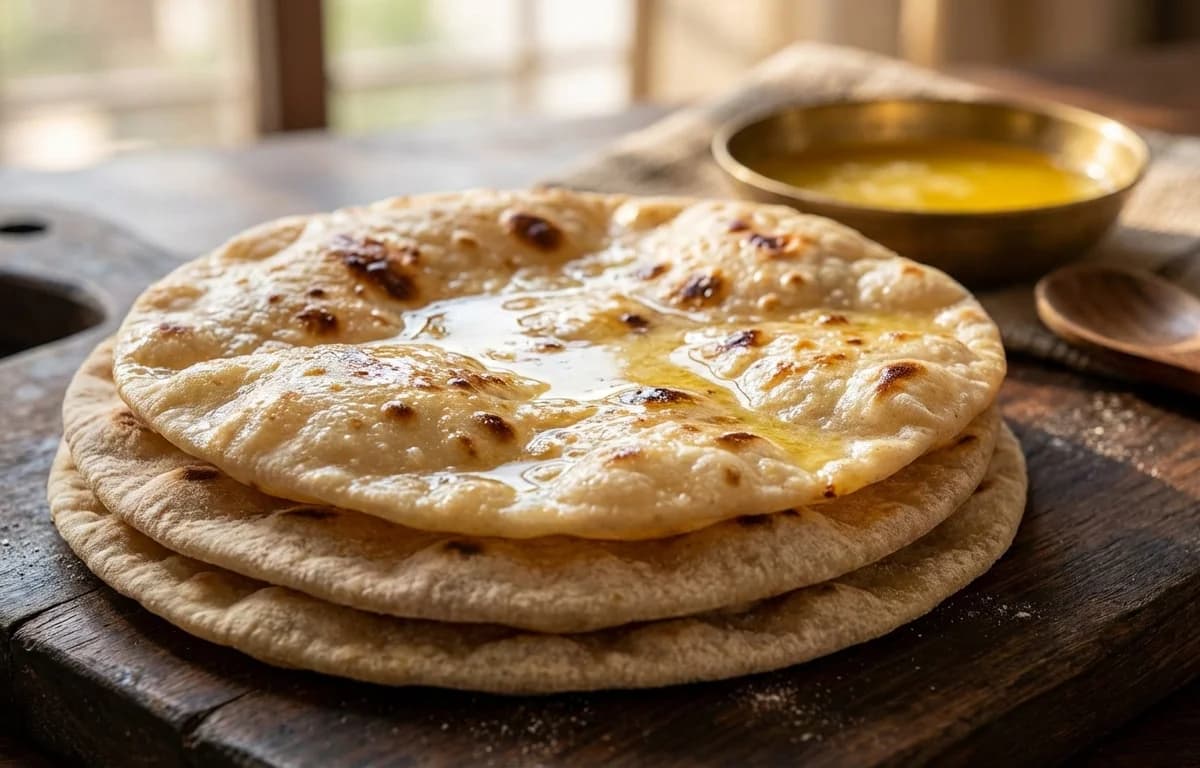
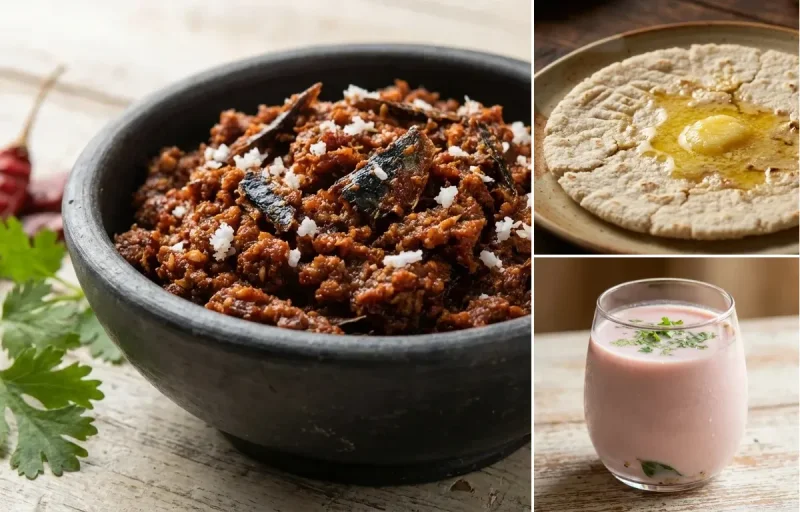
A staple in Indian households, these soft and thin whole wheat flatbreads are perfect for scooping up curries and dals. Made with just a few simple ingredients, they puff up beautifully on the flame, a hallmark of a perfectly made chapati.
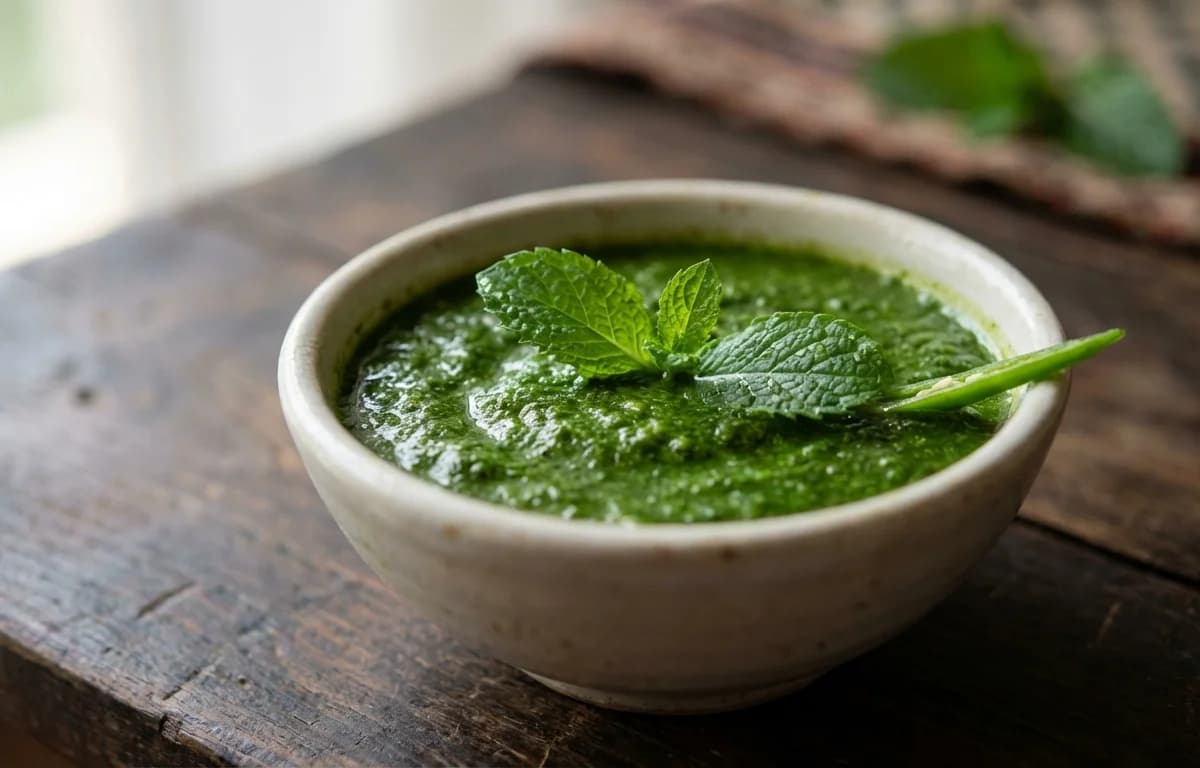
A vibrant and refreshing Indian condiment made with fresh mint, cilantro, and a hint of spice. This classic green chutney, also known as Pudina Chutney, is the perfect zesty accompaniment for samosas, chaat, kebabs, and sandwiches.
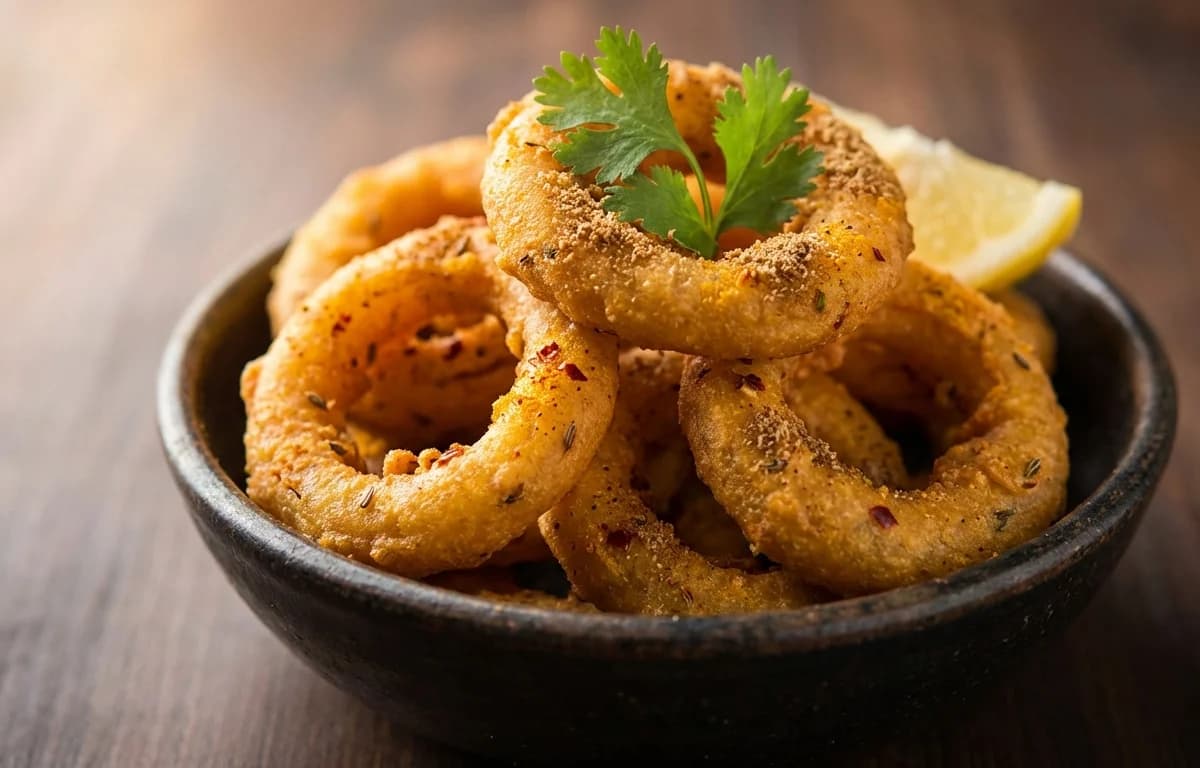
Crispy, savory, and utterly addictive! Sweet onion rings are coated in a flavorful, spiced chickpea flour batter and deep-fried to golden perfection. A perfect tea-time snack or appetizer that's ready in minutes.
Prep15 min
Cook15 min
Servings4
Serving size: 1 serving
About Fish Koliwada, Chapati, Mint Chutney and Indian Onion Rings
Crispy, protein-packed Fish Koliwada with soft chapati and tangy mint chutney – a flavor explosion!
This konkani dish is perfect for lunch. With 957.9300000000001 calories and 47.419999999999995g of protein per serving, it's a nutritious choice for your meal plan.
Other Cuisines to Explore
Discover authentic meals from cuisines around the world.
4 tbsp Water (Add gradually as needed for a thick batter)
2 cup Oil (For deep frying)
0.5 tsp Chaat Masala (For sprinkling)
4 pcs Lemon Wedges (For serving)
1 cup Onion Rings (For serving)
Instructions
1
Prepare and Marinate the Fish
Cut the boneless fish into 2-inch cubes. Pat them completely dry with paper towels; this is crucial for a crispy coating.
In a mixing bowl, combine the fish pieces, ginger-garlic paste, 1 tablespoon of lemon juice, and half of the salt.
Gently mix until the fish is evenly coated. Let it marinate for at least 15-20 minutes at room temperature.
2
Create the Batter
In a separate large bowl, whisk together the besan, rice flour, Kashmiri red chilli powder, turmeric powder, coriander powder, cumin powder, garam masala, ajwain, and the remaining salt.
Add the remaining 1 tablespoon of lemon juice.
Gradually add water, about 1 tablespoon at a time, whisking continuously to form a thick, smooth, lump-free batter. The consistency should be like a thick pancake batter that coats the back of a spoon.
3
Coat the Fish
Add the marinated fish pieces to the batter.
Gently toss with your hands or a spatula until each piece is thoroughly and evenly coated.
4
Deep Fry the Fish
Heat oil in a deep pan or kadai over medium-high heat to about 175°C (350°F). To test, drop a small amount of batter into the oil; it should sizzle and rise to the surface immediately.
Carefully slide the battered fish pieces into the hot oil one by one, ensuring not to overcrowd the pan. Fry in 2-3 batches.
Fry for 4-5 minutes, turning occasionally, until the fish is a deep golden-brown, crispy, and cooked through.
Using a slotted spoon, remove the fried fish and place them on a wire rack to drain excess oil and maintain crispiness.
5
Garnish and Serve
While the fish is still hot, sprinkle generously with chaat masala.
Serve immediately with fresh lemon wedges, onion rings, and a side of green chutney for dipping.
213cal
8gprotein
44gcarbs
2gfat
Ingredients
2 cup Atta (Also known as whole wheat flour)
1 cup Lukewarm Water (Adjust as needed, amount varies by flour type)
0.5 tsp Salt
1 tsp Ghee (For adding to the dough (optional))
Instructions
1
Prepare the Dough
In a large mixing bowl, combine 2 cups of atta and salt. If using, add 1 tsp of ghee and mix it into the flour with your fingertips until it resembles coarse crumbs.
Gradually add lukewarm water, a little at a time, mixing and gathering the flour to form a dough.
Knead the dough on a clean surface for 8-10 minutes, pressing and stretching with the heel of your hand. The final dough should be soft, pliable, smooth, and not sticky. It should have a texture similar to an earlobe.
Cover the dough with a damp cloth or a lid and let it rest for at least 20-30 minutes. This step is crucial for relaxing the gluten and ensuring soft chapatis.
2
Divide and Roll the Chapatis
After resting, knead the dough again for one minute to make it smooth.
Divide the dough into 8 equal-sized portions and roll them into smooth balls.
Take one ball and flatten it between your palms. Dip it into the dry atta for dusting, coating it lightly on both sides.
Place it on a rolling board (chakla) and roll it out into a thin, even circle of about 6-7 inches in diameter. Use minimal dry flour for dusting to avoid making the chapati hard.
3
Cook the Chapatis
Heat a tawa (flat griddle) on medium-high heat. To check if it's ready, sprinkle a pinch of dry flour; it should sizzle and turn brown quickly.
Carefully place the rolled chapati on the hot tawa. Cook for about 15-20 seconds until you see small bubbles forming on the surface.
Using tongs, flip the chapati. Cook the other side for about 30-40 seconds until light brown spots appear.
Using the tongs, lift the chapati and place it directly on a high gas flame. It should puff up like a balloon within 2-3 seconds.
Immediately flip it to cook the other side on the flame for another 2 seconds. Be careful not to burn it.
4
Finish and Serve
Remove the puffed chapati from the flame and place it in a casserole or a container lined with a clean kitchen towel. This traps the steam and keeps them soft.
Brush the top with a little ghee. This adds flavor and helps keep it soft.
Repeat the rolling and cooking process for the remaining dough balls.
Serve hot with your favorite dal, sabzi, or curry.
2 tablespoon Roasted Chana Dal (Acts as a thickener)
2 tablespoon Lemon Juice (Freshly squeezed)
0.75 teaspoon Salt (Adjust to taste)
0.5 teaspoon Black Salt (Also known as Kala Namak)
0.5 teaspoon Sugar (Optional, to balance flavors)
3 tablespoon Ice Cold Water (Or use ice cubes, add as needed for consistency)
Instructions
1
Prepare the Herbs (4 minutes)
Thoroughly rinse the mint and cilantro leaves under cold running water to remove any dirt or grit.
Pluck the mint leaves from their tough stems; discard the stems as they can be bitter.
For the cilantro, you can use the tender stems along with the leaves as they are full of flavor. Roughly chop the bunch.
Gently pat the herbs dry with a clean kitchen towel or paper towels to remove excess water.
2
Combine Ingredients in Blender (1 minute)
Place the prepared mint leaves, cilantro, green chilies (start with one for less heat), chopped ginger, roasted chana dal, lemon juice, salt, black salt, and sugar into a small, high-speed blender jar.
3
Blend to a Smooth Paste (3 minutes)
Add 2-3 tablespoons of ice-cold water or a couple of ice cubes. Using cold water is crucial to prevent the herbs from oxidizing and helps retain their vibrant green color.
Blend for 1-2 minutes, scraping down the sides of the jar with a spatula as needed, until you achieve a smooth, uniform paste.
If the chutney is too thick, add more cold water, 1 teaspoon at a time, and blend again until you reach your desired consistency. Be careful not to make it too watery.
Peel the large onions and slice them crosswise into 1/4 to 1/2-inch thick rounds.
Gently separate the rounds into individual rings. Set aside the smaller center pieces for another use.
2
Make the Batter
In a large mixing bowl, whisk together the besan, rice flour, ajwain, turmeric powder, red chili powder, garam masala, hing, baking soda, and salt.
Gradually pour in the cold water while whisking continuously to form a smooth, thick batter. The consistency should be similar to pancake batter, thick enough to coat the back of a spoon without being runny.
Do not overmix the batter. Let it rest for 10-15 minutes.
3
Heat the Oil
Pour oil into a deep pan or kadai, ensuring it's at least 2 inches deep. Heat over medium-high flame.
The ideal oil temperature is between 350-375°F (175-190°C).
To test without a thermometer, drop a small bit of batter into the oil. If it sizzles and rises to the top quickly without browning too fast, the oil is ready.