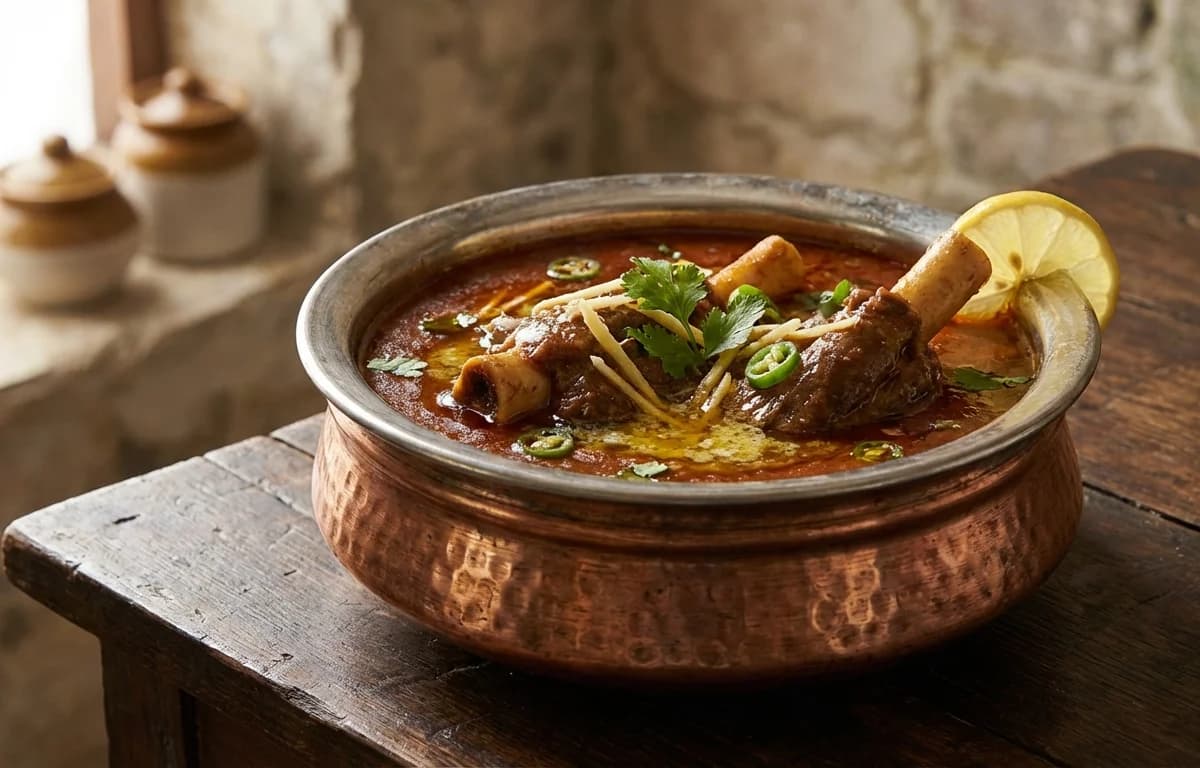
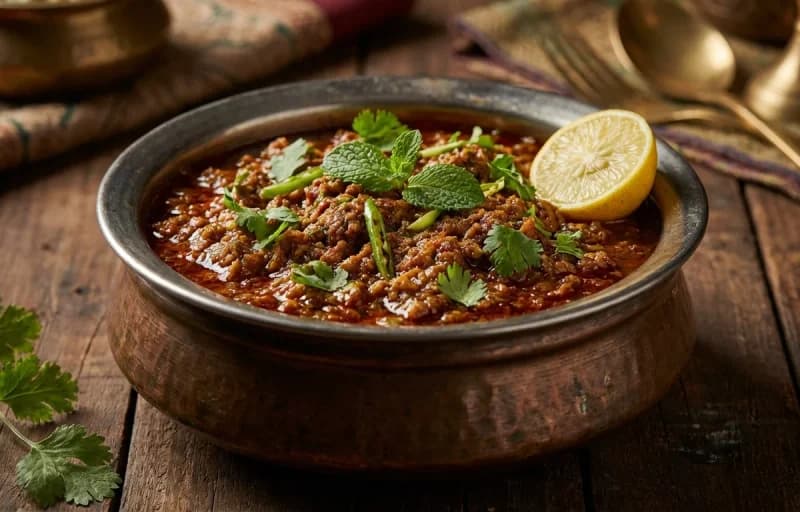
A rich, aromatic, slow-cooked mutton stew where the meat becomes incredibly tender and falls off the bone. This classic Mughlai dish is known for its spicy, flavorful gravy, perfect for a special meal.
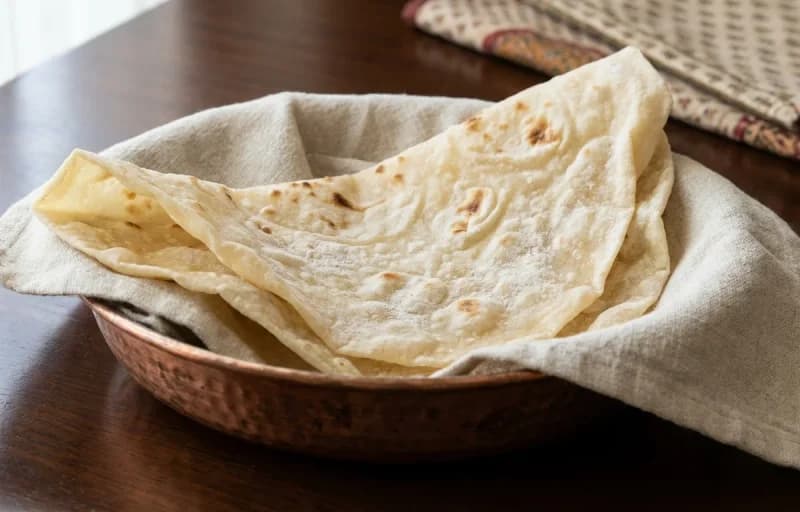
A soft and spongy leavened flatbread from Mughlai cuisine. Made with whole wheat flour and yeast, this roti has a delightful tangy flavor and a pillowy texture, perfect for scooping up rich curries.
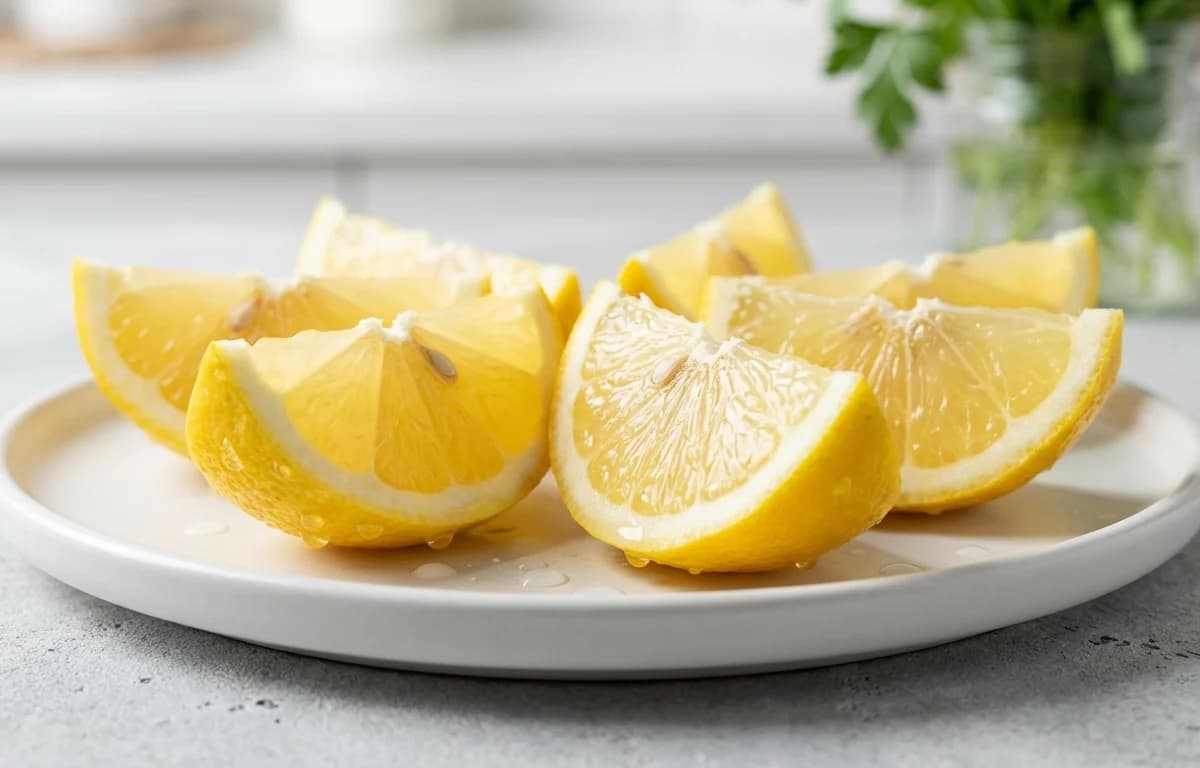
Bright, zesty lemon wedges, perfect for garnishing drinks, seafood, salads, and more. This simple guide shows you how to cut a lemon perfectly to add a burst of fresh citrus flavor to any dish or beverage.
Aromatic, slow-cooked Gosht Nihari with Khamiri Roti. A rich, energy-giving meal perfect for any day!
This awadhi dish is perfect for lunch. With 1211.6999999999998 calories and 62.129999999999995g of protein per serving, it's a nutritious choice for your meal plan.
fat
2 tsp
Coriander Powder
2 tsp Fennel Powder
1 tsp Dry Ginger Powder
1 tsp Garam Masala
2 pcs Bay Leaves
1 inch Cinnamon Stick
2 pcs Black Cardamom
4 pcs Green Cardamoms
4 pcs Cloves
4 tbsp Atta (Whole wheat flour)
6 cups Water (Hot)
2 tsp Salt (Or to taste)
2 inch piece Ginger (For garnish, julienned)
3 pcs Green Chili (For garnish, slit lengthwise)
0.5 cup Fried Onions (For garnish)
1 pcs Lemon (Cut into wedges for serving)
2 tbsp Coriander Leaves (Chopped, for garnish)
Instructions
1
Brown Onions and Sear Mutton
Heat 4 tbsp of ghee in a heavy-bottomed pot or Dutch oven over medium heat.
Add the sliced onions and fry until they are deep golden brown and crisp, about 12-15 minutes. Be careful not to burn them.
Remove the fried onions (birista) with a slotted spoon and set aside. Keep half for garnish.
In the same ghee, add the mutton shanks and sear on all sides over medium-high heat until well-browned, about 5-7 minutes.
Add the ginger and garlic pastes and sauté for 2 minutes until the raw aroma disappears.
2
Cook with Spices and Yogurt
Reduce the heat to low. Add the crushed fried onions, Kashmiri red chili powder, red chili powder, turmeric, coriander powder, fennel powder, and dry ginger powder. Sauté for 1 minute until fragrant.
Add the whisked curd, stirring continuously to prevent it from splitting. Cook for 5-7 minutes until the oil (rogan) starts to separate from the masala.
3
Slow Cook the Nihari
Pour in 6 cups of hot water and add the salt. Add the whole spices: bay leaves, cinnamon stick, black cardamoms, green cardamoms, and cloves.
Bring the mixture to a rolling boil, then reduce the heat to the lowest possible setting.
Cover the pot with a tight-fitting lid and let it simmer for 3.5 to 4 hours. The meat should be exceptionally tender and falling off the bone.
4
Thicken the Gravy
Carefully skim off the layer of oil (rogan) from the top of the gravy and set it aside in a small bowl. This will be used later.
In a separate bowl, whisk the atta with 1 cup of cool water to create a smooth, lump-free slurry.
Slowly pour the slurry into the simmering nihari, stirring constantly to prevent lumps from forming.
Increase the heat to medium-low and let the gravy simmer for another 20-25 minutes, stirring occasionally, until it thickens and the raw taste of the flour is gone.
Stir in the garam masala.
5
Garnish and Serve
Ladle the hot Nihari into serving bowls.
Pour the reserved rogan (oil) over each serving.
Garnish generously with julienned ginger, slit green chilies, the remaining fried onions, and chopped coriander leaves.
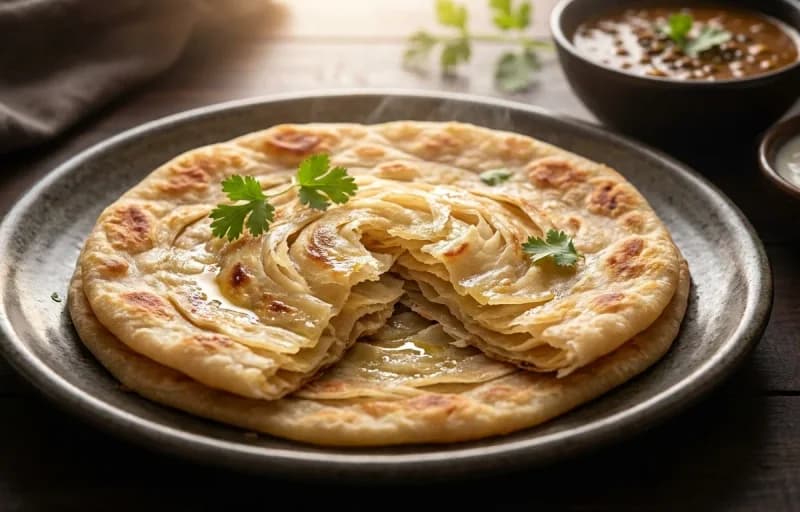
Serve immediately with lemon wedges on the side, accompanied by hot naan or khameeri roti.
4
Serving size: 1 serving
346cal
9gprotein
46gcarbs
15gfat
Ingredients
2 cup Atta
1 tsp Active Dry Yeast
1 tsp Sugar (To activate the yeast)
0.5 cup Warm Water (Around 105-115°F (40-46°C))
0.5 cup Warm Milk
4 tbsp Ghee (Melted, 2 tbsp for dough and 2 tbsp for brushing)
1 tsp Salt
Instructions
1
Activate the Yeast
In a small bowl, combine the warm water, sugar, and active dry yeast.
Stir gently and let it sit for 5-10 minutes.
The mixture will become frothy and bubbly, indicating the yeast is active and ready to use.
2
Prepare the Dough
In a large mixing bowl or the bowl of a stand mixer, combine the atta and salt.
Create a well in the center and pour in the activated yeast mixture, warm milk, and 2 tablespoons of melted ghee.
Mix until a shaggy dough forms, then transfer to a lightly floured surface.
Knead for 8-10 minutes by hand (or 6-7 minutes with a dough hook) until the dough is soft, smooth, and elastic. It should be pliable and not too sticky.
3
Proof the Dough
Form the dough into a ball and place it in a lightly greased bowl.
Cover the bowl with a damp cloth or plastic wrap.
Let the dough rest in a warm, draft-free place for 90 minutes, or until it has doubled in size.
4
Shape the Rotis
Once proofed, gently punch down the dough to release the air.
Briefly knead for another minute.
Divide the dough into 8 equal portions and roll each portion into a smooth ball.
5
Cook the Rotis
Heat a tawa or cast-iron skillet over medium-high heat.
Take one dough ball, dust it lightly with atta, and roll it into a 6-inch circle, keeping it slightly thicker than a regular chapati.
Place the rolled roti on the hot tawa. Cook for about 30-40 seconds, until small bubbles start to appear on the surface.
Flip the roti and cook the other side for about 1 minute, pressing down gently with a spatula to encourage puffing.
Flip again and cook for another 30 seconds until golden-brown spots appear on both sides.
For a charred, tandoori-like effect, you can carefully lift the roti with tongs and hold it over a low open flame for a few seconds until it puffs up completely.
6
Serve
Remove the cooked roti from the heat and immediately brush it with the remaining melted ghee.
Repeat the process for all the dough balls, stacking the cooked rotis in a casserole dish or wrapped in a kitchen towel to keep them soft and warm.
Serve hot with your favorite curry, dal, or kebab.
1 large Lemon (Choose one that is firm with a bright, unblemished yellow peel.)
Instructions
1
Wash and Roll
Thoroughly wash the lemon under cool running water to remove any wax or residue. Pat it completely dry.
On a countertop or cutting board, press down firmly on the lemon with the palm of your hand and roll it back and forth for 10-15 seconds. This helps to release the juices.
2
Trim the Ends
Place the lemon on a stable cutting board.
Using a sharp knife, carefully slice off about 1/4 inch from both the stem end and the blossom end. This creates flat surfaces for stability.
3
Cut in Half
Stand the lemon on one of its newly cut flat ends.
Slice it directly down the middle, lengthwise, to create two equal halves.
4
Create Wedges
Place each lemon half cut-side down on the board.
Slice each half lengthwise into 3 or 4 equal wedges, depending on your desired size. This will yield a total of 6 or 8 wedges, ready for serving.