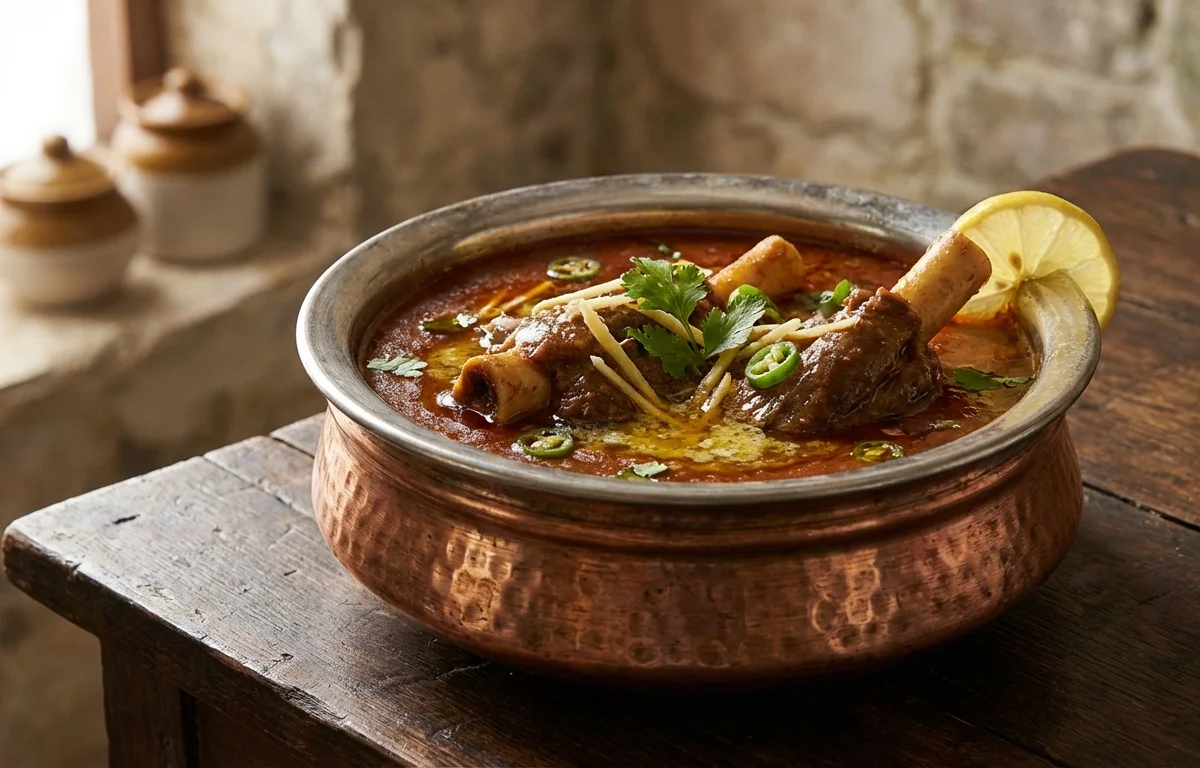
Gosht Nihari
A slow-cooked mutton stew with deep spice, a silky body, and rich marrow flavor. This old Delhi classic is simmered until the meat turns tender and the gravy becomes glossy, making it perfect with naan or khameeri roti.
For 4 servings
- prep · ~3 min
Crush the whole spices.
1.Add fennel seeds, coriander seeds, cumin seeds, black peppercorns, cloves, green cardamom, bay leaf, and cinnamon to a mortar or spice grinder.2.Crush them coarsely so they release flavor but do not turn into a very fine powder.3.Keep the spice mix ready near the stove. - saute · ~10 min
Brown the onions in ghee.
1.Heat ghee in a heavy pot over medium heat.2.Add sliced onion and cook until deep golden brown, stirring often.3.Do not burn the onions; they should turn rich brown and sweet.TIPA heavy pot helps the nihari cook gently without catching at the bottom. - saute · ~7 min
Cook the meat with ginger-garlic paste.
1.Add mutton pieces to the pot and sear for 5 to 6 minutes until lightly browned.2.Add ginger-garlic paste and cook until the raw smell fades.3.Stir well so the meat gets coated with the browned onion and ghee. - mix · ~2 min
Add the spices and seasoning.
1.Add the crushed whole spice mix to the pot.2.Stir in red chili powder, turmeric powder, nutmeg powder, mace powder, and salt.3.Cook for 1 to 2 minutes on low heat so the spices bloom without burning. - boil · ~10 min
Add water and bring the stew to a boil.
Pour in water and scrape the bottom of the pot well. Bring everything to a steady boil so the flavors start blending.
- simmer · ~110 min
Slow-cook the nihari until the meat is tender.
Lower the heat, cover, and cook gently for 1 hour 45 minutes to 2 hours, stirring a few times, until the mutton is very tender and the broth is rich.
TIPKeep the heat low. Fast boiling can tighten the meat and make the gravy cloudy. - mix · ~10 min
Thicken the gravy with flour slurry.
Mix whole wheat flour with a little water until smooth. Stir it into the pot and cook 8 to 10 minutes, stirring often, until the gravy turns silky and lightly thick.
TIPAdd the slurry slowly while stirring so the gravy stays smooth and lump-free. - rest · ~10 min
Rest the nihari before serving.
Turn off the heat and let the nihari sit for 10 minutes so the fat settles slightly and the spices round out.
- garnish
Garnish with ginger, cilantro, and lemon juice.
- serve
Serve hot.
What to keep in mind.
7 tips from the recipe — small details that make a real difference to the final dish.
- 1Use bone-in shank if possible; the marrow gives nihari its signature depth and body.
- 2Brown the onions to a deep golden stage, not just soft, or the gravy will taste flat.
- 3Keep the simmer very gentle; a hard boil can toughen mutton and muddy the broth.
- 4Stir and scrape the pot after adding water so the browned onion bits enrich the stew.
- 5Add the flour slurry in a thin stream while stirring constantly to avoid a pasty, lumpy gravy.
- 6Nihari tastes even better the next day; chill overnight and reheat slowly for a fuller spice blend.
- 7Finish each bowl with ginger juliennes and lemon just before serving so the rich gravy stays balanced.
Adapt it for your goals.
Beef-shank
Use beef shank instead of mutton for a more traditional, gelatin-rich nihari with extra body from the connective tissue.
low oilLow-oil
Reduce the ghee slightly and chill the finished nihari to lift excess fat before reheating for a lighter bowl.
spicierSpicier
Increase red chili powder or add a little black pepper for a hotter finish without changing the stew's structure.
pressure cookerPressure-cooker
Cook the mutton under pressure to shorten the long simmer, then finish uncovered with the flour slurry for the right consistency.
Why this is on our healthy list.
Protein-Rich Main Dish
Bone-in mutton provides substantial protein, making this stew filling and supportive of muscle maintenance.
Mineral-Dense Broth
Slow-cooked bone-in meat and marrow contribute minerals and create a nourishing, deeply savory cooking liquid.
Digestive Spice Support
Fennel, cumin, ginger, and coriander are traditional spices often used to add aroma while making rich meat dishes feel easier to digest.
Frequently asked questions
Yes, but bone-in cuts like shank or shoulder give much better flavor and body. Boneless meat will taste lighter and the gravy will be less rich.