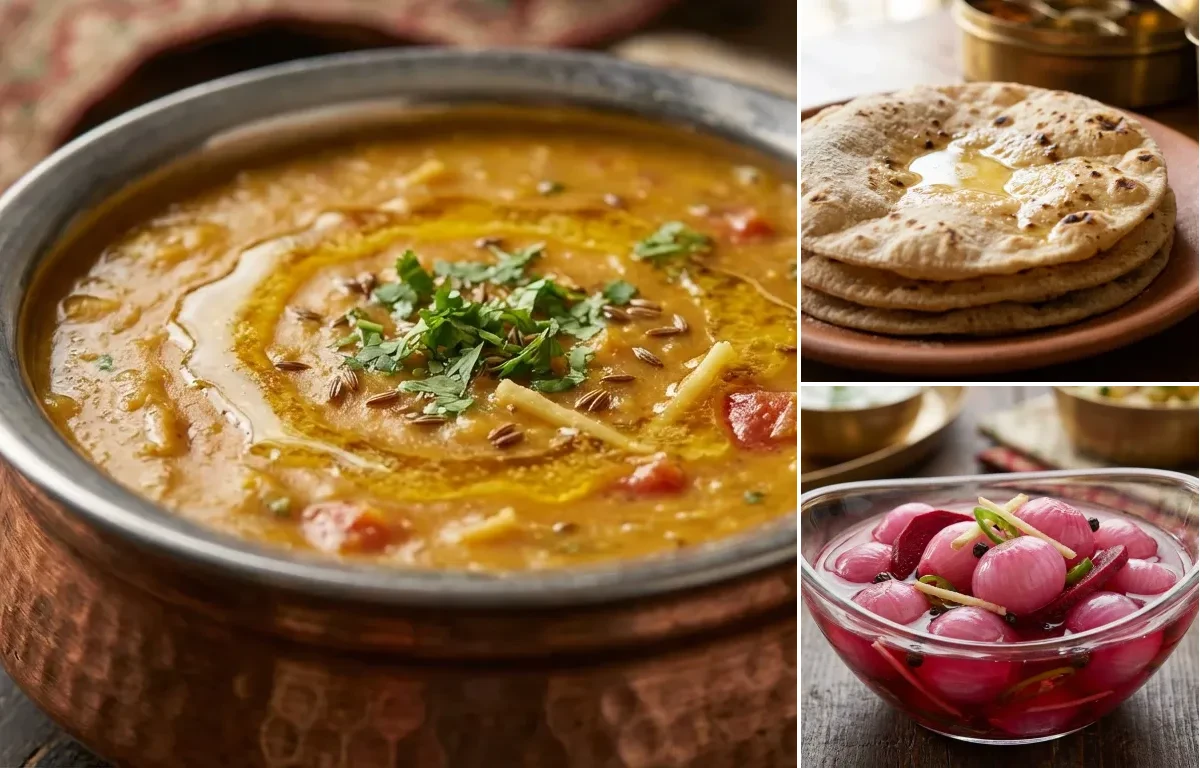
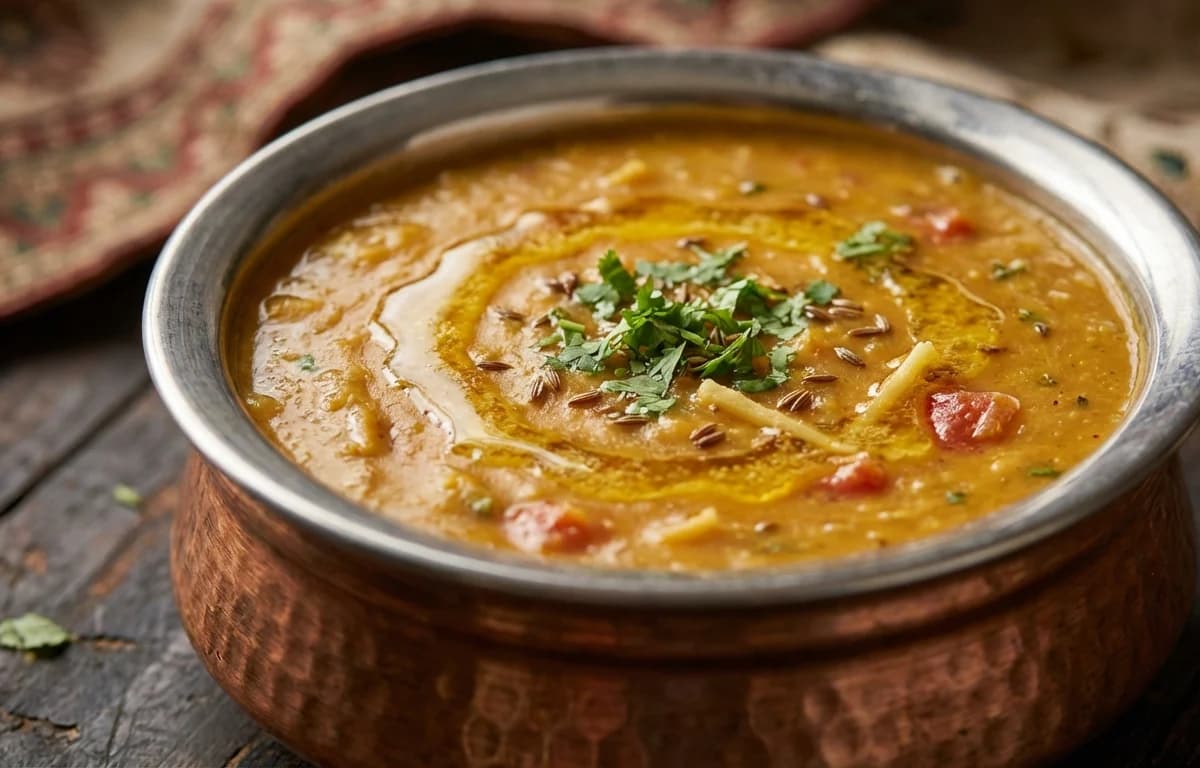
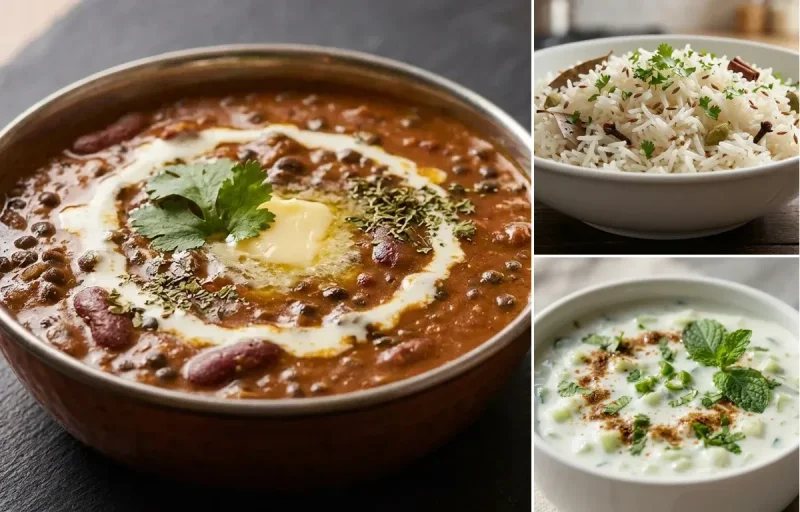
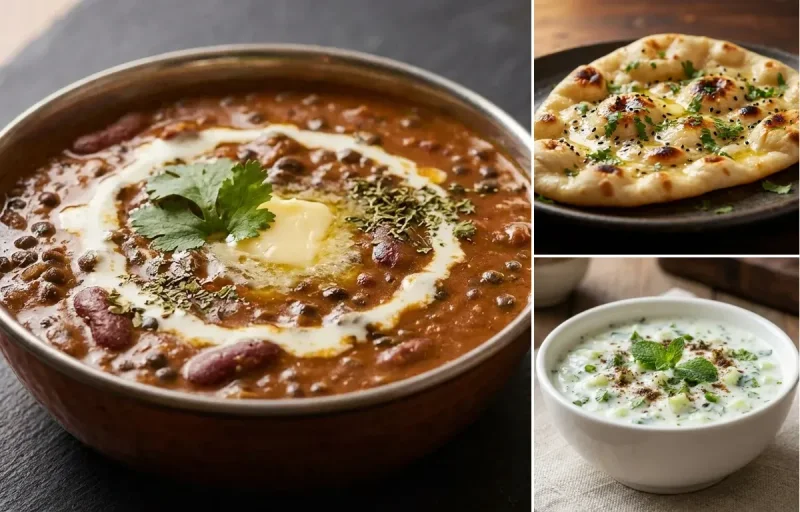
A humble yet incredibly flavorful mixed lentil curry made with chana dal and urad dal. This creamy, wholesome dal is inspired by the one served in Gurdwaras, offering comfort and nourishment in every spoonful.
Prep15 min
Cook45 min
Soak120 min
Servings4
Serving size: 1 serving
306cal
12gprotein
38gcarbs
Ingredients
0.75 cup Chana Dal (Bengal gram lentils)
0.25 cup Whole Urad Dal (Black gram lentils with skin)
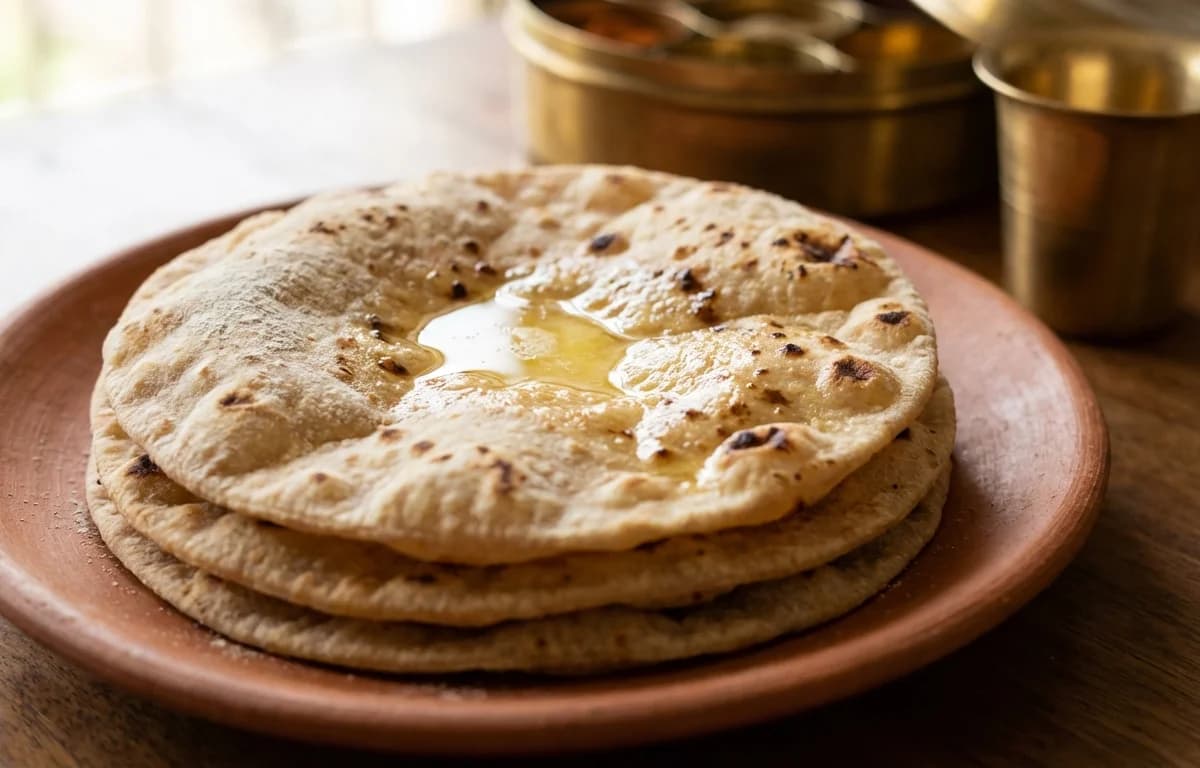
Soft, unleavened whole wheat flatbread, a daily staple in Indian households. Perfect for scooping up curries and dals, this simple, wholesome bread is puffed up on an open flame for that classic, airy texture.
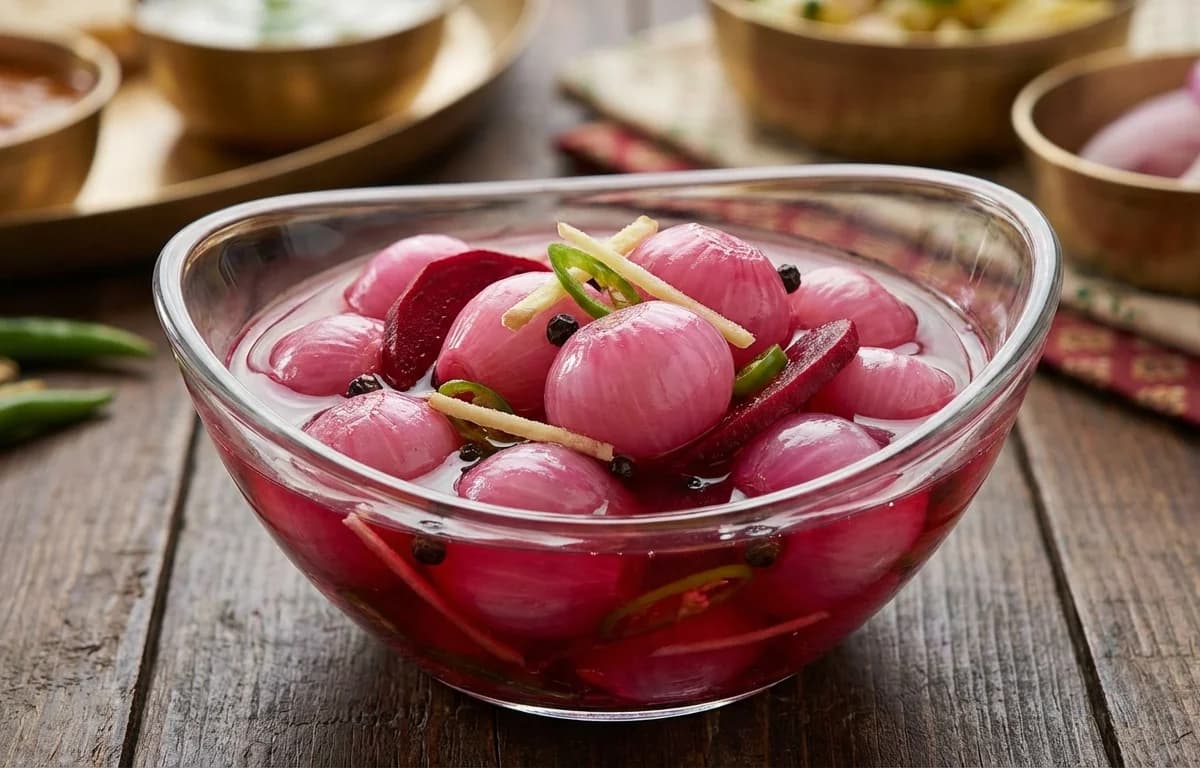
Crisp, tangy pickled pearl onions soaked in a sweet and sour vinegar brine. This classic Indian restaurant-style condiment adds a refreshing crunch to rich curries and tandoori dishes.
Prep15 min
Cook5 min
Ferment1440 min
Servings
About Langar Dal, Roti and Sirke Wale Pyaaz
Soul-satisfying Langar wali Dal with soft rotis – a fiber-rich, protein-packed homestyle meal!
This punjabi dish is perfect for dinner. With 552.0799999999999 calories and 20.250000000000004g of protein per serving, it's a high-fiber option for your meal plan.
Other Cuisines to Explore
Discover authentic meals from cuisines around the world.
2 pcs Green Chili (Slit lengthwise, adjust to taste)
2 medium Tomatoes (Pureed or finely chopped)
0.5 tsp Turmeric Powder
1 tsp Kashmiri Red Chili Powder (For color, use regular for more heat)
1 tsp Coriander Powder
1.5 tsp Salt (Adjust to taste)
0.75 tsp Garam Masala
3 tbsp Coriander Leaves (Freshly chopped, for garnish)
Instructions
1
Soak the Dals
Pick through the chana dal and urad dal to remove any stones or debris. Rinse them together under cool running water until the water runs clear.
Place the rinsed dals in a large bowl and cover with 3 cups of water. Let them soak for at least 4 hours, or preferably overnight. This step is crucial for even cooking, especially for the chana dal.
After soaking, drain the water completely and give the dals one final rinse.
2
Pressure Cook the Dals
Transfer the soaked and drained dals to a 3-liter or larger pressure cooker.
Add 4 cups of fresh water, the turmeric powder, and 1 teaspoon of salt. Stir to combine.
Secure the lid and pressure cook on medium-high heat for 6-7 whistles, or for about 20 minutes. The dals should be completely soft and mushy.
Allow the pressure to release naturally. This can take 10-15 minutes.
3
Prepare the Tempering (Tadka)
While the dal is cooking, heat the ghee in a separate pan (kadai) over medium heat.
Once the ghee is hot, add the cumin seeds. When they start to sizzle and become fragrant (about 30 seconds), add the asafoetida.
Immediately add the finely chopped onion and sauté for 6-8 minutes, until it turns soft and golden brown.
Add the grated ginger, minced garlic, and slit green chilies. Sauté for another minute until the raw aroma disappears.
Add the tomato puree, Kashmiri red chili powder, coriander powder, and the remaining 0.5 teaspoon of salt. Mix well.
Cook the masala, stirring occasionally, for 7-10 minutes, until it thickens and you see ghee separating from the sides.
4
Combine and Simmer
Once the pressure has released, open the cooker. Use a whisk or the back of a ladle to lightly mash the cooked dal. This creates the signature creamy, homogenous texture of Langar Dal.
Pour the prepared tadka into the cooked dal. Stir thoroughly to combine.
Bring the dal to a gentle simmer over low heat. Let it cook uncovered for 8-10 minutes, allowing the flavors to meld together. The dal will thicken as it simmers.
If the dal becomes too thick for your liking, add a splash of hot water to reach the desired consistency.
5
Garnish and Serve
Turn off the heat. Stir in the garam masala and most of the chopped coriander leaves, reserving some for garnish.
Let the dal rest for 5 minutes before serving. This allows the flavors to settle.
Serve hot, garnished with the remaining coriander leaves. It pairs wonderfully with roti, naan, or steamed basmati rice.
213cal
8gprotein
44gcarbs
2gfat
Ingredients
2 cup atta (Use a fine-milled whole wheat flour for best results.)
1 cup lukewarm water (Adjust quantity as needed; dough should be soft and pliable.)
1 tsp ghee (For the dough, plus extra for brushing (optional).)
Instructions
1
Prepare the dough
In a large mixing bowl, combine the atta and 1 tsp of ghee.
Gradually add lukewarm water, a little at a time, mixing with your fingers to form a shaggy dough.
Knead the dough on a clean surface for 8-10 minutes, using the heel of your palm to push and fold until it is smooth, soft, and pliable, but not sticky.
Cover the dough with a damp cloth or a lid and let it rest for at least 20-30 minutes. This step is crucial for relaxing the gluten and ensuring soft rotis.
2
Divide and roll the rotis
After resting, knead the dough for another minute.
Divide the dough into 8 equal-sized portions and roll each into a smooth, crack-free ball.
Take one dough ball, flatten it, and dip it in dry atta for dusting.
On a rolling board, use a rolling pin to roll it into an even circle about 6-7 inches in diameter. Ensure the edges are as thin as the center for proper puffing.
3
Cook the roti
Heat a flat griddle (tawa) over medium-high heat. It's ready when a pinch of flour sprinkled on it sizzles and turns brown in seconds.
Place the rolled roti on the hot tawa. Cook for about 20-30 seconds, until you see small bubbles appear on the surface.
Using tongs, flip the roti. Cook the second side for about 45-60 seconds, until light brown spots appear.
4
Puff the roti
Using tongs, carefully remove the roti from the tawa and place it directly over a medium-high open flame. It should puff up into a ball almost instantly. Flip it once and remove immediately to avoid burning.
Alternatively, if you don't have a gas stove, flip the roti back onto the tawa and gently press the edges with a folded kitchen towel. This traps steam and helps the roti puff up.
Once puffed, immediately remove the roti from the heat.
5
Finish and serve
Brush one side with ghee, if desired, for extra flavor and softness.
Place the finished roti in a casserole dish or a container lined with a clean kitchen towel to keep them soft and warm.
Repeat the process for all remaining dough balls. Serve hot with your favorite dal, curry, or sabzi.
Peel the pearl onions. To make peeling easier, blanch them in hot water for 2 minutes, then immediately transfer to a bowl of ice-cold water.
Trim the root and stem ends of each onion, keeping them whole.
Make a small, shallow cross-shaped incision on the top of each onion. This helps the brine penetrate deeper for better flavor.
2
Make the Pickling Brine
In a non-reactive saucepan (like stainless steel or enamel), combine the water, white vinegar, sugar, and salt.
Add the julienned ginger, slit green chilies, and black peppercorns.
Bring the mixture to a rolling boil over medium-high heat, stirring occasionally until the sugar and salt dissolve completely. This should take about 3-5 minutes.
3
Assemble the Pickle
Place the peeled pearl onions and the thin slice of beetroot into a clean, sterilized 500ml (16 oz) glass jar.
Carefully pour the hot pickling brine over the onions, ensuring they are fully submerged. Gently tap the jar on the counter to release any air bubbles.
4
Cool, Store, and Serve
Allow the jar to cool to room temperature on the counter, which may take 1-2 hours.
Once completely cool, seal the jar with an airtight lid and place it in the refrigerator.
For the best flavor and crunch, let the onions pickle for at least 24 hours before serving. The flavor will continue to develop and intensify over the next few days.