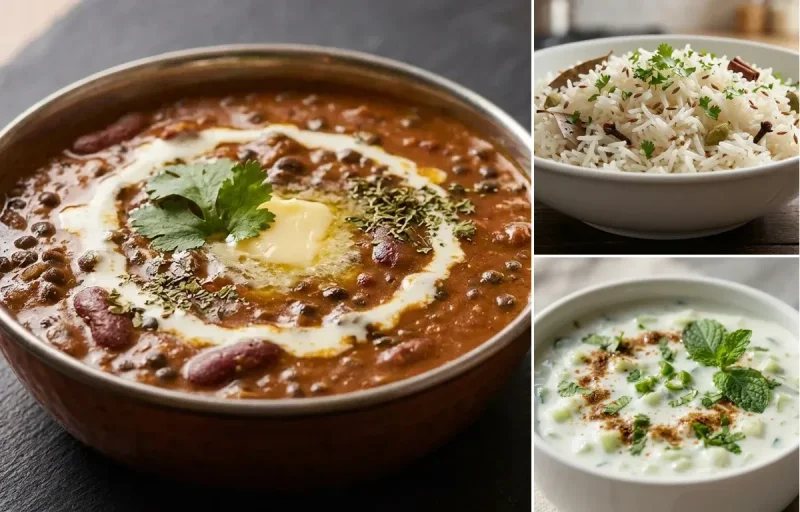
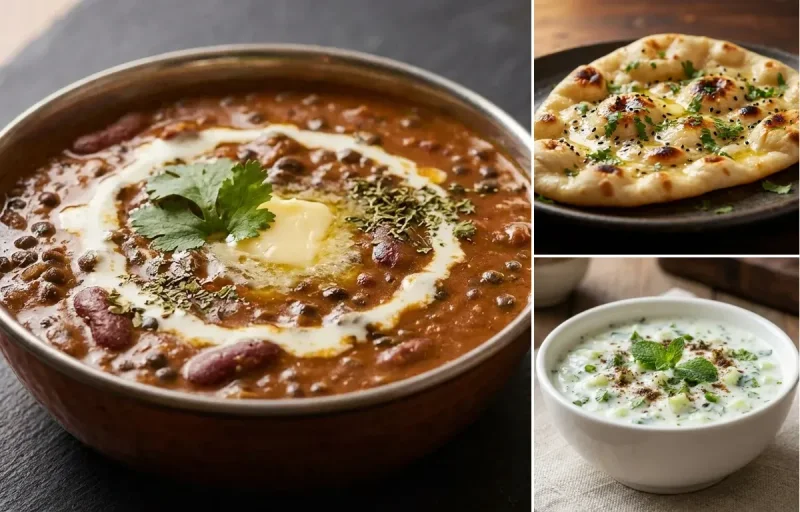
Dal Tadka, Steamed Rice, Aloo Gobi and Cucumber Raita
Popularity
4.5
A comforting and wholesome meal featuring flavorful tempered yellow lentils, fluffy steamed rice, spiced potato and cauliflower curry, and a cooling yogurt raita.
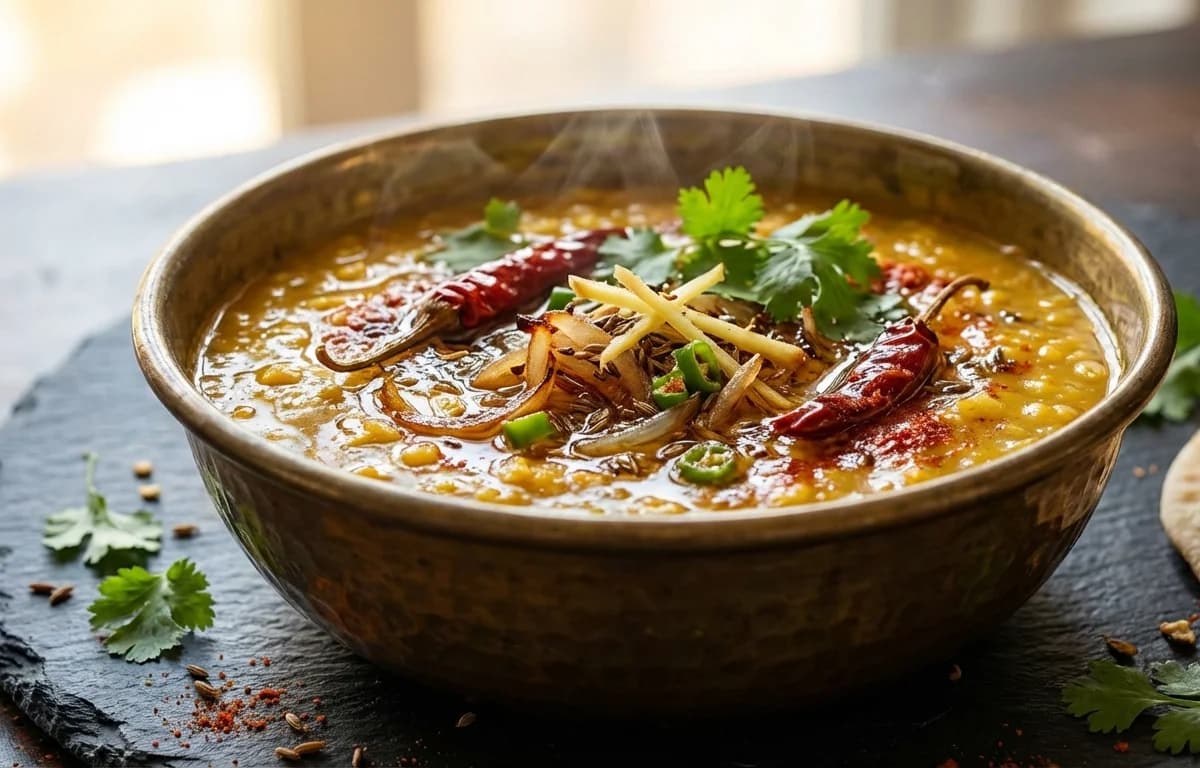
A comforting and classic North Indian lentil dish. Creamy yellow lentils are cooked until tender and then topped with a fragrant tempering of spices sizzled in ghee. Perfect with steamed rice or roti.
Prep10 min
Cook25 min
Soak30 min
Servings4
Serving size: 1 serving
264cal
12gprotein
38gcarbs
Ingredients
1 cup Toor Dal (rinsed and soaked for 30 minutes)
3 cup Water (for pressure cooking, plus more as needed)
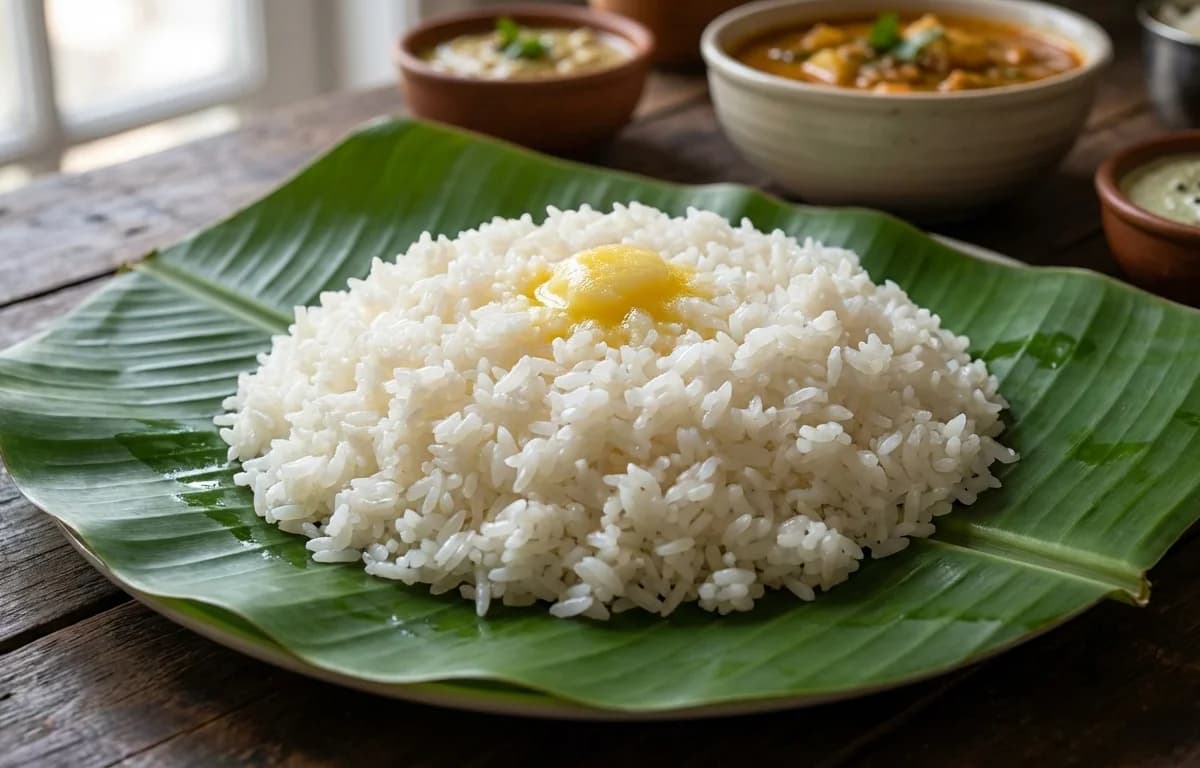
Achieve perfectly fluffy, soft, and separate grains of steamed rice every time with this foolproof recipe. An essential staple in Indian cuisine, this simple method forms the ideal base for a multitude of dishes like dal, sabzi, and rich curries.
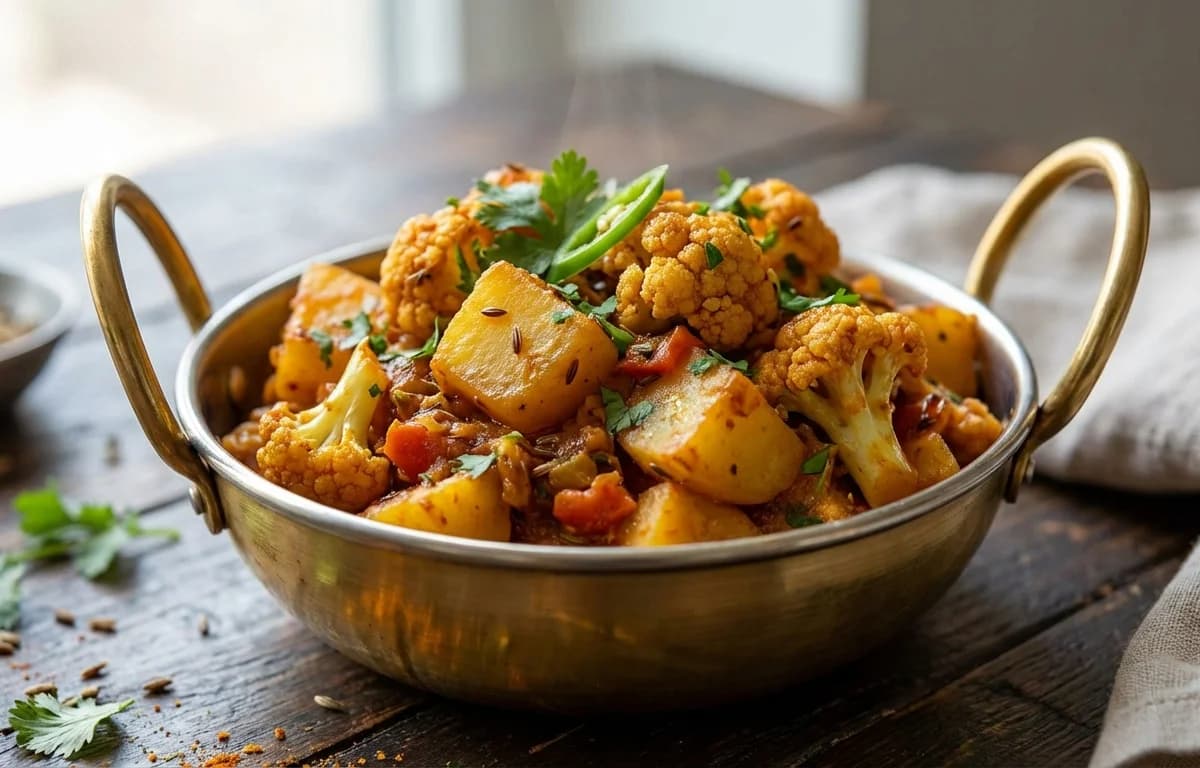
A classic North Indian stir-fry of potatoes and cauliflower, perfectly spiced and cooked until tender. This simple, comforting dish is a staple in Indian homes and pairs wonderfully with roti or dal.
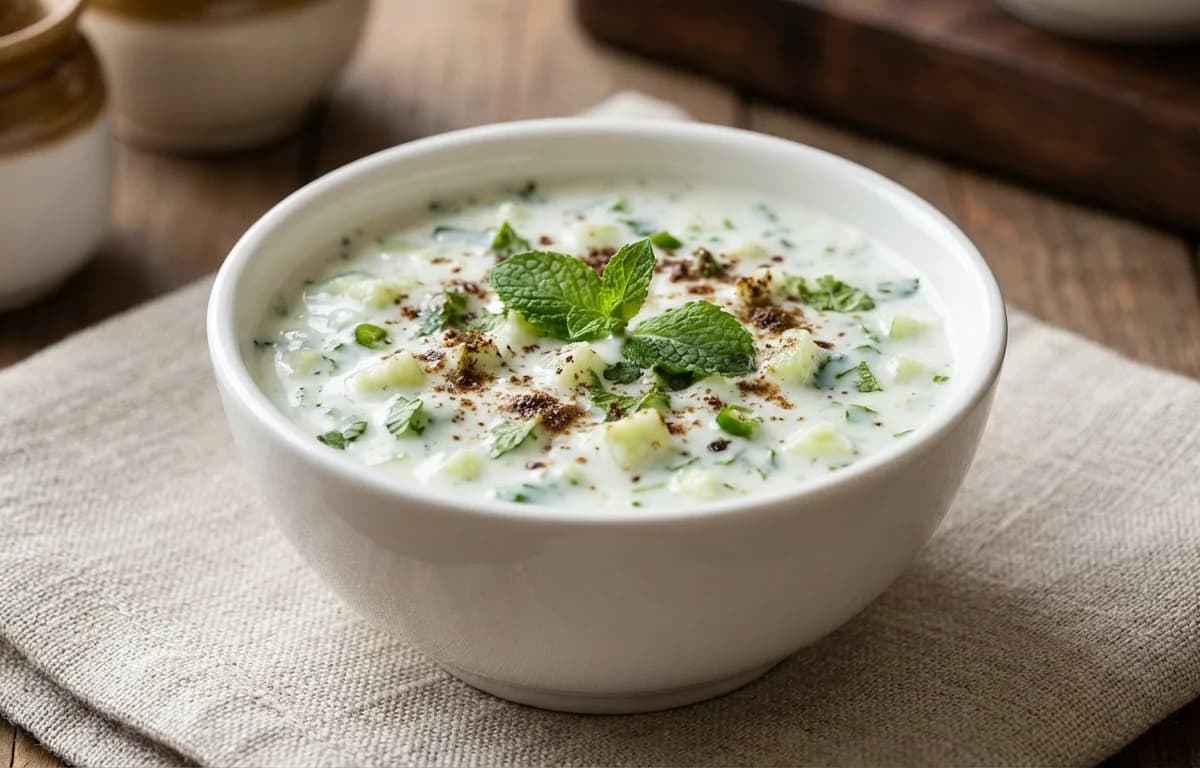
A cooling yogurt dip with grated cucumber, fresh herbs, and a hint of spice. It's the perfect side to balance spicy Indian meals and is ready in just 10 minutes.
Prep10 min
Cook0 min
Servings4
Serving size: 1 serving
About Dal Tadka, Steamed Rice, Aloo Gobi and Cucumber Raita
A comforting and wholesome meal featuring flavorful tempered yellow lentils, fluffy steamed rice, spiced potato and cauliflower curry, and a cooling yogurt raita.
This punjabi dish is perfect for lunch. With 826.7 calories and 27.179999999999996g of protein per serving, it's a muscle-gain option for your meal plan.
Other Cuisines to Explore
Discover authentic meals from cuisines around the world.
0.5 tsp Kashmiri Red Chili Powder (for color, adjust to taste)
0.5 tsp Garam Masala
2 tbsp Coriander Leaves (freshly chopped, for garnish)
1 tsp Lemon Juice (optional, for a tangy finish)
Instructions
1
Pressure Cook the Dal
Rinse the toor dal thoroughly under cold running water until the water runs clear. Drain.
Place the rinsed dal in a pressure cooker. Add 3 cups of water, turmeric powder, and 1/2 tsp of salt.
Secure the lid and pressure cook on medium-high heat for 4-5 whistles, or about 15 minutes, until the dal is completely soft and mushy.
Allow the pressure to release naturally. This extra time helps the dal become even creamier.
Once the pressure has subsided, open the cooker and whisk the dal gently until it reaches a smooth, consistent texture. If it's too thick, add a little hot water to reach your desired consistency.
2
Prepare the Masala Base
Heat 1 tbsp of ghee in a separate pan or kadai over medium heat.
Add 1/2 tsp of cumin seeds and let them sizzle.
Add the finely chopped onion and sauté for 3-4 minutes until it becomes soft and translucent.
Add the ginger-garlic paste and slit green chilies. Cook for another minute until the raw smell disappears.
Stir in the chopped tomatoes and the remaining 1/2 tsp of salt. Cook for 4-5 minutes, stirring occasionally, until the tomatoes break down and the mixture becomes pulpy.
Pour this onion-tomato masala into the cooked dal. Add the garam masala, stir well, and let it simmer on low heat for 5 minutes for the flavors to meld.
3
Prepare the Final Tempering (Tadka)
In a small tadka pan or small skillet, heat the remaining 1 tbsp of ghee over medium heat until hot.
Add the mustard seeds and the remaining 1/2 tsp of cumin seeds. Allow them to crackle and splutter, which should take about 30 seconds.
Add the whole dried red chilies and hing (asafoetida). Sauté for just 10-15 seconds, being careful not to burn them.
Turn off the heat completely. Immediately add the Kashmiri red chili powder to the hot ghee and give it a quick swirl. This prevents the powder from burning and turning bitter.
4
Combine and Serve
Immediately pour the sizzling hot tempering over the simmering dal. You should hear a satisfying sizzle as the tadka hits the dal.
Stir gently to incorporate the tempering. Stir in the optional lemon juice if using.
Garnish with freshly chopped coriander leaves.
Serve hot with steamed basmati rice, jeera rice, or fresh rotis.
4
Serving size: 1 serving
253cal
5gprotein
55gcarbs
0gfat
Ingredients
1.5 cup basmati rice
3 cup water (for cooking, plus more for rinsing)
Instructions
1
Rinse and Soak the Rice
Place 1.5 cups of basmati rice in a medium bowl.
Add cool water and gently swirl the rice with your fingertips. The water will become cloudy.
Carefully drain the starchy water. Repeat this rinsing process 3-4 times, until the water runs mostly clear.
Add enough fresh water to cover the rice by an inch and let it soak for 30 minutes. This is key for long, fluffy grains.
After soaking, drain the rice completely using a fine-mesh sieve.
2
Cook the Rice
Transfer the drained rice to a heavy-bottomed saucepan with a tight-fitting lid.
Add 3 cups of fresh water.
Place the pan over medium-high heat and bring the water to a rolling boil.
Once boiling, give the rice one gentle stir to prevent sticking.
Immediately reduce the heat to the lowest setting, cover the pot securely, and let it simmer for 12-15 minutes.
Do not lift the lid during this time to keep the steam trapped inside.
3
Rest and Fluff
After 12-15 minutes, turn off the heat. Keep the lid on and let the pot stand undisturbed for another 10 minutes.
This resting period allows the residual steam to finish cooking the grains perfectly.
After resting, remove the lid and use a fork to gently fluff the rice, separating the grains.
1.5 cup Curd (Use thick, full-fat yogurt for best results)
1 medium Cucumber (Grated and squeezed to remove all excess water)
2 tbsp Coriander Leaves (Finely chopped)
1 tbsp Mint Leaves (Finely chopped, optional)
1 pcs Green Chilli (Finely chopped, optional for mild heat)
1 tsp Roasted Cumin Powder (Also known as Bhuna Jeera Powder)
0.5 tsp Salt (Adjust to taste)
0.25 tsp Kala Namak (Optional, for a tangy flavor)
0.25 tsp Sugar (Optional, to balance the tanginess)
Instructions
1
Prepare the cucumber: Wash, peel (or leave partially peeled), and grate the cucumber. Place the grated cucumber in a muslin cloth or between your palms and squeeze firmly to remove as much water as possible. This is a critical step to prevent a watery raita. Discard the water.
2
Prepare the yogurt base: In a medium-sized bowl, add the thick curd and whisk it vigorously for about 1 minute until it is completely smooth, creamy, and free of lumps.
3
Combine ingredients: Add the squeezed cucumber, finely chopped coriander leaves, mint leaves, and green chilli (if using) to the whisked yogurt.
4
Season and mix: Sprinkle in the roasted cumin powder, salt, kala namak, and sugar (if using). Stir everything together gently until all the ingredients are evenly distributed.
5
Chill and serve: Cover the bowl and refrigerate the raita for at least 20-30 minutes. This allows the flavors to meld together. Serve chilled as a refreshing side dish with biryani, pulao, kebabs, or any spicy Indian meal.
Cook the masala, stirring occasionally, for 5-7 minutes until the tomatoes break down completely and oil begins to separate from the mixture. This step is crucial for flavor.
4
Cook the Aloo Gobi (15 minutes)
Drain the potatoes and add them to the pan. Stir well to coat with the masala. Cook for 4-5 minutes, stirring occasionally.
Add the cauliflower florets and gently toss everything together to ensure the florets are evenly coated.
Add 1/4 cup of hot water, cover the pan with a tight-fitting lid, and reduce the heat to low.
Let it cook for 10-12 minutes, or until the potatoes and cauliflower are tender but not mushy. Avoid stirring too often to prevent the florets from breaking.
5
Garnish and Serve (3 minutes)
Once cooked, remove the lid. If there's excess moisture, increase the heat to medium and cook for a minute or two until it evaporates.
Sprinkle the garam masala and crushed kasuri methi over the dish.
Garnish with fresh chopped coriander leaves.
Gently mix, turn off the heat, and let it rest for 5 minutes for the flavors to meld.
Serve hot with roti, paratha, or as a side dish with dal and rice.