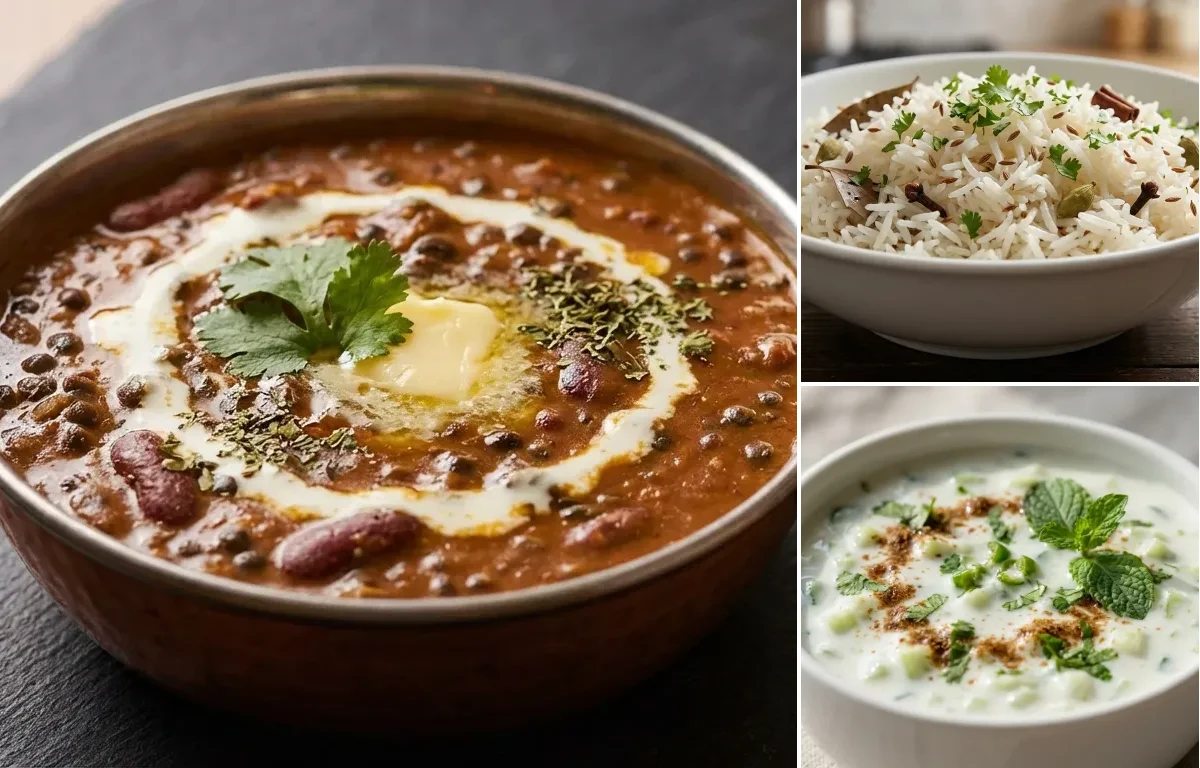
A rich and creamy North Indian classic featuring slow-cooked black lentils in a buttery tomato sauce, served with aromatic cumin-tempered basmati rice and a refreshing cucumber yogurt dip.
A quintessential Punjabi dish, this Dal Makhani is incredibly rich and creamy. Whole black lentils and kidney beans are slow-cooked in a buttery, tomato-based gravy, resulting in a dish that's pure comfort in a bowl. Perfect with naan or rice.
Prep20 min
Cook90 min
Soak480 min
Servings4
Serving size: 1 serving
412cal
17gprotein
48gcarbs
Ingredients
1 cup Whole Black Gram (also known as Sabut Urad Dal)
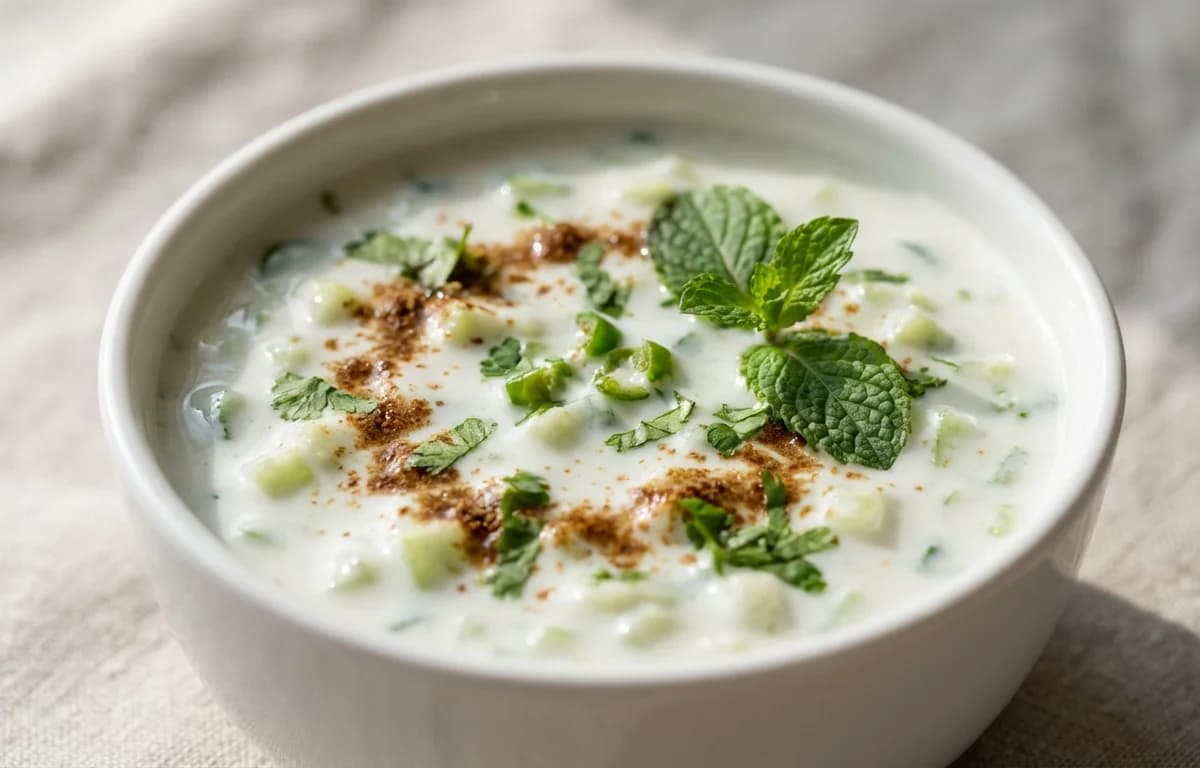
A refreshing and cooling yogurt dip made with grated cucumber, fresh herbs, and mild spices. This classic Indian side dish is the perfect accompaniment to spicy curries, biryanis, and pulaos, ready in just 10 minutes.
Prep10 min
Cook0 min
Servings4
Serving size: 1 serving
About Dal Makhani, Jeera Rice and Cucumber Raita
A rich and creamy North Indian classic featuring slow-cooked black lentils in a buttery tomato sauce, served with aromatic cumin-tempered basmati rice and a refreshing cucumber yogurt dip.
This punjabi dish is perfect for dinner. With 501.58 calories and 22.32g of protein per serving, it's a nutritious choice for your meal plan.
Other Cuisines to Explore
Discover authentic meals from cuisines around the world.
1 tsp Kashmiri Red Chili Powder (for color, adjust to taste)
1 tsp Coriander Powder
0.75 tsp Garam Masala
0.25 cup Heavy Cream (plus more for garnish)
1 tbsp Kasuri Methi (dried fenugreek leaves)
Instructions
1
Soak and Cook Lentils
Rinse the whole black gram and kidney beans thoroughly under running water. Soak them together in plenty of water for at least 8 hours, or preferably overnight.
Drain the soaking water. Add the lentils and beans to a pressure cooker along with 4 cups of fresh water, 1 tsp of salt, the bay leaf, and the cinnamon stick.
Secure the lid and pressure cook on high heat. After the first whistle, reduce the heat to medium-low and cook for 15-20 minutes. The beans should be completely soft and mashable.
Allow the pressure to release naturally. Open the cooker, remove the bay leaf and cinnamon stick. Using the back of a ladle, lightly mash about a quarter of the lentils against the side of the pot to help create a creamy base.
2
Prepare the Masala Base
In a heavy-bottomed pan (kadai), melt 2 tbsp of butter over medium heat.
Add the finely chopped onion and sauté for 7-8 minutes until it turns soft and golden brown.
Add the ginger-garlic paste and cook for another minute until the raw aroma disappears.
Stir in the tomato puree, Kashmiri red chili powder, coriander powder, and the remaining 0.5 tsp of salt. Cook this masala, stirring occasionally, for 8-10 minutes until it thickens and you see oil separating at the edges.
3
Combine and Slow Cook
Pour the cooked lentil mixture (along with its cooking liquid) into the prepared masala. Mix everything thoroughly.
Add 1 cup of hot water, or more if needed, to achieve a thick but pourable consistency. Bring the dal to a gentle boil.
Reduce the heat to the lowest setting. Partially cover the pan and let the dal simmer for a minimum of 45 minutes, stirring every 10-15 minutes to prevent it from sticking to the bottom.
This slow simmering process is crucial for developing the deep, creamy flavors of Dal Makhani. The dal will continue to thicken as it cooks.
4
Finish and Garnish
Once the dal has reached your desired creamy consistency, stir in the garam masala and the remaining 2 tbsp of butter.
Crush the kasuri methi between your palms to release its aroma and add it to the dal. Stir in the heavy cream.
Let it simmer for a final 5 minutes on low heat for all the flavors to meld together beautifully.
Taste and adjust the salt if necessary. Turn off the heat.
5
Serve
Transfer the Dal Makhani to a serving bowl.
Garnish with a swirl of fresh cream and serve hot with garlic naan, roti, or jeera rice.
90cal
5gprotein
9gcarbs
4gfat
Ingredients
2 cup Curd (Thick, plain, and chilled. Greek yogurt or hung curd works well.)
1 medium Cucumber (Peeled and grated. English or Persian cucumbers are preferred.)
1 tsp Roasted Cumin Powder (Freshly ground for best aroma.)
2 tbsp Coriander Leaves (Finely chopped.)
1 tbsp Mint Leaves (Finely chopped.)
0.5 tsp Salt (Adjust to taste.)
0.25 tsp Black Salt (Also known as Kala Namak.)
1 pcs Green Chilli (Finely chopped, deseed for less heat.)
0.25 tsp Sugar (Optional, to balance the tang of the yogurt.)
Instructions
1
Prepare the Cucumber (4 minutes)
Wash, peel, and grate the medium cucumber using a box grater.
Place the grated cucumber in a fine-mesh sieve or a muslin cloth. Press down firmly or squeeze to remove as much water as possible. This is the most crucial step to prevent a watery raita.
Set the squeezed cucumber aside.
2
Prepare the Yogurt Base (2 minutes)
In a medium-sized mixing bowl, add the thick curd (yogurt).
Whisk the curd for about a minute until it is completely smooth and creamy, with no lumps.
Add the roasted cumin powder, salt, black salt, and optional sugar to the whisked yogurt. Mix well to combine the spices evenly.
3
Combine and Chill (4 minutes + chilling time)
Add the squeezed grated cucumber, finely chopped green chilli, coriander leaves, and mint leaves to the spiced yogurt base.
Gently fold all the ingredients together until everything is well incorporated.
Taste and adjust the seasoning if necessary. You may need more salt or a pinch more sugar depending on the sourness of your yogurt.