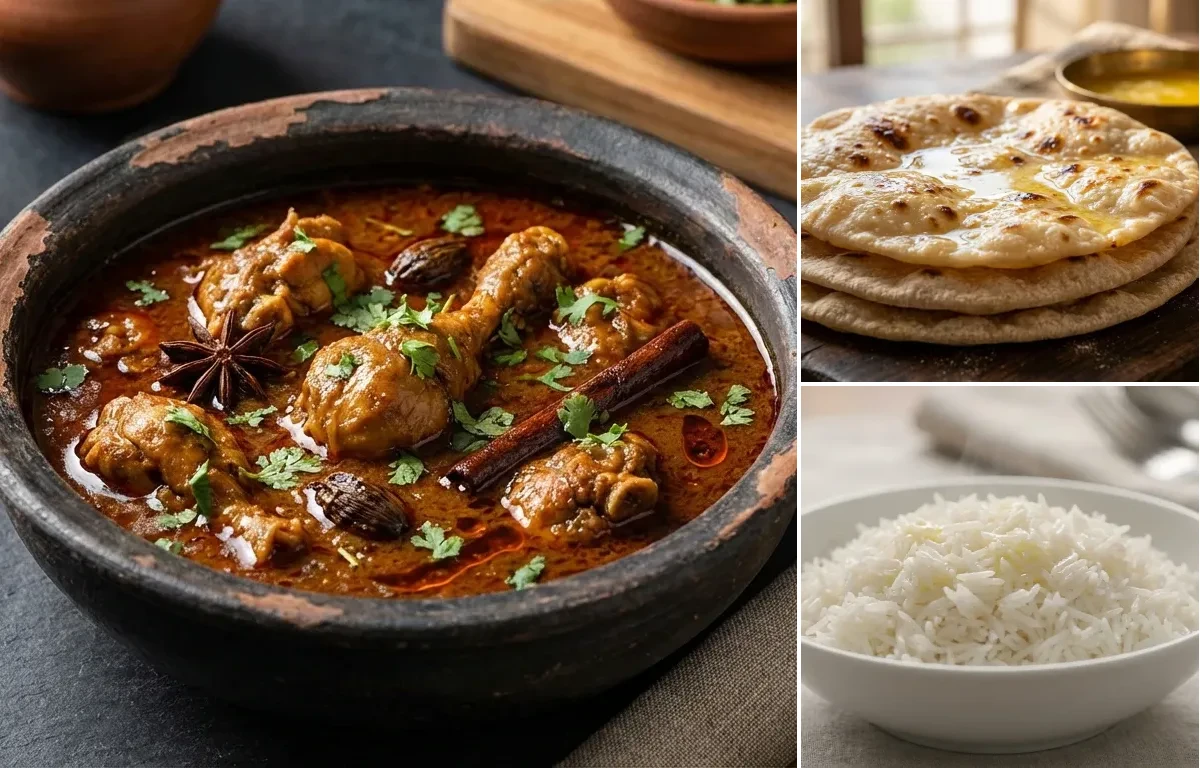
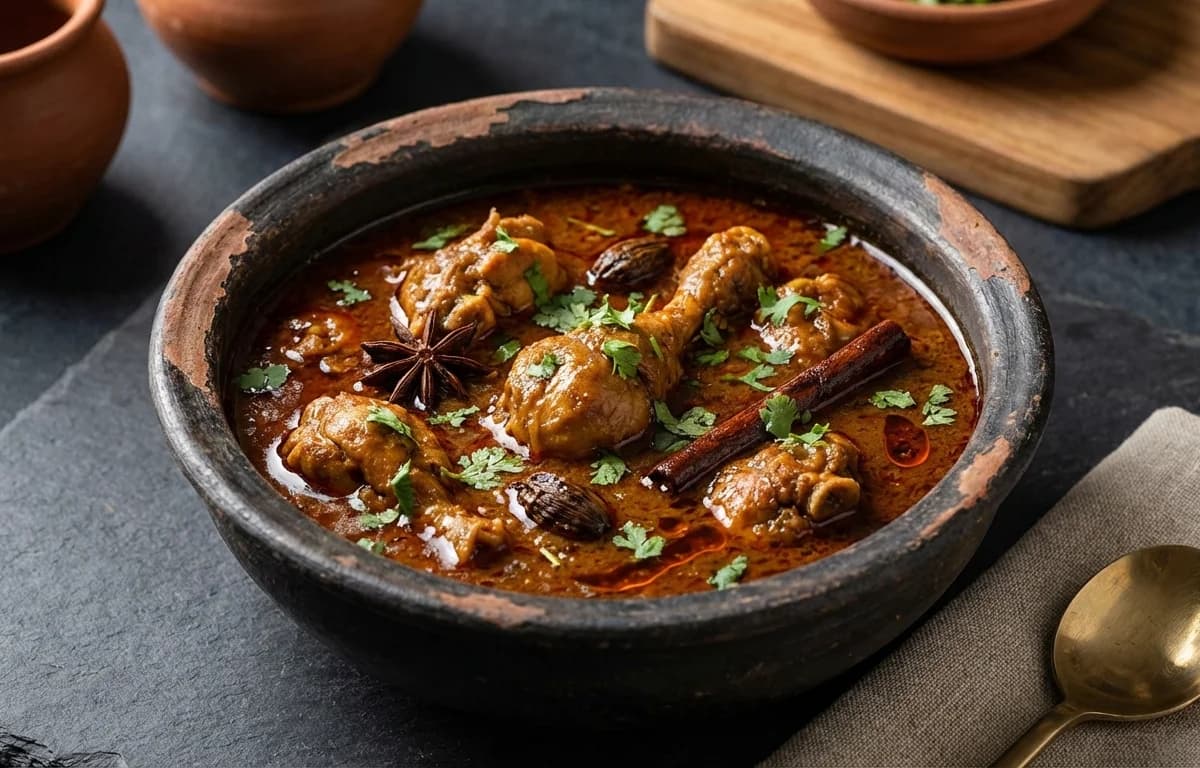
A fiery and aromatic chicken curry from Nagpur, famous for its intense heat and complex blend of roasted spices. This iconic Maharashtrian dish is a true treat for spice lovers, delivering a rich, dark gravy that's packed with flavor.
Prep25 min
Cook50 min
Servings4
Serving size: 1 serving
616cal
40gprotein
25gcarbs
41g
Ingredients
750 g chicken (bone-in, cut into medium pieces)
1 tsp turmeric powder (divided)
1 tbsp ginger garlic paste (for marinade)
1 tbsp lemon juice
2 tsp salt (divided, or to taste)
2 pcs onion (medium, thinly sliced)
1.5 inch ginger (roughly chopped)
10 pcs garlic cloves
4 pcs green chilies (slit, adjust to heat preference)
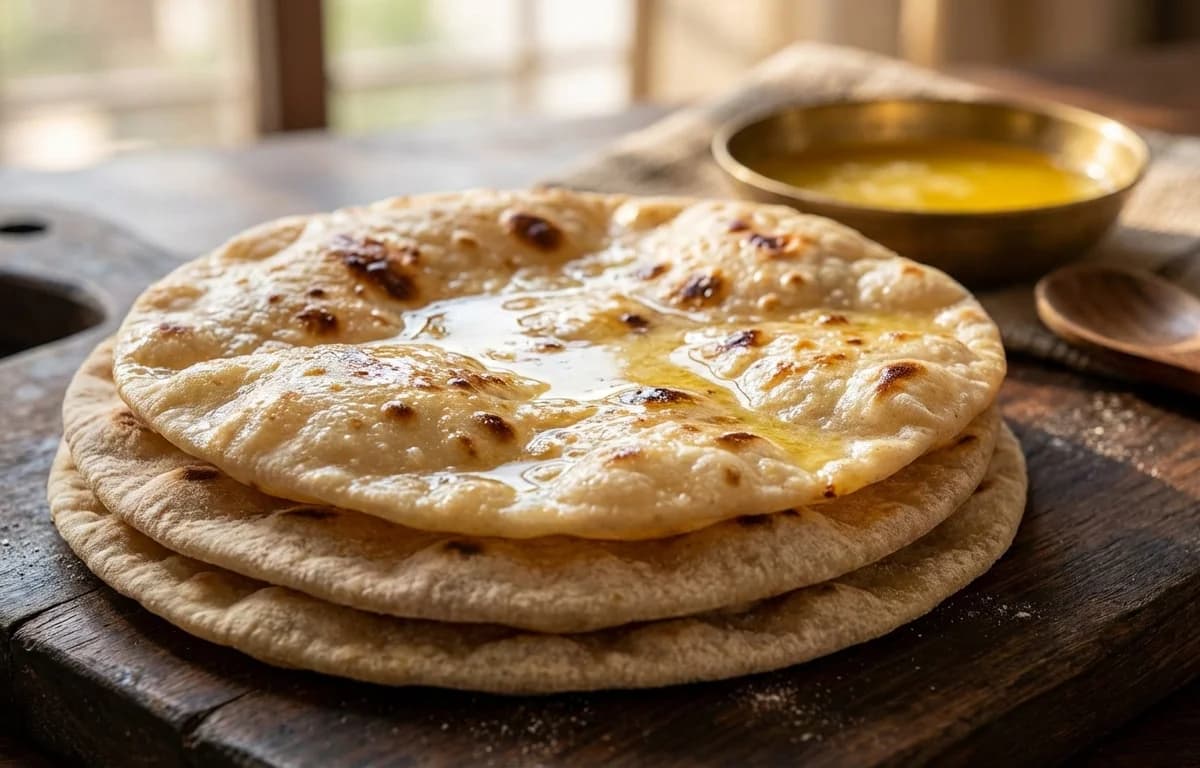
A staple in Indian households, these soft and thin whole wheat flatbreads are perfect for scooping up curries and dals. Made with just a few simple ingredients, they puff up beautifully on the flame, a hallmark of a perfectly made chapati.
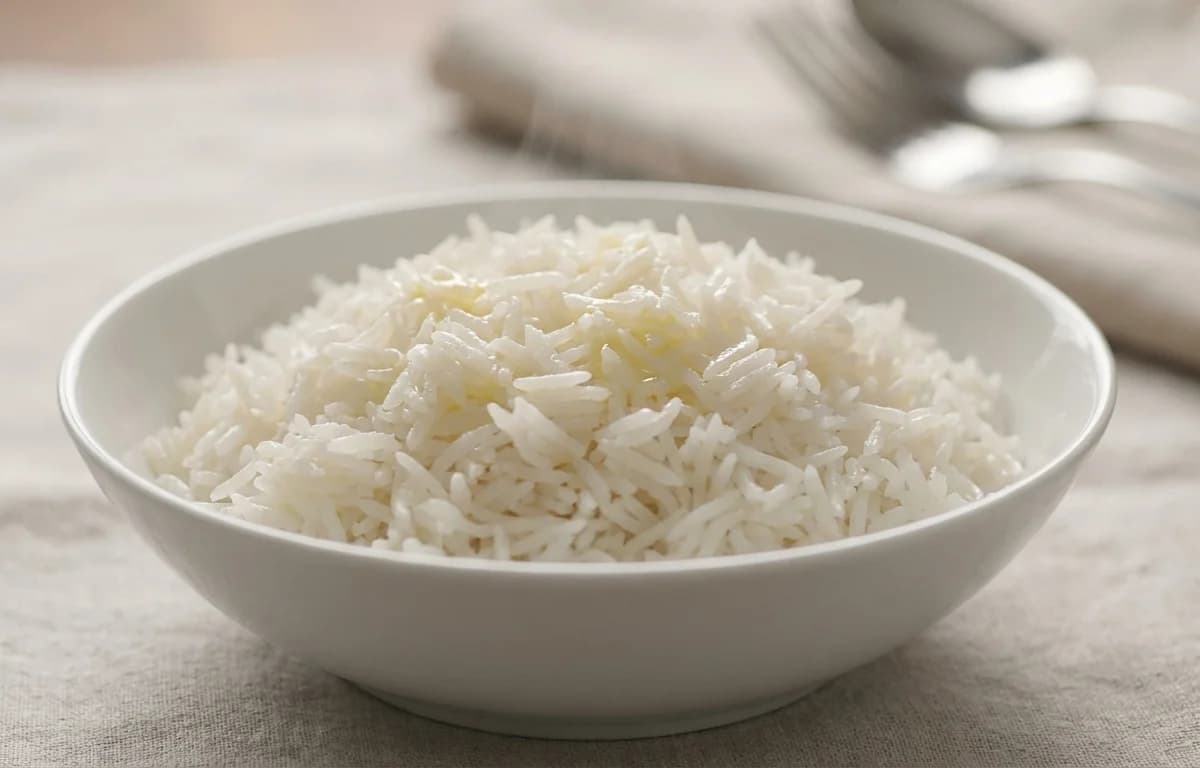
Perfectly fluffy, long-grained basmati rice with a delicate aroma. This simple, foolproof recipe gives you separate, non-sticky grains every time, making it the perfect base for any curry or dal.
Prep35 min
Cook25 min
Soak30 min
Servings
About Nagpuri Chicken Saoji, Chapati and Steamed Basmati Rice
Perfectly spiced Nagpuri Chicken Saoji with fluffy rice & chapatis. A truly aromatic & energy-giving meal!
This maharashtrian dish is perfect for dinner. With 1090.98 calories and 52.779999999999994g of protein per serving, it's a nutritious choice for your meal plan.
Other Cuisines to Explore
Discover authentic meals from cuisines around the world.
8 pcs dry red chilies (use a mix of Kashmiri for color and Guntur for heat)
6 tbsp vegetable oil (divided)
1 tsp red chili powder (preferably Saoji or Kashmiri for color)
1 tsp garam masala
2 cup hot water (for the gravy)
3 tbsp coriander leaves (chopped, for garnish)
Instructions
1
Marinate the Chicken
In a large bowl, combine the chicken pieces with 0.5 tsp turmeric powder, 1 tbsp ginger-garlic paste, lemon juice, and 1 tsp salt.
Mix thoroughly to ensure all chicken pieces are well-coated.
Cover the bowl and let it marinate for at least 30 minutes at room temperature.
2
Prepare the Dry Saoji Masala
Heat a heavy-bottomed pan over low heat. Add all the dry masala ingredients: coriander seeds, cumin seeds, desiccated coconut, poppy seeds, black peppercorns, cloves, green and black cardamoms, cinnamon stick, bay leaves, star anise, stone flower, and dry red chilies.
Dry roast for 5-7 minutes, stirring continuously, until the spices become highly aromatic and the coconut turns a light golden brown. Be careful not to burn them.
Remove the roasted spices from the pan and let them cool completely.
Once cooled, transfer to a spice grinder and blend into a fine powder. Set this Saoji masala aside.
3
Prepare the Wet Masala Paste
In the same pan, heat 2 tbsp of oil over medium heat.
Add the sliced onions and fry, stirring occasionally, for about 10-12 minutes until they are deeply browned and caramelized. This step is crucial for the gravy's color and flavor.
Add the chopped ginger, garlic cloves, and green chilies. Sauté for another 2-3 minutes until the raw aroma disappears.
Turn off the heat and allow the mixture to cool down.
Transfer the cooled onion mixture to a blender. Add a splash of water if needed and blend to a very smooth paste.
4
Cook the Chicken Curry
Heat the remaining 4 tbsp of oil in a pressure cooker or a heavy-bottomed pot over medium-high heat.
Add the prepared wet masala paste and cook for 7-8 minutes, stirring frequently, until it darkens and oil starts to separate from the masala.
Reduce the heat to low. Add the remaining 0.5 tsp turmeric powder and 1 tsp red chili powder. Sauté for 30 seconds.
Add the marinated chicken pieces. Increase the heat to high and sear the chicken for 5-7 minutes, stirring to cook it evenly on all sides.
Stir in the ground dry Saoji masala and the remaining 1 tsp of salt. Mix well to coat the chicken and cook for 2 more minutes.
Pour in 2 cups of hot water and stir well, scraping any bits stuck to the bottom of the pot.
5
Finish and Serve
If using a pressure cooker: Secure the lid and cook on medium heat for 3 whistles. Allow the pressure to release naturally before opening.
If using a pot: Bring the curry to a boil, then reduce the heat to low. Cover and simmer for 25-30 minutes, or until the chicken is tender and the gravy has thickened.
Once cooked, stir in the garam masala. Let the curry rest for 10-15 minutes to allow the flavors to meld and the oil (tari) to rise to the surface.
Garnish with freshly chopped coriander leaves and serve hot with jowar bhakri, roti, or steamed rice.
213cal
8gprotein
44gcarbs
2gfat
Ingredients
2 cup Atta (Also known as whole wheat flour)
1 cup Lukewarm Water (Adjust as needed, amount varies by flour type)
0.5 tsp Salt
1 tsp Ghee (For adding to the dough (optional))
Instructions
1
Prepare the Dough
In a large mixing bowl, combine 2 cups of atta and salt. If using, add 1 tsp of ghee and mix it into the flour with your fingertips until it resembles coarse crumbs.
Gradually add lukewarm water, a little at a time, mixing and gathering the flour to form a dough.
Knead the dough on a clean surface for 8-10 minutes, pressing and stretching with the heel of your hand. The final dough should be soft, pliable, smooth, and not sticky. It should have a texture similar to an earlobe.
Cover the dough with a damp cloth or a lid and let it rest for at least 20-30 minutes. This step is crucial for relaxing the gluten and ensuring soft chapatis.
2
Divide and Roll the Chapatis
After resting, knead the dough again for one minute to make it smooth.
Divide the dough into 8 equal-sized portions and roll them into smooth balls.
Take one ball and flatten it between your palms. Dip it into the dry atta for dusting, coating it lightly on both sides.
Place it on a rolling board (chakla) and roll it out into a thin, even circle of about 6-7 inches in diameter. Use minimal dry flour for dusting to avoid making the chapati hard.
3
Cook the Chapatis
Heat a tawa (flat griddle) on medium-high heat. To check if it's ready, sprinkle a pinch of dry flour; it should sizzle and turn brown quickly.
Carefully place the rolled chapati on the hot tawa. Cook for about 15-20 seconds until you see small bubbles forming on the surface.
Using tongs, flip the chapati. Cook the other side for about 30-40 seconds until light brown spots appear.
Using the tongs, lift the chapati and place it directly on a high gas flame. It should puff up like a balloon within 2-3 seconds.
Immediately flip it to cook the other side on the flame for another 2 seconds. Be careful not to burn it.
4
Finish and Serve
Remove the puffed chapati from the flame and place it in a casserole or a container lined with a clean kitchen towel. This traps the steam and keeps them soft.
Brush the top with a little ghee. This adds flavor and helps keep it soft.
Repeat the rolling and cooking process for the remaining dough balls.
Serve hot with your favorite dal, sabzi, or curry.
1.5 cup Basmati Rice (Use good quality, aged basmati rice for best results)
2.25 cup Water (For the absorption cooking method)
0.75 tsp Salt (Adjust to taste)
1 tsp Ghee (Optional, for flavor and to prevent sticking)
Instructions
1
Rinse and Soak the Rice (35 minutes)
Place the basmati rice in a large bowl. Add cold water and gently swirl the rice with your fingers. Drain the cloudy water. Repeat this process 3-4 times until the water runs mostly clear. This removes excess starch and prevents stickiness.
Cover the rinsed rice with fresh water and let it soak for 30 minutes. Soaking allows the grains to absorb water, ensuring they cook evenly and elongate beautifully.
After 30 minutes, drain the rice completely using a fine-mesh sieve and set aside.
2
Cook the Rice (15 minutes)
In a medium, heavy-bottomed saucepan with a tight-fitting lid, combine the drained rice, 2.25 cups of fresh water, salt, and ghee (if using).
Bring the mixture to a rolling boil over medium-high heat, uncovered.
As soon as it boils, give it one gentle stir, then immediately reduce the heat to the lowest possible setting. Cover the saucepan tightly with the lid.
Let the rice simmer for 12-15 minutes, or until all the water has been absorbed. Do not lift the lid during this time to prevent steam from escaping.
3
Rest and Fluff (10 minutes)
Turn off the heat but leave the saucepan on the stove, still covered. Let the rice rest and steam for 10 minutes. This step is crucial for finishing the cooking process and achieving a perfect texture.
After resting, remove the lid. Use a fork to gently fluff the rice, separating the long, delicate grains.
Serve hot as a perfect accompaniment to curries, dals, or grilled dishes.