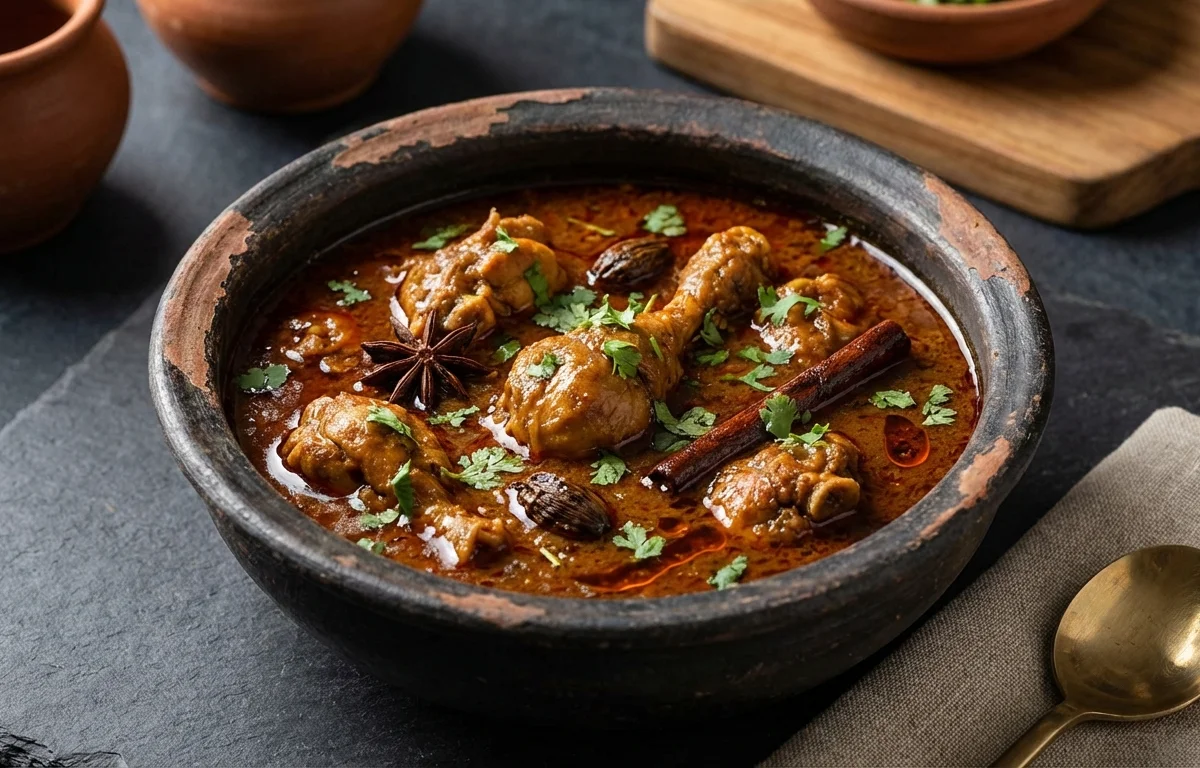
Nagpuri Chicken Saoji
A fiery, rustic chicken curry from Nagpur's Halba community, known for its bold heat and dark, intense gravy. Whole spices are dry-roasted and ground fresh, giving the dish its signature smoky depth. Tender bone-in chicken is slow-cooked in a blend of coconut, poppy seeds, and aromatic masala until the oil floats to the top.
For 4 servings
- prep · ~15 min
Soak the poppy seeds.
Soak the poppy seeds in warm water for 15 minutes. Drain and set aside.
- roast · ~5 min
Dry roast the whole spices.
Heat a pan over low heat and dry roast the dried coconut until golden brown. Remove and set aside. In the same pan, roast coriander seeds, cumin seeds, black peppercorns, cloves, cinnamon, dried red chilies, and dried fenugreek leaves until fragrant and slightly darkened.
TIPRoast on low heat and stir continuously to avoid burning. The coconut should turn a deep golden, not black. - mix · ~2 min
Grind the Saoji masala.
Transfer the roasted spices and coconut to a grinder along with the soaked poppy seeds. Add a splash of water and grind to a smooth, thick paste. Set aside.
- temper · ~1 min
Start the tempering.
Heat oil in a heavy-bottomed pot over medium heat. Add bay leaves and crushed green cardamom. Sauté until fragrant.
TIPMustard oil is traditional and adds a pungent depth. Heat it until it just starts to smoke, then reduce the heat before adding spices. - saute · ~15 min
Cook the onions until deep brown.
Add chopped onions to the pot and sauté on medium heat until deep brown, stirring frequently. This should take 12-15 minutes. Add a pinch of salt to help them brown faster.
TIPDon't rush this step. The deep color of the onions gives the gravy its characteristic dark hue. - saute · ~3 min
Fry the ginger-garlic paste.
Add the ginger-garlic paste to the browned onions and sauté for 2-3 minutes until the raw smell disappears.
- saute · ~10 min
Cook the ground masala.
Add the ground Saoji masala paste to the pot. Stir in the turmeric powder and red chili powder. Cook the masala on medium-low heat, stirring continuously, until the oil separates from the mixture and the raw smell is completely gone.
TIPThis step is critical for the Saoji flavor. The masala must be fried thoroughly or the gravy will taste raw. - fry · ~8 min
Sear the chicken.
Add the chicken pieces to the pot. Increase the heat to medium-high and sear the chicken, stirring constantly, until the pieces are browned on all sides and coated well with the masala.
- simmer · ~30 min
Slow cook the curry.
Pour in the water and stir well to combine. Bring the gravy to a boil, then reduce the heat to low. Cover the pot and let the curry simmer gently until the chicken is tender and cooked through, about 25-30 minutes.
TIPStir occasionally to prevent the masala from sticking to the bottom. The gravy will thicken and the oil will float to the top when ready. - garnish
Garnish with fresh coriander and serve hot.
Transfer the Nagpuri Chicken Saoji to a serving bowl, scatter chopped coriander leaves on top, and serve piping hot with jowar bhakri or steamed rice.
What to keep in mind.
7 tips from the recipe — small details that make a real difference to the final dish.
- 1Use bone-in chicken for deeper flavor and tenderness that stands up to the intense masala.
- 2Dry-roast the coconut and spices on low heat, stirring non-stop, to prevent burning and ensure a smoky, not bitter, base.
- 3Soak the poppy seeds in warm water for exactly 15 minutes so they grind into a silky-smooth paste without grittiness.
- 4Brown the onions deeply (12–15 minutes) until caramelized; this is key to the gravy's signature dark color and sweetness.
- 5Fry the ground masala until oil separates completely — about 10 minutes — to eliminate raw spice taste and unlock layered aromas.
- 6Let the curry simmer covered on low heat for 25–30 minutes, then rest for 5 minutes off heat to allow flavors to meld.
- 7Use mustard oil for authenticity; heat it until it just smokes, then reduce heat before adding whole spices to tame its pungency.
Adapt it for your goals.
Mild
Reduce the dry red chilies from 6 to 2–3 and skip the extra red chili powder. Ideal for those who love the Saoji aroma but prefer a gentler heat level.
high proteinHigh-protein
Swap chicken with bone-in goat meat or lamb (mutton) and increase simmer time to 45–50 minutes until tender. The robust masala complements stronger meats beautifully.
low oilLow-oil
Use only 1 tablespoon of oil and cook the onions and masala on a non-stick pan, adding water splash by splash to prevent burning. Reduces fat without losing flavor.
jainJain
Replace onion and ginger-garlic paste with asafoetida (hing) and a paste of raw banana or bottle gourd (lauki). Omit garlic and onion to follow Jain dietary principles while keeping the spice base.
veganVegan
Substitute chicken with king oyster mushrooms or jackfruit and use plant-based oil. The masala's intensity ensures a deeply savory, non-meat version that satisfies.
Why this is on our healthy list.
Rich in Antioxidants
Coriander seeds, cumin, cloves, cinnamon, and fenugreek leaves are packed with antioxidants that help fight inflammation and support overall cellular health.
Digestive Aid
Poppy seeds, cumin, and dried ginger-garlic paste are traditionally used to improve digestion and soothe the gut, making this spicy curry easier on the stomach.
High in Lean Protein
Bone-in chicken provides high-quality protein and essential minerals like calcium and phosphorus, which support muscle repair and bone strength.
Warming Spices for Circulation
Black pepper, cloves, and cinnamon have thermogenic properties that improve blood circulation and provide a natural warming effect, ideal for cooler months.
Contains Antimicrobial Compounds
Cloves and cinnamon are known for their antimicrobial and antibacterial properties, which can help support the immune system when consumed regularly.
Frequently asked questions
Yes, but reduce cooking time to 15–20 minutes to avoid dryness. Bone-in adds more flavor and keeps the meat tender during the long simmer.


.webp)