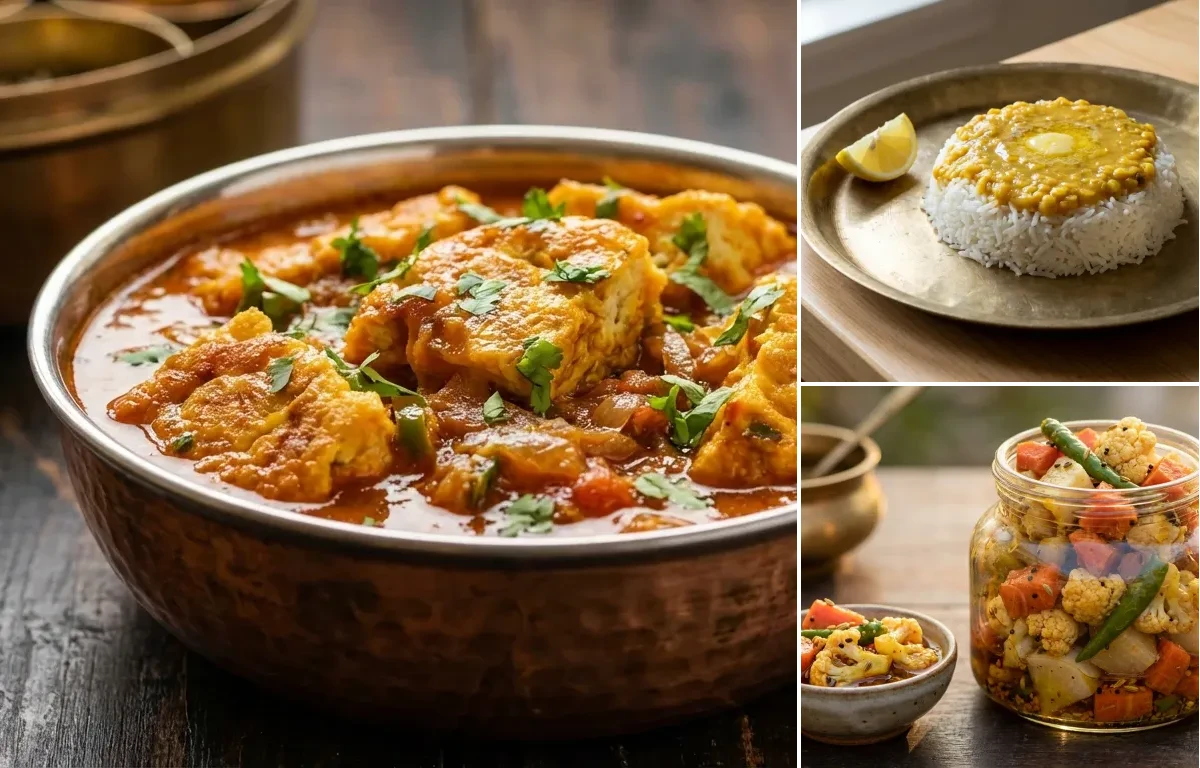
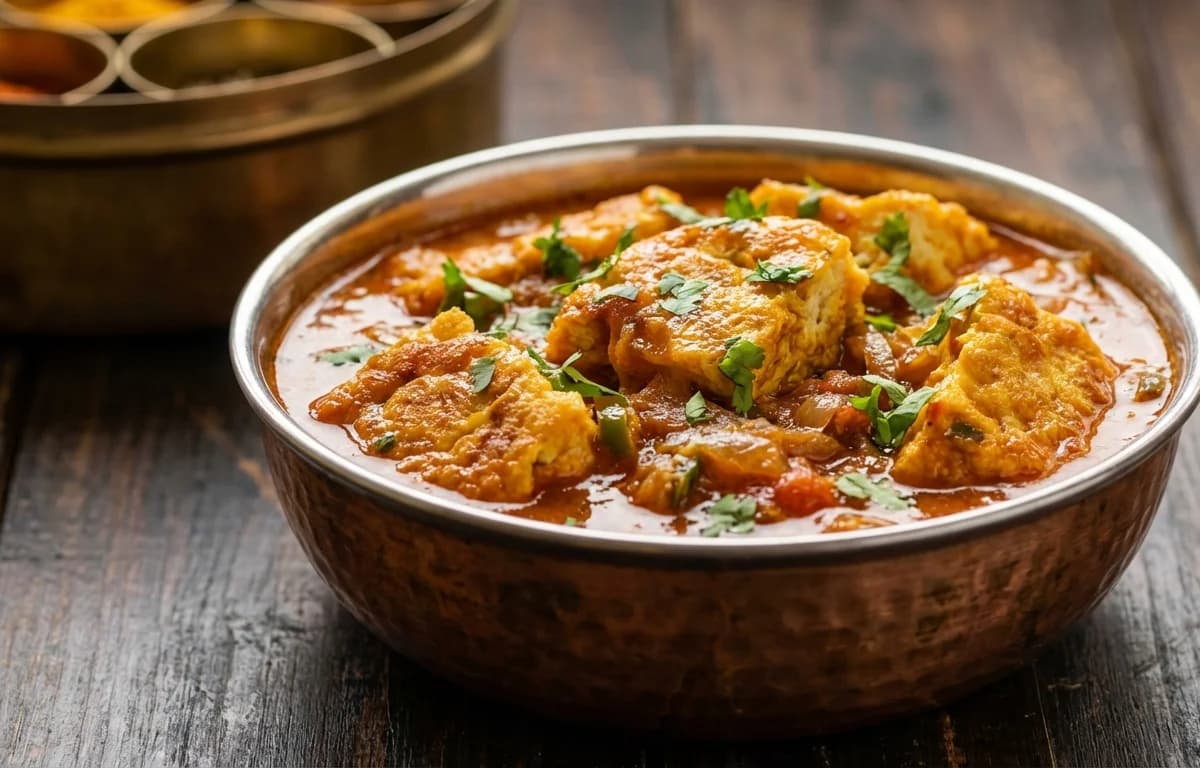
A comforting and unique Indian dish where fluffy, savory omelette rolls are simmered in a rich, aromatic onion-tomato gravy. This protein-packed curry is a quick and delicious alternative to traditional meat or vegetable curries, perfect for a satisfying weeknight meal.
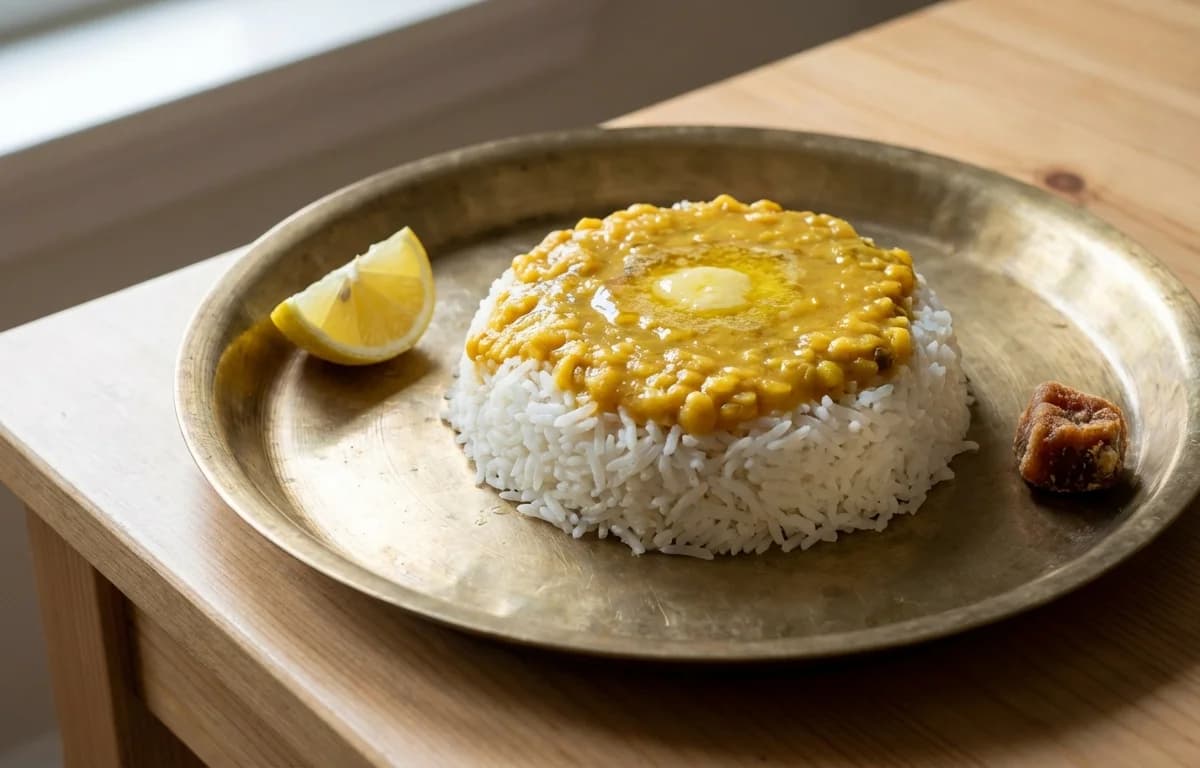
A comforting and wholesome Maharashtrian staple of simple, unspiced lentil soup (Varan) served with steamed rice (Bhaat). It's the ultimate soul food, often topped with ghee and a squeeze of lime.
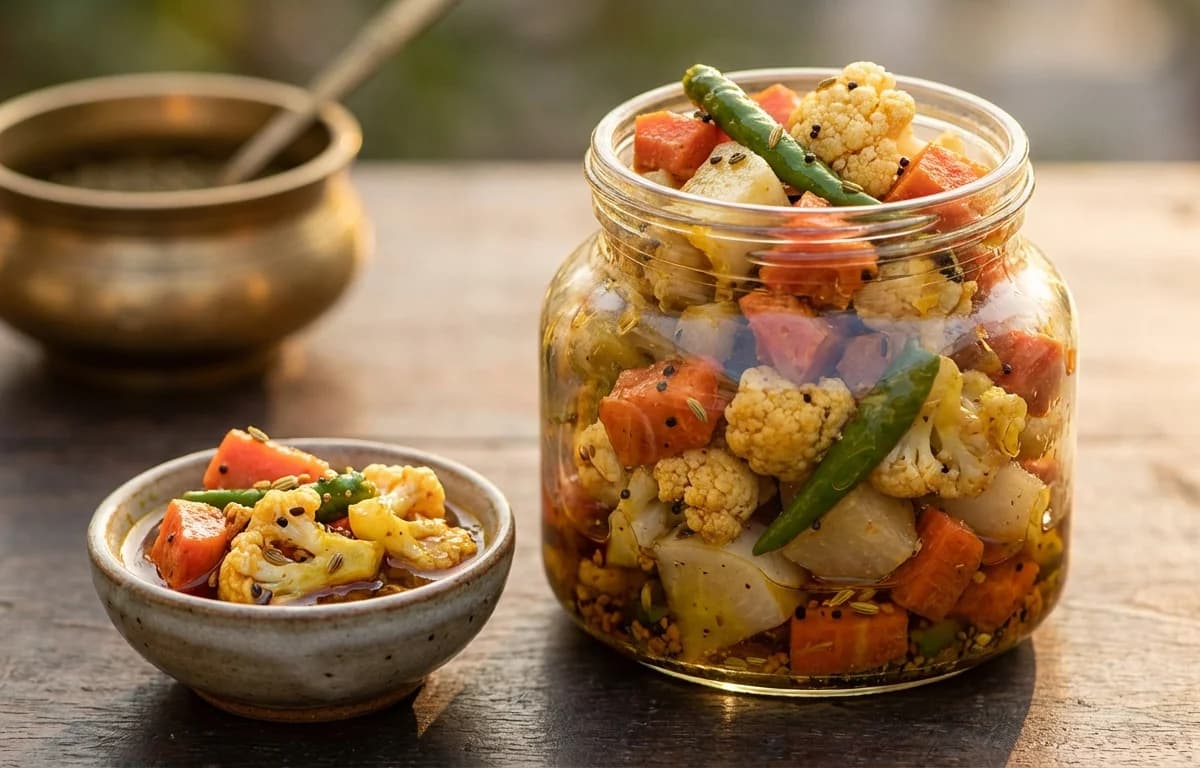
A vibrant, tangy, and spicy North Indian mixed vegetable pickle. Crunchy carrots, cauliflower, and turnips are preserved in aromatic mustard oil and spices. A perfect condiment to spice up any meal, ready in just a few days!
Prep30 min
Cook15 min
Servings16
Serving size: 1 serving
About Omelette Curry, Varan Bhaat and Vegetable Pickle
Creamy Omelette Curry with comforting Varan Bhaat. A protein-rich, homestyle meal that feels like a warm hug!
This maharashtrian dish is perfect for lunch. With 718.19 calories and 27.140000000000004g of protein per serving, it's a muscle-gain option for your meal plan.
Other Cuisines to Explore
Discover authentic meals from cuisines around the world.
1.5 cup Water (warm, or as needed for desired consistency)
0.5 tsp Garam Masala
Instructions
1
Prepare and Cook the Omelettes
In a large bowl, whisk the 8 eggs until light and frothy. Add the finely chopped small onion, green chillies, 2 tbsp of chopped coriander leaves, 1/4 tsp of turmeric powder, and 1/2 tsp of salt. Whisk again to combine everything well.
Heat 2.5 tbsp of the vegetable oil in a non-stick skillet over medium heat. Pour half of the egg mixture into the pan and swirl to create a large, thin omelette. Cook for 2-3 minutes until the top is set and the bottom is golden brown.
Carefully flip the omelette and cook for another 1-2 minutes. Slide it onto a plate. Repeat with the remaining egg mixture to make a second omelette.
Allow the omelettes to cool for a minute, then tightly roll each one into a log. Using a sharp knife, slice the rolls into 1-inch thick pinwheels and set aside.
2
Create the Curry Base (Tadka)
In a separate wide pan or kadai, heat the remaining 2.5 tbsp of vegetable oil over medium heat.
Once the oil is hot, add the cumin seeds and allow them to splutter for about 30 seconds until fragrant.
Add the 2 finely chopped medium onions and sauté for 8-10 minutes, stirring frequently, until they are soft and golden brown.
Add the ginger-garlic paste and cook for another 60 seconds, stirring continuously, until the raw aroma disappears.
3
Cook the Masala
Stir in the tomato puree and cook for 4-5 minutes, until it starts to thicken and the raw smell is gone.
Reduce the heat to low and add the spice powders: remaining 1/2 tsp turmeric powder, red chilli powder, and coriander powder, along with the remaining 1 tsp of salt.
Mix well and cook the masala for 5-7 minutes, stirring occasionally. Continue cooking until the masala darkens in color and you see oil separating from the sides of the pan.
4
Simmer and Finish the Curry
Pour in 1.5 cups of warm water and stir well, scraping any bits from the bottom of the pan. Bring the gravy to a boil.
Reduce the heat to a simmer and let the gravy cook, partially covered, for 5 minutes to allow the flavors to meld.
Gently slide the sliced omelette pieces into the simmering gravy. Use a spoon to carefully coat them with the gravy without breaking them.
Simmer for only 2-3 minutes. This is just enough time for the omelettes to absorb the flavor without becoming soggy.
Sprinkle the garam masala and the remaining 2 tbsp of chopped coriander leaves over the curry. Give it a final gentle stir and turn off the heat.
5
Serve
Let the curry rest for 5 minutes before serving. This allows the flavors to settle. Serve hot with fresh roti, naan, or steamed basmati rice.
4
Serving size: 1 serving(Serving consists of about 1 cup of varan and 1 cup of bhaat (rice).)
218cal
11gprotein
34gcarbs
5gfat
Ingredients
1 cup Toor Dal (Also known as split pigeon peas)
1.5 cup Ambemohar Rice (A traditional fragrant short-grain rice. Basmati or Sona Masuri can be used as alternatives.)
6.5 cup Water (3 cups for dal, 3 cups for rice, and about 0.5 cup to adjust consistency later)
0.5 tsp Turmeric Powder
0.25 tsp Asafoetida (Also known as Hing)
1 tsp Salt (Adjust to taste)
0.5 tsp Jaggery (Optional, for a subtle sweetness to balance flavors)
4 tsp Ghee (For serving)
1 piece Lemon (Cut into wedges for serving)
Instructions
1
Prepare Dal and Rice
Rinse the toor dal under running water 3-4 times, until the water runs clear.
Soak the rinsed dal in 2 cups of water for at least 30 minutes. This step is crucial for a creamy texture and faster cooking.
While the dal is soaking, rinse the rice thoroughly and set it aside.
2
Pressure Cook Dal and Rice Together
Drain the soaked dal. Add it to a pressure cooker along with 3 cups of fresh water, turmeric powder, and asafoetida.
In a separate, smaller container that fits inside your cooker, combine the rinsed rice with 3 cups of water.
Place a trivet or stand inside the pressure cooker over the dal. Place the rice container on top of the trivet.
Secure the lid of the pressure cooker. Cook on medium-high heat for 4-5 whistles, which should take about 15-20 minutes.
Turn off the heat and allow the pressure to release naturally. Do not force open the lid.
2 tbsp Red Chili Powder (Adjust to your spice preference)
0.5 tsp Asafoetida
3 tbsp Salt (Use non-iodized salt for best results)
0.25 cup White Vinegar
Instructions
1
Prepare and Dry the Vegetables
Wash all vegetables thoroughly under running water.
Cut the carrots, cauliflower, and turnips into uniform, bite-sized pieces. Slit the green chilies lengthwise.
Bring a large pot of water to a rolling boil. Blanch the cauliflower and turnips for 2 minutes. Add the carrots and blanch for 1 more minute. The vegetables should be slightly tender but still very crisp.
Immediately drain the vegetables in a colander and spread them on a clean, dry kitchen towel or a large tray in a single layer.
Let the vegetables air-dry completely. This is a critical step. You can place them in the sun for 3-4 hours or under a ceiling fan for 5-6 hours until no surface moisture remains.
2
Prepare the Spice Mix and Oil
While the vegetables dry, heat a small, dry pan over low heat. Add the mustard seeds, fennel seeds, and fenugreek seeds. Dry roast for 1-2 minutes until they become aromatic. Be careful not to burn them.
Remove the spices from the pan and let them cool completely.
Once cooled, transfer the roasted spices to a grinder or mortar and pestle and grind them into a coarse powder.
In a separate, larger pan, heat the mustard oil over medium-high heat until it reaches its smoking point (you will see faint white smoke). This process removes the oil's raw pungency.
Once the pressure has fully released, carefully open the cooker. Remove the container with the cooked rice and set it aside.
Using a whisk or a traditional wooden churner (ravi), mash the cooked dal directly in the cooker until it is completely smooth and creamy. For an extra smooth texture, you can use an immersion blender.
Place the cooker back on low heat. Add salt and the optional jaggery. Stir until well combined.
Check the consistency. If the varan is too thick, add 1/2 to 1 cup of hot water and stir until you reach a flowing, soupy consistency. Simmer for 2-3 minutes for the flavors to meld.
4
Serve Hot
Fluff the cooked rice (bhaat) gently with a fork.
To serve, place a generous portion of hot steamed rice in a bowl or on a plate.
Pour the hot varan over the rice.
Top with a teaspoon of ghee and serve immediately with a lemon wedge on the side for squeezing over the top.
Turn off the heat and allow the oil to cool down completely to room temperature. This can take 30-40 minutes.
3
Assemble the Pickle
In a large, completely dry mixing bowl, combine the dried vegetables and green chilies.
Add the coarsely ground spice mix, turmeric powder, red chili powder, asafoetida, and salt. Toss everything together until the vegetables are evenly coated with the spices.
Pour the cooled mustard oil and the white vinegar over the spiced vegetables.
Mix thoroughly with a clean, dry spoon to ensure every piece is well-coated with oil and spices.
4
Store and Mature
Carefully transfer the prepared pickle into a clean, dry, and sterilized glass jar. Press the contents down gently.
Seal the jar with a tight-fitting lid. Place the jar in a sunny spot for 2-3 days. This helps the flavors to meld and mature.
Shake the jar gently once each day to redistribute the oil and spices.
After 3 days, the pickle is ready to eat. Store it at room temperature for up to a month, or in the refrigerator for up to 6 months for a longer shelf life.