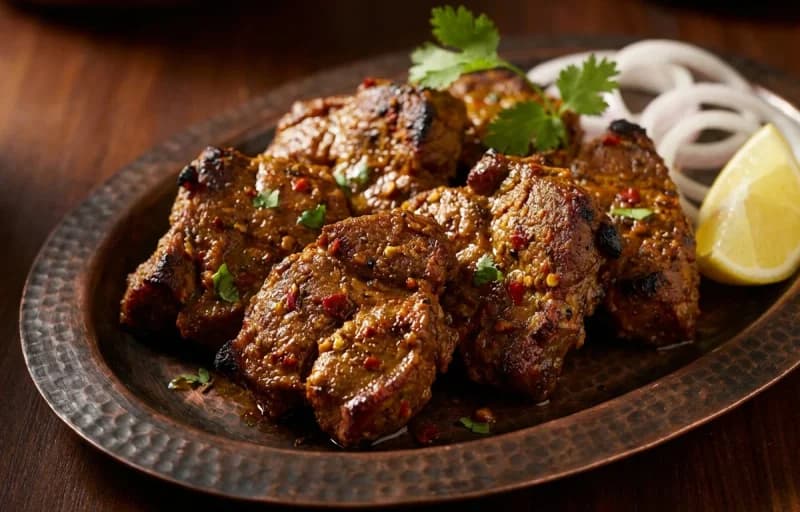
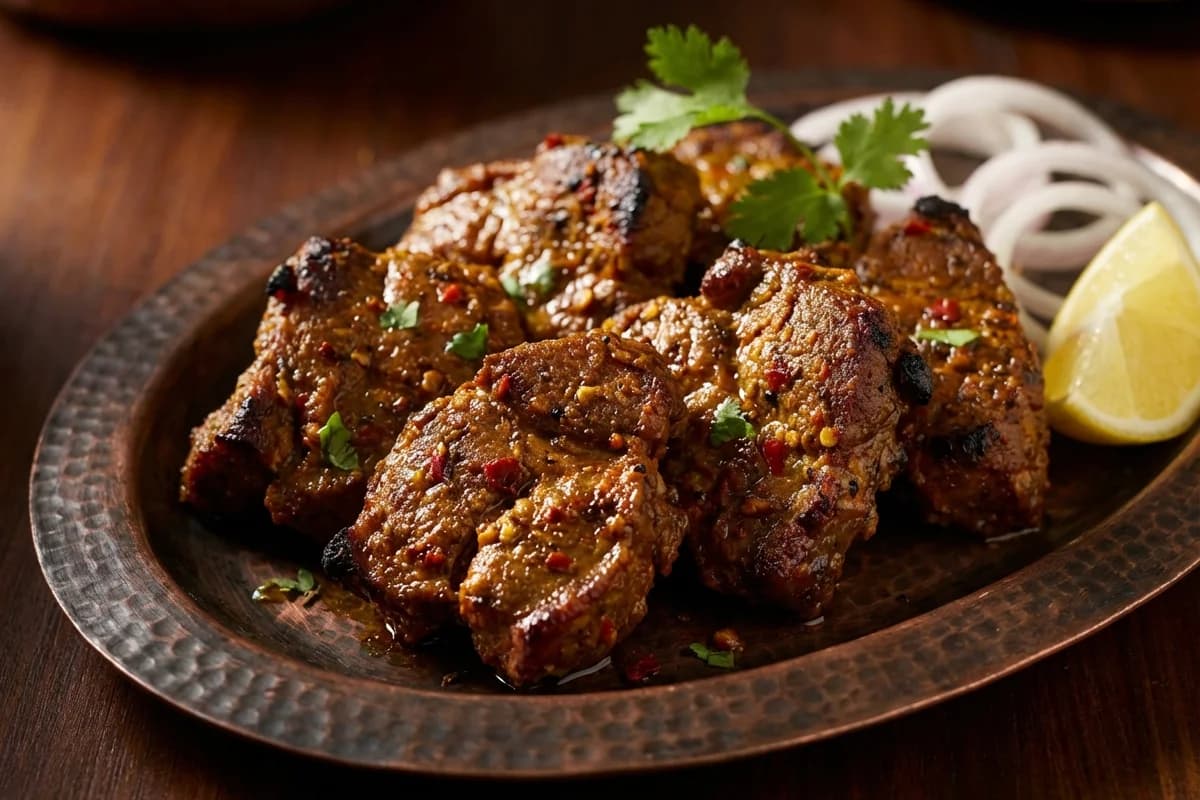
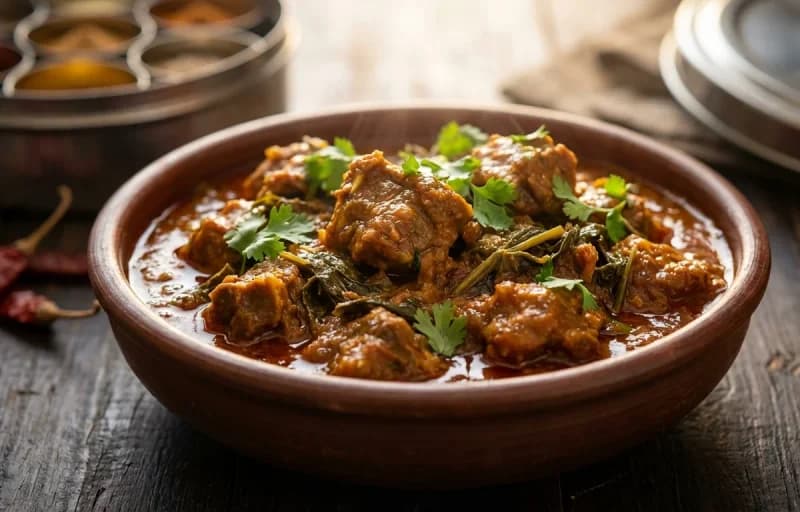
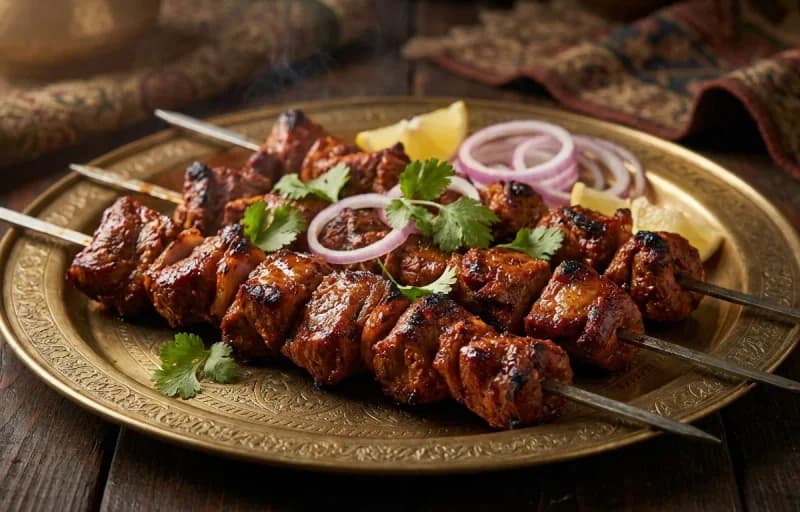
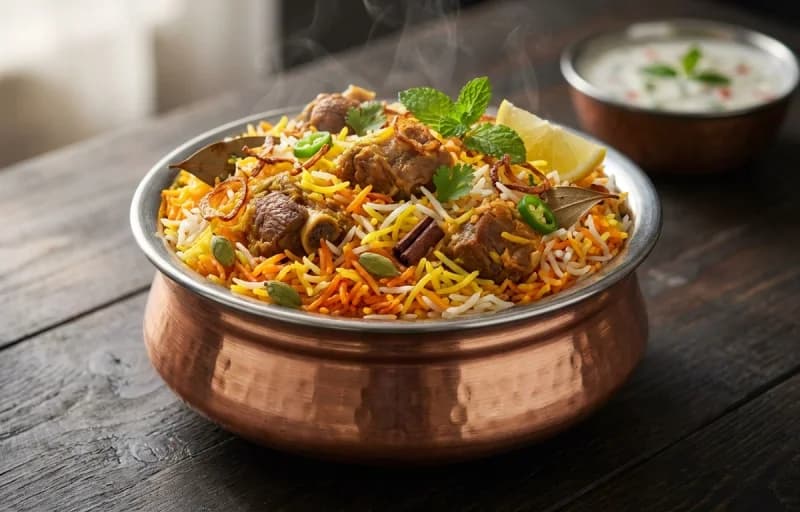
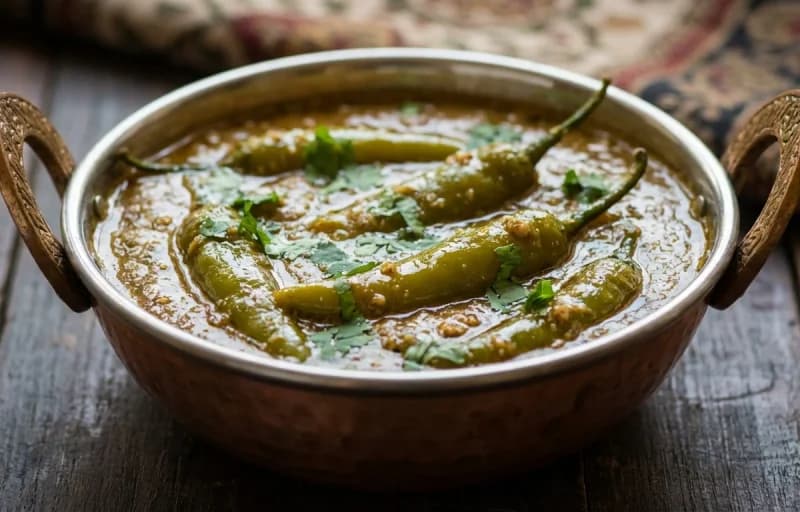
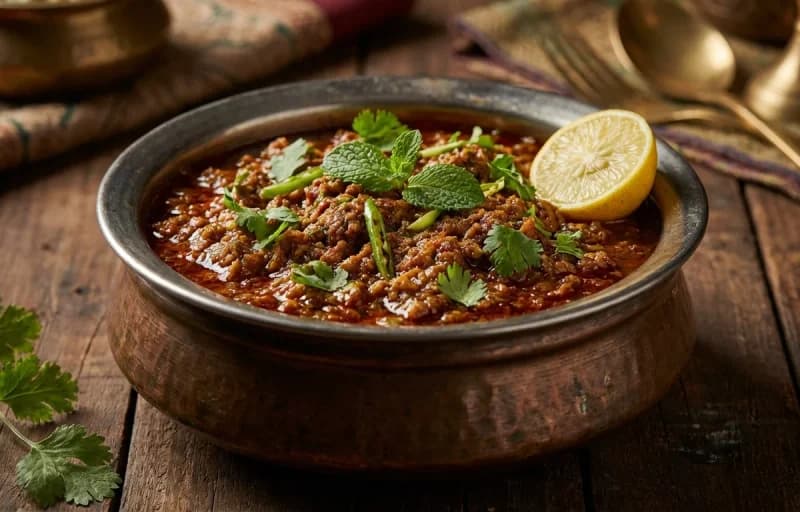
An iconic Hyderabadi delicacy, Patthar ka Gosht features paper-thin slices of lamb marinated in a potent blend of spices and raw papaya paste. Traditionally seared on a hot granite stone ('patthar'), this kebab is renowned for its smoky aroma and incredibly tender, melt-in-your-mouth texture.
Prep260 min
Cook15 min
Servings4
Serving size: 1 serving
430cal
29gprotein
7gcarbs
32g
Ingredients
600 g boneless lamb (from the leg, cut into very thin, 1/4-inch thick slices (parche))
2 tbsp raw papaya paste (essential for tenderizing)
2 tbsp ginger garlic paste
0.25 cup curd (thick or hung curd)
1 tbsp green chilli paste (adjust to taste)
1 tsp red chilli powder (use kashmiri for color and mild heat)
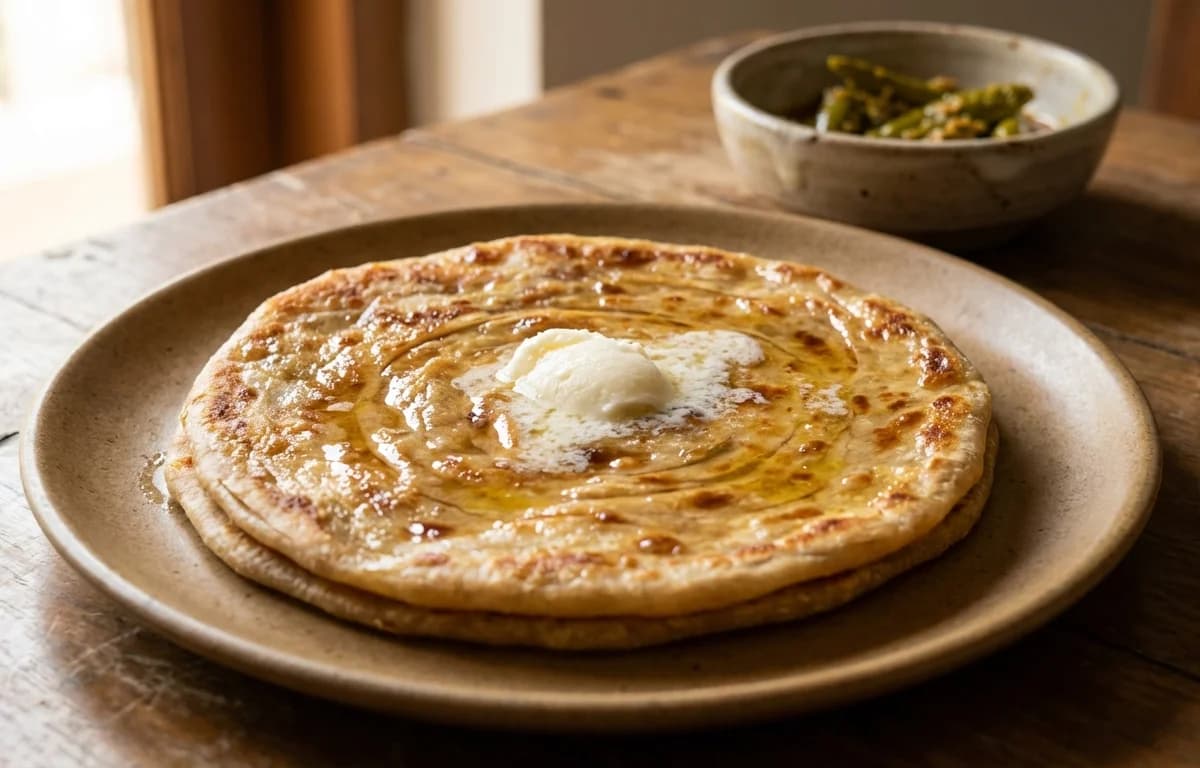
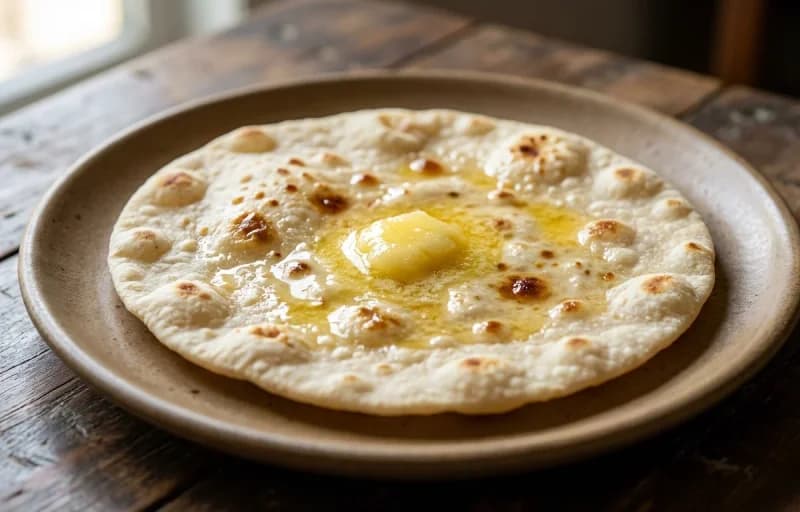
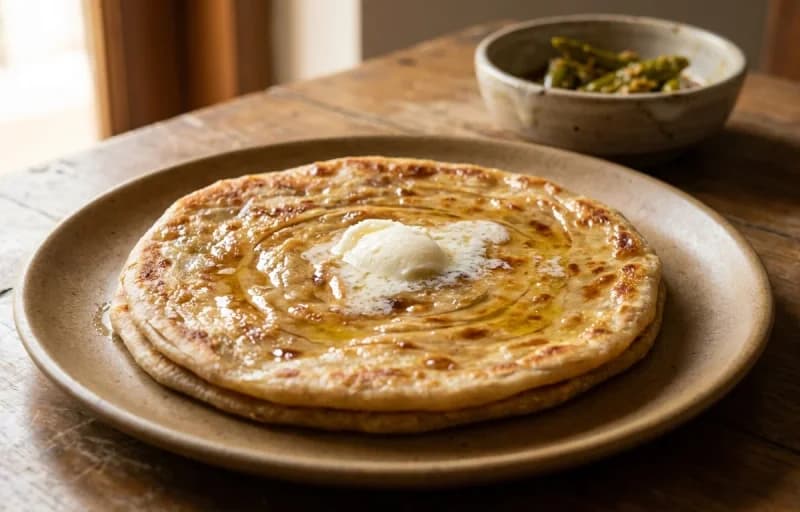
A classic North Indian flatbread made with whole wheat flour. These flaky, layered delights are pan-fried to golden perfection with ghee, resulting in a crispy exterior and a soft, chewy interior. A perfect companion to any curry, dal, or simply enjoyed with a dollop of butter.
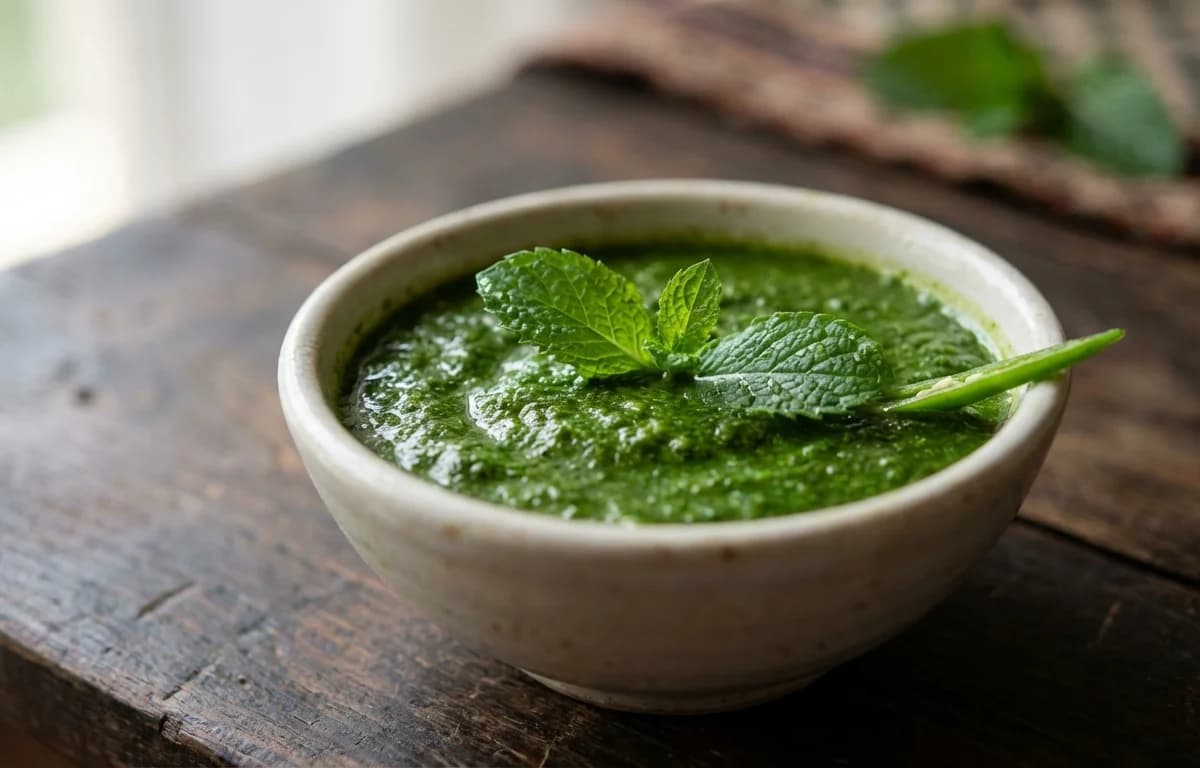
A vibrant and refreshing Indian condiment made with fresh mint, cilantro, and a hint of spice. This classic green chutney, also known as Pudina Chutney, is the perfect zesty accompaniment for samosas, chaat, kebabs, and sandwiches.
Melt-in-mouth Patthar ka Gosht with flaky paratha and tangy mint chutney - pure soul-satisfying comfort!
This hyderabadi dish is perfect for dinner. With 780.7299999999999 calories and 38.349999999999994g of protein per serving, it's a nutritious choice for your meal plan.
fat
1.5 tsp salt (adjust to taste)
2 tbsp lemon juice (divided)
3 tbsp ghee (for cooking)
2 tbsp coriander leaves (chopped, for garnish)
1 pc onion (medium, thinly sliced into rings for garnish)
Instructions
1
Prepare the Lamb
Place the thin lamb slices between two sheets of plastic wrap or in a zip-top bag.
Using a meat mallet or a heavy rolling pin, gently pound the slices until they are uniformly about 1/4-inch thick.
This step is crucial for ensuring the meat cooks quickly and becomes tender. Place the pounded slices in a large mixing bowl.
2
Marinate the Lamb
To the bowl with the lamb, add the raw papaya paste, ginger-garlic paste, curd, green chilli paste, red chilli powder, turmeric powder, garam masala, black pepper powder, salt, and 1 tablespoon of lemon juice.
Using your hands, mix thoroughly, ensuring every slice of lamb is evenly coated with the marinade.
Cover the bowl and refrigerate for a minimum of 4 hours, or preferably up to 8 hours. Do not exceed 12 hours, as the papaya paste can make the meat overly soft.
3
Heat the Cooking Surface
Traditionally, a thick granite stone (patthar) is heated over a flame for 15-20 minutes until it is extremely hot.
As an alternative, place a heavy-bottomed cast-iron skillet or griddle over high heat. Allow it to heat up for at least 5-7 minutes, or until it just begins to smoke lightly. A very hot surface is essential for a good sear.
4
Cook the Kebabs
Brush the hot stone or pan with about 1 tablespoon of ghee.
Carefully place a few marinated lamb slices on the surface in a single layer. Do not overcrowd the pan, as this will steam the meat instead of searing it.
Cook for 60-90 seconds on the first side, until a dark brown crust forms. Flip and cook for another 60 seconds on the other side.
The meat is thin and will cook very quickly. Remove from the pan and repeat in batches with the remaining lamb, adding more ghee as needed.
5
Garnish and Serve
Arrange the freshly cooked Patthar ka Gosht on a serving platter.
Garnish generously with chopped coriander leaves and fresh onion rings.
Squeeze the remaining 1 tablespoon of lemon juice over the kebabs just before serving.
Serve immediately while hot and smoky, accompanied by mint chutney and naan or rumali roti.
330cal
8gprotein
44gcarbs
15gfat
Ingredients
2 cup Atta
1 tsp Salt
0.25 cup Ghee (melted, for layering and frying)
1 cup Water (lukewarm, adjust as needed)
Instructions
1
Prepare the Dough
In a large mixing bowl, combine 2 cups of atta and 1 tsp of salt. Mix well.
Gradually add lukewarm water while mixing with your fingers. Start with 3/4 cup and add more tablespoon by tablespoon as needed.
Knead for 8-10 minutes to form a soft, smooth, and pliable dough. It should not be sticky. The ideal consistency is soft to the touch, similar to an earlobe.
Add 1 tsp of ghee and knead for another minute to make the dough smooth.
2
Rest the Dough
Cover the dough with a damp cloth or a lid and let it rest for at least 20-30 minutes. This step is crucial as it allows the gluten to relax, making the parathas softer and easier to roll.
3
Divide and Shape
After resting, knead the dough gently for 30 seconds.
Divide the dough into 8 equal-sized portions and roll each portion into a smooth ball between your palms.
4
Create the Layers (Triangle Fold)
Take one dough ball and flatten it slightly. Dust it with dry atta.
Roll it into a circle about 4-5 inches in diameter.
Spread about 1/4 tsp of melted ghee evenly over the surface.
Fold the circle in half to create a semi-circle. Apply a little more ghee on the top surface of the semi-circle.
Fold it in half again to form a triangle.
Gently press the triangle and dust it with dry atta.
5
Roll the Paratha
Place the layered triangle on a rolling board. Roll it out gently and evenly into a larger triangle, about 6-7 inches in length on each side. Don't press too hard, as this can cause the layers to merge.
6
Cook the Paratha
Heat a tawa (flat griddle) over medium-high heat. The tawa should be hot but not smoking.
Carefully place the rolled paratha on the hot tawa. Cook for about 30-40 seconds, or until you see small bubbles appear on the surface.
Flip the paratha. Cook the other side for about 1 minute, until light golden-brown spots appear.
Spread about 1/2 tsp of ghee on the top surface and flip it again.
Gently press the paratha with a flat spatula, especially around the edges, to encourage it to puff up. Cook for 30-40 seconds until this side is golden brown and crisp.
Apply ghee to the other side, flip, and cook for another 20-30 seconds.
Remove from the tawa and repeat the process for the remaining dough balls.
7
Serve
Serve the hot, flaky parathas immediately with your favorite curry, dal, yogurt, or pickle.
2 tablespoon Roasted Chana Dal (Acts as a thickener)
2 tablespoon Lemon Juice (Freshly squeezed)
0.75 teaspoon Salt (Adjust to taste)
0.5 teaspoon Black Salt (Also known as Kala Namak)
0.5 teaspoon Sugar (Optional, to balance flavors)
3 tablespoon Ice Cold Water (Or use ice cubes, add as needed for consistency)
Instructions
1
Prepare the Herbs (4 minutes)
Thoroughly rinse the mint and cilantro leaves under cold running water to remove any dirt or grit.
Pluck the mint leaves from their tough stems; discard the stems as they can be bitter.
For the cilantro, you can use the tender stems along with the leaves as they are full of flavor. Roughly chop the bunch.
Gently pat the herbs dry with a clean kitchen towel or paper towels to remove excess water.
2
Combine Ingredients in Blender (1 minute)
Place the prepared mint leaves, cilantro, green chilies (start with one for less heat), chopped ginger, roasted chana dal, lemon juice, salt, black salt, and sugar into a small, high-speed blender jar.
3
Blend to a Smooth Paste (3 minutes)
Add 2-3 tablespoons of ice-cold water or a couple of ice cubes. Using cold water is crucial to prevent the herbs from oxidizing and helps retain their vibrant green color.
Blend for 1-2 minutes, scraping down the sides of the jar with a spatula as needed, until you achieve a smooth, uniform paste.
If the chutney is too thick, add more cold water, 1 teaspoon at a time, and blend again until you reach your desired consistency. Be careful not to make it too watery.