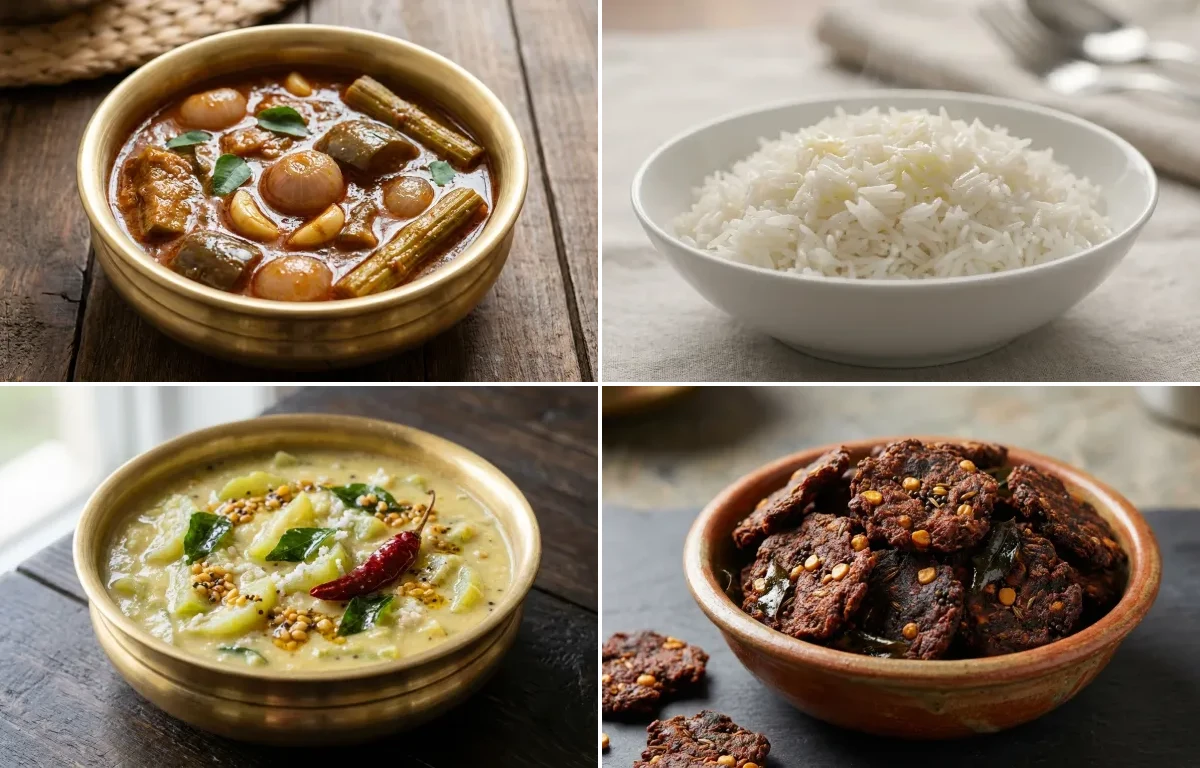
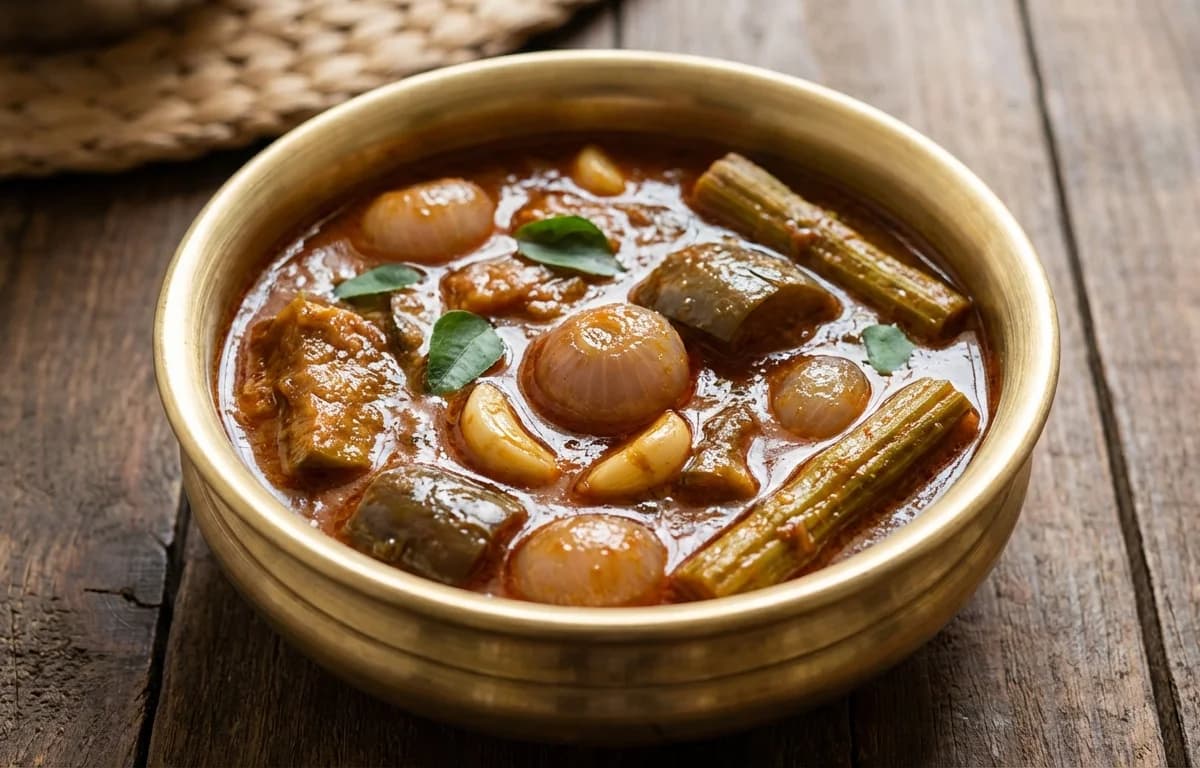
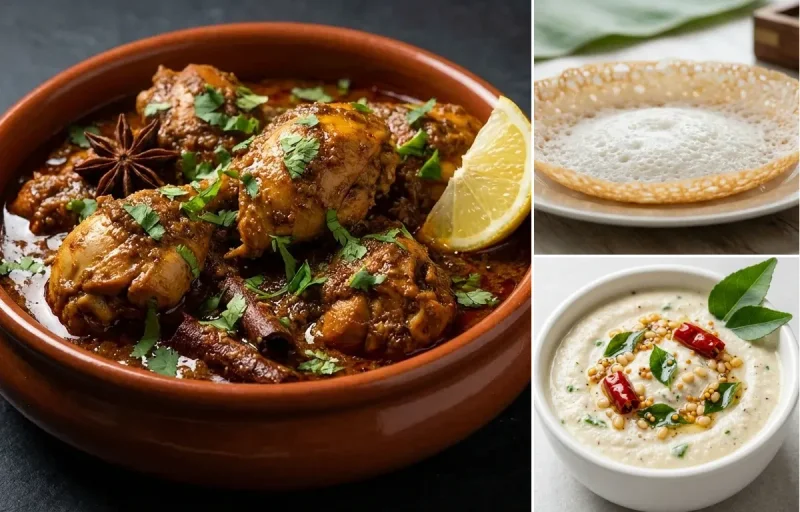
A tangy and spicy South Indian curry made with tamarind extract, vegetables, and a blend of aromatic spices. This classic dish from Tamil Nadu is a perfect accompaniment for steamed rice and papad.
Prep15 min
Cook30 min
Soak15 min
Servings4
Serving size: 1 serving
192cal
3gprotein
20gcarbs
Ingredients
30 g Tamarind (A piece roughly the size of a large lime)
2.5 cup Warm Water (1.5 cups for soaking tamarind, 1 cup for the gravy)
3 tbsp Sesame Oil (Gingelly oil is traditionally used and recommended for best flavor)
1 tsp Mustard Seeds
0.5 tsp Fenugreek Seeds
1 tsp Urad Dal (Optional, for a crunchy texture in the tempering)
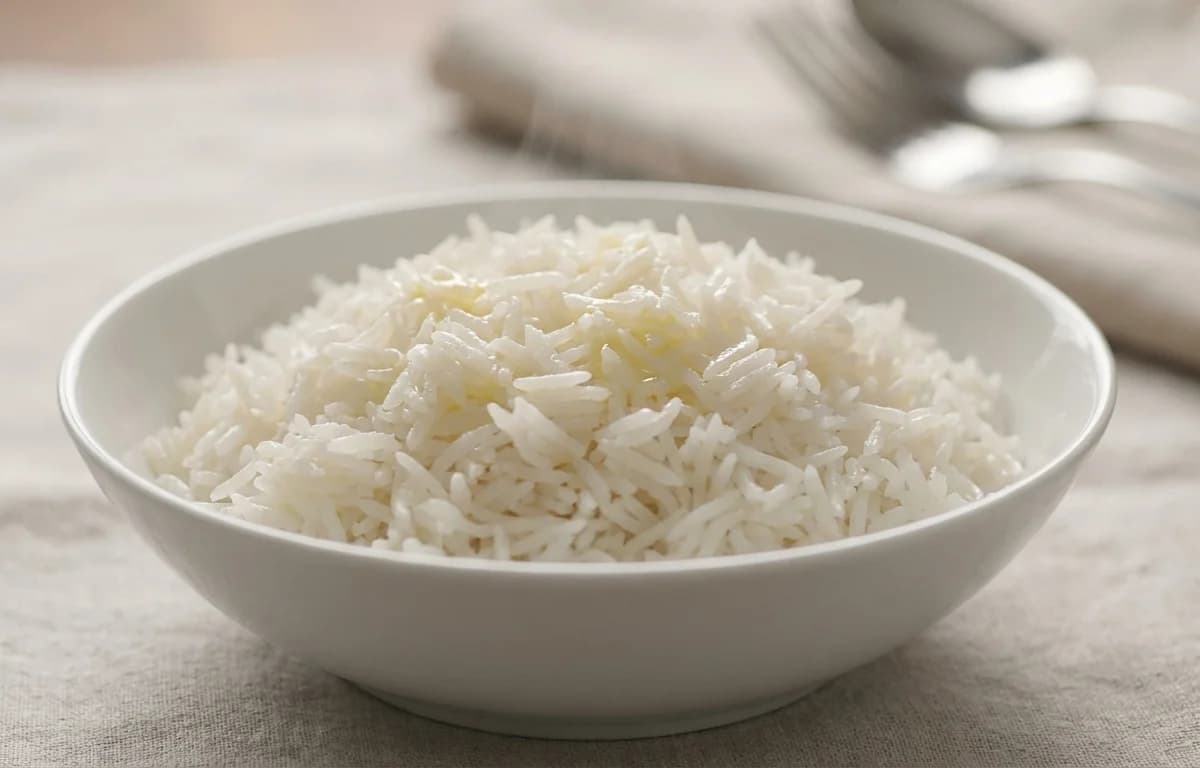
Perfectly fluffy, long-grained basmati rice with a delicate aroma. This simple, foolproof recipe gives you separate, non-sticky grains every time, making it the perfect base for any curry or dal.
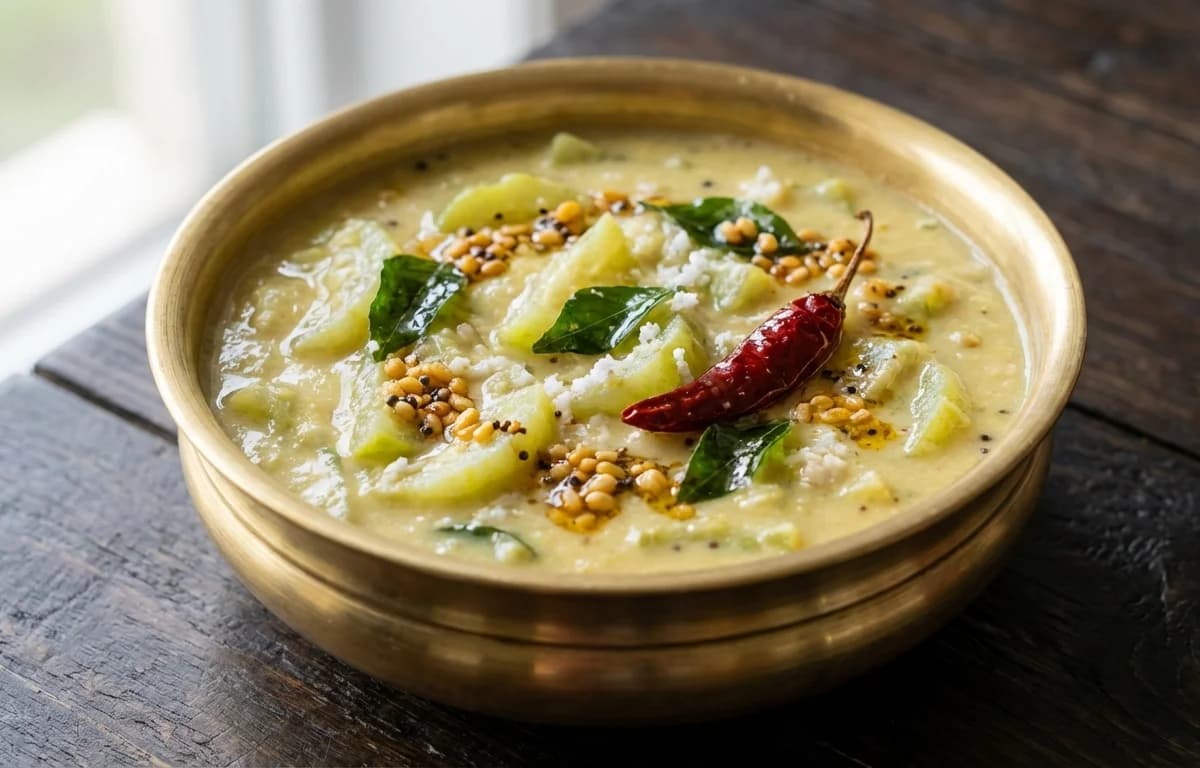
A comforting South Indian classic featuring tender snake gourd and soft lentils simmered in a creamy coconut gravy. This mildly spiced, wholesome dish is a perfect accompaniment to steamed rice and a dollop of ghee.
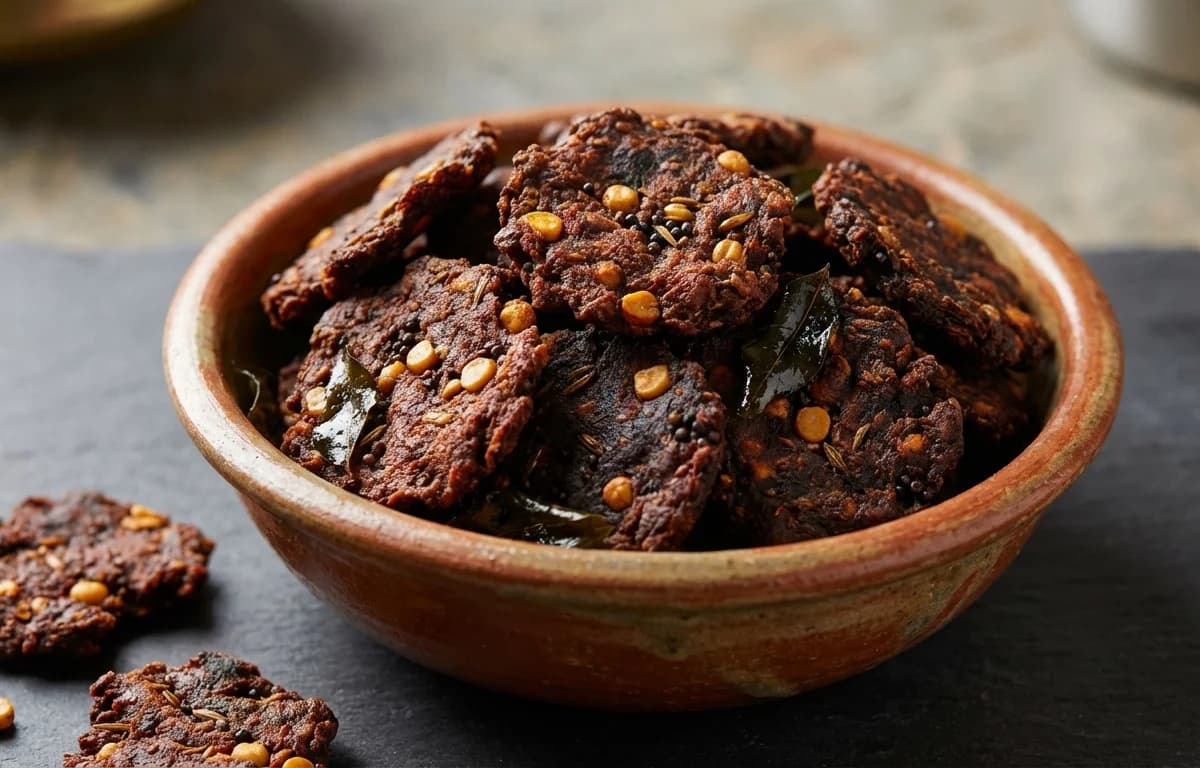
A traditional South Indian sun-dried seasoning made with shallots, garlic, and a blend of aromatic spices. Vadagam adds a unique, deep umami flavor when used for tempering sambar, kuzhambu, and curries. A pantry staple in Tamil households, this recipe follows the authentic multi-day sun-drying process.
Prep45 min
Cook0 min
Servings40
Serving size: 1 serving
About Puli Kuzhambu, Steamed Basmati Rice, Pudalangai Kootu and Vadagam
Tangy Puli Kuzhambu with creamy Pudalangai Kootu and rice – a gut-friendly, soul-satisfying comfort meal.
This chettinad dish is perfect for lunch. With 660.0699999999999 calories and 16.8g of protein per serving, it's a nutritious choice for your meal plan.
Other Cuisines to Explore
Discover authentic meals from cuisines around the world.
1 cup Pearl Onions (Peeled, also known as Sambar onions)
6 clove Garlic (Lightly crushed)
1 pc Drumstick (Cut into 2-inch pieces)
1 pc Brinjal (Medium-sized, cut into 1-inch cubes)
0.5 tsp Turmeric Powder
3 tbsp Sambar Powder (Adjust according to your spice preference)
1.5 tsp Salt (Adjust to taste)
1 tsp Jaggery (Powdered, essential for balancing the flavors)
Instructions
1
Prepare Tamarind Extract
Soak the 30g of tamarind in 1.5 cups of warm water for about 15-20 minutes.
Once softened, squeeze the tamarind pulp thoroughly with your fingers to extract its essence into the water.
Strain the liquid through a fine-mesh sieve into a bowl, pressing the pulp to get all the extract. Discard the solids. Set this tamarind water aside.
2
Sauté Vegetables
Heat 2 tbsp of sesame oil in a heavy-bottomed pan or clay pot (kadai) over medium heat.
Add the pearl onions and crushed garlic. Sauté for 2-3 minutes until the onions become translucent and fragrant.
Add the drumstick and brinjal pieces. Continue to sauté for 5-7 minutes until the vegetables are lightly browned and about half-cooked.
3
Simmer the Kuzhambu
Reduce the heat to low. Add the turmeric powder and sambar powder to the pan. Stir continuously for 30-45 seconds until aromatic, being careful not to burn the spices.
Pour in the prepared tamarind extract, 1 cup of fresh water, salt, and powdered jaggery. Stir well to combine.
Increase the heat to medium-high and bring the mixture to a rolling boil.
Once boiling, reduce the heat to low, cover the pan, and let it simmer for 12-15 minutes. The key is to cook until the raw smell of tamarind disappears and the gravy thickens.
You'll know it's ready when you see specks of oil floating on the surface.
4
Prepare the Tempering (Tadka)
While the kuzhambu simmers, heat the remaining 1 tbsp of sesame oil in a small tadka pan over medium heat.
Add the mustard seeds and wait for them to splutter completely.
Add the fenugreek seeds and urad dal. Fry for about 30 seconds until the dal turns a light golden brown.
Add the broken dried red chillies, curry leaves, and asafoetida. Sauté for another 20-30 seconds until the curry leaves are crisp.
5
Combine and Serve
Carefully pour the hot tempering over the simmering kuzhambu.
Stir gently to incorporate the flavors. Let it cook for one final minute.
Turn off the heat and let the Puli Kuzhambu rest for at least 10-15 minutes before serving. This allows the flavors to meld beautifully.
Serve hot with steamed rice, appalam (papad), or a simple vegetable stir-fry (poriyal).
4
Serving size: 1 serving
262cal
5gprotein
55gcarbs
1gfat
Ingredients
1.5 cup Basmati Rice (Use good quality, aged basmati rice for best results)
2.25 cup Water (For the absorption cooking method)
0.75 tsp Salt (Adjust to taste)
1 tsp Ghee (Optional, for flavor and to prevent sticking)
Instructions
1
Rinse and Soak the Rice (35 minutes)
Place the basmati rice in a large bowl. Add cold water and gently swirl the rice with your fingers. Drain the cloudy water. Repeat this process 3-4 times until the water runs mostly clear. This removes excess starch and prevents stickiness.
Cover the rinsed rice with fresh water and let it soak for 30 minutes. Soaking allows the grains to absorb water, ensuring they cook evenly and elongate beautifully.
After 30 minutes, drain the rice completely using a fine-mesh sieve and set aside.
2
Cook the Rice (15 minutes)
In a medium, heavy-bottomed saucepan with a tight-fitting lid, combine the drained rice, 2.25 cups of fresh water, salt, and ghee (if using).
Bring the mixture to a rolling boil over medium-high heat, uncovered.
As soon as it boils, give it one gentle stir, then immediately reduce the heat to the lowest possible setting. Cover the saucepan tightly with the lid.
Let the rice simmer for 12-15 minutes, or until all the water has been absorbed. Do not lift the lid during this time to prevent steam from escaping.
3
Rest and Fluff (10 minutes)
Turn off the heat but leave the saucepan on the stove, still covered. Let the rice rest and steam for 10 minutes. This step is crucial for finishing the cooking process and achieving a perfect texture.
After resting, remove the lid. Use a fork to gently fluff the rice, separating the long, delicate grains.
Serve hot as a perfect accompaniment to curries, dals, or grilled dishes.
500 g Shallots (Peeled, also known as chinna vengayam)
100 g Garlic (Peeled)
2 tbsp Mustard Seeds
2 tbsp Urad Dal
2 tbsp Chana Dal
1 tbsp Cumin Seeds
1 tsp Fenugreek Seeds
0.5 cup Curry Leaves (Fresh, washed and thoroughly patted dry)
1 tbsp Turmeric Powder
1 tsp Asafoetida (Also known as hing)
2 tbsp Rock Salt (Preferred for preservation, can be substituted with sea salt)
0.25 cup Castor Oil (Essential for authentic flavor and preservation)
Instructions
1
Prepare Aromatics (15 minutes)
In a food processor or using a mortar and pestle, coarsely crush the peeled shallots and garlic. Avoid making a fine paste; a chunky, uneven texture is crucial for the final product.
Ensure the curry leaves are completely dry before use. If freshly washed, pat them dry with a towel and let them air dry for an hour.
2
Mix Ingredients (10 minutes)
In a large, wide, non-reactive bowl (glass or stainless steel), combine the crushed shallots and garlic.
Add all the dry ingredients: mustard seeds, urad dal, chana dal, cumin seeds, fenugreek seeds, dry curry leaves, turmeric powder, asafoetida, and rock salt.
Pour in the castor oil. Using your hands, mix everything thoroughly until every ingredient is well-coated with oil and spices. The mixture should be homogenous.
3
Initial Sun-Drying (3 Days)
Spread the mixture evenly on a large tray or a clean cotton cloth. The layer should be relatively thin to promote even drying.
Cover the tray with a fine net or muslin cloth to protect it from dust, insects, and birds.
Place it in direct, strong sunlight for the entire day (at least 6-8 hours).
Stir in the ground coconut paste and salt. Add the remaining 1/4 cup of water, or more, to adjust the consistency to your liking.
Place the cooker back on the stove over low-medium heat and let it simmer for 5-7 minutes, stirring occasionally. This cooks out the raw flavor of the coconut paste.
4
Prepare and Add the Tempering (Tadka)
In a small pan (tadka pan), heat the coconut oil over medium heat.
Once the oil is hot, add the mustard seeds and wait for them to splutter completely.
Add the urad dal and sauté until it turns a light golden brown, about 30-45 seconds.
Toss in the broken dried red chilli and curry leaves. Sauté for another 15-20 seconds until the curry leaves are crisp.
Turn off the heat and immediately stir in the asafoetida.
5
Finish and Serve
Pour the hot tempering directly into the simmering kootu.
Mix well to incorporate the flavors. Turn off the heat.
Serve Pudalangai Kootu hot with steamed rice, a drizzle of ghee, and a side of appalam (papad).
Each evening, bring the tray indoors. The next morning, mix the contents well with a spoon or your hands and spread it out in the sun again. Repeat this process for 3 full days.
4
Form Balls and Continue Drying (4-5 Days)
After 3 days, the mixture will have lost significant moisture and become darker, but should still be pliable enough to shape.
Take small portions of the mixture (about a tablespoon) and press firmly between your palms to shape them into tight, compact balls, approximately 1 to 1.5 inches in diameter.
Arrange these balls on the tray, leaving some space between them for air circulation.
Continue to sun-dry the balls for another 4-5 days, turning them once or twice a day to ensure they dry evenly on all sides.
5
Final Check and Storage (5 minutes)
The vadagam is ready when the balls are rock-hard, completely dry, and have turned a deep brown or almost black color.
A good test is to shake a few balls in your closed palm; you should hear a distinct rattling sound, indicating they are fully dehydrated.
Once completely dry, store the vadagam in a clean, airtight glass or steel container at room temperature. It will last for over a year, with the flavor deepening over time.