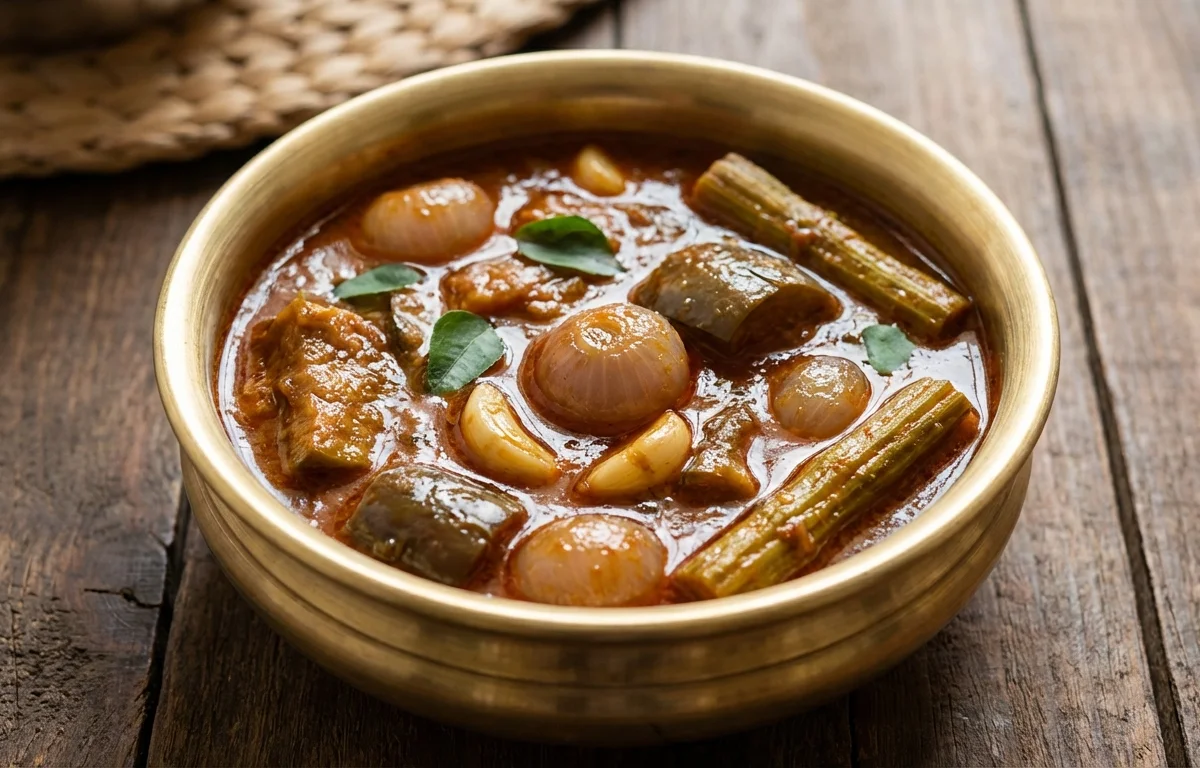
Puli Kuzhambu
A tangy Tamil-style tamarind curry with soft brinjal, drumstick, and a deeply spiced sesame aroma. It cooks into a rich, balanced kuzhambu that tastes even better after resting for a while.
For 4 servings
- prep · ~15 min
Soak the tamarind and prep the vegetables.
1.Soak tamarind in 1 cup warm water for 15 minutes.2.Quarter the brinjal and cut the drumstick into 2 inch pieces.3.Peel the shallots and garlic cloves.4.Squeeze and strain the tamarind, then add more water to make about 2 cups tamarind water.TIPKeep cut brinjal in water until needed so it does not darken. - temper · ~1 min
Make the tempering.
1.Heat sesame oil in a kadai over medium heat.2.Add mustard seeds and let them splutter.3.Add fenugreek seeds, dried red chili, and curry leaves.4.Cook for a few seconds until fragrant.TIPDo not let the fenugreek turn dark brown or the kuzhambu will taste bitter. - saute · ~6 min
Cook the shallots, garlic, and vegetables.
1.Add shallots and garlic to the pan.2.Sauté until the shallots soften lightly, about 3 to 4 minutes.3.Add brinjal and drumstick pieces.4.Cook for 2 minutes so the vegetables are coated well in the oil and spices. - saute · ~1 min
Add the spice powders.
Lower the heat and add turmeric powder, red chili powder, and coriander powder. Mix well for 20 to 30 seconds without letting the spices burn.
- simmer · ~15 min
Pour in tamarind water and simmer the kuzhambu.
1.Pour in the tamarind water and the remaining plain water.2.Add salt and jaggery, then mix well.3.Bring the curry to a boil over medium heat.4.Lower the heat and simmer until the vegetables are tender and the raw tamarind smell disappears.TIPA gentle simmer helps the tamarind cook down and gives the kuzhambu a rounded taste. - mix · ~3 min
Thicken the kuzhambu lightly.
Stir the rice flour with 2 tbsp water until smooth. Pour it into the simmering kuzhambu and cook for 2 to 3 minutes until the gravy looks glossy and lightly thickened.
- rest · ~10 min
Rest the kuzhambu before serving.
Turn off the heat and let the kuzhambu rest for 10 minutes so the flavors settle and deepen.
- serve
Serve hot with rice.
What to keep in mind.
7 tips from the recipe — small details that make a real difference to the final dish.
- 1Keep the fenugreek light golden in the tempering; even slightly dark seeds can make the whole kuzhambu bitter.
- 2After cutting, keep the brinjal in water and add it only when ready to cook so it stays pale and cooks evenly.
- 3Simmer until the sharp raw tamarind smell is completely gone; that is the key doneness cue for a rounded kuzhambu.
- 4Mix the rice flour slurry until fully smooth before pouring in, or the gravy can develop small lumps.
- 5Let the kuzhambu rest at least 10 minutes before serving; the sesame oil, tamarind, and spices meld noticeably as it sits.
- 6This dish tastes even better the next day, so make it ahead and reheat gently for a deeper, more settled flavor.
- 7If the kuzhambu reduces too much while drumstick cooks, add a small splash of hot water rather than boiling hard.
Adapt it for your goals.
No-garlic
Skip the garlic for a more traditional satvik-style version; the shallots, tamarind, and tempering still give plenty of depth.
jainJain
Omit shallots and garlic, and replace brinjal and drumstick with pumpkin or okra for a Jain-friendly kuzhambu with similar tang.
okraOkra
Swap the brinjal for lady's finger; sauté it well first so it stays less slimy and holds up nicely in the tamarind gravy.
without rice flourWithout-rice-flour
Leave out the rice flour if you prefer a thinner, more broth-like kuzhambu to mix with hot rice.
Why this is on our healthy list.
Vegetable-Rich Curry
Brinjal, drumstick, shallots, and garlic add plant compounds, fiber, and variety while keeping the dish light and satisfying.
Tamarind-Based Sourness
Tamarind brings strong tang and depth, helping create a bold curry without relying on heavy dairy or rich cream.
Contains Aromatic Spices
Fenugreek, turmeric, coriander, red chili, and curry leaves contribute characteristic South Indian flavor along with beneficial plant compounds.
Sesame Oil Flavor Depth
Sesame oil gives richness and aroma, so a modest amount can make the kuzhambu feel full-flavored and satisfying.
Frequently asked questions
It usually needs more simmering. Cook until the raw tamarind smell disappears and the gravy tastes rounded rather than aggressively sour.