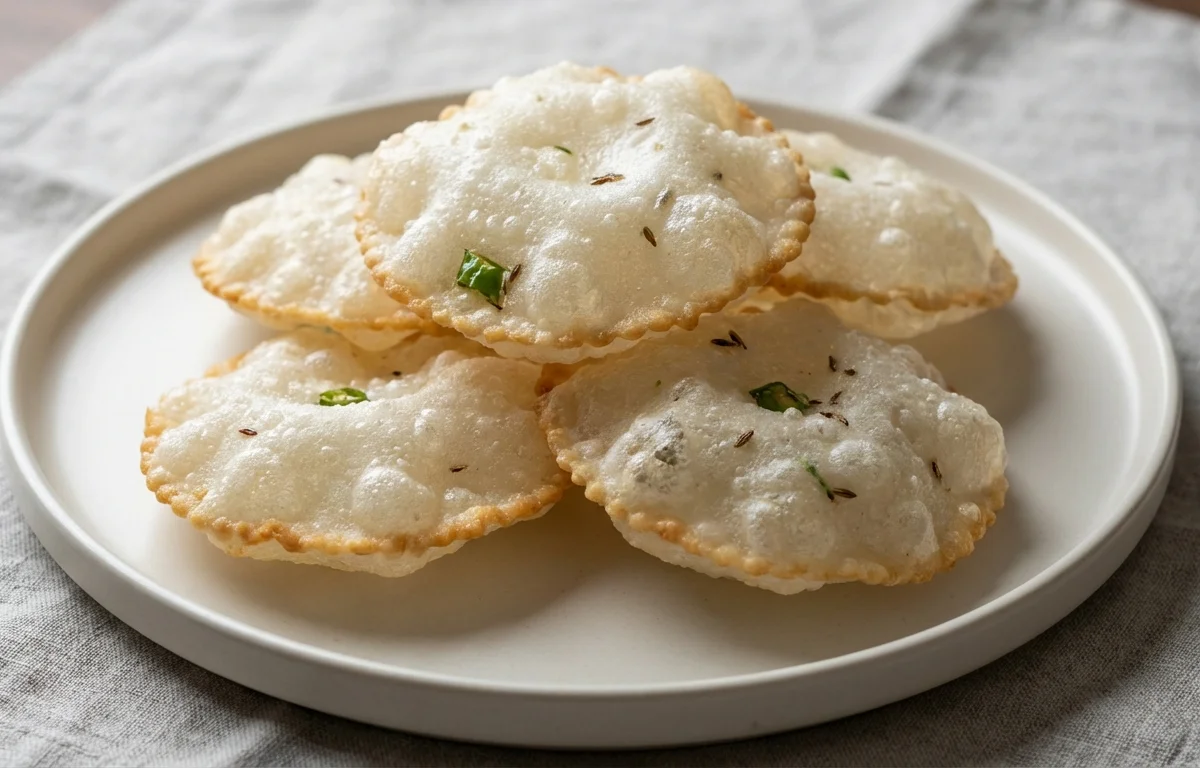
Akki Sandige
Akki Sandige is a traditional Karnataka sun-dried rice fryum made from cooked rice flour dough, lightly spiced with cumin and green chili. Dry a batch in the sun, then fry whenever you want a crisp, airy side for rasam rice or curd rice.
For 8 servings
- prep
Prepare the drying surface.
Spread the plastic sheet or a clean thick cloth in a sunny spot and grease it lightly with 1 tsp oil so the sandige lifts off easily after drying.
- boil · ~5 min
Boil the water with the seasonings.
1.Add water to a heavy pan and bring it to a boil over medium heat.2.Add crushed green chili, cumin seeds, asafoetida, and salt.3.Let it boil for 1 minute so the flavors spread through the water. - mix · ~7 min
Cook the rice flour into a thick dough.
1.Lower the heat and add the rice flour gradually to the boiling water.2.Stir continuously with a sturdy spoon so no lumps form.3.Cook until the mixture turns glossy, thick, and comes together like a soft dough.TIPKeep the heat low once the flour goes in. High heat makes the dough catch at the bottom before it cooks through. - rest · ~10 min
Cool the dough slightly.
Take the pan off the heat and let the dough cool just enough to handle comfortably. It should stay warm and soft, not cold or stiff.
- assemble · ~15 min
Shape the sandige on the sheet.
1.Pinch small portions of the warm dough.2.Drop or press them into small rounds on the greased sheet, leaving a little space between each one.3.Smooth the tops lightly with damp fingers if needed.TIPShape them while the dough is still warm. Once it cools fully, it becomes harder to portion neatly. - rest
Sun-dry the sandige completely.
Dry the shaped sandige in strong sun for 1 to 2 days, turning them once they firm up. Bring them indoors at night. Dry until they are hard, light, and no longer sticky.
TIPAny moisture left inside will make them soften in storage instead of frying crisp. - fry · ~5 min
Deep fry the dried sandige.
1.Heat oil for deep frying over medium heat.2.Slide in a few dried sandige at a time.3.Fry until they puff and turn crisp without getting too dark.4.Drain well and repeat with the remaining pieces.TIPUse medium heat so they expand fully. Very hot oil browns the outside before the center crisps. - serve
Serve the Akki Sandige.
Serve hot and crisp as a side with rice, rasam, sambar, or curd rice. Store the fully dried unfried sandige in an airtight container for later use.
What to keep in mind.
7 tips from the recipe — small details that make a real difference to the final dish.
- 1Add the rice flour in a steady sprinkle while stirring, or the dough will form hard lumps that show up in the dried sandige.
- 2The dough is ready when it looks glossy and leaves the sides of the pan; undercooked dough dries poorly and fries chewy.
- 3Shape the rounds while the dough is still warm, because cooled rice dough stiffens quickly and cracks at the edges.
- 4Keep the sandige small and evenly sized so they dry at the same rate and puff evenly in oil.
- 5Turn them only after the tops are firm; flipping too early can make the soft sandige stick and tear.
- 6Dry them until completely hard and light before storing, and always bring them inside at night to avoid moisture.
- 7Fry on medium heat in small batches; if the oil is too hot, they brown before they fully expand.
Adapt it for your goals.
Milder
Reduce the green chili for a gentler version that still keeps the cumin and asafoetida flavour, ideal for serving with spicier rasam or sambar.
pepper cuminPepper-cumin
Swap the green chili for crushed black pepper for a warmer, more traditional savoury heat with a slightly different aroma.
sesameSesame
Add a little white sesame to the dough for a nuttier flavour and extra texture in the fried sandige.
mini sandigeMini-sandige
Shape very small rounds so they dry faster and fry up quickly, useful when making large batches for storage.
Why this is on our healthy list.
Naturally Gluten-Free Base
Made from rice flour rather than wheat, this traditional fryum suits meals where a gluten-free accompaniment is preferred.
Digestive Spice Support
Cumin and asafoetida are classic seasonings used in South Indian cooking to add aroma and make starchy foods feel lighter.
Portion-Friendly Pantry Side
Because the sandige is dried and fried only when needed, you can prepare just enough to accompany a meal instead of making a large fresh snack.
Frequently asked questions
It should turn glossy, thicken well, and gather into a soft mass that leaves the sides of the pan when stirred.