Arbi Tuk
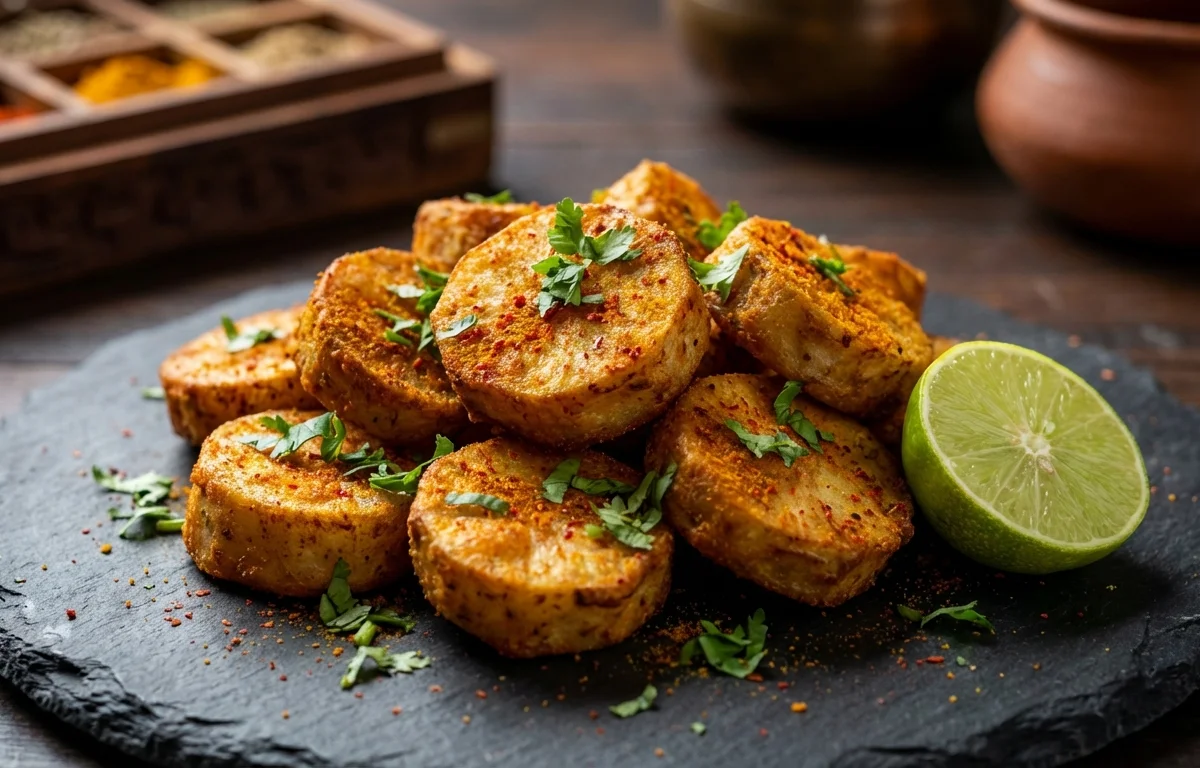
Crisp, spiced colocasia slices with a soft center and chatpata finish. This Sindhi-style snack or side is lightly boiled first, then fried until golden and tossed with simple masalas and lemon.
For 4 servings
- boil · ~15 min
Boil the arbi until just tender.
1.Place the arbi and water in a pot and bring to a boil over medium-high heat.2.Add the salt to the boiling water.3.Cook until the arbi is just tender but not falling apart, about 12-15 minutes.4.Drain well and let it cool enough to handle.TIPDo not overboil the arbi or it will break while pressing and turn soggy while frying. - prep · ~5 min
Peel and flatten the arbi.
1.Peel the cooled arbi with your fingers or a small knife.2.Place each piece on a board and gently press it to flatten into a thick disc.3.Keep the flattened pieces in a single layer so they do not stick. - fry · ~15 min
Fry the arbi until crisp and golden.
1.Heat the oil for frying in a kadai over medium heat.2.Slide in a few flattened arbi pieces at a time without crowding the pan.3.Fry until both sides are golden and crisp, turning once, about 4-5 minutes per batch.4.Lift them out and drain briefly.TIPKeep the heat at medium so the arbi crisps slowly; very hot oil will brown the outside before the center firms up. - mix · ~1 min
Season the fried arbi.
Place the hot fried arbi in a wide bowl. Sprinkle red chili powder, cumin powder, chaat masala, and black pepper over the top, then drizzle in the lemon juice and toss gently to coat.
- garnish
Garnish with cilantro.
- serve
Serve hot.
What to keep in mind.
7 tips from the recipe — small details that make a real difference to the final dish.
- 1Boil the arbi only until a knife slips in with slight resistance; overcooked pieces will crack when flattened.
- 2Let the boiled arbi steam-dry after draining so excess moisture does not make the frying oil splutter.
- 3Press each piece gently into a thick disc, not too thin, so you get crisp edges and a creamy center.
- 4Fry in small batches and keep the oil at medium heat for an even golden crust without a hard exterior.
- 5Season while the fried arbi is still hot so the chaat masala and chili cling properly to the surface.
- 6Add the lemon juice at the very end and toss lightly, otherwise the crust can lose some crispness.
- 7For make-ahead prep, boil, peel, and flatten the arbi earlier; fry and season just before serving.
Adapt it for your goals.
Low-oil
Brush the flattened arbi with oil and air-fry or roast until crisp for a lighter version with less frying.
extra spicyExtra-spicy
Increase red chili powder and add a pinch of crushed ajwain or extra black pepper for a sharper, more robust snack.
herb forwardHerb-forward
Toss with extra cilantro and a little mint after frying for a fresher, chutney-like finish.
fasting friendlyFasting-friendly
Skip chaat masala if needed and season with sendha namak, black pepper, and lemon for a vrat-style adaptation.
Why this is on our healthy list.
Fiber from Arbi
Colocasia provides dietary fiber, which can make this snack more satisfying than refined-flour snacks.
Plant-Based Side Dish
This recipe is naturally plant-based, using arbi, spices, lemon juice, and herbs for flavor.
Antioxidant-Rich Seasoning
Red chili, black pepper, cumin, cilantro, and lemon add flavorful plant compounds along with brightness.
Frequently asked questions
It was likely boiled too long. Arbi should be just tender, then cooled slightly before pressing into thick discs.