Atukula Dosa
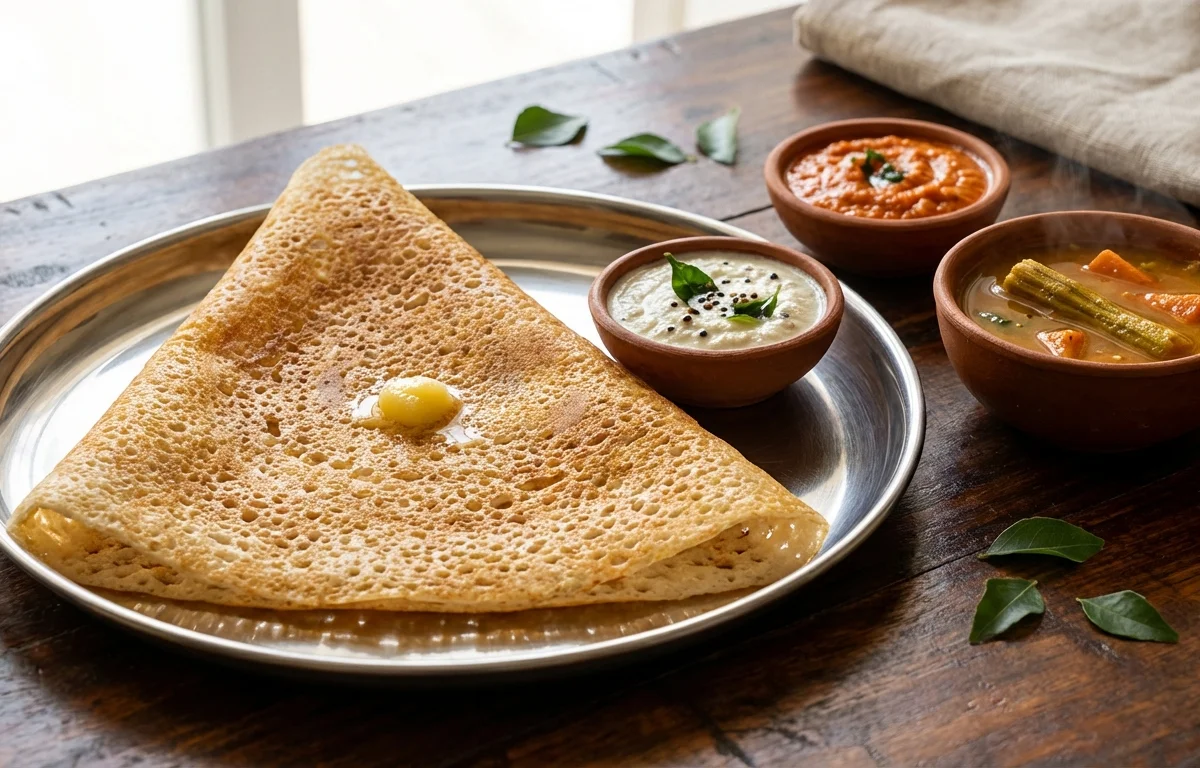
Soft inside with lightly crisp edges, this Andhra-style poha dosa is made from rice, flattened rice, and urad dal. The batter ferments into a mild, tangy base that cooks into golden dosas perfect with chutney.
For 8 servings
- prep · ~240 min
Soak the rice, dal, and atukulu.
1.Rinse the rice well and soak it in water for 4 hours.2.Rinse the urad dal and fenugreek seeds together and soak them for 4 hours.3.Rinse the atukulu and soak it separately for 20 to 30 minutes near the end of the soaking time.TIPUse thick atukulu so the batter stays light but still has enough body for dosa. - mix · ~20 min
Grind the batter.
1.Drain the urad dal and fenugreek seeds, then grind them with a little water to a smooth and fluffy batter.2.Drain the rice and atukulu, then grind them together with enough water to a smooth but slightly grainy batter.3.Combine both batters in a large bowl and mix well by hand for 1 to 2 minutes.TIPKeep the batter slightly thick after grinding; it loosens a bit during fermentation. - rest · ~480 min
Ferment the batter.
Cover the bowl and keep it in a warm place for about 8 hours, or until the batter rises and smells lightly tangy.
- mix · ~2 min
Add salt and adjust the batter.
Stir the fermented batter gently. Add the salt and enough water, if needed, to make a pourable batter that spreads easily on the pan.
- fry · ~25 min
Cook the dosas.
1.Heat a dosa tawa over medium heat and lightly grease it with a little oil.2.Pour a ladle of batter in the center and spread it in a thin circle.3.Drizzle a little oil around the edges and cook until the bottom turns golden and the edges lift easily.4.Flip for a few seconds if you like, then remove. Repeat with the remaining batter.TIPIf the batter sticks, lower the heat briefly, wipe the tawa, and start again on an evenly heated surface. - serve
Serve the atukula dosa hot.
What to keep in mind.
7 tips from the recipe — small details that make a real difference to the final dish.
- 1Grind the urad dal very fluffy and the rice-atukulu slightly grainy for dosas that are soft inside but still crisp at the edges.
- 2Mixing the two batters by hand helps kick-start fermentation and gives the dosa a better rise.
- 3Add salt only after fermentation in cooler weather if your batter tends to rise slowly.
- 4For easy spreading, the batter should pour smoothly but still coat the ladle; overly thin batter makes flat, pale dosas.
- 5Keep the tawa on medium heat; if it is too hot, the batter will seize and won't spread into a thin circle.
- 6Wait to flip until the edges release on their own and the underside turns golden, otherwise the dosa can tear.
- 7Fermented batter keeps well in the fridge for a couple of days; stir gently and thin slightly before making more dosas.
Adapt it for your goals.
Low-oil
Cook on a well-seasoned cast-iron or nonstick tawa and use only a light oil smear for a lighter everyday dosa.
extra softExtra-soft
Use a slightly thicker batter and spread less thin for softer dosas that pair especially well with spicy Andhra chutneys.
no flipNo-flip
Cook only on one side for a more traditional dosa texture with a crisp base and soft, porous top.
milletMillet
Replace part of the rice with little millet or foxtail millet for a nuttier flavour and a more whole-grain style dosa.
Why this is on our healthy list.
Balanced Rice-Dal Base
The combination of rice and urad dal makes this dosa more balanced and satisfying than a rice-only batter.
Fermented and Gentle
Fermentation can improve flavour and make the batter feel lighter and easier to enjoy for many people.
Includes Flattened Rice
Atukulu adds softness and quick-cooking starch, giving the dosa a tender texture without needing refined flour.
Frequently asked questions
Usually the room is too cool or the batter was ground too thin. Keep it in a warm spot and make sure the urad portion is beaten fluffy.



.webp)