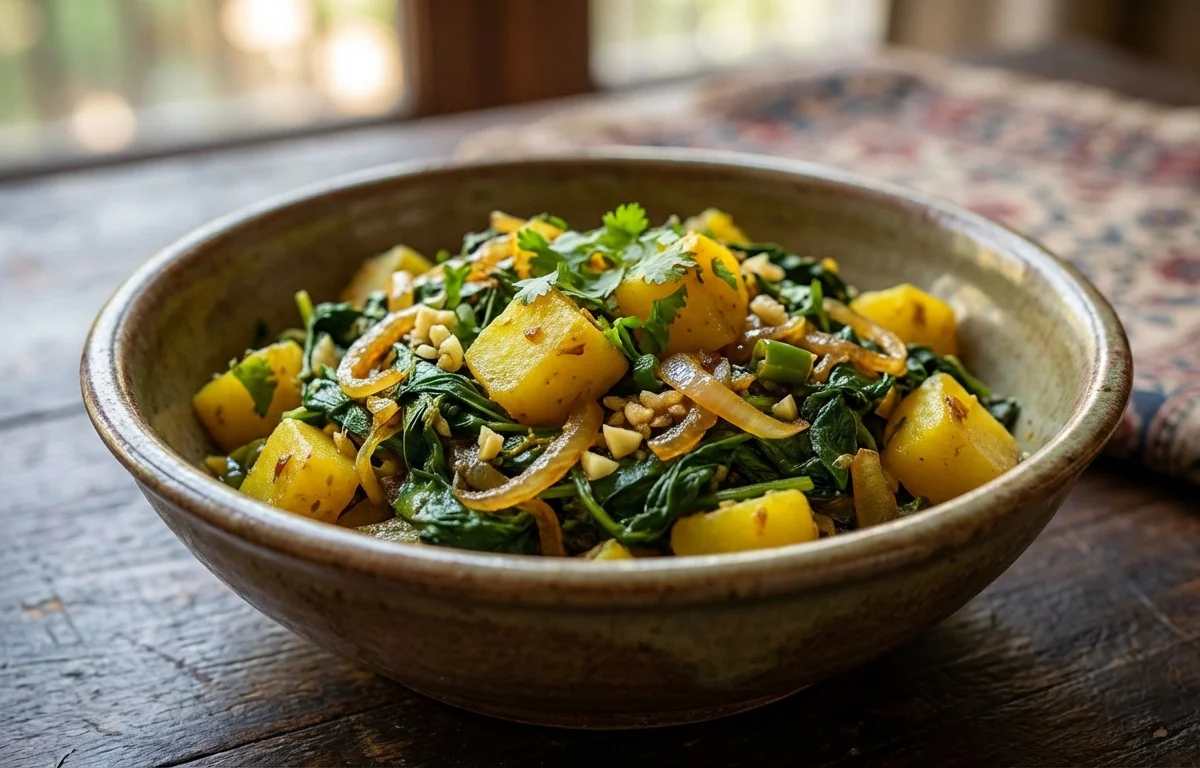
Babori Xaak Bhaji
A simple Assamese stir-fry that lets the gentle, earthy flavor of babori xaak shine. Cooked with a light tempering of garlic and green chili, this homestyle bhaji is quick, comforting, and best served with rice and dal.
For 4 servings
- prep · ~10 min
Clean and chop the babori xaak.
1.Pick through the leaves and tender stems, discarding any damaged parts.2.Wash the xaak in several changes of water until no grit remains.3.Drain well and roughly chop the leaves and tender stems.TIPWet greens can make the bhaji watery, so drain them well before cooking. - saute · ~3 min
Heat the oil and cook the garlic.
1.Heat mustard oil in a pan over medium heat until it just starts to shimmer.2.Add sliced garlic and cook until lightly golden and fragrant.3.Add green chilies and stir for 20 to 30 seconds.TIPDo not let the garlic turn dark brown or it will taste bitter. - saute · ~7 min
Cook the babori xaak.
1.Add the chopped babori xaak to the pan and toss well to coat it in the oil.2.Add salt and cook on medium heat, stirring often, until the leaves wilt down.3.Keep cooking until the moisture dries and the greens turn tender but still bright.TIPCook uncovered so the greens stay lightly dry instead of steamy. - serve
Serve hot with rice.
What to keep in mind.
7 tips from the recipe — small details that make a real difference to the final dish.
- 1Drain the washed xaak thoroughly before chopping so the bhaji fries lightly instead of steaming.
- 2Let the mustard oil shimmer briefly to mellow its raw pungency before adding the garlic.
- 3Slice the garlic evenly so it turns light golden at the same time and perfumes the oil without burning.
- 4Add the greens in batches if needed; overcrowding the pan can trap moisture and make the bhaji soggy.
- 5Cook uncovered and stir often until the pan looks dry and the leaves stay bright, not dull olive.
- 6Salt lightly at first, because leafy greens shrink a lot and can taste saltier once the moisture cooks off.
- 7This bhaji is best eaten fresh, but leftovers can be reheated quickly on a hot pan to drive off any moisture.
Adapt it for your goals.
Low-oil
Use less mustard oil and add the greens in smaller batches so they wilt quickly; good if you want a lighter everyday bhaji.
milderMilder
Reduce to one green chili or remove the seeds for a gentler heat while keeping the garlic-mustard oil flavour intact.
with potatoWith-potato
Add thinly sliced potato before the garlic finishes browning, then cook until tender for a heartier homestyle Assamese side.
with borWith-bor
Add fried Assamese bora or bori near the end for extra texture and a more traditional rustic touch.
Why this is on our healthy list.
Leafy Green Nourishment
Babori xaak provides the natural benefits of leafy greens, making this a simple way to include more greens in a meal.
Lightly Cooked Side Dish
With minimal oil and no heavy masalas, this bhaji stays light and pairs well with rice and dal without feeling rich.
Garlic-Forward Simplicity
Garlic adds flavour without needing extra fats or complex seasonings, helping the dish stay wholesome and straightforward.
Frequently asked questions
Wash the greens well, then drain them thoroughly and cook uncovered over medium heat so the released moisture can evaporate.