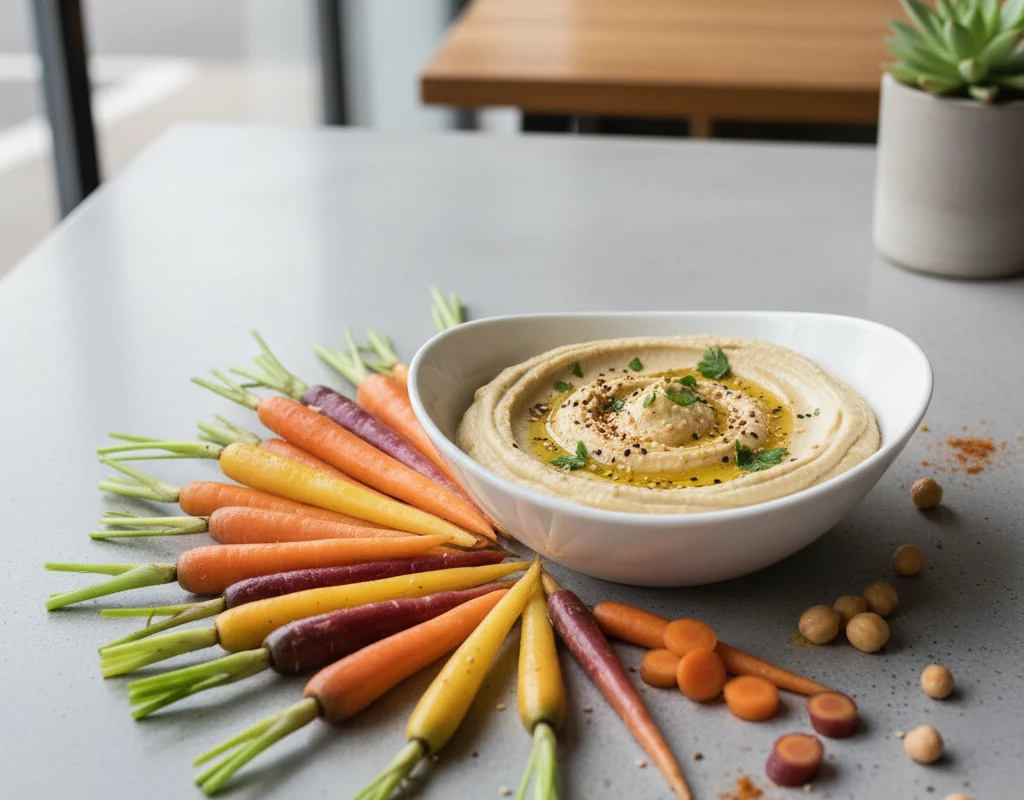
Baby Carrots With Hummus
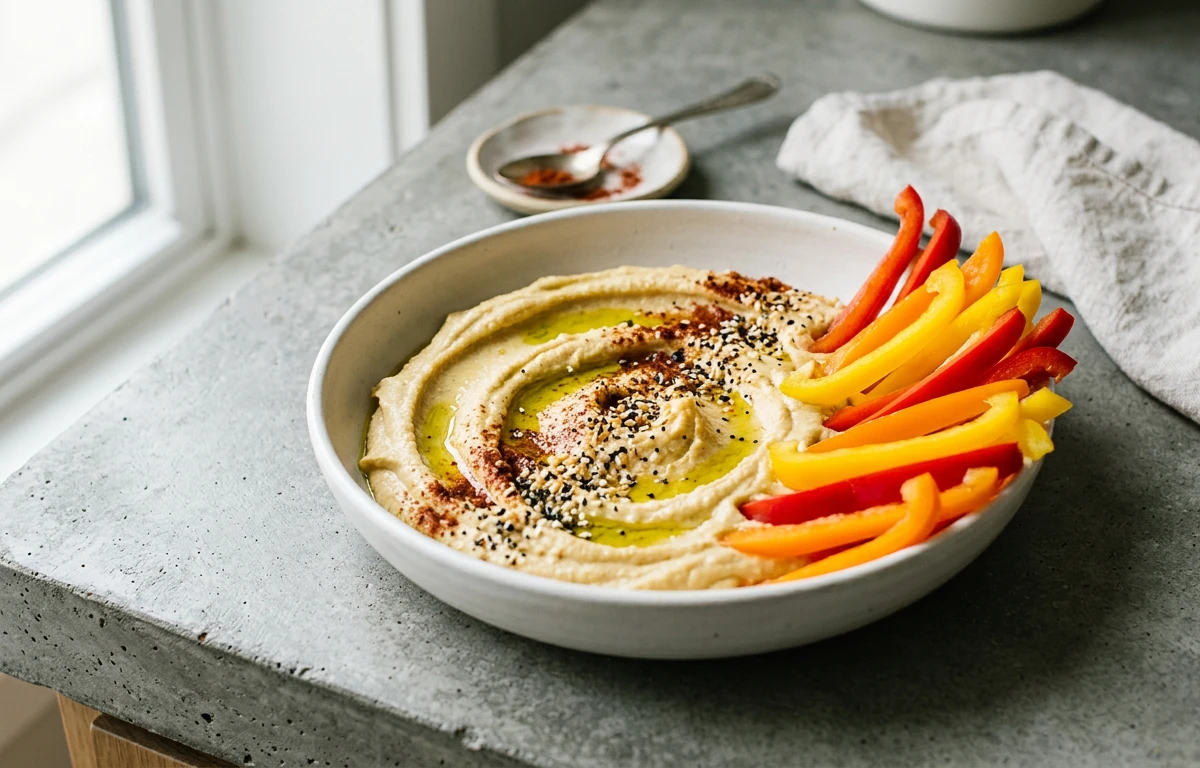
Crisp, naturally sweet baby carrots paired with a smooth, creamy homemade hummus. The hummus is whipped from chickpeas, tahini, lemon, and garlic until perfectly velvety and finished with a drizzle of olive oil. A fresh, wholesome snack or light appetizer that comes together in minutes.
For 4 servings
- prep
Soak and cook the chickpeas (if using dried).
Soak dried chickpeas in plenty of water overnight or for at least 8 hours. Drain, then boil in fresh water until very tender and easily squished between your fingers, about 45-60 minutes. Drain and let cool slightly. If using pre-cooked chickpeas, skip to next step.
TIPOvercook the chickpeas slightly — softer chickpeas yield the creamiest hummus. - prep
Wash and prep the baby carrots.
Rinse the baby carrots under cold water and pat them completely dry with a clean kitchen towel. Set aside.
- mix · ~5 min
Blend the hummus base.
1.In a food processor, combine tahini and lemon juice. Process for 1 minute until pale and thick.2.Add minced garlic and salt. Process for 30 seconds.3.Scrape down the sides of the bowl with a spatula.4.Add half the cooked chickpeas and 2 tablespoons of olive oil. Process for 1 minute.5.Add remaining chickpeas and ice cubes. Blend for 2-3 minutes until extremely smooth and creamy.6.If too thick, add cold water 1 tablespoon at a time until desired consistency.TIPWhipping the tahini with lemon juice first transforms the texture — don't skip this step. - mix
Season and taste the hummus.
Add the ground cumin and pulse to combine. Taste and adjust salt or lemon juice as needed. The hummus should be smooth, light, and well-balanced.
- assemble
Plate the hummus and carrots.
1.Spoon the hummus into a shallow serving bowl, using the back of a spoon to create swirls and a shallow well in the center.2.Drizzle generously with olive oil and sprinkle with paprika.3.Arrange the baby carrots around the hummus on a platter or serve them in a separate bowl for dipping. - serve
Serve immediately.
Enjoy the creamy hummus with crisp baby carrots. Best served fresh, but hummus can be refrigerated for up to 3 days in an airtight container.
TIPBring refrigerated hummus to room temperature and re-whip with a splash of cold water to revive its creaminess.
What to keep in mind.
7 tips from the recipe — small details that make a real difference to the final dish.
- 1Blend the tahini with lemon juice first; this emulsifies the base and prevents a gritty texture.
- 2Add ice cubes while blending—this aerates the hummus and makes it extra light and creamy.
- 3Use lukewarm chickpeas (not fridge-cold) for smoother blending and better emulsion.
- 4For the smoothest hummus, peel the chickpeas by rubbing them in a kitchen towel before blending.
- 5If your hummus is too thick, add cold water 1 tablespoon at a time until it reaches a silky consistency.
- 6Store hummus in an airtight container with a thin layer of olive oil on top to keep it moist.
- 7Bring leftover hummus to room temperature and whisk in a splash of cold water before serving to restore creaminess.
Adapt it for your goals.
Roasted carrot hummus
Roast half the baby carrots at 200°C until tender and caramelized, then blend them into the hummus for a sweeter, earthier dip that pairs with raw carrots on the side.
herb fleckedHerb-flecked
Add a handful of fresh parsley or cilantro leaves to the food processor during the final blend for a bright, herby hummus that complements the sweet carrots.
Why this is on our healthy list.
Rich in plant protein
Chickpeas provide a solid source of plant-based protein, making this snack satisfying and muscle-friendly.
Good source of healthy fats
Tahini and olive oil supply heart-healthy unsaturated fats that support nutrient absorption and satiety.
High in fiber
Both chickpeas and baby carrots are rich in dietary fiber, which aids digestion and helps maintain steady energy levels.
Frequently asked questions
Yes, use one 400g can, drained and rinsed. Warm them in a little water for 2 minutes before blending for best texture.