
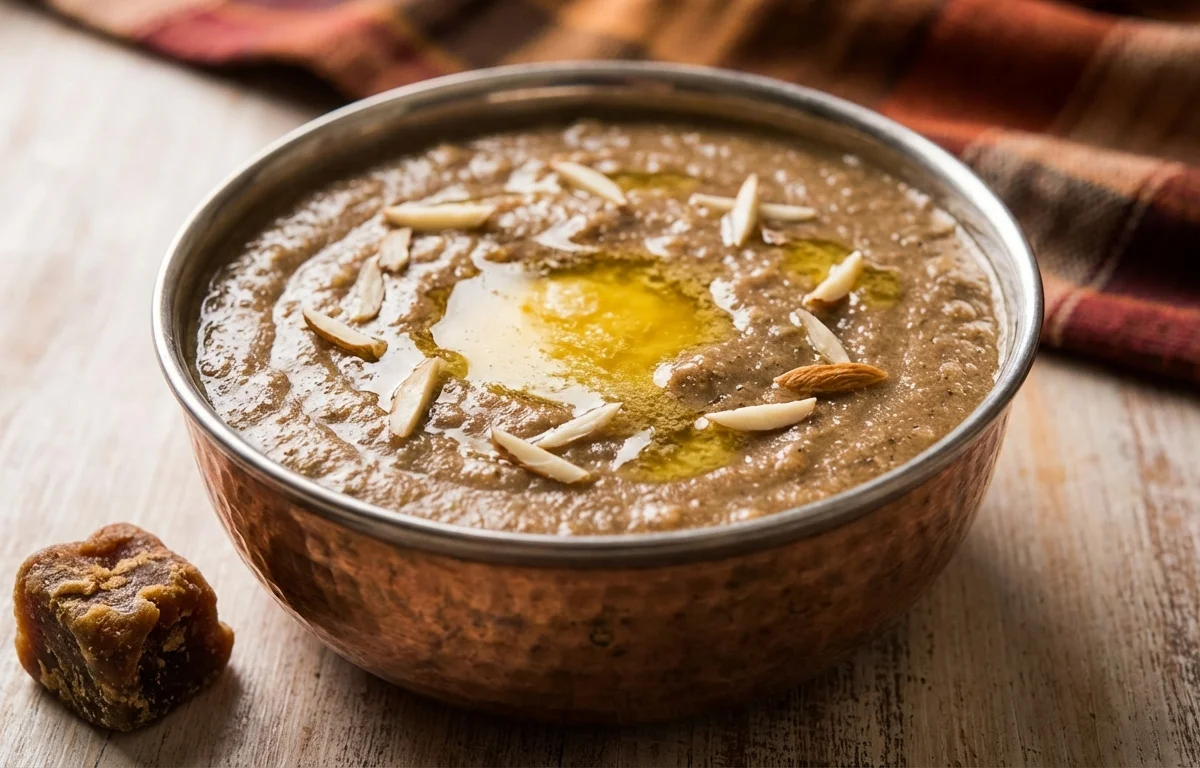
Bajra Raab
A warm, comforting Rajasthani-style drink made with bajra flour, buttermilk, and gentle spices. It turns silky and lightly tangy as it cooks, making it a soothing bowl for cool days or a simple light meal.
For 4 servings
- mix · ~3 min
Whisk the bajra flour with buttermilk and water.
1.Add bajra flour to a bowl.2.Pour in the buttermilk and whisk until smooth with no lumps.3.Add the water and salt, then whisk again to make a thin mixture.TIPWhisk well before heating because bajra flour thickens quickly and can form lumps. - temper · ~1 min
Heat the ghee and crackle the cumin.
1.Heat ghee in a heavy pan over low to medium heat.2.Add cumin seeds and let them sizzle for a few seconds.3.Add grated ginger and cook briefly until fragrant. - boil · ~5 min
Add the bajra mixture and bring it up gently.
Pour the whisked mixture into the pan in a slow stream, stirring constantly. Cook over medium heat until it begins to heat through and comes just to a gentle boil.
TIPKeep stirring, especially at the bottom of the pan, so the flour cooks evenly and does not catch. - simmer · ~15 min
Simmer until the raab turns smooth and lightly thick.
Lower the heat and simmer, stirring often, until the raw taste of bajra disappears and the raab looks smooth, glossy, and lightly thickened but still pourable.
TIPIf it gets too thick, loosen it with a splash of hot water and stir well. - serve
Serve the bajra raab warm.
What to keep in mind.
6 tips from the recipe — small details that make a real difference to the final dish.
- 1Whisk the bajra flour into buttermilk before adding water to break up lumps more easily.
- 2Use a heavy-bottomed pan; bajra settles fast and can catch at the base during simmering.
- 3Keep the heat gentle once the buttermilk mixture is in the pan so it stays smooth and doesn't split.
- 4Stir along the bottom edges often; that is where the raab thickens first.
- 5Cook until the raw bajra smell is gone and the texture looks glossy but still pourable, not pasty.
- 6If reheating leftovers, add a little hot water or buttermilk and whisk well, since raab thickens as it sits.
Adapt it for your goals.
Vegan
Use oil instead of ghee and a thin, unsweetened vegan buttermilk-style mix such as diluted peanut or cashew yogurt for a dairy-free version.
thicker meal styleThicker-meal-style
Simmer a little longer for a spoonable raab if you want it more like a light porridge than a drink.
peppery winterPeppery-winter
Add a pinch of black pepper with the ginger for a warmer, more robust cold-weather version.
Why this is on our healthy list.
Naturally Gluten-Free Grain
Bajra is a millet, so this raab is suited to those looking for a wheat-free, traditional grain-based dish.
Gut-Friendly Tang
Buttermilk brings a light sourness and dairy nourishment while keeping the dish soothing and easy to sip.
Warming Digestive Spices
Ginger and cumin add aroma and are classic ingredients used to make simple, comforting foods feel lighter and more digestible.
Frequently asked questions
Usually the flour was not whisked smooth before heating, or the mixture was poured into the pan without continuous stirring. Whisk well first and stir constantly as it heats.



.webp)
.webp)
.webp)