Bajrichi Bhakri
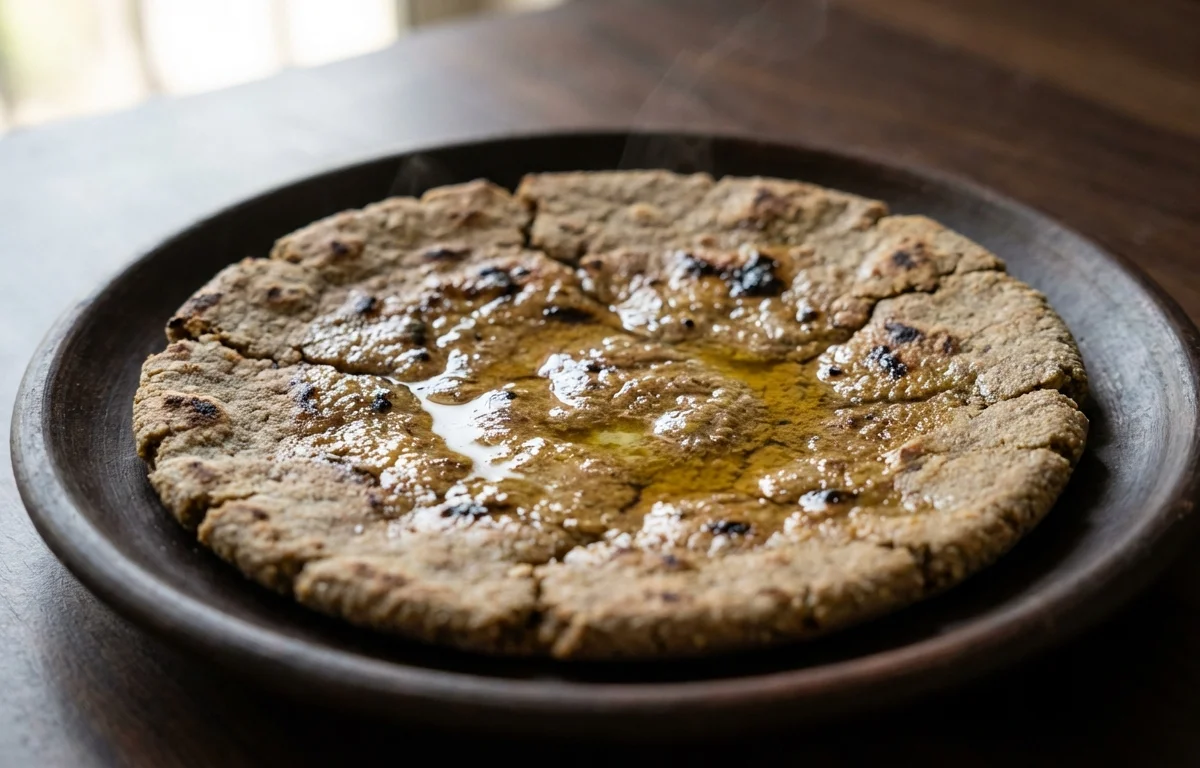
A rustic Maharashtrian flatbread made with bajra flour, warm water, and a little salt. Soft in the center with lightly toasted edges, this everyday bhakri tastes wonderful with pithla, thecha, curd, or simple vegetable sabzi.
For 4 servings
- prep · ~2 min
Warm the water and measure the flour.
Keep the water warm but not boiling. Set aside a little bajra flour for dusting while shaping the bhakri.
- knead · ~5 min
Make a soft dough.
1.Add bajra flour and salt to a wide bowl.2.Pour in the warm water little by little and mix with your fingers.3.Bring it together into a soft dough while it is still warm.4.Knead gently for 2 to 3 minutes until smooth and crack-free.TIPBajra dough dries quickly, so shape the bhakri right after kneading. - rest · ~5 min
Cover and rest the dough briefly.
Cover the dough with a cloth and let it rest for 5 minutes so it is easier to pat out.
- assemble · ~8 min
Divide and shape the bhakri.
1.Divide the dough into 4 equal portions.2.Take one portion and roll it gently between your palms.3.Dust with bajra flour and flatten it by patting with your fingers into a round disc about 5 to 6 inches wide.4.Keep the edges even and smooth any cracks as you shape.TIPPatting by hand gives the best texture, but you can flatten it between two sheets of parchment if needed. - fry · ~7 min
Cook the bhakri on a hot tawa.
1.Heat a tawa over medium-high heat until hot.2.Place one bhakri on the tawa and cook until the surface changes color and small spots appear, about 1 minute.3.Flip and cook the second side for 1 to 2 minutes, pressing the edges lightly with a cloth or spatula.4.Spread a little ghee and cook both sides until light brown spots appear.TIPIf the tawa is too cool, the bhakri will turn dry; if too hot, it will crack before cooking through. - serve · ~10 min
Cook the remaining bhakri and serve hot.
Repeat with the remaining dough portions. Serve Bajrichi Bhakri hot with thecha, pithla, yogurt, or a simple sabzi.
What to keep in mind.
7 tips from the recipe — small details that make a real difference to the final dish.
- 1Use warm water throughout; if the dough cools too much, bajra becomes harder to bind and cracks while patting.
- 2Keep the dough covered with a cloth while shaping each bhakri so the surface does not dry out.
- 3Smooth any edge cracks with slightly damp fingers before moving the bhakri to the tawa.
- 4A hot tawa is crucial: the bhakri should change color within about a minute, not sit and dry out.
- 5Press the edges gently after flipping, since the thicker rim often needs extra contact with the tawa to cook through.
- 6Serve immediately or wrap in a cloth-lined container; bajrichi bhakri firms up as it cools.
- 7If transferring by hand feels tricky, pat it on parchment and invert it carefully onto the hot tawa.
Adapt it for your goals.
Vegan
Skip the ghee and cook with a few drops of neutral oil, or serve plain for a fully plant-based bhakri.
jowar mixJowar-mix
Replace part of the bajra flour with jowar flour for a slightly lighter texture and easier patting.
methiMethi
Knead in a little finely chopped fresh methi for a more aromatic bhakri that pairs especially well with curd.
spicedSpiced
Add cumin, chili powder, or crushed green chili to the dough for a more flavorful everyday version.
Why this is on our healthy list.
Naturally Gluten-Free
Made with bajra flour rather than wheat, this bhakri is a traditional gluten-free flatbread option.
Good Source of Fiber
Pearl millet adds satisfying fiber, which helps make this simple flatbread more filling than many refined breads.
Wholesome Millet Base
Bajra is a rustic whole grain commonly valued for its earthy flavor and mineral-rich grain profile.
Frequently asked questions
Usually the dough is too dry or has cooled down. Add a little warm water, knead briefly, and smooth cracks with damp fingers as you pat.



.webp)