Kokum Saar
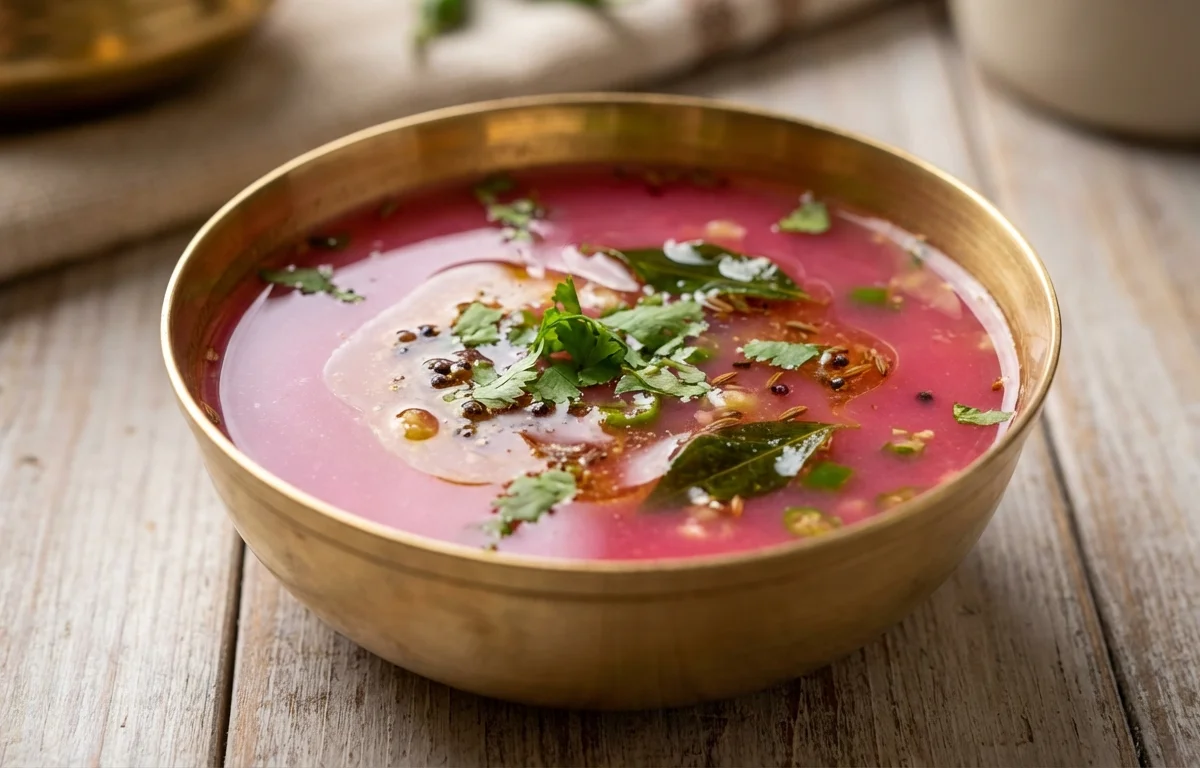
A tangy, slightly sweet digestive drink-soup from the Konkan coast. Dried kokum petals are soaked and simmered with cumin, green chili, and a touch of jaggery, then finished with a fragrant coconut-cumin paste. Served warm or chilled, this Maharashtrian-Gomantak classic is light, refreshing, and perfect with rice.
For 4 servings
- prep · ~20 min
Soak the kokum.
Rinse the dried kokum petals. Soak them in 1 cup of warm water for 20 minutes. After soaking, squeeze the petals well to extract all the juice and pulp. Strain and set the deep purple extract aside.
TIPWarm water speeds up extraction. Squeeze the petals with your fingers — most of the sourness is in the pulp. - mix · ~2 min
Make the coconut-cumin paste.
Grind the grated fresh coconut with ¼ tsp of cumin seeds and 2-3 tablespoons of water into a smooth, fine paste. Set aside.
TIPGrind until you see no visible coconut flecks — this ensures a silky mouthfeel in the saar. - temper · ~2 min
Make the tempering.
1.Heat ghee in a pan over medium heat.2.Add the remaining cumin seeds and let them crackle (30 sec).3.Add slit green chilies and sauté until fragrant (30 sec).TIPKeep the heat medium — cumin burns easily and turns bitter. - boil · ~3 min
Simmer the kokum base.
1.Pour the strained kokum extract and 2 cups of water into the pan with the tempering.2.Add jaggery and salt. Stir and bring to a gentle boil (2-3 min). - mix · ~1 min
Add and incorporate the coconut paste.
Lower the heat completely. Stir in the coconut-cumin paste and mix well. Warm through gently for 1 minute — do not let it boil after adding the coconut, as it can curdle or separate.
TIPBoiling coconut paste changes its texture and can split the saar. Keep it on low heat. - rest · ~5 min
Rest and serve.
Take the pan off the heat. Let it sit for 5 minutes so the flavors meld. Garnish with fresh coriander leaves. Serve warm over rice, or chill and serve as a cold soup.
What to keep in mind.
7 tips from the recipe — small details that make a real difference to the final dish.
- 1Use dried kokum petals, not fresh kokum fruit, for authentic tang. Look for deep maroon-black petals with a pleasant sour aroma.
- 2Squeeze the soaked kokum petals thoroughly between your fingers — this releases the maximum dark purple juice.
- 3Grind the coconut-cumin paste until absolutely smooth (no gritty flecks) for a silky, creamy saar.
- 4Never let the saar boil after adding the coconut paste — low heat only, or the coconut can curdle and split the liquid.
- 5Adjust jaggery to balance the kokum's sourness; start with 1 teaspoon and add more if needed.
- 6This saar tastes even better the next day as the flavors meld — make it a day ahead for deeper taste.
- 7Serve warm over plain steamed rice for a light meal, or chill it thoroughly for a refreshing summer soup.
Adapt it for your goals.
Vegan
Replace ghee with coconut oil for a fully plant-based tempering. The coconut oil's subtle tropical notes complement kokum beautifully.
spicierSpicier
Add 1/4 teaspoon crushed black pepper or a pinch of red chili powder along with the green chilies for extra heat and a more layered warmth.
garlic temperedGarlic-tempered
Add 2 crushed garlic cloves to the ghee when tempering cumin. Garlic adds a savory depth that transforms the saar into a more robust soup.
Why this is on our healthy list.
Digestive Aid
Kokum contains hydroxycitric acid (HCA), which is traditionally used to improve digestion and reduce acidity. The cumin and ginger-like notes further soothe the stomach.
Low in Calories & Fat
This saar is very light — made primarily from kokum water and a small amount of coconut, with just 1 teaspoon of ghee. It's a hydrating, low-calorie option.
Natural Electrolytes
The combination of water, salt, and jaggery provides a natural electrolyte balance, making this an excellent summer drink to combat dehydration.
Rich in Antioxidants
Kokum petals are packed with anthocyanins (the deep purple pigments), which are powerful antioxidants that help fight oxidative stress.
Frequently asked questions
Kokum (Garcinia indica) is a small, sour-tasting fruit from the Western Ghats of India, sold as dried, dark maroon petals in Indian grocery stores or online. It is not interchangeable with tamarind.



.webp)