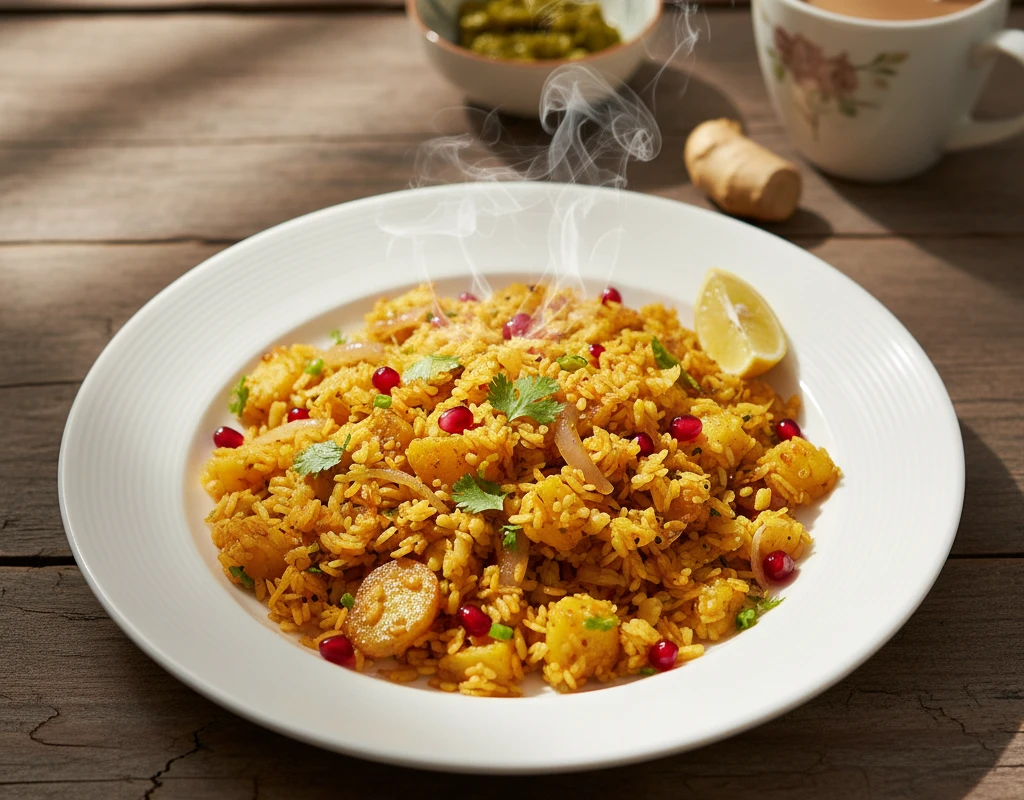
Kanda Batata Poha
A beloved Maharashtrian breakfast made with flattened rice, gently spiced with turmeric and green chilies, and tossed with soft potatoes and sweet sautéed onions. Comes together in 20 minutes, finished with a squeeze of lemon, fresh coriander, and crunchy roasted peanuts for a light, comforting start to the day.
For 4 servings
- prep · ~5 min
Rinse and drain the poha.
1.Place poha in a colander and rinse under running water for 30 seconds.2.Drizzle 2-3 tablespoons of water evenly and let it sit for 5 minutes to soften.3.Fluff with a fork. The grains should be soft yet separate — not mushy.TIPPress a grain between your fingers — it should flatten smoothly without a hard center. - temper · ~3 min
Make the tempering.
1.Heat oil in a kadai or wide pan over medium heat.2.Add mustard seeds and let them pop.3.Add cumin seeds and curry leaves, stir for 15 seconds until fragrant.4.Add slit green chilies and peanuts, sauté until peanuts are lightly golden (2 minutes). - saute · ~10 min
Cook the onions and potatoes.
1.Add chopped onions and cook until translucent and slightly pink (4-5 minutes).2.Add diced potatoes and stir well.3.Cover and cook on low heat until potatoes are tender, stirring occasionally (5-6 minutes).TIPDice the potatoes small — roughly 1 cm cubes — so they cook fast and blend into the poha. - mix · ~2 min
Season and add the poha.
1.Sprinkle turmeric powder, salt, and sugar over the potato-onion mix.2.Stir well to coat everything evenly.3.Add the softened poha and gently fold it in, taking care not to break the grains. - steam · ~4 min
Steam the poha.
Cover the pan, reduce heat to the lowest setting, and let it steam for 3-4 minutes. This allows the flavors to meld and the poha to become fluffy.
TIPPlace a tawa or flat griddle under the pan if needed to diffuse heat and prevent the bottom from scorching. - garnish · ~1 min
Finish and serve.
1.Remove from heat, drizzle lemon juice over the poha and fold gently.2.Garnish with chopped coriander leaves.3.Serve hot with a wedge of lemon on the side.
What to keep in mind.
7 tips from the recipe — small details that make a real difference to the final dish.
- 1Use thick poha (flattened rice) — it holds its shape after rinsing and steaming.
- 2Rinse the poha quickly and let it sit for 5 minutes; pressing a grain should flatten without a hard centre.
- 3Dice the potatoes into small 1 cm cubes so they cook evenly and blend with the poha.
- 4Cook the onions until they turn slightly pink for a natural sweetness that balances the dish.
- 5After adding poha, steam on the lowest heat with a tawa under the pan to prevent scorching.
- 6Add lemon juice only after removing from heat to preserve its fresh, bright flavour.
- 7For extra crunch, roast the raw peanuts separately until golden before adding to the tempering.
Adapt it for your goals.
Low-oil
Use a non-stick pan and reduce oil to 1 tablespoon; toast peanuts separately in a dry pan to keep them crisp. Ideal for those watching their fat intake.
high proteinHigh-protein
Add 1/2 cup of crumbled paneer or firm tofu along with the poha for a protein boost. Great for post-workout meals or to keep you full longer.
jainJain
Omit potatoes, onions, and garlic; use asafoetida (hing) in the tempering and add grated carrot or bottle gourd for sweetness. Suitable for Jain dietary practices.
veganVegan
This recipe is already vegan — simply skip any optional dairy garnish like yogurt and use lemon or amchur (dry mango powder) for tang.
Why this is on our healthy list.
Light & Easily Digestible
Flattened rice (poha) is low in fat and easy on the stomach, making this a gentle breakfast option for sensitive digestion.
Good Source of Plant Protein
Raw peanuts add plant-based protein and healthy monounsaturated fats, helping to keep you satiated until lunch.
Rich in Antioxidants
Turmeric and curry leaves provide anti-inflammatory compounds, while coriander offers detoxifying properties.
Iron-Enhancing Combination
The vitamin C from lemon juice enhances absorption of iron naturally present in poha (flattened rice), supporting energy levels.
Frequently asked questions
Over-rinsing or letting the poha sit too long after washing leads to excess moisture. Rinse quickly, drain well, and fluff with a fork — the grains should be soft but separate.



.webp)