Baked Lemon Herb Salmon & Asparagus
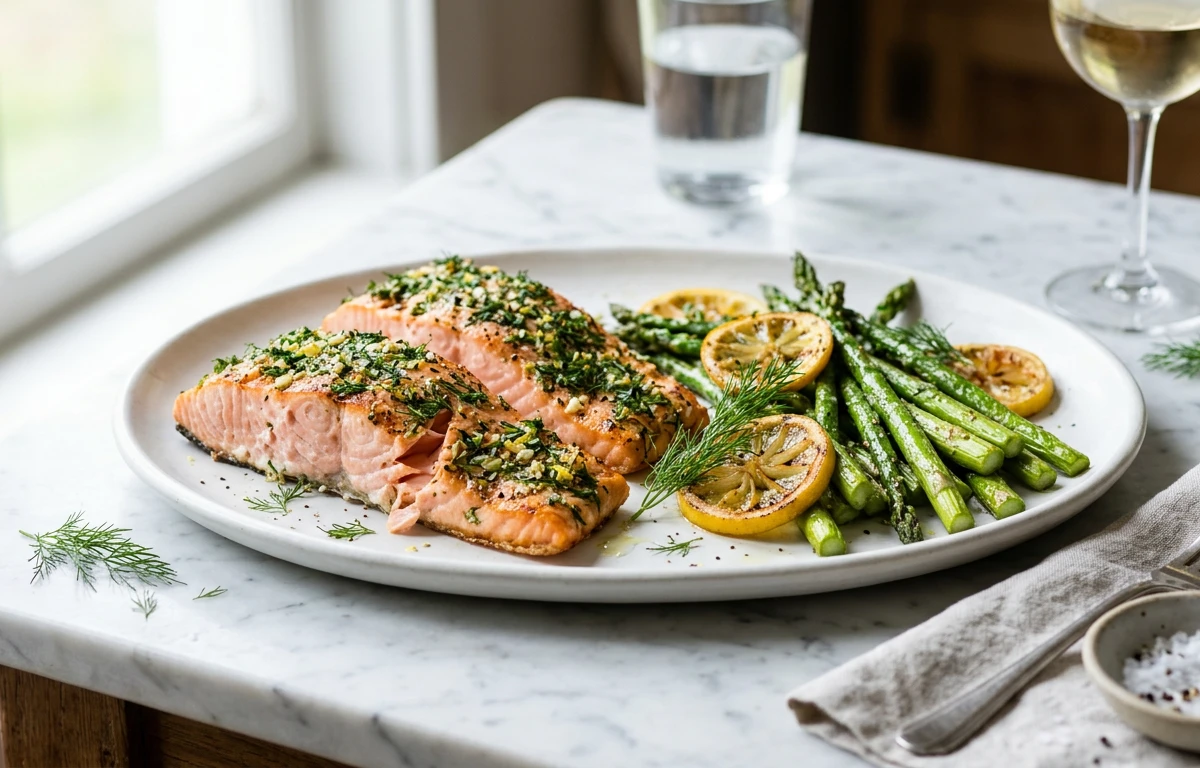
Flaky, tender salmon fillets baked on a sheet pan alongside bright green asparagus spears, all coated in a zesty lemon-herb butter. The broiler gives it a gorgeous golden finish while the asparagus roasts to crisp-tender perfection. A complete, elegant dinner that comes together in under 30 minutes with just one pan to clean.
For 4 servings
- prep
Preheat the oven and prepare the pan.
1.Position an oven rack in the middle and preheat to 425°F.2.Line a large rimmed sheet pan with parchment paper. - mix
Make the lemon herb butter.
1.In a small bowl, combine melted butter, olive oil, minced garlic, lemon zest, lemon juice, dried oregano, dried thyme, and crushed rosemary.2.Whisk until well blended.TIPWarming the lemon slightly before juicing yields more juice. - prep
Season the salmon and asparagus.
1.Place the salmon fillets skin-side down on one half of the prepared sheet pan.2.Arrange the trimmed asparagus on the other half.3.Drizzle the lemon herb butter evenly over the salmon and asparagus.4.Sprinkle salt and black pepper over everything.TIPPat the salmon very dry before seasoning — this helps the butter mixture cling and the top to brown. - bake · ~12 min
Bake the salmon and asparagus.
Place the sheet pan in the preheated oven and bake for 10-12 minutes. The salmon is done when it flakes easily with a fork and reaches an internal temperature of 135-140°F. The asparagus should be bright green and tender-crisp.
TIPAvoid overbaking — salmon continues to cook from residual heat after leaving the oven. - bake · ~2 min
Broil for a golden finish.
Switch the oven to broil on high. Broil the sheet pan for 1-2 minutes, watching carefully, until the tops of the salmon turn lightly golden and the asparagus tips get a slight char.
TIPKeep the oven door slightly ajar and don't walk away — broilers can burn food in seconds. - garnish
Garnish with parsley and lemon slices.
Remove the pan from the oven. Sprinkle fresh chopped parsley over the salmon and asparagus, and arrange lemon rounds on top. Serve immediately.
What to keep in mind.
6 tips from the recipe — small details that make a real difference to the final dish.
- 1Pat the salmon fillets very dry before seasoning to ensure the butter mixture clings and the top browns evenly.
- 2Trim woody ends from asparagus by snapping one spear at its natural breaking point, then cut the rest to match.
- 3Bake until the salmon registers 135-140°F at its thickest point for a moist, flaky interior.
- 4Keep the oven door slightly ajar while broiling and watch constantly to prevent the salmon from burning.
- 5For make-ahead prep, mix the lemon herb butter and trim asparagus up to a day in advance.
- 6Store leftovers in an airtight container in the fridge for up to 2 days; reheat gently in a low oven.
Adapt it for your goals.
Herb-swap
Replace dried oregano, thyme, and rosemary with 2 tablespoons each of fresh dill and chives for a brighter, more delicate flavor.
low oilLow-oil
Replace butter with additional olive oil or use a light avocado oil spray on the asparagus to reduce saturated fat.
veganVegan
Swap salmon for thick slices of firm tofu or portobello mushrooms, and use plant-based butter or extra olive oil.
low carbLow-carb
Substitute asparagus with broccoli florets or green beans for a different nutrient profile that stays low in carbs.
Why this is on our healthy list.
Rich in Omega-3s
Salmon is one of the best natural sources of omega-3 fatty acids, which support heart and brain health.
High in Vitamin K
Asparagus provides a generous amount of vitamin K, essential for bone health and blood clotting.
Good Source of Folate
Asparagus is rich in folate, a B-vitamin important for cell growth and metabolism.
Lean Protein
Each salmon fillet delivers high-quality, lean protein that helps build and repair tissues.
Low in Saturated Fat
Using olive oil and a modest amount of butter keeps the saturated fat content moderate while adding healthy monounsaturated fats.
Frequently asked questions
Salmon is done when it flakes easily with a fork and reaches an internal temperature of 135-140°F at its thickest part.