
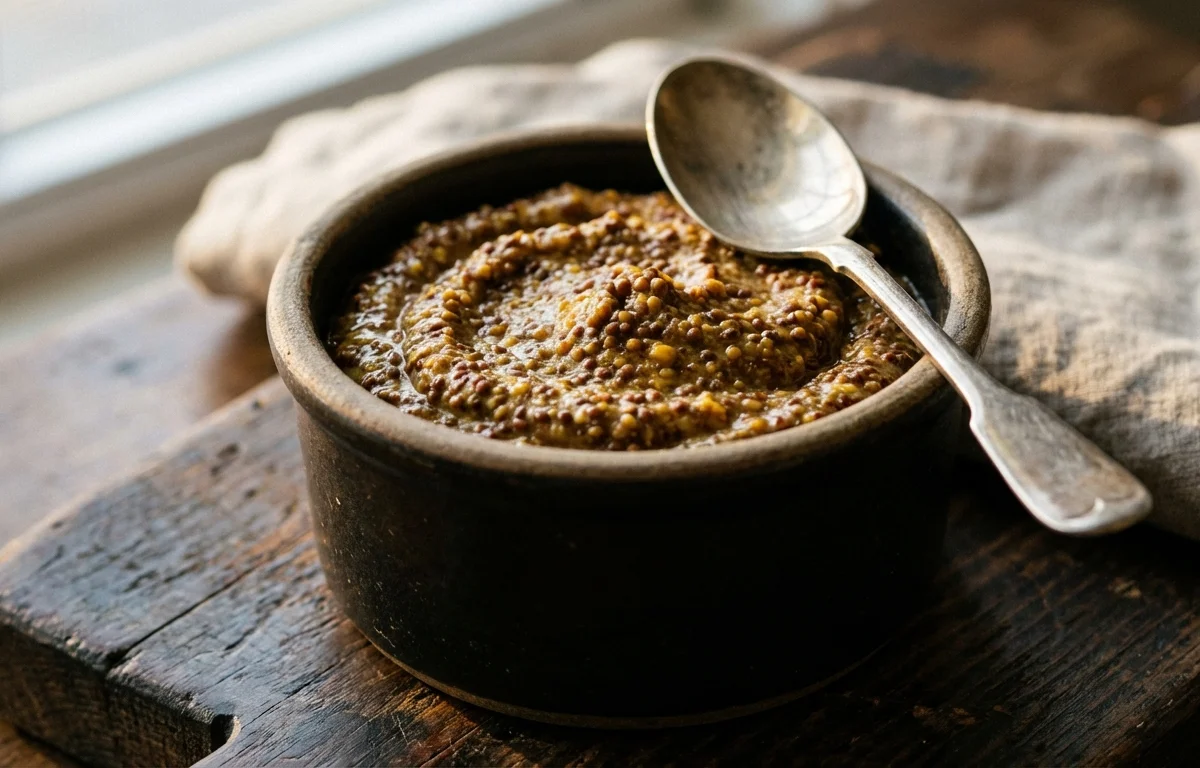
Brown Mustard
A bold, spicy homemade mustard with a rustic texture and sharp, sinus-clearing heat. Made from whole brown mustard seeds soaked and blended into a smooth paste, this classic American deli-style condiment beats anything from a squeeze bottle. Perfect on hot dogs, sandwiches, or as a dip for pretzels.
For 16 servings
- prep · ~480 min
Soak the mustard seeds.
1.Place brown mustard seeds in a mixing bowl and cover with cold water by 2 inches.2.Cover and let soak at room temperature for 8 hours or overnight.3.Drain the soaked seeds through a fine mesh strainer and discard the soaking water.TIPSoaking mellows the raw bitterness and softens the seeds for blending. The longer they soak, the smoother your mustard will be. - mix · ~2 min
Blend the mustard paste.
1.Combine drained mustard seeds, apple cider vinegar, 1/4 cup cold water, honey, salt, turmeric powder, and garlic powder in a blender.2.Blend on high for 1 to 2 minutes, scraping down the sides as needed, until you reach your desired texture.3.For a whole-grain style, pulse briefly. For a smoother mustard, blend longer, adding a teaspoon of cold water at a time to loosen.TIPCold liquid prevents the mustard from turning bitter. Never use hot water or vinegar when blending. - rest · ~60 min
Rest the mustard to mellow the heat.
1.Transfer the mustard paste to a clean glass jar and seal loosely.2.Let it sit at room temperature for 1 hour to let the initial intense heat settle into a balanced, sharp warmth.TIPFreshly blended mustard is intensely hot and slightly bitter. Resting lets the heat stabilize. Taste after resting; it will continue to mellow in the fridge. - serve · ~120 min
Chill and serve.
1.Seal the jar tightly and refrigerate for at least 2 hours before serving.2.The mustard will thicken as it chills. It keeps refrigerated for up to 3 months.TIPThe flavor deepens overnight. This mustard is at its best after a full day in the fridge.
What to keep in mind.
7 tips from the recipe — small details that make a real difference to the final dish.
- 1Soak the seeds for at least 8 hours to soften them and reduce bitterness; overnight is ideal.
- 2Always use cold liquid when blending to prevent the mustard from turning bitter.
- 3For a whole-grain texture, pulse the blender briefly instead of running it continuously.
- 4Let the mustard rest at room temperature after blending to allow the initial fierce heat to mellow into a balanced sharpness.
- 5Taste the mustard after the 1-hour rest—it will continue to mellow in the fridge, so don't judge it too early.
- 6Store in a clean glass jar with a loose lid for the first hour, then tighten and refrigerate.
- 7This mustard keeps for up to 3 months refrigerated; its flavor deepens significantly after a full day.
Adapt it for your goals.
Spicier
Swap half the brown mustard seeds for yellow mustard seeds and add 1 teaspoon of horseradish for an extra sinus-clearing kick.
sweeter & milderSweeter & milder
Increase honey to 1 tablespoon and add 1/2 teaspoon of brown sugar for a honey-mustard style that's great on deli sandwiches.
herb infusedHerb-infused
Add 1 teaspoon of dried thyme or rosemary with the seeds before blending for an aromatic, savory mustard perfect with roasted meats.
beer mustardBeer mustard
Replace half the cold water with a dark beer (like stout or porter) for a rich, malty depth that pairs beautifully with pretzels and sausages.
Why this is on our healthy list.
Low in Calories & Fat
Mustard seeds are naturally low in calories and fat, making this a guilt-free condiment that adds big flavor without the baggage of mayonnaise or creamy dressings.
Contains Antioxidants
Mustard seeds are rich in selenium and glucosinolates, compounds that support your body's antioxidant defenses and may help reduce inflammation.
High in Dietary Minerals
Mustard seeds provide small amounts of magnesium, calcium, and phosphorus, which are important for bone health and muscle function.
Digestive Aid
The natural compounds in mustard seeds can stimulate saliva and digestive juices, helping to kickstart digestion when paired with hearty foods.
Frequently asked questions
Bitter mustard usually comes from using hot liquid during blending or soaking. Always use cold water and vinegar to keep the heat clean and avoid bitterness.


