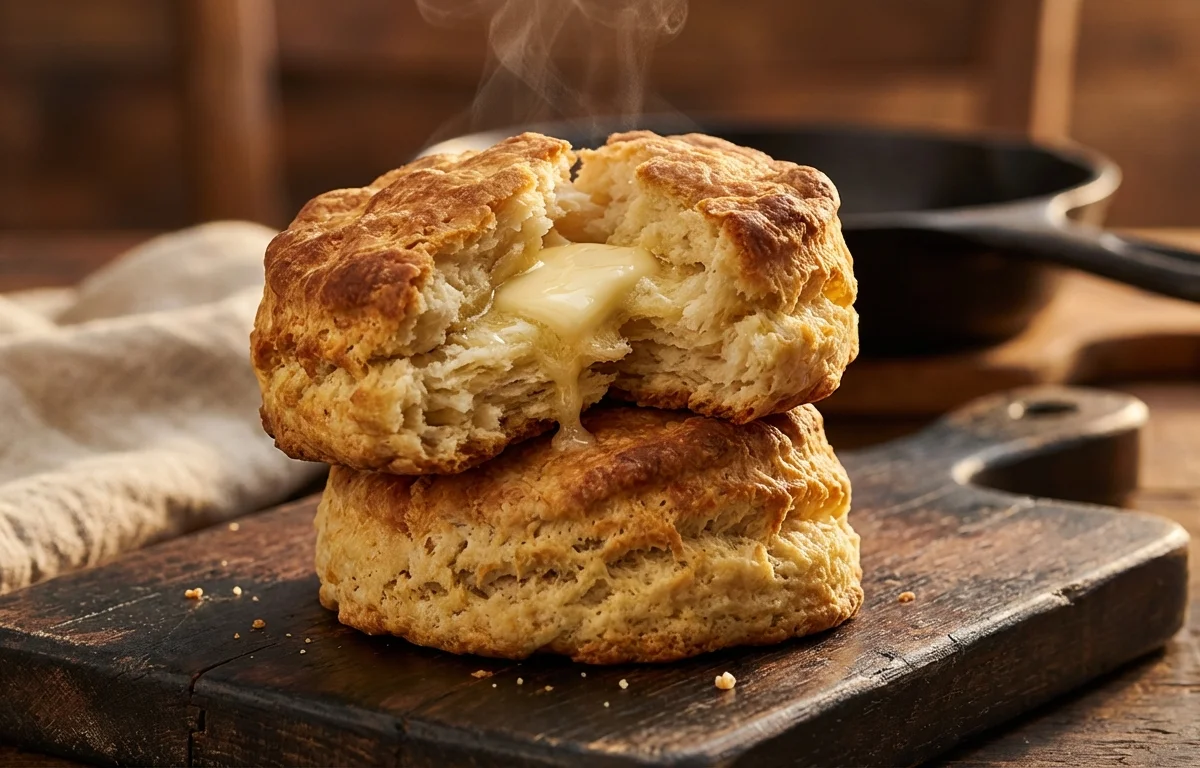
Cathead Biscuits
Towering, fluffy buttermilk biscuits as big as a cat's head, with a golden, crisp exterior giving way to a soft, tender crumb. These Southern Appalachian classics are handmade with flour, cold butter, and buttermilk, baked to perfection and ready to soak up gravy, butter, or jam.
For 4 servings
- prep
Preheat oven and prepare skillet.
Preheat oven to 450°F. Place a 10-inch cast iron skillet in the oven to heat while preparing the dough.
TIPA hot skillet gives the biscuits a crisp bottom crust. A baking sheet works too if you don't have cast iron. - mix
Combine dry ingredients.
In a large mixing bowl, whisk together flour, baking powder, baking soda, and salt until well combined.
- mix
Cut butter into flour mixture.
Add cold butter cubes to the flour mixture. Using a pastry cutter or two forks, cut the butter into the flour until the mixture resembles coarse crumbs with some pea-sized butter pieces remaining.
TIPKeep the butter cold. If the butter starts to soften, pop the bowl in the freezer for 5 minutes. - mix
Add buttermilk and form a shaggy dough.
Pour cold buttermilk into the flour mixture. Stir gently with a fork or wooden spoon until the dough just comes together. It will be sticky and shaggy — do not overmix.
TIPOvermixing develops gluten and makes biscuits tough. Stop mixing the moment no dry flour remains. - prep
Shape the biscuits.
Turn dough onto a generously floured surface. Dust the top with flour, then gently pat into a 1-inch thick rectangle. Fold the dough over itself in thirds like a letter, then pat again to 1-inch thickness. Cut into 4 equal rounds using a large biscuit cutter or a sharp knife, pressing straight down without twisting.
TIPNever twist the cutter — it seals the edges and prevents the biscuits from rising to their full height. - bake · ~15 min
Bake until tall and golden.
Carefully remove the hot skillet from the oven. Place biscuits in the skillet, sides touching for a softer rise. Brush tops with melted butter. Bake for 14 to 16 minutes until tall, golden brown, and cooked through.
- serve
Serve warm.
Brush with any remaining melted butter and serve immediately, split open with more butter, jam, or smothered in sausage gravy.
What to keep in mind.
6 tips from the recipe — small details that make a real difference to the final dish.
- 1Use buttermilk straight from the fridge to keep the dough cold and ensure maximum rise.
- 2Pat the dough to exactly 1-inch thickness; too thin and biscuits won't tower, too thick and they may not bake through.
- 3Press the biscuit cutter straight down without twisting—twisting seals the edges and stunts rising.
- 4Place biscuits snugly against each other in the skillet so they rise upward instead of spreading outward.
- 5For extra-flaky layers, repeat the folding step (letter fold) 2-3 times before cutting.
- 6Let baked biscuits rest in the skillet for 2 minutes before serving so the crumb sets without drying out.
Adapt it for your goals.
Cheesy herb biscuits
Add 1/2 cup shredded sharp cheddar and 1 tablespoon chopped fresh chives or rosemary to the dry ingredients before adding buttermilk. Ideal for serving alongside soups or chili.
whole wheat cathead biscuitsWhole wheat cathead biscuits
Replace 1 cup of all-purpose flour with whole wheat flour and add an extra tablespoon of buttermilk. Offers a nuttier flavor and more fiber.
vegan cathead biscuitsVegan cathead biscuits
Use cold vegan butter (like plant-based sticks) and a mixture of 1 cup plant milk (unsweetened) + 1 tablespoon lemon juice or vinegar in place of buttermilk. Creates dairy-free biscuits that are still fluffy and tender.
Why this is on our healthy list.
Good Source of Calcium
Buttermilk provides calcium for strong bones and teeth, and the small amount of butter adds a touch of vitamin A.
Low in Added Sugar
These biscuits contain no added sugar, making them a savory bread choice that won't spike blood sugar.
Moderate Saturated Fat
With only 6 tablespoons of butter spread over 4 large biscuits, each biscuit contains a modest amount of saturated fat, suitable for balanced diets.
Frequently asked questions
Dense biscuits usually result from overmixing the dough, warm butter, or twisting the cutter. Keep ingredients cold, mix until just combined, and press straight down when cutting.