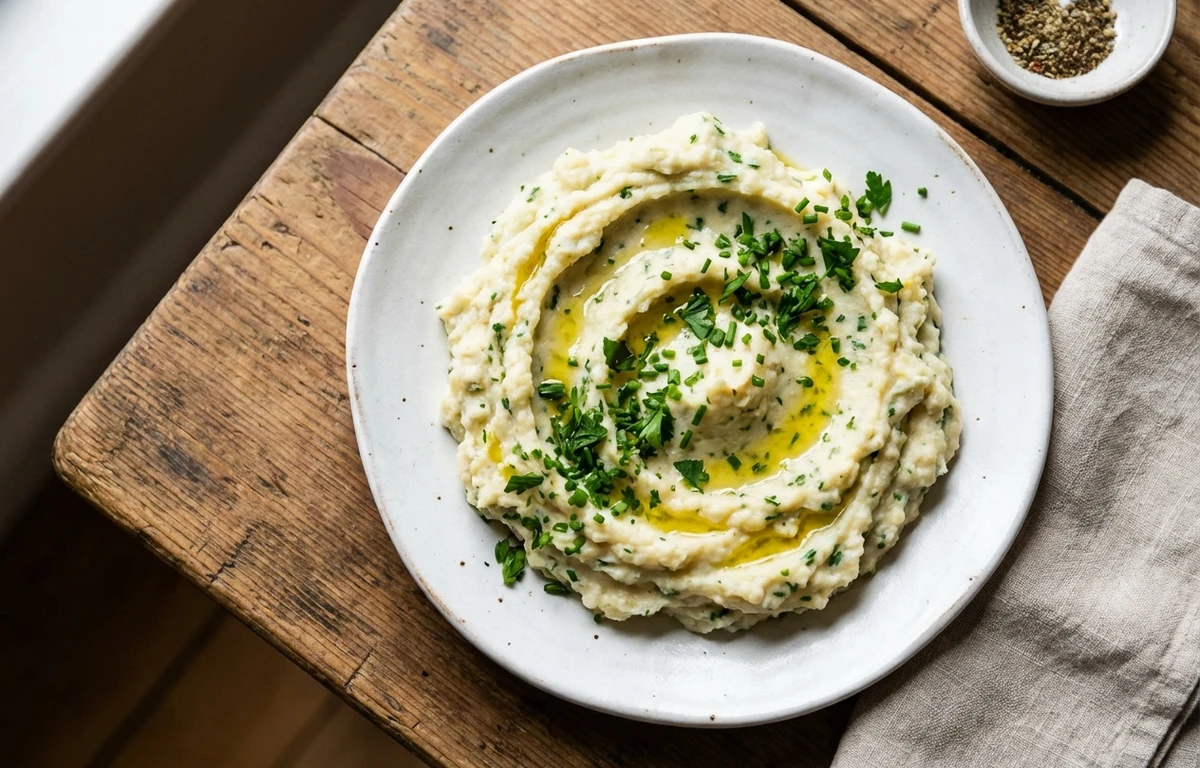
Cauliflower Mash
Creamy, buttery cauliflower mash with roasted garlic and a hint of black pepper. A lighter twist on classic mashed potatoes that's just as comforting — ready in 25 minutes with 5 simple ingredients.
For 4 servings
- prep · ~5 min
Cut the cauliflower into florets and peel the garlic.
Remove the leaves and core from a medium cauliflower head. Cut into even-sized florets so they steam uniformly. Peel 4 garlic cloves and keep whole.
- steam · ~12 min
Steam the cauliflower and garlic until fork-tender.
Fill a large pot with an inch of water and bring to a boil over high heat. Place the cauliflower florets and garlic cloves in a steamer basket, set it over the boiling water, and cover. Steam for 10-12 minutes until the cauliflower is very tender and easily pierced with a fork.
TIPDon't undercook — the cauliflower must be completely soft to get a smooth, creamy mash without graininess. - rest · ~2 min
Drain and let the cauliflower steam-dry for 2 minutes.
Remove the steamer basket and transfer the steamed cauliflower and garlic to a colander. Let them sit for 2 minutes to release excess moisture — this prevents a watery mash.
TIPPat the florets gently with a clean kitchen towel to absorb extra moisture if they still look wet. - mix · ~2 min
Blend the cauliflower with butter and cream cheese.
Transfer the cauliflower and garlic to a food processor. Add the butter and cream cheese. Pulse in short bursts until smooth and creamy, scraping down the sides once or twice. Avoid over-processing, which can make the mash gluey.
TIPFor a chunkier rustic mash, use a potato masher instead of a food processor. - mix · ~1 min
Season with salt and pepper, then pulse to combine.
Add a pinch of salt and a pinch of freshly cracked black pepper. Pulse 2-3 times just to incorporate. Taste and adjust if needed.
- garnish · ~1 min
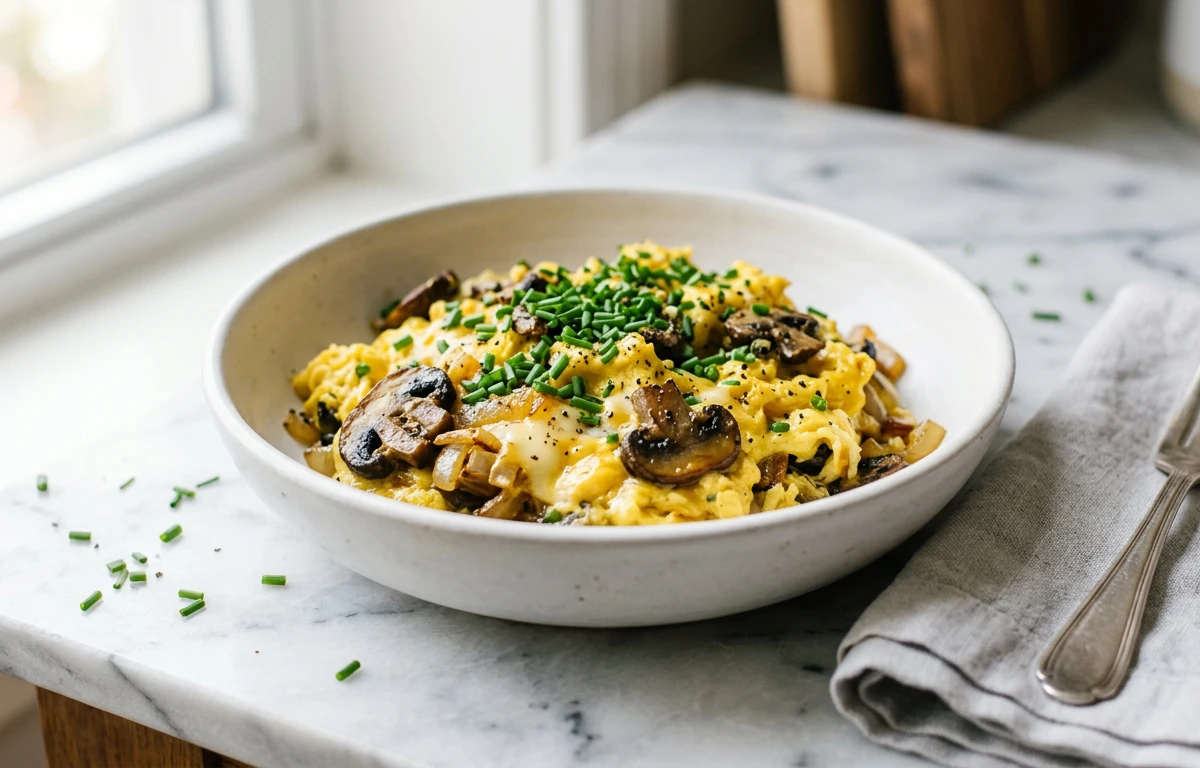
Spoon into a serving bowl and garnish with fresh chives.
Transfer the mash to a warm serving bowl. Scatter chopped fresh chives over the top and add a small pat of butter to melt in the center if desired. Serve hot.
What to keep in mind.
7 tips from the recipe — small details that make a real difference to the final dish.
- 1Steam the cauliflower until completely fork-tender to avoid a grainy texture.
- 2Let the steamed cauliflower rest in a colander for 2 minutes to release excess moisture.
- 3Pat the florets dry with a clean towel if they still look wet after resting.
- 4Use a food processor for a silky-smooth mash, but pulse in short bursts to avoid glueyness.
- 5For a chunkier rustic mash, use a potato masher instead of a food processor.
- 6Warm the serving bowl before spooning in the mash to keep it hot longer.
- 7Make ahead: reheat gently in a saucepan with a splash of milk or butter, stirring often.
Adapt it for your goals.
Dairy-free
Replace butter with olive oil or vegan butter, and use a dairy-free cream cheese or a splash of unsweetened almond milk. Ideal for lactose-intolerant or vegan diets.
herb infusedHerb-infused
Add 1 tablespoon of chopped fresh rosemary or thyme along with the chives for an aromatic, savory twist that pairs beautifully with roasted meats.
cheesyCheesy
Stir in 1/4 cup of grated Parmesan or sharp cheddar after blending for a richer, cheesy cauliflower mash that mimics loaded mashed potatoes.
low fatLow-fat
Reduce butter to 1 tablespoon and replace cream cheese with 2 tablespoons of plain Greek yogurt for a lighter version with a tangy kick.
Why this is on our healthy list.
Low in Carbohydrates
Cauliflower is naturally low in carbs, making this mash a great alternative for anyone watching their blood sugar or following a low-carb or keto diet.
Rich in Vitamin C
Cauliflower is an excellent source of vitamin C, supporting immune health and collagen production, especially when steamed to preserve nutrients.
Good Source of Fiber
Cauliflower provides dietary fiber that aids digestion and promotes a feeling of fullness, helping with weight management.
Contains Antioxidants
Garlic and cauliflower are both rich in antioxidant compounds like allicin and sulforaphane, which help combat oxidative stress.
Frequently asked questions
Yes, but thaw it first and pat very dry to remove excess moisture, otherwise the mash may be watery and less creamy.